 Bellingham Exterior
 Birchwood Siding Has to Handle More Than Most Homeowners Realize
Birchwood sits close enough to the water and the wet weather patterns that roll through Whatcom County that its homes take a different kind of beating than siding in drier parts of the state. It's not one big storm that does the damage — it's the steady combination of salt-tinged air, sideways rain off Bellingham Bay, and long stretches of shade and moisture that let moss and algae get established and stay established for months at a time. Siding here needs to shed water fast, resist the slow chemical wear that salt air causes, and not give moss a foothold to begin with. A lot of siding products can handle one of those things. Very few handle all three well, year after year, without babysitting.
We install fiber cement siding on homes throughout the Bellingham area, and Birchwood is one of the neighborhoods where the climate factors show up clearly in what we see on tear-offs — swollen trim, moss-stained panels, caulk lines that gave up years before the siding did. This page covers what Birchwood homes specifically need from their siding, what a correct fiber cement installation actually involves, and why the product we use is the one product we're willing to stand behind here.
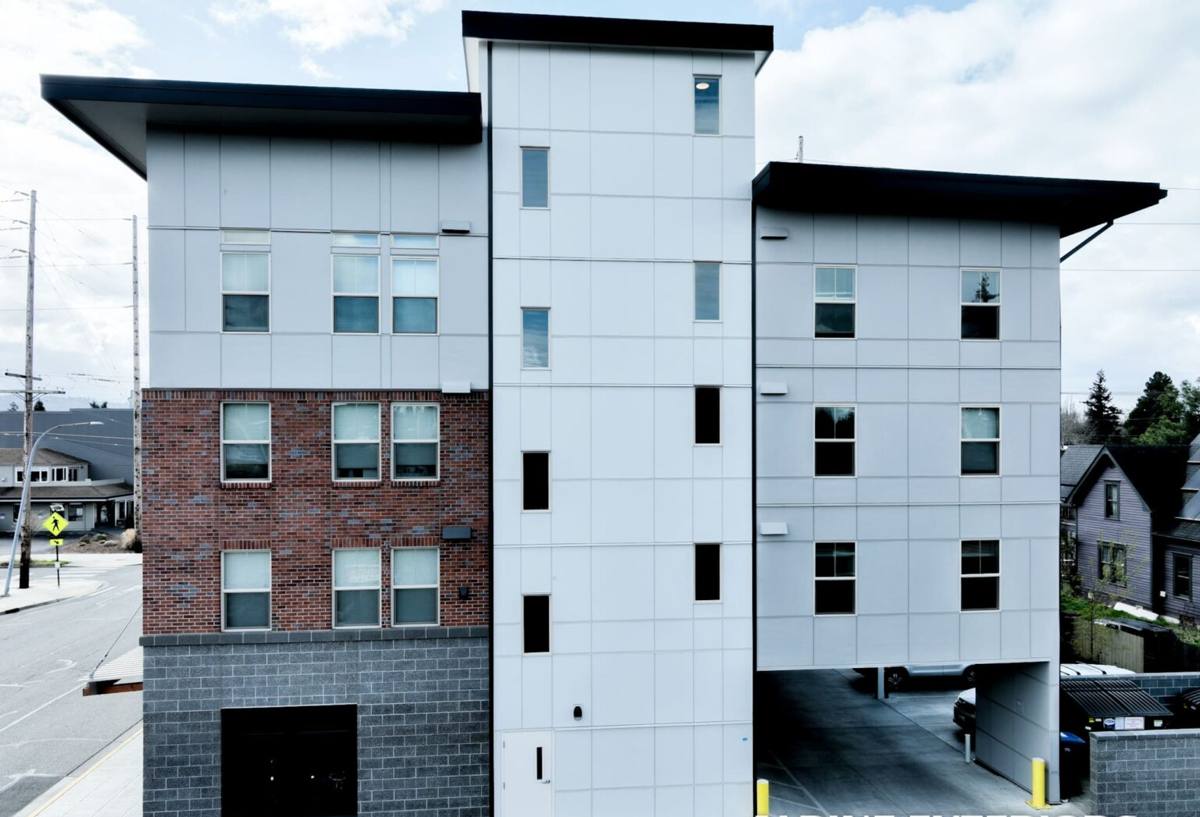
What Salt Air, Driving Rain, and Moss Actually Do to Siding
Each of these stressors attacks siding differently, and understanding the mechanism is the difference between a fix that lasts and one that just looks fixed for a season.
Salt Air
Moisture carrying trace salt accelerates the breakdown of paint films and the corrosion of exposed fasteners. On wood-based or engineered wood products, this shows up as faster finish failure at edges and cut ends — the places most vulnerable to moisture intrusion in the first place. Over enough seasons it's a slow, cumulative wear pattern, not a one-time event.
Driving Rain
Wind-driven rain doesn't just wet the surface of siding — it pushes water sideways and upward under laps, around penetrations, and into any gap in the water-resistive barrier behind the siding. A siding system is only as good as its drainage plane and flashing details. The siding material matters, but the installation matters just as much, because rain finds every shortcut.
Moss and Algae Season
Whatcom County's mild, wet stretches give moss and algae a long window to establish, especially on north-facing walls, under eaves, and anywhere airflow is limited. Once organic growth takes hold on a porous or moisture-absorbent surface, it holds moisture against the siding even longer, which compounds every other problem. Siding that doesn't absorb water in the first place gives moss far less to grab onto.
Why We Install Only James Hardie Fiber Cement
We made a deliberate decision to install James Hardie fiber cement siding exclusively — not LP SmartSide, not vinyl, not Cemplank or Allura, not primed spruce or cedar. That's not a marketing position; it's a standard we hold because of what we see when we replace other products on homes in this climate.
- It doesn't absorb water into a wood substrate. Fiber cement is cement, sand, and cellulose fiber — it doesn't swell, rot, or delaminate the way wood-based siding can when moisture gets past the finish.
- It's non-combustible. That's a separate benefit from moisture performance, but it's a real one, and it's part of why James Hardie has become the standard for climate-engineered siding across the Pacific Northwest.
- ColorPlus factory finish is baked on, not brushed on. The finish is cured in a controlled environment and backed by its own finish warranty, which matters directly in an area where field-applied paint takes a beating from UV, rain cycling, and salt air.
- It's engineered for regional climates. James Hardie makes an HZ5 product line specifically for climates like ours, with moisture and freeze-thaw performance tuned to Pacific Northwest conditions rather than a generic national spec.
- The warranty is transferable and substantial — which matters to resale, and reflects the manufacturer's confidence in long-term performance when the product is installed correctly.
We're not going to tell you other siding products are junk — some of them are reasonable products used correctly in the right climate. What we will say is that for a Birchwood home dealing with salt air, driving rain, and a long moss season, we don't think the trade-offs of wood-based or vinyl alternatives are worth it, and we've built our business around installing the one product we believe holds up here without excuses.
Matching the Right Hardie Product to a Birchwood Home
James Hardie makes several distinct product lines, and picking the right one is part of doing the job correctly — not every board is interchangeable with every home style.
| Product Line | Best For | Why It Fits Birchwood Conditions |
|---|---|---|
| HardiePlank Lap Siding | Most single-family homes, traditional and modern styles | Widest color and texture range in ColorPlus finish; the workhorse choice for full re-sides |
| HardiePanel Vertical Siding | Modern facades, accent walls, gable ends | Clean vertical drainage lines that shed driving rain efficiently |
| HardieShingle | Craftsman and cottage-style homes | Traditional shingle look without the moisture absorption of wood shingles |
| HardieTrim | Corners, fascia, window and door trim | Matches the siding's moisture resistance at the joints where water intrusion typically starts |
The HZ5 formulation, engineered for our climate zone, is what we spec on Birchwood homes by default — it's built to perform in the freeze-thaw and moisture-cycling conditions typical of this part of Washington.
What a Correct Installation Actually Involves
Fiber cement siding is only as good as the installation behind it. A rushed or shortcut job can undercut even the best product, and this is where most siding failures we get called out to inspect actually originate — not in the siding material itself, but in the details behind it.
- Removal of failing siding down to the sheathing, with a full inspection for hidden rot or moisture damage before anything new goes up
- Correction of any compromised sheathing or framing found underneath — never siding over a problem
- A continuous, correctly lapped water-resistive barrier, installed to shed water down and out, not trap it behind the cladding
- Proper flashing at every window, door, and penetration — the single most common failure point in siding jobs done wrong
- Correct fastening per James Hardie's published installation specifications, including fastener type and placement to avoid voiding the manufacturer warranty
- Manufacturer-specified gaps and clearances at trim, corners, and grade to allow drainage and airflow
- Caulking and sealant only where James Hardie's details call for it — not as a substitute for correct flashing
Our Process, Start to Finish
1. On-Site Assessment
We walk the exterior with you, look at how the home is currently performing — moss patterns, moisture staining, trim condition — and talk through what's driving the need for new siding.
2. Product and Color Selection
We help you pick the right Hardie product line and ColorPlus finish for your home's style and exposure, including which elevations need extra attention for rain and moss exposure.
3. Written Estimate
You get a detailed, written scope and price before any work starts — no verbal-only quotes, no scope creep.
4. Tear-Off and Substrate Inspection
Old siding comes off, and we inspect the sheathing and framing underneath before anything new goes up. If we find rot or moisture damage, we tell you before we cover it back up.
5. Weather Barrier and Flashing
This is the step that determines whether the job holds up in driving rain. We install the water-resistive barrier and flashing to manufacturer spec, not shortcuts.
6. Siding Installation
James Hardie boards go up per manufacturer fastening and clearance specifications, maintaining warranty compliance throughout.
7. Final Walkthrough
We walk the finished job with you and address anything before we consider it done.
What Fiber Cement Siding Costs to Consider
Every home is different, and a real number only comes from an on-site look at square footage, trim complexity, and substrate condition. But these are the factors that move the price up or down on most Birchwood projects.
| Factor | Effect on Cost |
|---|---|
| Home size and wall complexity | More square footage and more corners, gables, and dormers increase labor time |
| Substrate condition | Rot or moisture damage found at tear-off adds repair scope before new siding goes on |
| Product line and texture | Lap, panel, and shingle profiles carry different material and labor costs |
| Trim scope | Full HardieTrim replacement at corners and openings adds cost but improves long-term water management |
| Access and site conditions | Tight lots, height, or landscaping obstacles affect labor and staging |
Living With Fiber Cement Siding After It's Installed
One of the practical advantages of James Hardie siding in this climate is how little it asks of you afterward. It doesn't need repainting on the schedule wood siding does, and because it doesn't absorb water the way wood-based products can, it's less hospitable to the moss and algae that thrive in Whatcom County's damp stretches. That said, no siding is maintenance-free:
- Rinse the exterior periodically, especially north-facing and shaded walls where moss is more likely to establish
- Keep gutters clear so water isn't overflowing directly onto siding runs
- Trim back vegetation that keeps a wall shaded and damp
- Inspect caulking at trim joints every couple of years and address any gaps early
Why Hiring a Crew That Already Works Birchwood Matters
A crew that installs siding across different climate zones treats every job the same way. A crew that works Bellingham and Whatcom County regularly knows which elevations on a Birchwood home are going to take the worst of the driving rain, where moss tends to establish first, and how to detail flashing so it actually performs through a wet Pacific Northwest winter rather than just passing a dry-day inspection. That local pattern recognition doesn't replace following the manufacturer spec — it's what makes sure the spec gets applied where it actually matters on your specific home.
If you're weighing a re-side in Birchwood, we're glad to take a look at your home, walk through what James Hardie can do for it, and give you a straightforward, written estimate — no pressure, no upsell into a product we wouldn't put on our own homes. The form below gets you started.