 Bellingham Exterior
 Why Cordata Homes Need Siding That's Built for This Climate
Cordata sits in north Bellingham, close enough to the Salish Sea and Bellingham Bay that the region's damp, salt-touched marine air is simply part of daily life here. Add Whatcom County's long stretch of driving rain from fall through spring, plus the shaded, tree-lined lots common in this part of town, and you get a climate that's genuinely hard on exterior siding. Wood-based products absorb moisture, swell, and eventually rot at the seams. Vinyl can warp in temperature swings and never really stops water at the laps. And almost every siding type in this area picks up moss and algae if it can't dry out between rain events.
Homes in Cordata tend to see moss growth start earlier in the fall and hang on later into spring than homes in drier inland parts of the state, simply because the Pacific Northwest's cloud cover and rainfall keep surfaces damp for weeks at a time. Siding that can't shed water quickly, or that gives moss spores something to grip onto, turns into a maintenance headache within a few years. That's the problem we're solving when we recommend fiber cement for this neighborhood.
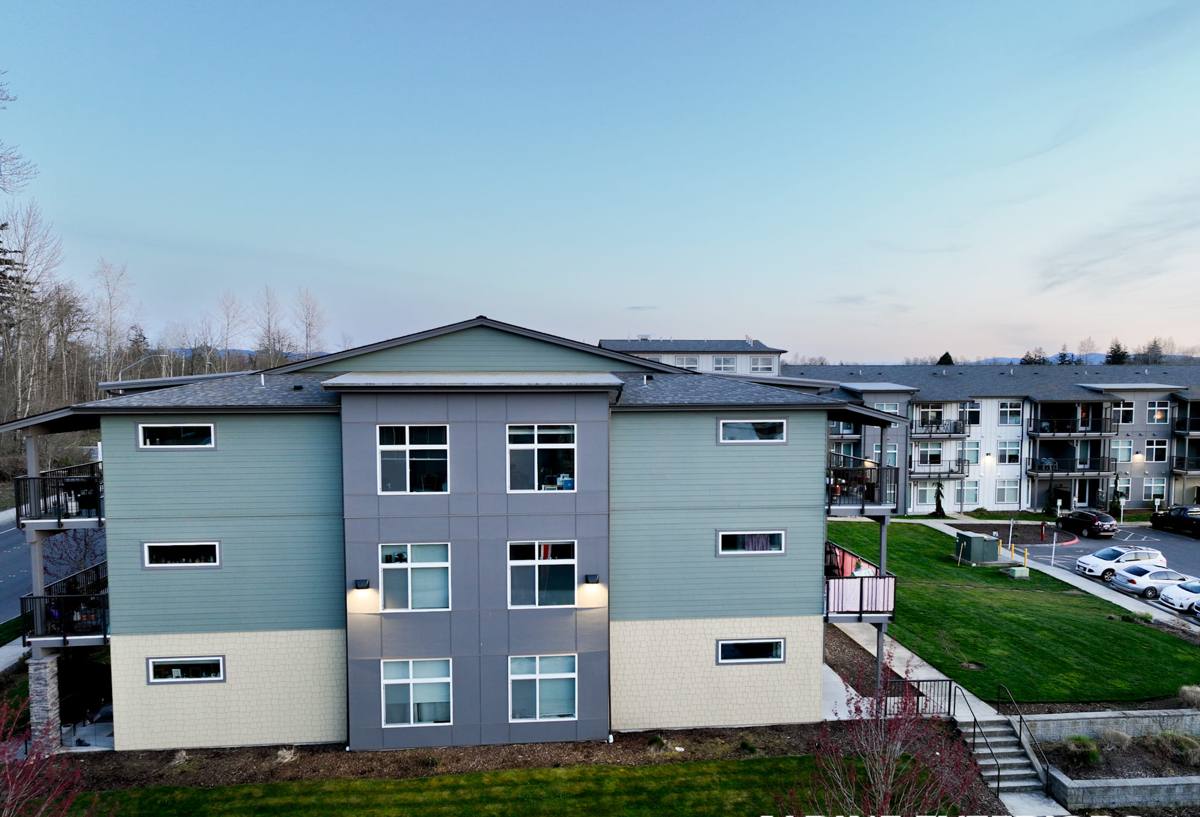
What "Correct" Fiber Cement Siding Looks Like Here
Fiber cement itself isn't a single product — it's a category, and the difference between a siding job that lasts twenty-plus years and one that fails early almost always comes down to the specific product line and how it's installed. We install James Hardie exclusively, and for a reason: Hardie engineers its siding by climate zone, and the HZ5 product line is built specifically for regions like ours that deal with sustained moisture, freeze-thaw cycles, and heavy rain rather than dry heat.
What a Correct Installation Involves
- Proper water-resistive barrier and flashing behind every panel, not just at obvious joints
- Correct starter strip and bottom clearance so siding never sits in standing water or direct soil contact
- Manufacturer-spec fastener placement and nailing patterns — over-driven or under-driven nails are one of the most common causes of early failure
- Properly caulked and primed cut edges, since factory-finished ColorPlus panels are only fully protected where the factory coating is intact
- Rain-screen gap or drainage plane detailing appropriate to the wall assembly, so moisture that does get behind the siding has somewhere to go
- Butt joints and corners detailed to shed water outward, not channel it into the wall cavity
None of this is exotic. It's just detail work that has to be done right the first time, because siding is not a component you want to be replacing again in eight or ten years.
Salt Air, Driving Rain, and Moss: What Each One Actually Does to Siding
Salt-Laden Air
Proximity to the Salish Sea means the air moving through Whatcom County carries more salt and moisture than you'd find further inland. Over time, that accelerates corrosion on fasteners, trim flashing, and any metal components in the wall assembly. It also means paint and coatings on lower-quality siding break down faster than the same product would in a drier climate.
Driving Rain
Bellingham's weather pattern isn't gentle, steady drizzle — it's frequently wind-driven rain that hits walls at an angle rather than falling straight down. That kind of exposure finds every gap in a poorly lapped or poorly flashed siding installation. Water doesn't need much of an opening to work its way behind panels and into sheathing.
Moss and Algae
Shaded lots, tree cover, and long damp stretches give moss and algae exactly what they need to establish themselves: consistent moisture and limited direct sun. Once organic growth gets a foothold on a porous or textured surface, it holds moisture against the siding even longer, which compounds the problem. Fiber cement's smoother factory finish gives moss less to grip compared to some wood and composite products, though it still requires periodic gentle cleaning like any exterior surface in this climate.
Why We Only Install James Hardie
We get asked why we don't offer LP SmartSide, vinyl, Cemplank, Allura, or the primed cedar and spruce siding some homeowners request by name. The honest answer is that we've made a professional call to standardize on one product system because we trust it to perform in this exact climate over the long haul.
- Non-combustible core — fiber cement doesn't feed a fire the way wood-based products can, which matters given increasingly active wildfire seasons across the broader Pacific Northwest
- ColorPlus factory finish — baked-on coating that resists fading and chipping far better than field-applied paint, and it's engineered specifically to handle UV and moisture cycling
- Climate-engineered HZ product lines — Hardie builds different formulations for different climate zones, so what goes on a Whatcom County home is matched to our actual weather rather than a one-size-fits-all product
- Transferable warranty — a real, documented warranty that can move with the home if it's sold, which matters for resale value
- Proven longevity — when installed to spec, Hardie siding has a long track record in wet coastal and marine climates similar to ours
We're not saying every alternative product is without merit — some have real advantages in cost or specific applications. But when we weigh moisture behavior, long-term maintenance burden, and how a product actually holds up against driving rain and salt air year after year, Hardie is what we're willing to put our name behind and warranty our workmanship on.
How Our Process Works for Cordata Projects
1. On-Site Assessment
We walk the exterior, check current siding condition, look at moisture damage or rot at trim and corners, and assess drainage, grading, and roof-to-wall transitions — all common trouble spots in this climate.
2. Product and Color Selection
We help homeowners choose the right Hardie product line and ColorPlus finish for their home's style and sun exposure, factoring in how much shade and moisture the specific lot sees.
3. Tear-Off and Substrate Check
Old siding comes off and we inspect sheathing underneath for hidden water damage before anything new goes up. This step gets skipped by crews trying to move fast, and it's exactly where hidden problems get missed.
4. Weather Barrier and Flashing
We install or verify the water-resistive barrier and flashing details at every window, door, and penetration before a single siding panel goes on.
5. Installation to Manufacturer Spec
Panels, fasteners, joints, and clearances are installed exactly to Hardie's published specifications — the details that actually determine whether the warranty holds up and the siding performs for decades.
6. Final Walkthrough
We review the finished work with the homeowner, covering basic care and what to expect from the siding through Whatcom County's seasons.
Why Hiring a Crew That Already Works Cordata Matters
Siding installation looks similar on paper everywhere, but the details that matter — how much rain-screen gap a given wall assembly needs, how aggressively to detail flashing on a shaded, moss-prone lot, how to sequence work around Bellingham's wetter months — come from having actually done the work in this exact area repeatedly. A crew that's used to installing in a hot, dry climate and simply follows a generic checklist here is more likely to under-detail the moisture protection that a marine climate demands. Local experience means fewer surprises and a job that's specified correctly the first time.
Comparing Common Siding Options for This Climate
| Product | Moisture Performance in Marine Climate | Maintenance Burden | Typical Longevity Here |
|---|---|---|---|
| James Hardie Fiber Cement (HZ5) | Engineered for wet climates; dimensionally stable | Low — periodic gentle wash | Decades, with correct install |
| Vinyl Siding | Sheds surface water but laps can allow moisture behind panels | Low, but prone to warping in temperature swings | Moderate |
| LP SmartSide (engineered wood) | Vulnerable at cut edges and joints if not sealed meticulously | Higher — edge sealing and inspection needed | Shorter if moisture gets in |
| Primed Cedar or Spruce | Absorbs moisture readily; prone to rot without diligent upkeep | High — repainting, sealing, rot monitoring | Shortest without heavy maintenance |
Signs Your Current Siding Is Struggling in This Climate
- Soft or spongy spots when you press on the siding, especially near the bottom edge or around windows
- Persistent moss or algae growth that returns quickly after cleaning
- Peeling, bubbling, or chalky paint that needs recoating more often than every several years
- Visible gaps, warping, or buckling at panel seams and corners
- Musty smells or staining on interior walls near exterior corners, which can point to moisture getting behind the siding
- Fasteners that are rusting, backing out, or leaving streak stains down the siding face
Any one of these is worth a professional look before it turns into sheathing or framing damage, which costs far more to repair than siding alone.
Cost Factors Worth Understanding Before You Budget
Every Cordata home is different, so we won't quote a number without seeing the site, but the main factors that drive siding project cost are worth knowing going in:
| Factor | Why It Matters |
|---|---|
| Home size and wall complexity | More corners, dormers, and trim detail mean more labor and material cuts |
| Current siding removal | Tear-off and disposal of old material adds time versus a bare-wall install |
| Substrate condition | Rot or water damage found underneath old siding requires repair before new siding goes on |
| Product line and finish | Different Hardie panel styles and ColorPlus finishes carry different material costs |
| Flashing and drainage detailing | Proper moisture management takes more labor than a bare-minimum install, but it's what makes the siding last |
If your Cordata home is due for new siding, or you want a second opinion on whether existing siding is holding up the way it should, we're happy to walk the exterior with you and give a straightforward, no-pressure estimate — no obligation, no sales pressure, just an honest look at what your home needs.