 Bellingham Exterior
 Why Happy Valley Decks Wear Out Faster Than You'd Expect
If you own a home in Happy Valley, you already know Bellingham weather doesn't do decks any favors. The neighborhood sits close enough to Bellingham Bay and the Salish Sea that salt-laden air is a constant, low-grade attacker on fasteners, flashing, and any exposed metal hardware. Add in driving rain that comes sideways off the water during fall and winter storms, and you've got moisture finding its way into every seam, screw hole, and board gap on a deck that isn't detailed correctly. Then there's moss season — which in Whatcom County isn't really a season so much as most of the year — turning shaded or north-facing decks into slick, spongy surfaces that trap water against the wood long after the rain stops.
None of this means a deck in Happy Valley is doomed. It means the repair work has to account for these specific stressors instead of treating the deck like it's sitting in a dry inland climate. A patch job that would hold up fine in Eastern Washington can fail within a season or two here if it doesn't address drainage, fastener corrosion, and moss intrusion specifically.
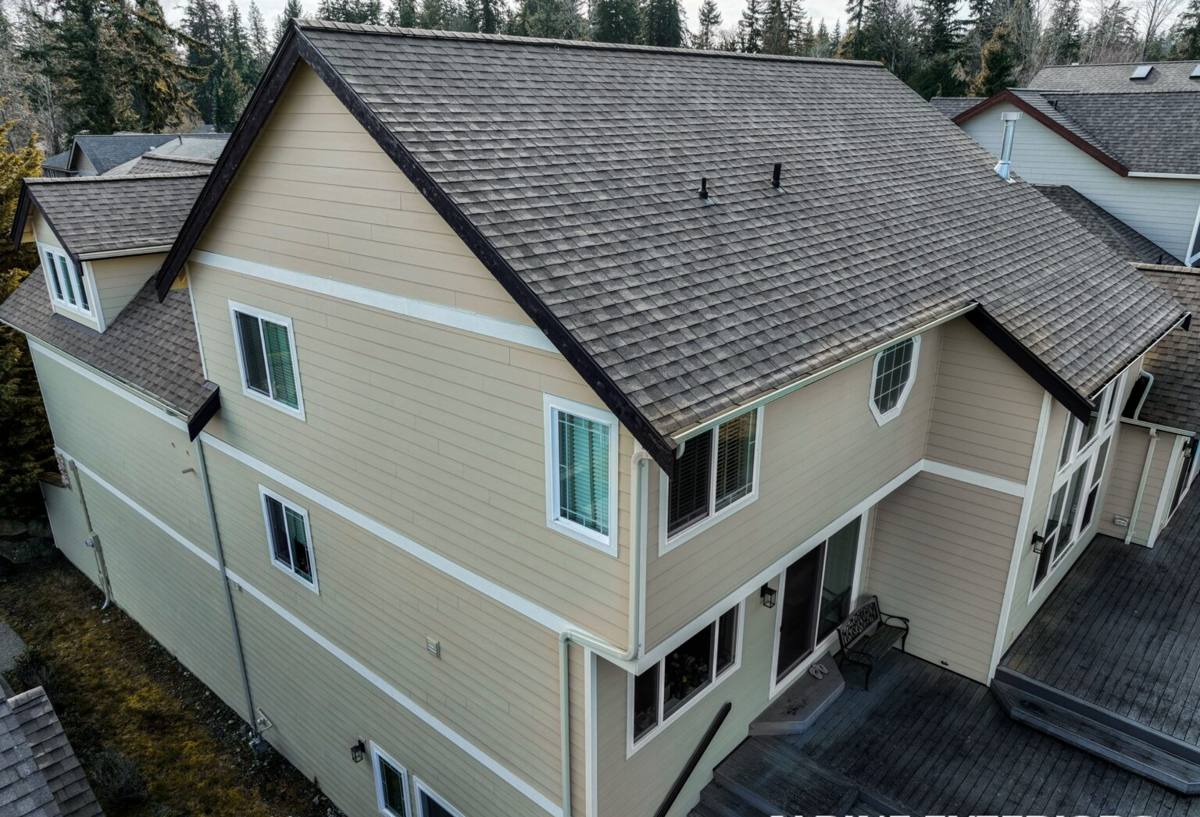
Common Signs of Deck Damage We See in Happy Valley
Most deck problems in this area start small and stay hidden until they're not. Knowing what to look for early saves homeowners a lot of money down the road.
Cosmetic Wear
Graying wood, surface mildew, and moss growth on the boards themselves are cosmetic issues on their own. They're worth addressing for appearance and slip safety, but they don't necessarily mean the structure underneath is compromised.
Structural Warning Signs
- Soft or spongy spots when you walk across the deck, especially near the house
- Rust streaking or bleeding around fasteners and joist hangers
- Gaps opening up where the ledger board meets the house siding
- Railings or posts that flex or wiggle when pushed
- Visible daylight or standing water under the deck after rain
- Stair stringers that feel bouncy or uneven underfoot
- Wood that's dark, swollen, or crumbles when probed with a screwdriver
Any one of these on its own might be a minor fix. Several together usually mean water has been getting in for a while and the repair needs to go deeper than the surface.
What a Correct Deck Repair Actually Involves
A repair that actually holds up in this climate isn't just about swapping out a rotten board. It's about understanding why that board failed and making sure the same failure doesn't happen again in a different spot next winter.
Ledger Board and Structural Connections
The ledger board — where the deck attaches to the house — is the single most important structural connection on most decks, and it's also the most common place we find hidden rot. Driving rain pushes water behind poorly flashed ledgers, and once moisture gets between the ledger and the house framing, it can sit there for years without showing an obvious sign from the outside. A correct repair means pulling back decking near the house, inspecting the ledger and the rim joist behind it, and replacing anything compromised before it becomes a safety issue.
Framing and Joists
Joists carry the actual weight of the deck, and in a marine climate they're prone to rot at the ends where they meet beams or ledgers — exactly the spots where water collects and doesn't dry out quickly. We check joist hangers for rust and proper nailing, not just the wood itself, since a hanger that's corroded through can fail even if the joist looks fine.
Fasteners and Hardware
Salt air accelerates corrosion on standard fasteners faster than most homeowners expect. A deck built or repaired with the wrong grade of screws, nails, or hardware can show rust streaking and weakening connections within a few years. Correct repair work means matching hardware to the exposure — stainless or high-grade coated fasteners rated for coastal and treated-lumber contact, not whatever was cheapest at the time of original construction.
Flashing and Water Management
Flashing is the quiet hero of deck longevity and the thing most often skipped or done poorly in the original build. Proper flashing at the ledger, around posts, and at any point where the deck meets the house directs water away from wood instead of letting it pool. If your deck has been failing in the same spot repeatedly, it's very often a flashing problem, not a wood-quality problem.
Repair or Replace? How We Help You Decide
Not every deck problem calls for a full rebuild, and not every deck is worth patching indefinitely. We look at the scope, age, and structural condition before recommending either path.
| Factor | Leans Toward Repair | Leans Toward Replacement |
|---|---|---|
| Ledger and framing condition | Solid, isolated soft spots only | Widespread rot at structural connections |
| Age of the deck | Under 15 years, built to a reasonable standard | Original construction unknown or clearly undersized |
| Extent of damage | Limited to boards, railings, or stairs | Multiple systems failing at once |
| Fastener and hardware condition | Isolated corrosion | Widespread rust bleeding throughout |
| Homeowner's timeline | Want it usable again quickly | Planning a redesign or larger addition anyway |
In a lot of Happy Valley homes we've looked at, the framing is actually in decent shape and the visible damage is limited to decking boards, stair treads, or railing components exposed directly to weather. In those cases, targeted repair makes far more financial sense than tearing the whole structure out.
Decking Material Considerations for This Climate
When we're replacing boards during a repair, the material choice matters more here than in drier climates. Each option has real trade-offs worth understanding rather than a single "best" answer.
| Material | Moisture Behavior | Maintenance Needs | Notes for This Climate |
|---|---|---|---|
| Pressure-treated lumber | Absorbs and releases moisture readily | Needs periodic sealing/staining | Affordable, but requires consistent upkeep to resist moss and rot |
| Cedar | Naturally moisture-resistant, but surface still weathers | Sealing recommended for appearance and longevity | Good natural fit for the Pacific Northwest look, still needs care in shaded areas |
| Composite decking | Doesn't rot, but can trap surface moisture if not cleaned | Low maintenance; occasional cleaning to prevent moss/mildew film | Performs well long-term but installation details still matter for framing underneath |
Composite is a solid option for many homeowners here because it removes rot risk from the equation on the visible boards, but we're upfront that it doesn't eliminate the need for good framing, flashing, and drainage underneath — moisture problems just move to the structure if those basics are skipped. Whatever material you choose, the installation details matter more than the material itself.
Our Deck Repair Process
- On-site assessment. We walk the full deck, probe suspect areas, and check the ledger, framing, and hardware — not just the decking surface.
- Honest scope of work. You get a clear explanation of what's cosmetic, what's structural, and what we recommend, in plain language.
- Removal of compromised material. We pull back only what needs to come out, minimizing disruption to sound sections.
- Structural correction. Any rot, corroded hardware, or flashing gaps get properly addressed, not just covered over.
- Rebuild with climate-appropriate materials. Fasteners, flashing, and decking chosen for durability in marine, high-rain conditions.
- Final walkthrough. We check railings, stairs, and surface for safety and finish quality before calling the job done.
Moss, Mildew, and Marine Air: Keeping Your Repaired Deck Healthy
A good repair buys you years of life, but Whatcom County's climate means ongoing care still matters — especially on shaded or north-facing decks where moss and moisture linger longest. Sun exposure, tree cover, and how close the deck sits to grade all affect how fast moss and mildew come back after a cleaning.
Simple Homeowner Deck-Inspection Checklist
- Sweep debris out of board gaps each fall before the rains set in
- Rinse or gently scrub moss and algae off the surface at least once or twice a year
- Check the area where the deck meets the house for gaps, dark staining, or soft wood
- Look underneath for standing water or blocked drainage after heavy rain
- Test railings and stair rails by hand for looseness or flex
- Watch for rust streaks around screws, nails, or metal connectors
- Reseal or restain wood decking on the manufacturer's recommended schedule, not "when it looks bad"
Catching small issues during a seasonal check is far cheaper than waiting for a soft spot to become a safety hazard.
Permits and Safety Considerations
Depending on the scope of the work, structural deck repairs — particularly anything involving the ledger board, footings, or railing height changes — can fall under local permitting requirements. We factor this into the plan when the scope of repair crosses from cosmetic into structural, so you're not left guessing about what's required. Railing height and guardrail spacing are also worth a second look during any repair, since older decks were sometimes built to standards that have since been updated for safety.
Why Hiring a Crew That Already Works Happy Valley Matters
A contractor who works this specific area regularly has already seen how Happy Valley's mix of tree cover, proximity to the water, and Bellingham's rain patterns plays out on real decks — which framing details tend to fail first, which orientations hold moss longest, and which fastener choices actually last versus which ones look fine for a year or two before rusting. That's the kind of pattern recognition that comes from repeated, local experience rather than a one-size-fits-all repair approach. It also means a crew that understands regional permitting expectations and won't be guessing at what a Whatcom County home actually needs to hold up long-term.
If your deck is showing any of the signs above — or you just want an honest opinion on whether repair or replacement makes more sense for your home — we're happy to take a look. Reach out for a free, no-pressure estimate using the form below, and we'll give you a straightforward assessment of what your deck actually needs.