 Bellingham Exterior
 Roofing Built for Happy Valley's Weather, Not Just Any Weather
Happy Valley sits close enough to Bellingham Bay and the surrounding hills that its homes take a different kind of beating than roofs a few miles inland. Salt-laden air off the water, wind-driven rain that comes in sideways during winter storms, and a moss season that can stretch from October well into spring all add up over the life of a roof. A roofing material and installation method that works fine in a drier climate can fail here years ahead of schedule if it wasn't chosen and installed with these specific conditions in mind.
Metal roofing, done correctly, holds up well against all three of these stresses. But "metal roofing" covers a wide range of products and installation quality, and not every metal roof performs the same way once it's been through a few Whatcom County winters. This page covers what actually matters for a metal roof on a Happy Valley home: the climate factors driving the decision, what a correct installation looks like, and what to expect from our process.
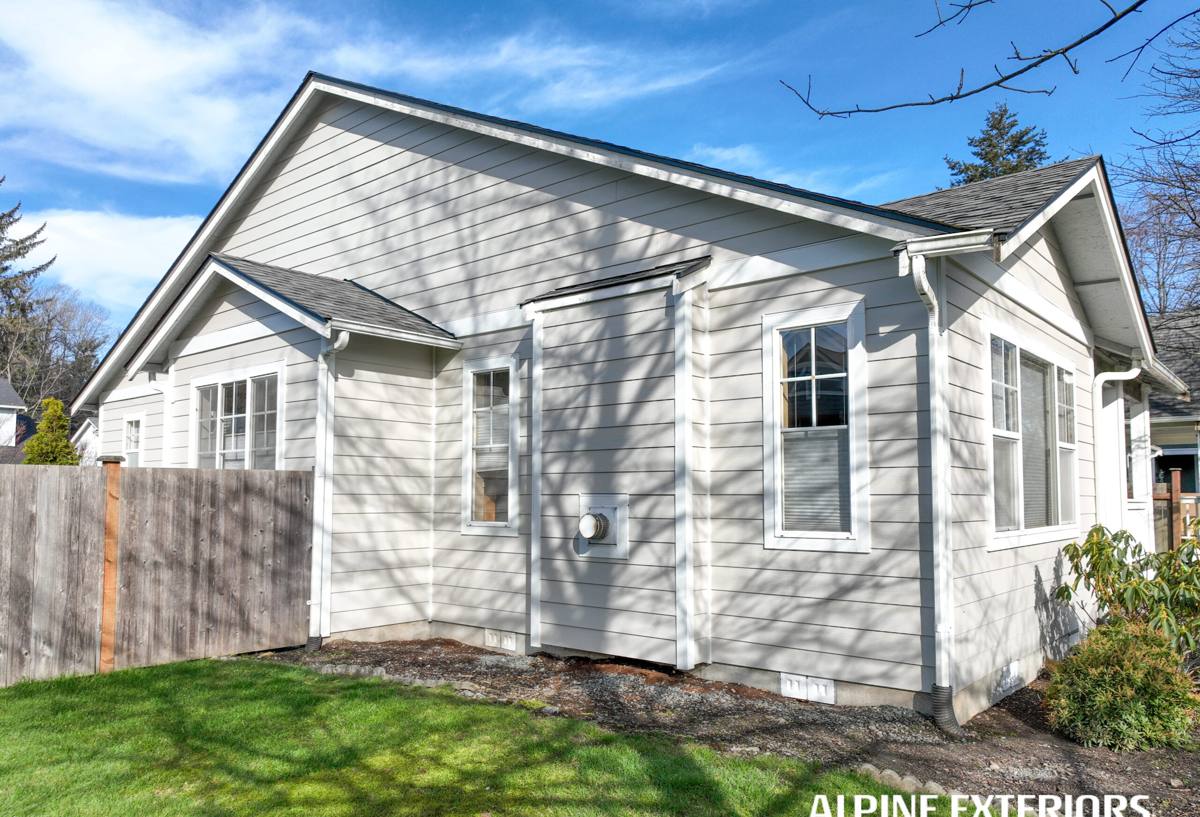
What Salt Air, Driving Rain, and Moss Actually Do to a Roof
Salt Air and Corrosion
Even homes that aren't right on the waterfront get exposure to salt-carrying air moving in off Bellingham Bay, especially with the prevailing winds common to this part of Whatcom County. Salt accelerates corrosion on any exposed metal — fasteners, flashing, gutters, and lower-grade panel coatings all degrade faster in this environment than they would inland. This is one of the biggest reasons material selection matters more here than in a lot of other markets.
Driving Rain and Wind-Driven Moisture
Bellingham gets plenty of straightforward vertical rainfall, but it's the wind-driven rain during fall and winter storms that causes the real problems. Water pushed sideways under wind pressure can work its way under panels, around poorly sealed penetrations, and past flashing that was installed for looks rather than performance. A roof that sheds water fine in calm conditions can still leak during a windstorm if the underlayment, seams, and flashing details weren't built for lateral water intrusion.
Moss and Organic Growth
Whatcom County's long wet season and tree cover create ideal conditions for moss, especially on north-facing slopes and shaded sections of roof. Moss holds moisture against roofing materials, and on some products that moisture retention accelerates deterioration. Metal roofing doesn't feed moss the way organic shingle materials do, and it doesn't hold water against its surface the same way — one of several reasons it's a strong fit for this specific climate.
Why Metal Roofing Fits Happy Valley Homes
Metal roofing isn't automatically the right choice for every home or every budget, but for the conditions Happy Valley deals with, it has real, specific advantages:
- Sheds water aggressively. Steep-profile metal panels move water off the roof fast, reducing the time standing moisture has to find a weak point.
- Resists moss growth. Metal doesn't provide the organic surface moss needs to establish and spread the way composition shingles or wood shakes do.
- Long service life when properly installed. A correctly installed metal roof with the right coating can outlast several cycles of asphalt shingle replacement.
- Handles wind well. Properly fastened panel systems resist the uplift and lateral pressure that come with Whatcom County's winter storms.
- Lower long-term maintenance burden. Fewer granules to lose, no shingle mat to saturate, and less surface area for moss and algae to take hold on.
None of these advantages are automatic, though. They depend entirely on choosing the right panel and coating system for a salt-air, high-moisture environment, and on an installation crew that details the flashing, fastening, and underlayment correctly. A metal roof installed with shortcuts can corrode at the fasteners or leak at the seams well before its expected lifespan — the material gets blamed, when the real issue was the install.
Panel and Coating Options: What We Weigh for This Climate
Not every metal roofing product is a good match for a salt-air, high-moisture environment. Here's how the common options generally compare for a Happy Valley home:
| Option | Corrosion Resistance Near Salt Air | Typical Trade-Off |
|---|---|---|
| Standing seam steel, quality coating | Strong when coating is rated for coastal/marine exposure | Higher upfront cost; installation quality is critical |
| Standing seam aluminum | Naturally corrosion-resistant, good fit near salt air | Softer material, needs careful handling during install |
| Exposed-fastener steel panels | Adequate with good coating, but fasteners are a weak point over time | Lower upfront cost; fastener seals need future maintenance |
| Bare or low-grade galvanized steel | Weak — accelerated corrosion in coastal-influenced air | Lowest cost, but shortest realistic service life here |
We don't install bare or minimally coated galvanized panels on homes with meaningful salt air exposure — not because the material is inherently bad everywhere, but because it's the wrong fit for this specific climate and we're not going to put our name on a roof we know will underperform here. For most Happy Valley homes, we're steering the conversation toward standing seam steel or aluminum with a coating system rated for coastal exposure, matched to the home's budget and roof profile.
What a Correct Metal Roof Installation Actually Involves
The panels get most of the attention, but the components underneath and around them are what determine whether a metal roof actually performs in this climate:
Underlayment
A synthetic, high-temperature-rated underlayment underneath the metal gives you a second line of defense if wind-driven rain ever gets past a seam or fastener. This matters more here than in drier climates simply because of how often that scenario gets tested.
Fastening and Panel Attachment
Fastener type, spacing, and torque all affect wind resistance and long-term corrosion risk. Fasteners need to be matched to the panel material to avoid galvanic corrosion — mixing incompatible metals is a common shortcut that causes premature rust at every fastener point.
Flashing and Penetrations
Valleys, chimneys, vents, and wall transitions are where most metal roof leaks actually originate — not the flat panel field. Flashing needs to be formed and layered correctly to handle rain being pushed sideways by wind, not just water running straight down.
Ventilation
Metal roofs perform best with proper attic and roof deck ventilation. Trapped moisture underneath the panels, especially in a climate with this much year-round humidity, can cause condensation issues on the underside of the metal and inside the attic space if ventilation wasn't accounted for.
Our Process for a Happy Valley Metal Roof
Every roof gets evaluated on its own merits, but the general process looks like this:
- On-site inspection of the existing roof, decking condition, ventilation, and any moss or moisture damage already present.
- Honest conversation about panel and coating options given the home's exposure, budget, and roofline.
- Written estimate that spells out material, underlayment, flashing approach, and timeline — no vague line items.
- Removal of old roofing and inspection of the deck, with repairs addressed before anything new goes down.
- Installation of underlayment, panels, flashing, and ventilation components to spec.
- Final walk-through so you know what was done and what to watch for going forward.
Before we hand the roof back over, we walk through a short checklist to confirm the install was done right:
- Panels properly seamed and fastened with corrosion-compatible hardware
- Underlayment continuous and correctly lapped
- Flashing formed and layered at every valley, penetration, and wall transition
- Ventilation intact and functioning as designed
- Gutters and drainage paths clear and properly pitched
- Job site cleaned of debris, old materials, and fasteners
Moss Season Maintenance for a Metal Roof
Metal roofing resists moss far better than shingle or shake roofing, but it isn't entirely immune, especially in shaded areas or where debris collects in valleys. A little seasonal attention goes a long way:
- Clear leaves and needles out of valleys and around penetrations before the wet season sets in.
- Keep gutters flowing so water isn't backing up against the roof edge.
- Trim back overhanging branches that keep sections of roof shaded and damp longer than the rest.
- Have any moss that does establish removed gently — pressure washing or scraping can damage coatings if done incorrectly.
This is light maintenance compared to what shingle or shake roofs typically need in this climate, which is part of why metal holds up well as a long-term investment for homes dealing with Bellingham's wet season.
Why It Matters to Hire a Crew That Already Works This Neighborhood
A crew that regularly works Happy Valley and the surrounding Bellingham area already understands the exposure this specific area deals with — the wind patterns, the moss pressure, the salt influence off the bay — instead of applying a generic approach and hoping it holds up. That local familiarity shows up in the details: the coating recommendation, the flashing approach at a tricky valley, the fastener spec that accounts for corrosion risk. It also means a crew that's still around and reachable if you have a question five years after the install, not a company that worked the area once and moved on.
If you're weighing metal roofing for a Happy Valley home, we're happy to take a look and walk you through what makes sense for your specific roof and budget — no pressure, no pushy sales pitch. Fill out the form below for a free estimate.