 Bellingham Exterior
 Deck Repair Built for Lynden's Climate, Not a National Checklist
Lynden sits inland from the salt air that works on Bellingham's waterfront homes, but it doesn't get off easy. What Lynden decks deal with instead is sustained, driving rain off the Nooksack lowlands, long stretches of overcast humidity, and a moss and algae season that can run from October through April in a shaded yard. Add in freeze-thaw cycles that hit this part of Whatcom County most winters, and you have a climate that's genuinely hard on exterior wood and composite decking, just in a different way than a coastal deck faces salt corrosion on fasteners and railings.
A deck repair done right in Lynden has to account for that. It's not just about swapping a rotten board — it's about understanding why that board rotted in the first place, whether it's isolated or a sign of a bigger moisture problem underneath, and what will actually hold up through another wet Whatcom County winter.
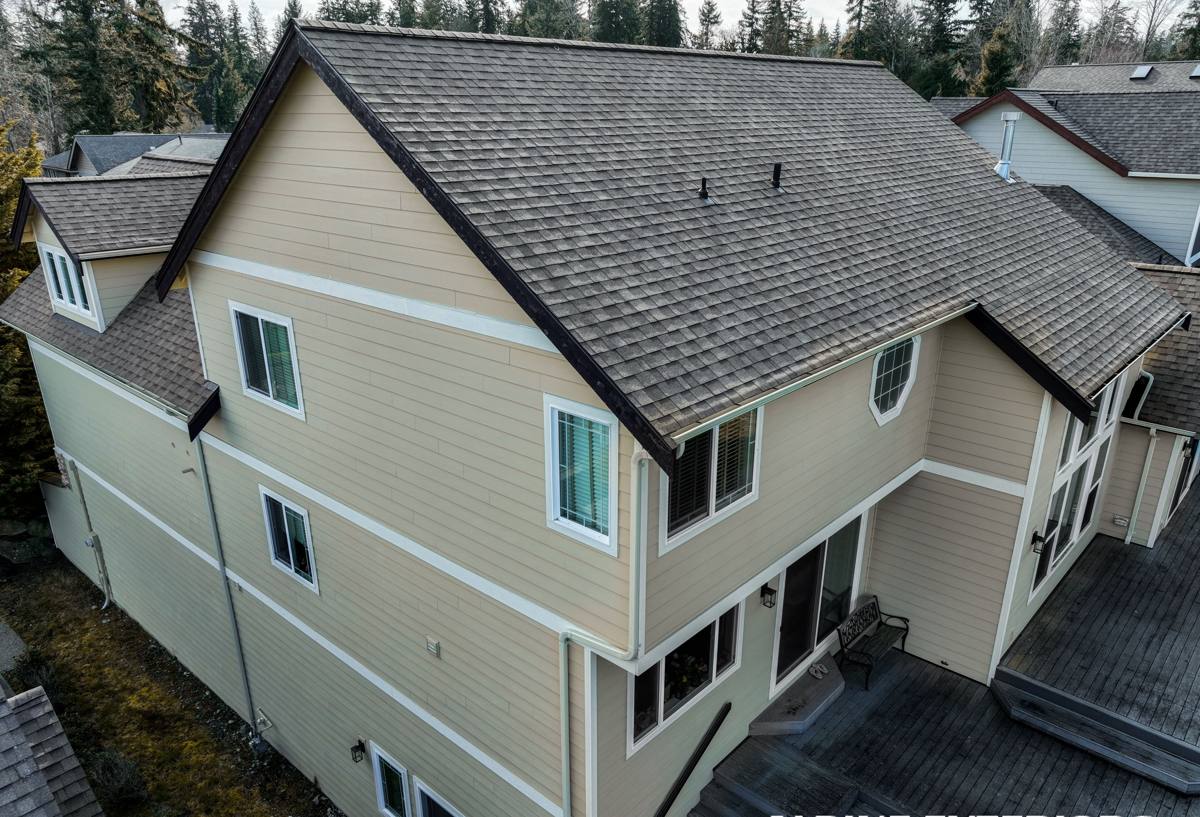
What Lynden's Weather Actually Does to a Deck
Moisture That Doesn't Dry Out
The core problem with decks in this part of Washington isn't any single storm — it's how long things stay wet. Driving rain gets under railings, behind ledger boards, and into end grain, and then the low winter sun and short days mean surfaces just don't dry between rain events. Wood that stays damp for weeks at a time is where rot gets started, especially at joints, fastener holes, and anywhere two pieces of wood meet without a gap for airflow.
Moss and Algae Aren't Just Cosmetic
A moss-covered deck board looks bad, but the real issue is what moss does structurally. It holds moisture against the wood surface constantly, and it makes boards slick and dangerous underfoot, especially on stairs and ramps. Left long enough, moss growth accelerates the same rot process that standing water causes, just more slowly and less visibly, often on the north or shaded side of a deck where the sun never quite dries things out.
Freeze-Thaw Stress on Fasteners and Framing
Whatcom County doesn't get brutal winters, but it gets enough freeze-thaw cycling that trapped moisture in a joist or post base can expand and contract repeatedly. Over a few seasons, that stress works screws loose, splits wood at connection points, and can shift a post base that was set without proper drainage. It's a slow failure mode, which is exactly why it often goes unnoticed until a board feels spongy or a railing starts to wobble.
Signs a Lynden Deck Needs Repair, Not Just Cleaning
- Boards that feel soft, spongy, or flex noticeably when you walk on them
- Visible gaps, cracking, or splintering at board ends and fastener locations
- A railing or post that moves when you push on it — even slightly
- Persistent moss or dark staining that comes back within weeks of cleaning
- Stairs that feel less solid than the rest of the deck
- Fasteners that are rusted, backed out, or leaving dark streaks on the wood
- Gaps or separation where the deck attaches to the house (the ledger board)
- Standing water that doesn't drain within an hour or two after rain
Any one of these on its own might be minor. Several together, or anything involving the ledger board or support posts, means it's worth a real inspection before it becomes a safety issue.
What a Correct Deck Repair Actually Involves
A lot of deck "repair" in this region amounts to pressure washing and replacing whatever board looks worst. That treats the symptom, not the cause. Our process starts with figuring out where moisture is actually getting in and staying trapped, because a new board installed the same way the old one was will fail the same way, just on a different timeline.
1. Structural Assessment
Before touching decking boards, we check the framing underneath — joists, beams, ledger board attachment, and post bases. This is where the real structural risk lives, and it's invisible from the top of the deck. A deck can look fine on the surface and still have a compromised ledger connection or a post base sitting in standing water.
2. Isolating the Cause, Not Just the Symptom
If a section is rotting, we look at why: poor drainage, missing flashing, boards installed tight against each other with no gap for water to escape, or a downspout dumping water straight onto the deck. Replacing boards without fixing the underlying cause means paying for the same repair again in a few years.
3. Board and Framing Replacement
Damaged decking, joists, or ledger sections get replaced with materials matched to what's already there, or upgraded where it makes sense. Fasteners are checked and replaced where corrosion or backing-out is a problem — this matters even inland, since galvanic corrosion between mismatched metals causes issues regardless of salt exposure.
4. Railing and Stair Repair
Railings and stairs take the most direct wear and carry real safety weight — literally. Loose posts, cracked balusters, and stair stringers showing rot get addressed as part of the same visit rather than left for a separate call.
5. Drainage and Airflow Correction
Where we can, we improve what's causing the moisture problem in the first place — adjusting board spacing, adding flashing where it's missing, or addressing grading and gutter runoff near the deck. This is the difference between a repair that lasts one season and one that lasts a decade.
Repair vs. Replacement: How We Make the Call
| Factor | Repair usually makes sense | Replacement usually makes sense |
|---|---|---|
| Framing condition | Joists and posts are solid, only surface boards are damaged | Multiple joists or the ledger board show rot |
| Extent of damage | Isolated to a few boards or one section | Damage is spread across most of the deck |
| Age of the deck | Under 15 years, built to a reasonable standard | Original construction is old or was never built to current code |
| Cause of damage | Fixable moisture source (drainage, gap spacing) | Chronic moisture intrusion with no practical fix at the current footprint |
| Budget approach | Lower upfront cost, targeted fix | Higher upfront cost, resets the clock on the whole structure |
Most decks we look at in Lynden fall into the repair category — the framing is sound and the problems are concentrated in decking boards, railings, or one moisture-prone corner. We'll tell you honestly if we think a deck is past the point where repair is the better investment.
Materials: What Holds Up Here
Pressure-treated lumber remains a solid, cost-effective choice for framing and even decking in this climate, as long as it's properly sealed and maintained on a regular schedule. Cedar offers natural rot resistance and a look a lot of homeowners prefer, but it needs more consistent upkeep to perform well through wet Whatcom County winters. Composite decking reduces maintenance significantly but comes with its own considerations — it doesn't rot, but trapped moisture underneath composite boards can still cause problems for the framing beneath if drainage and airflow aren't handled correctly during installation. We'll walk through what fits your deck, your maintenance preferences, and your budget rather than pushing one material as a default.
Our Process, Start to Finish
- On-site inspection — we look at the full structure, not just the visible surface, including framing, posts, and attachment points
- Honest assessment — a clear explanation of what's actually wrong, what's causing it, and whether repair or replacement fits better
- Written estimate — scope and cost laid out before any work starts, no surprise add-ons
- Repair work — framing, boards, railings, and drainage corrections completed to match or exceed what was there
- Final walkthrough — we check the completed work with you before calling the job done
Why a Crew That Already Works Lynden Matters
Deck repair isn't a one-size-fits-all trade. A crew that mostly works in drier climates will make different assumptions about board spacing, fastener choice, and moisture management than one that's spent years dealing with Whatcom County's rain-heavy shoulder seasons. We've seen how moss establishes on shaded Lynden decks, how driving rain finds its way behind railings, and where freeze-thaw cycling tends to loosen framing connections in this area. That local pattern recognition means a faster, more accurate diagnosis and a repair that's built for what your deck will actually face, not a generic national standard.
We also know that a deck repair isn't just a cosmetic project — it's about making sure the structure your family and guests stand on is sound. We're not going to recommend more work than a deck needs, and we're not going to patch over a structural problem to save time. We'll give you a straight answer, and if a deck is genuinely fine and just needs cleaning, we'll tell you that too.
Get a Straightforward Assessment
If your deck has soft spots, a wobbly railing, moss that keeps coming back, or you just want a second opinion before another Whatcom County winter, we're happy to take a look. Reach out for a free, no-pressure estimate using the form below — we'll give you a clear picture of what's going on and what it would take to fix it right.