 Bellingham Exterior
 Why Ferndale's Climate Is Hard on a Roof
Ferndale sits close enough to the water that homes here deal with a version of coastal weather that inland Whatcom County doesn't see the same way. Salt-laden air off the Salish Sea, long stretches of driving rain, and a moss season that can run most of the year all put steady wear on a roof. None of that is dramatic on any single day. It's the accumulation over years that separates a roof that holds up from one that starts failing early.
Salt Air and Coastal Exposure
Airborne salt is corrosive, and it doesn't need to be a stone's throw from the water to matter — it travels on wind and settles on every exterior surface, roofs included. Over time it can accelerate corrosion on fasteners, flashing, and any metal component that isn't rated or coated for it. This is one of the biggest reasons metal roofing choices in Ferndale need to be made a little more carefully than they would fifty miles inland.
Driving Rain and Wind-Driven Moisture
Whatcom County storms often bring rain sideways, not straight down. That matters for a roof because wind-driven rain finds its way into laps, seams, and fastener penetrations that would stay dry in a calm rain. A roof that's watertight in a light shower can still leak in a wind-driven storm if the underlayment, flashing, and panel overlaps weren't detailed for that condition.
Moss and Sustained Moisture
Shaded, north-facing, and low-slope sections of roof in this area stay damp for long stretches, which is exactly what moss needs to take hold. On asphalt shingles, moss roots into the mat and lifts the granules, shortening the roof's life. Metal doesn't give moss the same foothold, but it isn't immune — organic debris that collects in valleys or against obstructions can still hold moisture against the panel and, over years, affect the finish if it's never cleared.
Why Metal Roofing Fits Ferndale Homes
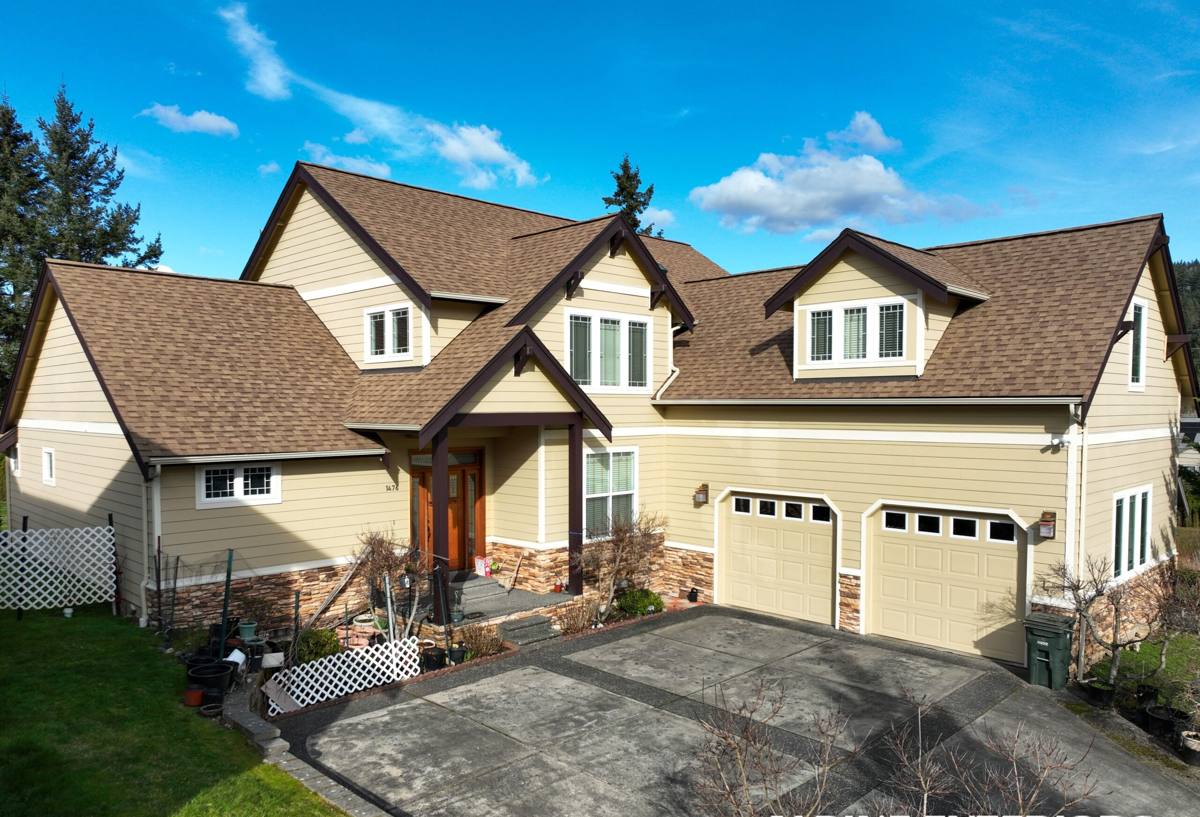
Metal roofing holds up well against everything listed above when it's specified and installed correctly. It sheds water fast, doesn't provide the organic surface moss needs to establish, and — with the right panel and fastener specification — resists the corrosion issues that salt air can cause faster than homeowners expect. It also handles wind uplift better than most other roofing materials when installed to spec, which matters during winter storm season.
None of that means metal roofing is automatically the right call for every home or budget. It's a bigger upfront investment than asphalt shingles. What we tell Ferndale homeowners honestly: if you're planning to stay in the home long term, or you're tired of dealing with moss and re-roofing every 20 years, metal is one of the strongest matches for this specific climate. If you need the lowest-cost option for a shorter hold, that's a different conversation, and we'll have it straight with you.
What a Correct Metal Roofing Installation Involves
A metal roof is only as good as what's underneath it and how it's fastened down. This is where a lot of the long-term performance difference actually comes from — not the panel itself, but the details most homeowners never see once the job is done.
Underlayment and Moisture Barrier
Given how much rain this area gets, we don't treat underlayment as an afterthought. A synthetic or self-adhered underlayment rated for metal roofing gives the roof a second line of defense if wind-driven rain ever works past the panels themselves, and it protects the deck during installation before panels go on.
Fastening and Corrosion Resistance
Fastener choice matters more here than in a dry inland climate. Exposed-fastener systems need corrosion-resistant screws with sealing washers rated for the panel material, and dissimilar metals need to be kept apart — mixing certain metal types accelerates corrosion through galvanic reaction. This is a detail that's easy to get wrong and hard to spot once the roof is finished, which is exactly why it needs to be right the first time.
Flashing at Every Penetration and Transition
Valleys, chimneys, skylights, vents, and wall transitions are where the vast majority of roof leaks actually start, on any roof material. Metal roofing depends on properly formed and sealed flashing at every one of these points — done with attention to the direction water and wind actually move on that specific roof, not a one-size-fits-all detail.
Ventilation
A well-ventilated attic controls condensation, which matters just as much as keeping rain out. Poor ventilation under a metal roof can lead to condensation on the underside of the panels, which causes its own moisture problems over time. We check and correct ventilation as part of the job, not as a separate add-on.
Choosing the Right Metal Roofing System
"Metal roofing" covers a few different systems, and they aren't interchangeable in cost, appearance, or how they perform in a wet, salty climate. Here's how the common options compare for a Ferndale home:
| System | Best For | Coastal/Moisture Performance | Maintenance |
|---|---|---|---|
| Standing seam (concealed fastener) | Long-term homes, steeper roofs | Excellent — no exposed fasteners to corrode or leak over time | Low |
| Exposed-fastener metal panel | Budget-conscious projects, outbuildings, some roof styles | Good, if fasteners and washers are rated correctly and re-checked periodically | Moderate — fasteners need periodic inspection |
| Stone-coated steel | Homes wanting a shingle or shake look with metal's durability | Good — coating adds a protective layer over the steel | Low to moderate |
| Aluminum panel systems | Homes closest to the water or with the highest salt exposure | Very good — aluminum doesn't rust, though it can corrode differently near certain fasteners | Low |
For most Ferndale homes, standing seam is our default recommendation because it eliminates the exposed-fastener corrosion question entirely. But the right system depends on your roof's slope, your home's style, and your budget — we'll walk through the honest trade-offs for your specific house rather than pushing one system on every job.
Our Process, Start to Finish
- On-site evaluation. We walk the roof and attic, check current ventilation, note existing moss or moisture damage, and measure exposure to wind and salt air based on the home's orientation.
- System recommendation and written estimate. We'll explain which metal system fits your roof and budget, and why — no pressure, no upsell for the sake of it.
- Tear-off and deck inspection. Old roofing comes off and we inspect the deck itself for rot or soft spots before anything new goes down, since covering a compromised deck just hides the problem.
- Underlayment and flashing installation. This is the step that determines how the roof performs in a storm, done to the details described above.
- Panel installation. Panels go on with fastening and seam methods matched to the chosen system and this climate's demands.
- Final walkthrough and cleanup. We check every penetration and edge, clear the site of debris and fasteners, and go over care and warranty information with you.
What Drives the Cost of a Metal Roof in Ferndale
We don't publish blanket prices because roof size, pitch, complexity, and system choice all move the number significantly — but these are the factors that actually drive cost on most Ferndale projects:
- Panel system: standing seam generally costs more upfront than exposed-fastener panels, largely due to labor and material differences.
- Roof complexity: valleys, dormers, and multiple roof planes all add labor and flashing work.
- Tear-off and deck condition: a deck needing repair adds cost that's better found and handled during tear-off than discovered later.
- Ventilation upgrades: if the existing attic ventilation is inadequate, correcting it now is far cheaper than dealing with condensation issues later.
- Access and pitch: steeper or harder-to-access roofs take more time and safety equipment to work safely.
We put all of this in writing before work starts, with no surprise line items added mid-project.
Living With a Metal Roof Here: Maintenance That Actually Matters
One of the real advantages of metal roofing in this climate is how little routine maintenance it needs compared to shingles — but "little" isn't "none." A short annual check keeps a well-installed metal roof performing for decades.
- Clear leaves, needles, and debris from valleys and against any roof-to-wall transitions where moisture can collect.
- Check gutters and downspouts are flowing freely, especially heading into fall storm season.
- Look for any panel scratches or exposed metal after storms and have them addressed before corrosion can start.
- On exposed-fastener systems, have fasteners and washers inspected periodically — they're the one component that can wear out before the panels do.
- Trim back overhanging branches that keep sections of roof shaded and damp longer than the rest.
Why It Matters That We Already Work in Ferndale
A roofing crew that mainly works dry inland climates doesn't think about salt-rated fasteners or wind-driven rain detailing by default — because they don't have to, most of the year. Working Whatcom County and the Bellingham area regularly means we spec and install roofs assuming the weather this area actually gets, not average conditions from somewhere else. That shows up in fastener selection, flashing details, and how ventilation is handled — the parts of the job that determine whether a metal roof lasts twenty years or forty.
It also means we're a known, findable crew if you ever have a question or warranty concern down the road, not a name from a one-time flyer or a storm-chasing outfit that isn't still around.
Get a Straight Answer for Your Roof
If you're weighing metal roofing for a Ferndale home — or just want an honest read on whether it makes sense for your roof, budget, and timeline — we're glad to take a look and walk you through it in plain terms. Reach out for a free, no-pressure estimate using the form below.