 Bellingham Exterior
 Roofing in Lynden: A Different Set of Conditions
Lynden sits inland from Bellingham Bay, but that doesn't mean the roof over a Lynden home has it easy. Whatcom County's weather doesn't stay in one lane — homes here deal with long stretches of driving rain off the Pacific, salt-laden air that drifts in from the coast, and a moss season that can run most of the year in shaded, tree-lined yards. A roof that's installed without those specifics in mind will look fine on day one and start failing quietly within a few winters.
We're a Bellingham-based crew, and Lynden is regular territory for us — not a once-in-a-while drive-out. That matters more than it sounds like it should, because roofing problems in this part of Whatcom County tend to repeat themselves in predictable ways: moss lifting shingle edges, valleys that were never flashed deep enough for our rain volume, ventilation that was an afterthought. When we install a new roof in Lynden, we're building against the conditions we already know are coming.
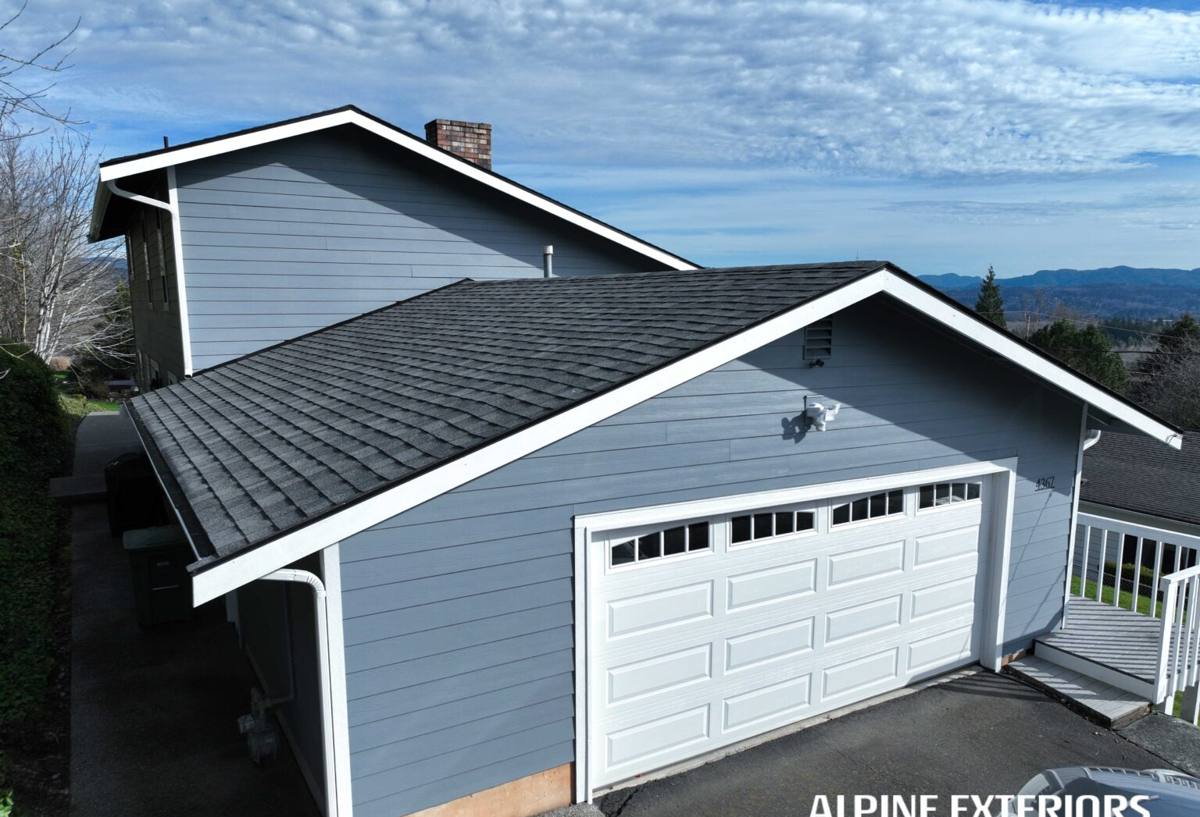
What Lynden's Climate Actually Does to a Roof
Driving Rain and Wind-Driven Moisture
Storms coming off the Pacific don't just drop rain straight down — wind pushes it sideways, up under shingle tabs, and into any gap in flashing or underlayment that a fair-weather installation might get away with. A roof built for a milder, drier climate will underperform here. Underlayment choice, fastener pattern, and flashing depth all need to account for wind-driven rain, not just average rainfall totals.
Salt Air and Metal Fatigue
Bellingham Bay's salt air reaches further inland than most homeowners assume, and it's hard on exposed metal. Flashing, drip edge, vent caps, and any fasteners left uncoated will corrode faster here than in a landlocked climate. It's not dramatic — it's a slow degrade that shows up as rust streaks, then as pinhole leaks at the flashing seams, usually five to ten years after a roof that used the wrong hardware went in.
Moss: The Slow, Patient Damage
Whatcom County's mild, wet climate is close to ideal moss-growing conditions, especially on north-facing slopes and roofs shaded by mature trees — common in and around Lynden. Moss isn't just cosmetic. As it grows, it holds moisture against the shingle surface and lifts tabs at the edges, which is exactly where wind-driven rain finds its way in. A roof installed without moss-resistant materials and design choices will need moss treatment as routine maintenance, not an occasional chore.
What a Correct New Roof Installation Involves
"New roof" covers a lot of ground, and the difference between a roof that lasts and one that disappoints is almost always in the parts you don't see once the shingles are down. Here's what we consider non-negotiable on every install:
- Full tear-off to the deck — never a layover — so we can actually inspect and fix what's underneath
- Deck inspection and repair of any soft, rotted, or delaminated sheathing before anything new goes down
- Ice-and-water shield at eaves, valleys, and penetrations, sized for our actual rain exposure, not a bare-minimum code spec
- Synthetic underlayment across the full deck for a wind and moisture barrier that outperforms old-style felt
- Corrosion-resistant flashing and fasteners at every valley, chimney, wall intersection, and vent
- Balanced intake and exhaust ventilation, not just exhaust vents added without a matching intake path
- Proper starter strip and shingle fastening pattern rated for our wind exposure
- A final walk-through where we point out what we did and why, before we consider the job done
Skip any one of these and the roof might still look right for a while. It just won't hold up the way it should through a normal Whatcom County winter.
Roofing Materials: What We Recommend and Why
There's no single "best" roofing material — the right choice depends on the home, the budget, and how much long-term maintenance the homeowner wants to take on. Here's how the common options stack up for a Lynden home specifically:
| Material | Moss/Moisture Behavior | Typical Lifespan Here | Maintenance |
|---|---|---|---|
| Architectural asphalt shingle | Good with algae-resistant granules; needs periodic moss removal on shaded slopes | 25–30 years | Low to moderate |
| Standard 3-tab asphalt | More vulnerable to edge lift from moisture and moss | 15–20 years | Moderate |
| Metal (standing seam) | Sheds moisture fast, moss struggles to gain a foothold | 40–50+ years | Low |
| Cedar shake | Attractive but holds moisture; high moss and rot risk in our climate without diligent upkeep | 20–30 years with heavy maintenance | High |
For most Lynden homes, we lean toward algae-resistant architectural asphalt shingle as the practical middle ground, or standing seam metal for homeowners who want to largely opt out of moss and moisture maintenance long-term. We're honest about the trade-offs of each — cedar shake, for example, can be a beautiful roof, but in a climate this wet it demands a maintenance commitment most homeowners underestimate going in. That's our professional read on the material, not a knock on anyone who chooses it.
Our Process, Start to Finish
1. On-Site Inspection and Honest Assessment
We look at the whole roof system — deck condition, existing ventilation, flashing points, slope orientation relative to shade and prevailing wind — before we recommend anything. If a repair is genuinely a better move than full replacement, we'll say so.
2. A Written Estimate That's Actually Specific
You'll see the material, the underlayment system, flashing approach, and ventilation plan in writing — not just a single number. A vague estimate usually means vague workmanship is coming.
3. Tear-Off and Deck Repair
Full removal of the old roofing, disposal handled by us, and any deck repairs done and priced transparently before we move forward.
4. Installation to Spec
Underlayment, flashing, ventilation, and shingles or panels installed to the plan we agreed on — built for Whatcom County wind and rain, not a generic install.
5. Cleanup and Walk-Through
Site cleaned of debris and nails, magnet-swept, and a final walk-through so you understand what's now protecting your home.
Why a Local Crew Matters for This Job
Roofing companies that work a wide, scattered territory tend to run one standard install everywhere. A crew based in Bellingham and working Lynden and the surrounding county regularly builds a different kind of knowledge: which slopes on which streets hold moss longest, which valley details fail first in a wind-driven storm, how salt air behaves this far inland versus right on the water. That's not something you get from a manufacturer's install manual — it's from doing the work here, repeatedly, and going back to fix what didn't hold up when it was done wrong the first time.
It also means accountability doesn't disappear after the last shingle goes on. If something needs attention during the warranty period, we're not driving in from three counties away.
Signs a Lynden Roof Needs Replacing, Not Repairing
- Granule loss heavy enough that shingles look bald in patches, especially on south- and west-facing slopes
- Moss established in mats rather than light surface growth, particularly on shaded north slopes
- Curling, cupping, or cracked shingles across multiple sections rather than one isolated area
- Daylight visible through the roof deck from inside the attic
- Repeated leaks at different points after prior patch repairs
- Roof age at or past 20–25 years for asphalt, especially if the original install skipped proper ventilation
If only one or two of these apply and the rest of the roof is sound, a targeted repair may still be the right call — we'll tell you that instead of pushing a full replacement you don't need yet.
What Affects the Cost of a New Roof
Every Lynden roof is priced on its own specifics, but the main cost drivers are consistent:
| Factor | Why It Matters |
|---|---|
| Roof size and pitch | More surface area and steeper slopes mean more material and labor time |
| Material choice | Standard asphalt, architectural asphalt, and metal carry different material and labor costs |
| Deck condition | Rotted or soft sheathing found at tear-off adds repair cost not visible from the ground |
| Number of valleys, penetrations, and roof lines | More flashing detail work means more labor |
| Ventilation upgrades | Adding proper intake/exhaust venting where none existed is a worthwhile add, not just an expense |
| Access and site conditions | Steep lots, limited driveway access, or tall trees near the roofline affect setup and disposal time |
We'd rather walk you through these in person against your actual roof than quote a number that doesn't mean anything without context. Broadly, a full asphalt shingle replacement on an average home runs into the mid-to-high five figures, with metal roofing typically priced higher upfront in exchange for a much longer service life — but your roof's specifics are what actually set the number.
Get a Straight Answer on Your Roof
If your Lynden roof is showing its age, or you just want an honest opinion on whether it's a repair year or a replacement year, we're happy to come take a look. There's no pressure and no obligation — just a straightforward assessment from a crew that already works this part of Whatcom County. Use the form below to request your free estimate.