 Bellingham Exterior
 Roofing in Silver Beach: A Different Set of Conditions
Silver Beach sits close enough to Bellingham Bay that salt-laden air is a daily fact of life for the homes here, not an occasional nuisance. Add Whatcom County's long wet season, driving rain that comes in sideways off the water during winter storms, and the shade from mature trees that keeps roofs damp for days after a storm passes, and you've got a neighborhood where roofs simply age faster than they would twenty miles inland. If you're planning a new roof installation in Silver Beach, the material choices, the underlayment details, and the ventilation plan all need to account for that environment specifically — not just follow a generic install checklist.
We've worked on enough roofs in this pocket of Bellingham to know the failure patterns: fasteners and flashing that corrode faster near the water, moss colonies that get a foothold on the north-facing slopes shaded by trees, and gutters that overflow during heavy rain events because they weren't sized or pitched for how much water actually comes off these roofs in a real Pacific Northwest winter. A correct install plans around all of that from day one.
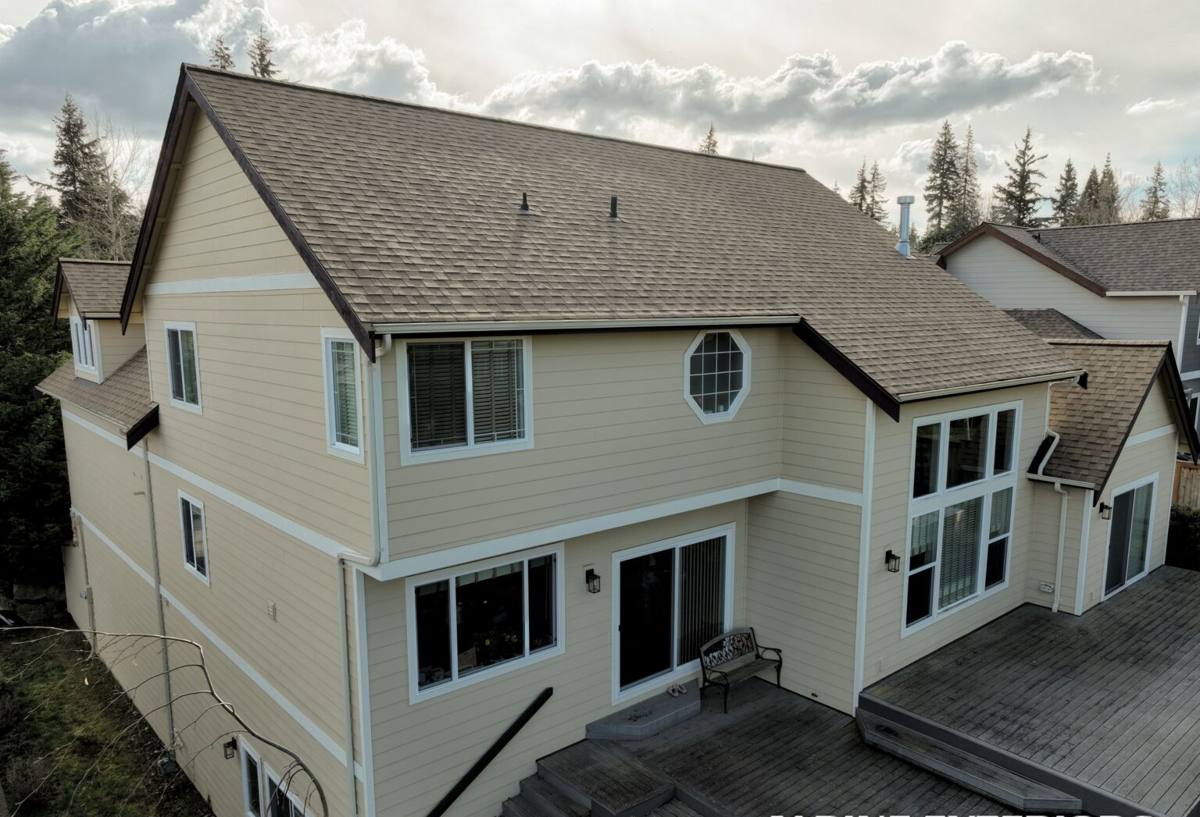
What Salt Air Actually Does to a Roof
Salt air isn't just "moisture" — it's moisture carrying dissolved salts that accelerate corrosion on anything metal. On a roof that means faster degradation of exposed fasteners, flashing, and any galvanized components that aren't rated for coastal exposure. Over years, that shows up as rust streaking, loosening fasteners, and flashing that fails at seams before the field material itself is anywhere near the end of its service life.
Where It Shows Up First
- Exposed nail heads and fasteners on older installs, especially where the wrong fastener material was used originally
- Flashing around chimneys, skylights, and roof-to-wall transitions
- Gutter hangers, drip edge, and any thin-gauge metal trim
- Ridge vents and other roof hardware with exposed metal components
The fix isn't complicated, but it does require choosing the right-grade materials up front rather than defaulting to whatever's cheapest at the supply house. Stainless or coated fasteners, properly rated flashing, and metal components suited to coastal exposure cost a bit more at install time and save a callback in five years.
Moss Season and Roof Assemblies That Actually Shed It
Bellingham's moss season runs long — realistically most of the year on shaded, north-facing, or low-slope sections. Moss isn't just a cosmetic problem. As it establishes, it holds moisture against the roofing material, lifts shingle edges as it grows, and on some materials it works its way under laps and tabs, giving water a path it wouldn't otherwise have.
A new roof install is the right time to address this proactively rather than treating it as ongoing maintenance you'll deal with later:
- Zinc or copper strips at the ridge on moss-prone slopes, which release trace metals with rain runoff that discourage regrowth
- Material selection that accounts for how much shade the roof actually gets — some products handle sustained damp exposure better than others
- Attention to any tree cover that's keeping sections of the roof from ever fully drying between rain events (a conversation worth having even if it means recommending trimming, which is outside our scope but worth flagging)
None of this eliminates moss forever — nothing does, short of full sun exposure — but it meaningfully slows regrowth and keeps the roof assembly draining the way it's designed to.
Driving Rain and the Underlayment System
Wind-driven rain off the bay behaves differently than a straight-down downpour. It gets pushed sideways and can find its way under shingle laps, around flashing, and into ridge and eave details that would be fine in calmer conditions. This is why the underlayment system matters as much as the visible roofing material — arguably more, since it's the backup layer that keeps the house dry if wind-driven water gets past the surface layer.
What a Storm-Ready Underlayment System Includes
- Ice-and-water shield or a comparable self-adhering membrane at eaves, valleys, and around every penetration — not just where code minimums require it
- A quality synthetic underlayment across the full field, properly lapped in the direction that sheds water downhill
- Extra attention to valleys, which concentrate water flow and take the brunt of driving rain during a real storm
- Properly sealed and lapped flashing at every roof-to-wall transition, chimney, and skylight
This is also where corners get cut on lower-bid jobs — underlayment upgrades are invisible once the roof is finished, so they're an easy thing to skip if a contractor is racing to a low number. It's worth asking any contractor bidding your job exactly what underlayment system they're specifying and why.
Choosing a Roofing Material for This Environment
There's no single "best" roofing material for Silver Beach — the right choice depends on your home's slope, how much shade it gets, your budget, and how long you plan to own the house. Here's an honest comparison of what we typically install in this part of Whatcom County:
| Material | How It Handles Salt Air & Moss | Typical Lifespan Here | Trade-offs |
|---|---|---|---|
| Architectural asphalt shingle | Good with proper ventilation and moss treatment; algae-resistant granules help | 25–30 years | Most affordable; needs periodic moss/moisture upkeep on shaded slopes |
| Standing seam metal | Excellent shedding, low moss retention; needs coastal-rated fasteners and coating | 40–50+ years | Higher upfront cost; installation quality is critical to avoid oil-canning and fastener issues |
| Composite/synthetic shake | Sheds water well, resists moisture absorption better than wood | 30–50 years | Mid-to-upper cost; product quality varies by manufacturer |
| Cedar shake | Attractive but holds moisture in a damp, shaded coastal climate | Highly variable, often shorter here | We're honest with clients that this climate is hard on wood roofing without diligent maintenance |
We'll walk through what makes sense for your specific roof — slope, sun exposure, and how your home is oriented relative to the water and tree cover all factor into the recommendation.
Ventilation: The Part That's Easy to Overlook
A new roof is only as good as the ventilation underneath it. Poor attic airflow traps moisture, which condenses on the underside of the roof deck and creates the exact damp conditions that accelerate rot, degrade insulation, and feed moss and algae growth from the inside out. In a climate as wet as ours, balanced intake (soffit) and exhaust (ridge or other vents) isn't optional — it's part of what makes the roof last its full expected lifespan.
During a new roof install, we check existing ventilation, correct any imbalance we find, and make sure the new roofing system doesn't accidentally block airflow that was working fine before.
Our Installation Process
- On-site assessment: We look at your roof's condition, slope, shade exposure, existing ventilation, and any moss or moisture patterns before recommending materials.
- Material and system plan: You get a clear recommendation with honest trade-offs — not just a single option with no context.
- Tear-off and deck inspection: Old roofing comes off and we inspect the deck underneath for rot or damage before anything new goes down, since covering a compromised deck defeats the purpose of a new roof.
- Underlayment and flashing: Full-coverage underlayment with reinforced protection at eaves, valleys, and penetrations, plus properly sealed flashing throughout.
- Roofing material install: Installed to manufacturer spec with coastal-appropriate fasteners and hardware.
- Ventilation check and correction: Intake and exhaust balanced for your attic's actual volume.
- Final walkthrough: We go over the finished roof, the gutter and drainage plan, and what maintenance (if any) we recommend going forward.
Why Local Experience in Silver Beach Matters
A roofing crew that's worked this specific pocket of Bellingham knows things a general contractor bidding blind won't — which slopes in the neighborhood hold moss the longest, how much wind-driven rain a given orientation actually takes in winter storms, and which fastener and flashing specs hold up here versus further inland in Whatcom County. That local knowledge shows up in fewer callbacks and a roof that's actually built for the conditions it faces, not just built to code minimums.
We also know the practical side: permitting expectations, disposal logistics for tear-off material, and working around the tree cover and tighter lots common in this neighborhood.
Questions to Ask Before You Hire
- What underlayment system are you specifying, and where does it go beyond code minimum?
- What fastener and flashing grade are you using given the coastal exposure here?
- How will you address existing moss growth and prevent it from recurring on shaded slopes?
- Will you inspect and correct attic ventilation as part of the job, or just replace the surface material?
- What does your workmanship warranty actually cover, separate from the manufacturer's material warranty?
If you're weighing a new roof for a home in Silver Beach, we're happy to take a look and give you a straightforward assessment — no pressure, no inflated urgency, just an honest read on your roof's condition and what it would take to get it right for this climate. Use the form below to request a free estimate.