 Bellingham Exterior
 Board & Batten in Puget: A Style That Has to Earn Its Keep
Board and batten has a specific look — vertical panels with narrow strips (battens) covering the seams — that shows up a lot on homes in and around Puget, whether the house is a newer build going for a modern-farmhouse look or an older place getting a refresh. It reads clean, it hides seams well, and it holds up visually in a way lap siding sometimes doesn't on taller wall sections or gable ends. But in this part of Whatcom County, the style only matters if the installation underneath it is right. Board and batten has more seams and more fastener penetrations per square foot than standard lap siding, and every one of those is a place water can find its way in if the job is rushed.
We install board and batten as a system, not a look. That means the water management behind the panels gets as much attention as the reveal lines and paint color homeowners see from the street.
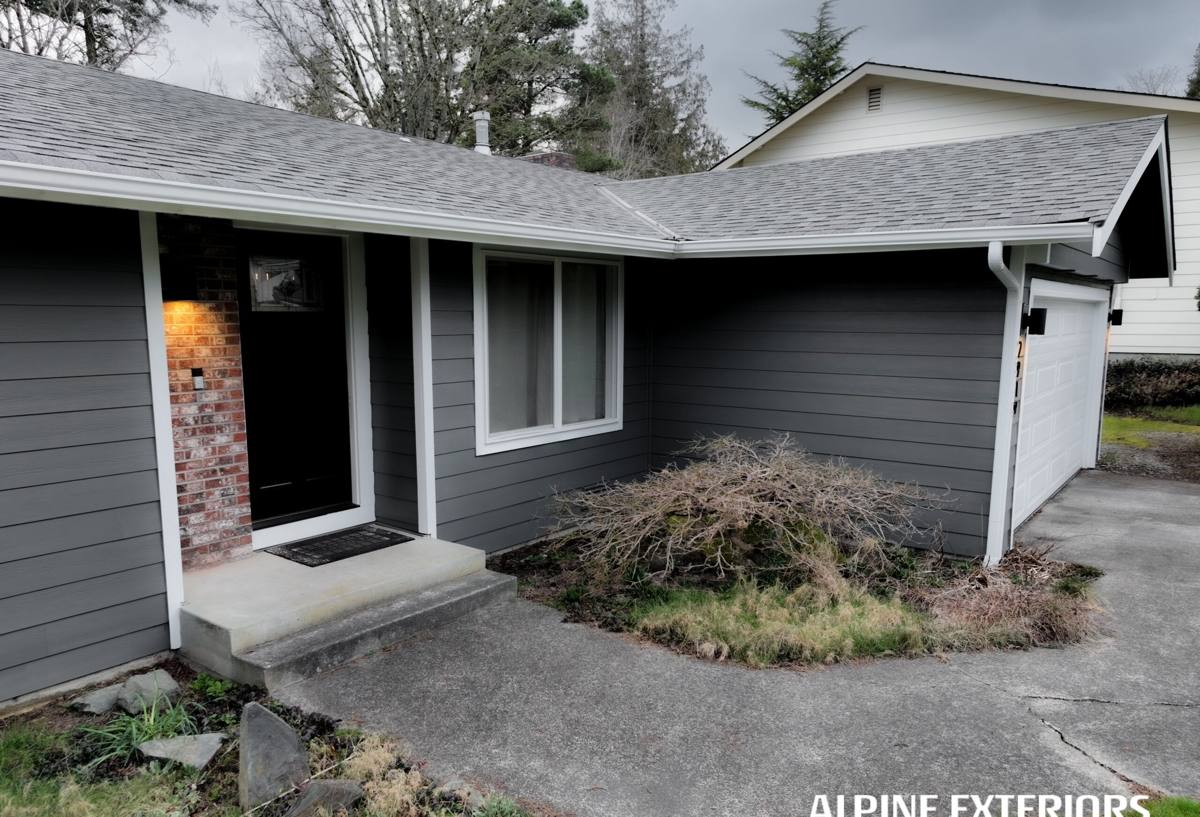
What Bellingham's Climate Actually Does to This Siding Style
Puget sits close enough to the water that salt air is a real factor, not a marketing phrase. Salt-laden moisture accelerates corrosion on fasteners, flashing, and trim — and on a board and batten wall, there are simply more fasteners exposed to that air than on other siding profiles. Add Bellingham's long stretch of driving rain each fall and winter, often pushed sideways by wind off the water, and you've got moisture being forced at seams and battens rather than just running down a flat wall.
Then there's moss. Whatcom County's damp, shaded microclimates — especially on north-facing walls or under tree cover, which a lot of Puget lots have — grow moss on siding, trim, and battens for a good chunk of the year. Moss holds moisture against the surface longer than bare wood or fiber cement would sit wet on its own, which matters most at butt joints and batten edges where water already wants to linger.
None of this makes board and batten a bad choice for the area. It means the details — flashing, fastening, spacing, and material choice — have to be handled with this specific climate in mind, not treated the same way they'd be treated on a dry-climate installation.
The Three Climate Stresses We Design Around
- Salt air: corrodes exposed or improperly coated fasteners and flashing over time
- Driving rain: pushes water laterally into seams instead of letting it sheet straight down
- Moss and shade: keeps surfaces damp longer, especially on north walls and battens near tree cover
What a Correct Board & Batten Job Involves
A board and batten wall is really two layers of defense: the water-resistive barrier and flashing system underneath, and the visible panels and battens on top. Most siding problems we get called out to fix in this style trace back to shortcuts in the layer nobody sees.
Behind the Panels
Every board and batten installation should start with a properly lapped weather-resistive barrier, correctly flashed window and door openings, and rainscreen or drainage detailing so water that does get behind the cladding has somewhere to go instead of sitting against the sheathing. On a marine-climate job like Puget, we don't treat drainage as optional — it's the difference between a wall that dries out after a storm and one that stays damp for weeks.
On the Surface
Panel and batten spacing has to follow the manufacturer's engineering, not just visual preference. Fasteners need to be corrosion-resistant and driven at the correct depth — overdriven fasteners crack fiber cement and underdriven ones leave gaps that trap water. Butt joints need to be flashed or backed, not just butted and caulked. Caulk is a supplement to good flashing, never a substitute for it.
James Hardie Board & Batten: What We Install and Why
We install James Hardie's fiber cement board and batten system exclusively — HardiePanel vertical siding with HardieTrim battens, engineered in the HZ5 product line for the Pacific Northwest's wet climate. Fiber cement doesn't absorb and swell with moisture the way wood-based battens can, and it doesn't need the repainting cycle that wood or primed spruce battens demand to keep water out of end grain. In a place with as much annual rainfall and shade-driven moss as Bellingham, that matters more than it does in drier climates.
The ColorPlus factory finish bakes color onto the panel and battens before they ever reach the jobsite, which gives more consistent, fade-resistant color than field-applied paint and removes one more maintenance task from a homeowner's list. James Hardie backs the product with a transferable limited warranty, which matters if a Puget home changes hands — it's one less thing a seller has to explain and a buyer has to worry about.
We don't install vinyl board and batten, LP SmartSide, cedar, or primed spruce battens. Vinyl board and batten profiles can look convincing from the curb, but the material still expands and contracts with temperature swings and isn't rated to carry the same fire performance as fiber cement. Wood and engineered-wood battens require ongoing paint and caulk maintenance to keep moisture out of exposed edges — maintenance that's easy to fall behind on in a climate that stays wet as long as this one does. We standardized on James Hardie because it holds up to the specific stresses Puget homes deal with without asking the homeowner to stay on top of a maintenance schedule to keep it that way.
Board & Batten Material Comparison
| Factor | James Hardie Fiber Cement | Vinyl Board & Batten | Wood / Primed Spruce Battens |
|---|---|---|---|
| Moisture behavior | Doesn't absorb or swell; engineered for wet climates | Won't rot, but expands/contracts and can warp | Absorbs moisture at cut edges and joints without maintenance |
| Salt air resistance | Fiber cement itself is unaffected; fasteners need corrosion-resistant hardware | Material resists corrosion but seams can loosen over time | Prone to accelerated wear near coastal air without regular repainting |
| Maintenance | Occasional wash; factory finish holds color for years | Low, but fading and brittleness increase with age | Repaint and recaulk on a recurring cycle |
| Fire performance | Non-combustible | Combustible | Combustible |
| Warranty | Transferable limited warranty | Varies by manufacturer, often prorated | Typically none beyond installer workmanship |
How Our Process Works on a Puget Job
We start with a walk of the home and an honest look at what's underneath the current siding, if it's being replaced — sheathing condition, existing flashing, and any moisture damage need to be addressed before new siding goes up, not covered over. From there we handle the weather-resistive barrier and flashing detailing, then install the HardiePanel and battens to spec, including fastener spacing and depth appropriate for this climate.
We also plan around Whatcom County's weather rather than fighting it. Board and batten installation goes faster and holds up better when panels aren't being set in active rain, so we sequence jobs with the forecast in mind rather than pushing through wet conditions just to hit a schedule.
Maintenance in a Marine Climate
Even with fiber cement, a board and batten wall in Puget benefits from periodic attention — not because the material is failing, but because the environment is active. An annual rinse-down removes salt residue and slows moss colonization before it takes hold. Caulking at trim and penetrations should be checked every year or two, since caulk is the one component in the system with a shorter service life than the siding itself. Gutters and downspouts should stay clear so roof runoff isn't dumping extra water down the wall face, which speeds up both staining and moss growth on battens.
Signs Your Current Siding Needs a Look
- Moss or dark streaking concentrated at seams, battens, or north-facing walls
- Soft or spongy spots when you press on siding near the bottom courses or window trim
- Visible gaps or cracking at butt joints and around window and door casing
- Peeling or bubbling paint that keeps returning in the same spots after repainting
- Rust streaks trailing down from fasteners or metal flashing
- Interior signs like peeling paint or musty odor on an exterior-facing wall
Why a Crew That Already Works Puget Makes a Difference
A lot of siding problems in this climate aren't caused by bad materials — they're caused by details that work fine in a dry climate but fail here. A crew that regularly works Puget and the rest of Bellingham already knows to flash for driving rain coming off the water, to specify corrosion-resistant fasteners because of salt air, and to plan drainage detailing for walls that sit in shade long enough to grow moss most of the year. That's not something you can fully substitute with a generic installation manual — it comes from doing the work here, on homes dealing with the same conditions, repeatedly.
If you're weighing board and batten for a Puget home, we're glad to take a look and walk you through what a correct installation involves for your specific house — no pressure, no obligation. Use the form below to request a free estimate.