 Bellingham Exterior
 Deck Building for Puget Homes in Bellingham
Puget sits close enough to the water that every deck we build there has to answer to salt air, driving rain, and a moss season that seems to start earlier each year. A deck that looks right the day it's finished but wasn't built for this specific stretch of Whatcom County will start showing problems within a couple of winters — soft spots underfoot, black streaking on the boards, fasteners bleeding rust through the finish. We build decks in Puget the way local conditions actually demand, not the way a generic build guide says to.
This page covers what a deck in this part of Bellingham needs structurally and materially, how we approach the build from first site visit to final walkthrough, and what to ask any contractor bidding the job — including us.
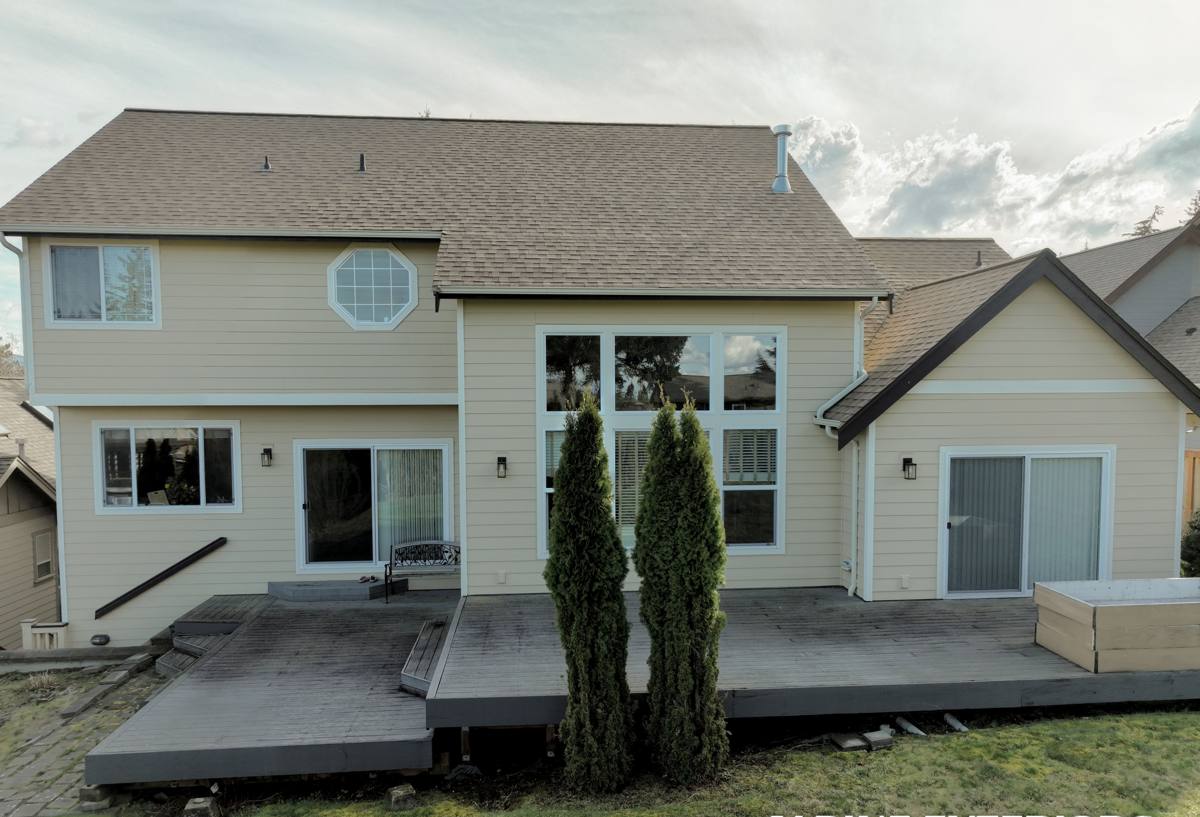
What Puget's Climate Does to a Deck
Whatcom County's marine climate is mild, which is part of why people love living here, but mild and dry are not the same thing. A deck in Puget deals with a specific combination of stressors most of the year:
- Salt-laden air off the Sound accelerates corrosion on any exposed metal — fasteners, brackets, railing hardware — faster than it would inland.
- Extended wet seasons mean wood and composite decking stay damp for days or weeks at a stretch, not just during a rain event.
- Low winter sun angles keep shaded areas of a deck — under eaves, behind railings, near fences — from ever fully drying out.
- Moss and algae growth gets a long runway here, often six months or more of favorable conditions, and it doesn't just look bad — it holds moisture against the deck surface and makes boards genuinely slick underfoot.
None of this means a deck can't hold up well in Bellingham. It means the framing, fasteners, decking material, and finish all have to be chosen and installed with that reality in mind, rather than treating this like a dry-climate build.
Where We See the Most Damage on Existing Decks
When we're called out to look at a failing deck in this area, the same few failure points come up again and again:
- Ledger board connections where flashing was skipped or installed wrong, letting water track into the house rim joist
- Standard carbon-steel or under-rated fasteners that have rusted and weakened at the head
- Joists and beams with no gap or with debris trapped against them, holding moisture and starting rot from the inside out
- Decking laid tight with no drainage gap, so water sits between boards instead of shedding
- Moss buildup on north-facing or shaded sections that was never addressed and slowly ate into the board surface
Almost all of these are prevention issues, not material-quality issues — they come from a build that didn't account for how wet this area stays.
What a Correctly Built Deck Requires Here
Framing and Structure
The framing is what fails first when a deck is built wrong, and it's the part homeowners can't inspect once decking boards are down. For Puget builds we pay particular attention to:
- Proper ledger flashing where the deck attaches to the house, so water is directed away from the structure rather than into it
- Joist spacing and beam sizing engineered for the actual span and load, not just what's minimally allowed
- Post bases set above grade and away from standing water, with proper footings for our soil and frost conditions
- Air gaps maintained between framing members so wood can dry between wet periods instead of staying saturated
Fasteners and Hardware
Given the salt air, we use fasteners and structural hardware rated for coastal or wet-climate exposure — stainless steel or heavy hot-dip galvanized, depending on the application — rather than standard-grade hardware that will streak and weaken within a few seasons. This is a small line item in a bid and a large factor in how long a deck actually lasts.
Decking Material Choice
There's no single right decking material for every homeowner — it comes down to budget, maintenance tolerance, and how the deck will be used. We walk through the honest trade-offs rather than pushing one option:
| Material | How it handles our climate | Maintenance | Typical lifespan |
|---|---|---|---|
| Pressure-treated wood | Good if properly sealed and re-coated; absorbs moisture if neglected | Annual cleaning, periodic re-sealing | 15-20 years with upkeep |
| Cedar | Naturally moisture- and insect-resistant, but still needs finish maintenance in this much rain | Regular cleaning and re-oiling to prevent graying and moss | 15-25 years with upkeep |
| Composite decking | Sheds moss and moisture well; doesn't rot; some early-generation products trapped surface moisture | Periodic washing, no sealing or staining needed | 25-30+ years, varies by product line |
| PVC/capped composite | Best moisture and moss resistance of the common options; fully sealed surface | Occasional washing only | 25-30+ years |
We install a range of these depending on what the homeowner wants, but we're upfront when a lower-maintenance option makes more sense for a shaded, moss-prone section of a Puget property than it would for a sunnier inland lot — the deck's own site conditions matter as much as the general climate.
Railings, Stairs, and Hardware Finish
Railing systems near the water take the same corrosion exposure as fasteners. We spec railing hardware and any metal balusters or cable systems for coastal-grade durability, and we pay attention to where railing posts meet decking — that junction is another spot where trapped moisture causes early rot if it's not detailed correctly.
Our Process for a Puget Deck Build
- On-site assessment. We look at sun exposure, drainage, existing structure if this is a replacement, and how close the site is to prevailing wind and salt exposure — a deck facing open water gets different hardware and finish recommendations than one tucked behind other structures.
- Design and material walkthrough. We go over decking, railing, and finish options with honest cost and maintenance trade-offs, sized to your budget and how you'll actually use the space.
- Permitting. Most deck builds in Bellingham require a permit, particularly for elevated structures or anything attached to the house. We handle that process as part of the job.
- Demolition and disposal (if replacing an existing deck), including a check of the ledger and rim joist area for hidden moisture damage before we build over it.
- Framing. Built to span and load requirements with corrosion-rated hardware and proper drainage gaps from the start.
- Decking, railing, and stairs installed per the agreed spec, with attention to drainage gaps between boards and proper flashing at every penetration.
- Final walkthrough where we cover basic maintenance — cleaning frequency, what moss buildup to watch for, and how to spot early warning signs before they become structural problems.
Moss and Long-Term Maintenance
Even a well-built deck in this climate needs some homeowner upkeep to get its full lifespan. This isn't unique to our work — it's just what living this close to the water requires. A short, honest maintenance checklist:
- Sweep debris and organic buildup off the deck surface regularly, especially in fall
- Clean shaded or north-facing sections more often — that's where moss establishes first
- Check that drainage gaps between boards stay clear rather than packed with debris
- Re-seal or re-oil wood decking on the manufacturer's recommended schedule, not just when it visibly grays
- Look underneath the deck once a year for signs of moisture staining, soft wood, or rust streaking on hardware
Composite and PVC decking cut down on most of this, but even those benefit from an annual wash to keep organic growth from getting a foothold.
Why a Crew That Already Works Puget Matters
A contractor who mostly builds decks in drier parts of the state can still build a structurally sound deck — but the material choices, fastener grade, and flashing details that matter most here often aren't part of their default spec. Working this area regularly means we already know:
- Which decking products actually hold up to sustained damp and shaded conditions versus which ones just perform well in a showroom
- How local permitting and inspection expectations apply to deck attachments and guardrail height requirements
- Where on a typical Puget lot moss and drainage problems tend to start, so we can design around them from day one
- What hardware grade is worth the extra cost this close to the water, and where it isn't necessary
That local pattern recognition is the difference between a deck that needs real repair work in five years and one that's still solid in twenty.
Repairs and Rebuilds
Not every project here is a new build. We also evaluate existing decks that are showing wear — soft boards, rust staining, railing that's gone loose, or persistent moss and algae that won't clean off. Sometimes a deck just needs targeted repair: replacing a section of decking, upgrading fasteners, or improving drainage at the ledger. Other times the framing has degraded enough that a full rebuild is the more honest recommendation. We'll tell you which one you're actually looking at rather than defaulting to the bigger job.
Get a Free, No-Pressure Estimate
If you're planning a new deck in Puget or want an honest look at one that's showing its age, we're happy to come take a look. The estimate is free, there's no pressure to sign anything on the spot, and you'll get a straightforward read on what your deck actually needs given its exposure, condition, and the way you use the space. Use the form below to get started.