 Bellingham Exterior
 New-Construction Windows: Not the Same Job as a Replacement
When a home in the Puget area is being built from the studs out, or when an addition, garage conversion, or full remodel opens the wall down to the framing, the windows go in differently than they would in an existing house. There's no old frame to work around and no existing flashing to patch into. That's actually an advantage — it means the window and the water management around it can be built correctly from day one, instead of compromising around what's already there. But it also means there's no room for shortcuts, because everything that keeps water out of the wall assembly for the next 30-plus years gets set during this one installation.
New-construction windows use a nailing fin (sometimes called a flange) that gets integrated into the weather-resistive barrier (WRB) and sheathing before siding goes on. Get that sequencing wrong — even in small ways — and the mistake gets buried behind the wall covering, where it won't show up as a problem for years.
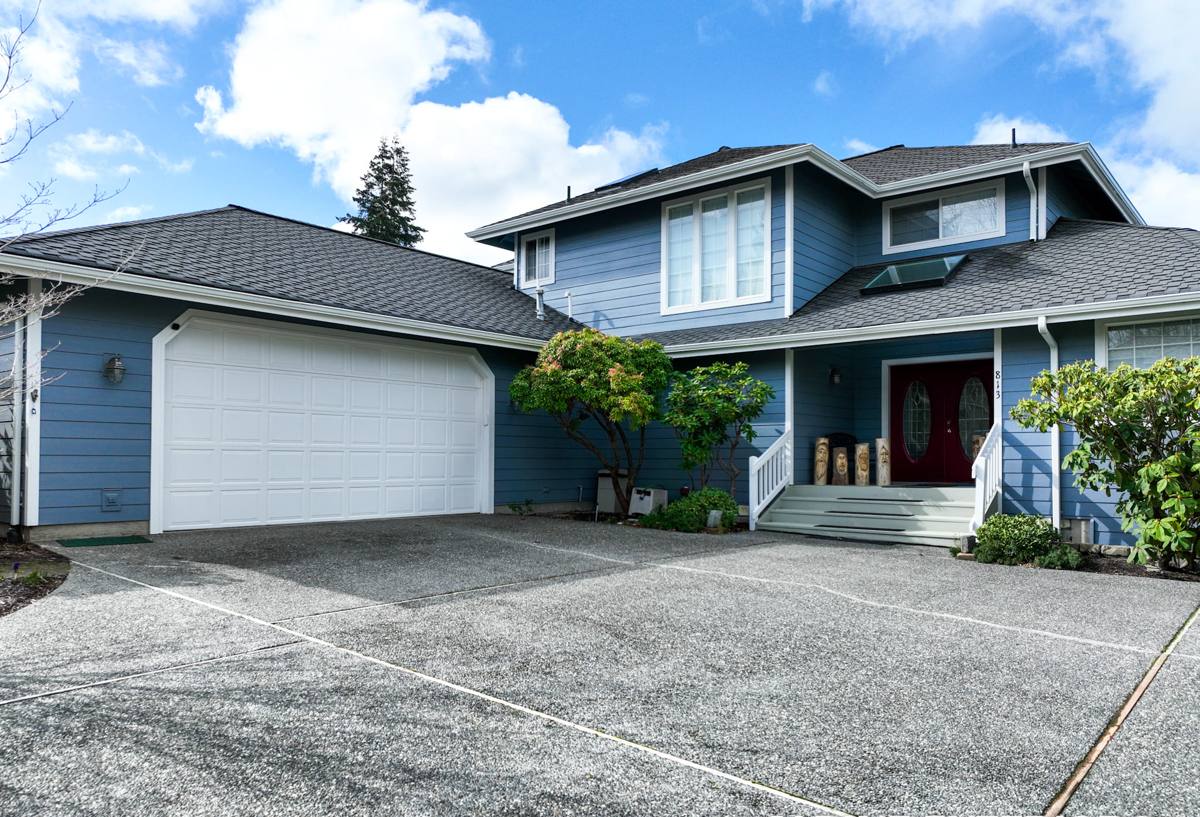
What Puget-Area Homes Need From Their Windows
The Puget area sits within Bellingham and Whatcom County's marine climate, and that climate asks more of a window installation than a drier inland location would. Three conditions in particular shape how we approach the job here.
Salt Air and Corrosion
Proximity to Puget Sound means airborne salt is a real factor on hardware, fasteners, and certain window frame materials. Left unaddressed, salt exposure accelerates corrosion on lower-grade hardware, screws, and flashing metals. We spec corrosion-resistant fasteners and hardware for homes in this area rather than treating it as an optional upgrade.
Driving Rain
Storms off the Sound don't just drop rain — they push it sideways into wall assemblies, especially on west- and southwest-facing elevations. A window that would perform fine in a calm-rain climate can still leak here if the flashing details, sill pan, and sealant lines aren't built to handle wind-driven water. This is the single biggest reason new-construction window failures happen: not a bad window, but a flashing sequence that wasn't built for how hard the rain actually hits the wall.
Long Moss and Mildew Season
Whatcom County's damp, mild winters and shoulder seasons mean surfaces that stay wet longer grow moss, algae, and mildew longer. On windows, that shows up as sash tracks and sill areas that don't drain and dry well, trapping moisture against wood trim or frame material. Detailing sills to shed water fast, and choosing frame materials that don't hold moisture against themselves, matters more here than it does in a drier climate.
What a Correct New-Construction Installation Involves
A properly installed new-construction window is really a small system, not just a product dropped into a rough opening. The sequence matters as much as the window itself:
- Rough opening checked for level, plumb, and square before the window ever shows up on site
- Sill pan flashing installed to catch and direct any water that gets past the window back outside the wall, not into the framing
- WRB (house wrap or equivalent) integrated with the flashing in the correct shingle-lap order — bottom, sides, then top — so water is always directed downward and outward
- Window set plumb, level, and square in the opening, then fastened through the nailing fin per the manufacturer's schedule
- Head flashing installed last, lapped over the WRB above the window so water sheds over the top, never behind it
- Backer rod and quality exterior sealant at appropriate joints — not sealant as a substitute for correct flashing order
- Interior air-sealing at the rough opening gap, which affects both energy performance and condensation risk
Skipping or reordering any one of these steps is how a window that looks fine on installation day ends up with rot or interior water staining two or three winters later.
Choosing the Right Window for a Puget-Area Build
Material and frame choice interact directly with the climate factors above. There's no single "best" window for every project — it depends on budget, the home's design, and how exposed the elevation is to wind-driven rain.
| Frame Material | Moisture / Salt Air Behavior | Maintenance | Typical Fit |
|---|---|---|---|
| Vinyl | Won't corrode or rot; performs well in salt air | Low — occasional cleaning | Value-focused builds, most elevations |
| Fiberglass | Very stable, resists moisture and corrosion, minimal expansion/contraction | Low | Exposed elevations, larger openings, higher-end builds |
| Wood-clad (exterior-clad, wood interior) | Good if cladding and flashing details are correct; interior wood needs protection from condensation | Moderate | Homes wanting a wood interior look with protected exterior |
| Aluminum | Prone to corrosion in salt air unless properly finished; conducts cold, higher condensation risk | Moderate to high | Limited use here; we're selective about where we recommend it |
We don't push any one brand or material as universally correct. What we do insist on is that whatever material a homeowner chooses is installed with the flashing and sealing details this climate demands — the product only performs as well as the installation around it.
Cost Factors Worth Understanding
| Factor | Why It Moves the Price |
|---|---|
| Window count and size | Larger openings and more units mean more flashing, framing, and labor hours |
| Frame material | Vinyl is generally the most budget-friendly; fiberglass and clad-wood cost more upfront |
| Glazing package | Double vs. triple pane, low-E coatings, and gas fill all affect both price and energy performance |
| Elevation exposure | West/southwest walls facing driving rain often warrant more robust flashing detail |
| Access and staging | Multi-story openings or tight lot access add labor time |
We give a written, itemized estimate before work starts so there aren't surprises once the openings are framed and ready.
How We Handle a New-Construction Window Job
Our process on Puget-area projects follows the same order every time, because consistency is what prevents callbacks:
- Plan review and rough opening verification — we confirm openings match the window schedule before ordering, catching framing errors while they're still cheap to fix
- Material selection walkthrough — we go over frame material, glazing, and hardware options against the home's exposure and the owner's budget
- Flashing and WRB installation — sill pans, jamb flashing, and house wrap integration, done in the correct water-shedding sequence
- Window setting and fastening — plumb, level, square, fastened to manufacturer spec
- Head flashing and sealant — final exterior weatherproofing layer
- Interior air-sealing and trim prep — so the opening is ready for interior finish work
- Final walkthrough — every unit operated, checked for square operation and a clean seal, before we call the job done
We photograph flashing details before they're covered by siding or trim, since that's the one stage of the job that becomes invisible afterward — it's useful documentation to have on file if any question ever comes up later.
Energy Performance and Local Code
Washington's energy code sets minimum performance requirements for new-construction glazing, and those requirements are stricter than many homeowners expect coming from other states. On new builds, window U-factor and solar heat gain coefficient (SHGC) are part of the whole-house energy compliance path, not just a comfort upgrade. We help homeowners and builders pick glazing packages that meet code without over-buying performance the home's design doesn't need — a west-facing wall with a lot of glass has different SHGC needs than a shaded north wall, for example. Getting this right also affects condensation risk on interior glass during Whatcom County's cold, damp winters, which ties back into the same moisture concerns that drive our installation details.
What to Ask Before Hiring a New-Construction Window Crew
New-construction window work is largely hidden once the siding goes on, so vetting the crew matters more than it does for most exterior projects. A few questions worth asking any contractor:
- Do you install a dedicated sill pan flashing, or rely on sealant alone at the sill?
- What's your shingle-lap order for integrating flashing with the house wrap?
- Will you photograph flashing details before they're covered by siding?
- What fastener and hardware grade do you use given local salt air exposure?
- How do you handle warranty coverage if a leak shows up after the siding is finished?
- Have you worked on homes in this specific area before, and do you know its typical wind and rain exposure?
A contractor who can answer these specifically, without hesitating or generalizing, has actually done this work in this climate before.
Why Local Experience in Puget Matters
General contracting skill doesn't automatically translate into knowing how hard rain drives sideways into a wall on a given elevation, or how quickly a poorly detailed sill grows moss in this climate. Crews who work regularly in the Bellingham and Whatcom County area build an instinct for which elevations need extra flashing attention and which fastener grades hold up against salt air over time. That local pattern recognition is the difference between a window installation that's technically to code and one that's actually built for the conditions it will face for the next few decades.
If you're planning new construction, an addition, or a remodel in the Puget area and want windows installed the right way from the start, we're happy to walk the plans or the framed openings with you and put together a straightforward, no-pressure estimate using the form below.