 Bellingham Exterior
 Roof Repair for Happy Valley Homes
Happy Valley sits close enough to the water and the tree cover that its roofs take a different kind of beating than roofs further inland. Salt-laden air off Bellingham Bay works on exposed fasteners and metal flashing year-round. Driving rain off Puget Sound doesn't just fall straight down — it gets pushed sideways under wind, which means it finds every gap a roof has, not just the ones facing the storm. And the long, wet moss season that Whatcom County is known for doesn't stop at gutters; it works its way under shingle tabs and holds moisture against the roof deck for months at a time. A roof repair here has to account for all three, not just patch the spot that's currently leaking.
This page covers what roof repair actually means for a Happy Valley home — what to watch for, what a correct repair involves, how we approach the job, and why a crew that already works this neighborhood tends to get it right the first time.
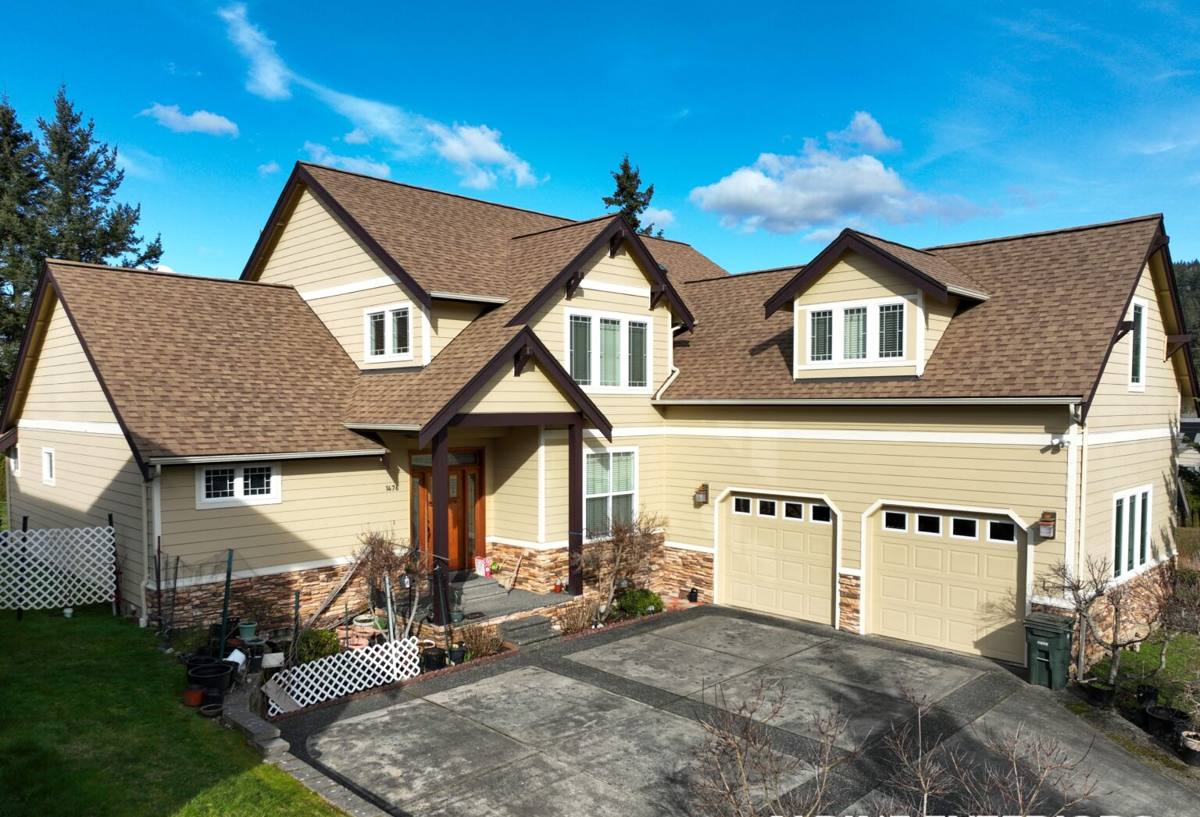
Signs Your Roof Needs Repair
Most roof problems in this area don't start as a dramatic leak — they start small and get ignored because the symptoms show up somewhere other than the actual damage. Here's what we look for and what homeowners should watch for between inspections.
Inside the house
- Water stains on ceilings or upper walls, especially near chimneys, skylights, or where two roof planes meet
- Peeling paint or bubbling drywall in a room directly under the attic
- A musty smell in the attic, which usually means moisture is sitting somewhere it shouldn't be
- Daylight visible through the roof deck when you look up from the attic
Outside the house
- Moss buildup on the north-facing or shaded slopes of the roof, where it stays damp longest
- Curling, cracked, or missing shingles, particularly after a windstorm
- Rust streaks or gaps around flashing at chimneys, vents, and valleys
- Granules collecting in gutters or at the base of downspouts, a sign the shingle surface is wearing thin
- Sagging spots on the roofline, which usually means deck damage underneath
Any one of these on its own might be minor. Two or three together, especially after a wet winter, usually means it's time for a closer look.
What a Correct Repair Actually Involves
A repair that just covers the visible hole is a temporary fix. A correct repair addresses why water got in, not just where it showed up. That distinction matters more here than in drier climates, because a roof in Whatcom County rarely gets a long stretch of dry weather to fully dry out between rain events.
Diagnosis before repair
We start by tracing the leak back to its actual source, which is often several feet away from the stain on the ceiling — water travels along rafters and sheathing before it drips. That means checking flashing, underlayment, valleys, and any roof penetrations (vents, skylights, chimneys) near the affected area, not just the shingles directly overhead.
Deck condition
If moisture has been sitting under a bad flashing seal or worn shingles for a while, the plywood or OSB deck underneath can go soft. Patching shingles over a compromised deck doesn't hold — the new material has nothing solid to fasten to, and the soft spot keeps absorbing water. Any legitimate repair includes a check of deck condition, and replacement of any section that's spongy or delaminated.
Matching materials and technique
Repairs should use compatible materials — same shingle profile and, where possible, matching color and manufacturer — and correct fastening and flashing technique, not just sealant over a gap. Sealant is a stopgap, not a repair. Proper step flashing, counter-flashing, and ice-and-water membrane in vulnerable areas (valleys, eaves, around penetrations) are what actually keep water out long-term in a region that gets this much sideways rain.
Common Repair Issues We See in This Neighborhood
Moss and organic buildup
Moss holds moisture against the shingle surface, and over time it lifts shingle edges and works its roots into the granule layer. On shaded slopes — common on lots with mature tree cover — moss can regrow within a season of cleaning if the underlying cause (shade, poor airflow, debris buildup) isn't addressed alongside the repair.
Flashing failure
Metal flashing around chimneys, skylights, and roof valleys is usually the first thing to fail, especially with salt air accelerating corrosion on lower-grade metal or exposed fasteners. A flashing repair is often a smaller, cheaper job than people expect, but it's frequently misdiagnosed as a shingle problem because that's where the stain shows up.
Wind and storm damage
Winter windstorms off the Sound can lift shingle tabs or tear off ridge caps without leaving obvious damage from the ground. A post-storm inspection is worth doing even if nothing looks wrong yet, since a lifted tab that isn't resealed will let water in on the next rain.
Gutter and drainage issues
Clogged or undersized gutters back water up under the roof edge, which shows up as fascia rot or leaks along the eaves — a roof problem that's actually a drainage problem. We check gutter flow as part of any repair estimate, since fixing the roof without fixing the drainage just brings the same issue back.
Repair vs. Replacement: How We Decide
Not every roof problem calls for a full replacement, and we don't push one when a repair will genuinely hold. The decision usually comes down to a few factors:
| Factor | Favors Repair | Favors Replacement |
|---|---|---|
| Roof age | Under 15–20 years, depending on material | At or past expected material lifespan |
| Extent of damage | Isolated to one section or penetration | Widespread across multiple slopes |
| Deck condition | Solid, no rot or soft spots | Multiple areas of deck damage |
| Shingle condition overall | Rest of roof still has useful life | Granule loss and curling across the field |
| History of repairs | First or second repair in years | Repeated repairs to the same areas |
We'll give you a straight answer on which side of that line your roof falls on, including honest talk about cost if the roof is borderline — sometimes the right call is a repair now with a plan to budget for replacement in a few years, and we'll say so.
Our Repair Process
- Inspection. We walk the roof (or use ladder and drone inspection where the pitch or access calls for it) and check the attic from inside, tracing any leak to its actual source.
- Written estimate. You get a clear scope of work and price before anything starts — what's being repaired, what materials we're using, and why.
- Repair work. Deck repair if needed, correct flashing and underlayment, matched shingles or roofing material, and proper fastening — not a sealant-only patch.
- Cleanup and check. We clear debris, check gutters and downspouts near the repair area, and confirm the fix from both the roof and the attic side before we consider the job done.
Materials and Workmanship Standards
For repairs, we match the existing roofing material where a good match is available, since mixing incompatible products or profiles creates its own leak risk down the line. For flashing, we use metal and fastening methods suited to a coastal, high-moisture climate rather than the cheapest option that would only hold up in a drier region. We don't rely on caulk or roofing cement as a substitute for correct flashing — those are legitimate tools for small, specific uses, but they're a maintenance liability when used to cover a structural flashing gap, since they degrade with UV and temperature swings and need to be reapplied, sometimes annually.
Keeping Moss and Moisture From Coming Back
A repair fixes the current problem. These habits help keep the next one from showing up as fast, especially on shaded or north-facing roof sections common in this area:
- Trim back overhanging branches to improve airflow and reduce shade on moss-prone slopes
- Clean gutters and valleys at least twice a year, more often under heavy tree cover
- Have moss treated or removed before it spreads, rather than after it's visible from the street
- Check flashing and roof penetrations after major windstorms, not just once a year
- Address small leaks and lifted shingles promptly — they don't get smaller on their own in a wet climate
Why a Local Crew Matters for This Job
A roofer who works Whatcom County regularly already knows which flashing details tend to fail here, which shingle lines hold up against salt air and moss, and how to size a repair so it actually survives a Bellingham winter rather than needing a redo in two years. That familiarity shows up in smaller ways too — knowing which roof pitches and access points around Happy Valley call for extra care, and having a working relationship with local suppliers so matching materials isn't a guessing game. It's the difference between a repair that's built for this climate and one that was built for somewhere drier.
If you've got a leak, a soft spot, or just want an honest read on what your roof needs before it becomes a bigger problem, we're happy to take a look. Reach out for a free, no-pressure estimate using the form below.