 Bellingham Exterior
 Roofing in Blaine's Coastal Climate
Blaine sits right on the water at the northern edge of Whatcom County, and that location shapes how roofs age here. Salt-laden air off Semiahmoo Bay and the Strait of Georgia works differently on roofing materials than the drier conditions you'd find further inland. Add in wind-driven rain that comes at the roof sideways instead of straight down, plus a moss season that can run most of the year under the region's cloud cover, and you get a roof that's dealing with more stress than the manufacturer's average lab test ever accounted for.
None of this means Blaine homes need exotic solutions. It means the basics — material choice, flashing detail, ventilation, and fastener selection — have to be done correctly and with the local climate in mind, not just installed to the minimum code requirement and left alone.
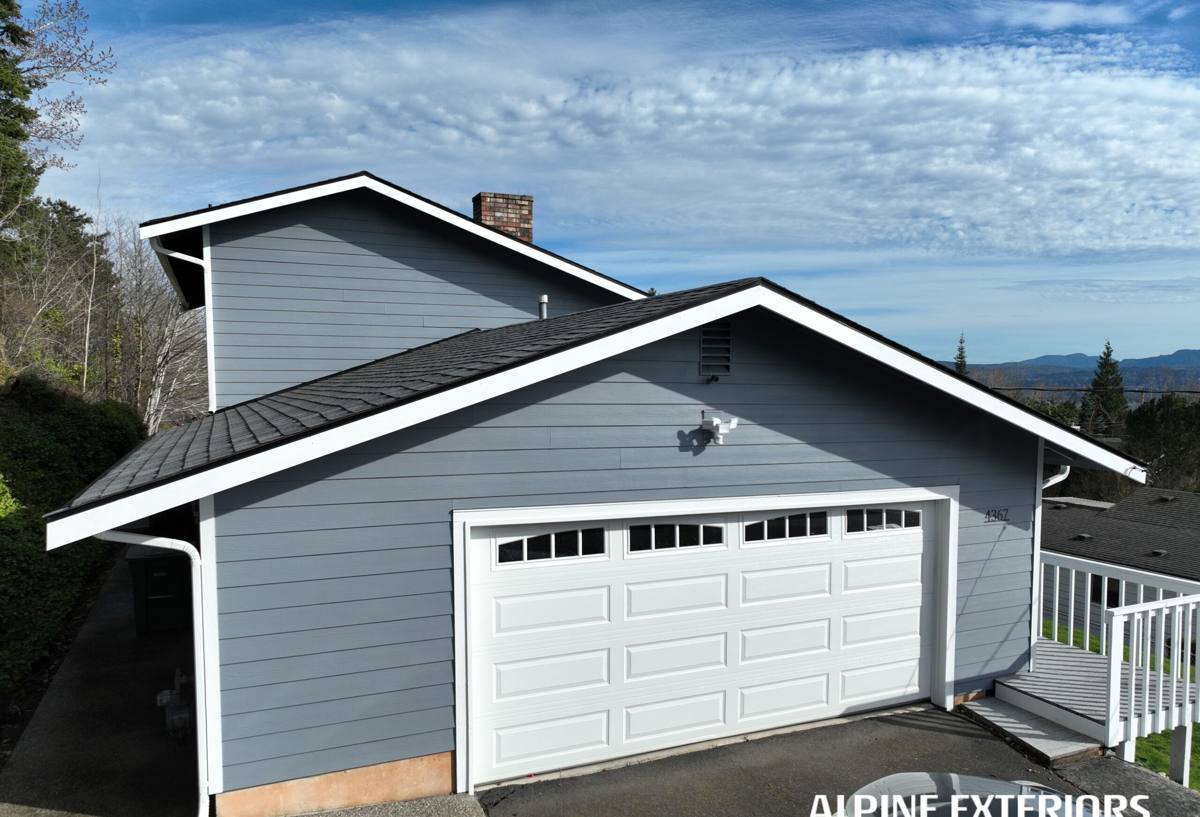
How Salt Air, Rain, and Moss Actually Damage a Roof
Salt Air
Airborne salt is corrosive to exposed metal. Nails, flashing, vent stacks, and fasteners that aren't rated for coastal exposure can start corroding years before an inland roof would show the same wear. Once a fastener weakens, the shingle or panel it's holding down becomes vulnerable to wind lift, and a small problem becomes a leak.
Driving Rain
Storms off the water tend to push rain at an angle rather than dropping it straight down. That matters at every seam, valley, and penetration on the roof. A roofing system that would shed water fine on a calm, vertical rain event can still let water sneak sideways under improperly lapped shingles or undersized flashing. This is why the details at valleys, chimneys, and roof-to-wall transitions matter more here than in drier climates.
Moss and Constant Moisture
Shade, humidity, and a long wet season give moss everything it needs to take hold, especially on north-facing slopes and anywhere debris collects. Moss holds moisture against the roofing material, which shortens the life of asphalt shingles and can work its way under shingle tabs and lift them. Left unchecked for years, moss growth can hide granule loss and deck-level moisture damage that isn't obvious from the ground.
Signs a Blaine Home Needs Replacement, Not Another Repair
Not every roof problem calls for a full replacement, and we'll tell you honestly when a repair is the right call. But there's a point where patching stops making financial sense. Common signs it's time to talk replacement:
- Granule loss heavy enough that shingles look bald or patchy in sunlight
- Shingles that are curling, cupping, or cracking across multiple areas of the roof, not just one spot
- Repeated leaks in different locations rather than one isolated failure point
- Visible sagging in the roofline, which can point to deck or structural moisture damage
- Moss growth that keeps returning even after cleaning, especially with soft or spongy patches underneath
- A roof approaching or past its expected material lifespan combined with any of the above
If your roof is showing one or two of these on an otherwise sound system, a repair or partial re-roof may be enough. If several of these are present at once, replacement is usually the more cost-effective path over the next several years.
What a Correct Roof Replacement Involves
A roof replacement is more than swapping old shingles for new ones. Done right, it addresses everything underneath the visible surface, which is where most coastal roof failures actually start.
Full Tear-Off and Deck Inspection
We remove the existing roofing down to the deck rather than layering over old material. This lets us inspect the sheathing for soft spots, moisture damage, or rot that can hide under a roof for years before it shows up as an interior leak. Any damaged decking gets replaced before new material goes down — installing new roofing over a compromised deck just resets the clock on the same problem.
Underlayment and Water Protection
In a climate with driving rain, the underlayment is doing more work than in drier regions. We use synthetic or self-adhering underlayment at vulnerable areas — eaves, valleys, and low-slope sections — to give the roof a second line of defense if wind-driven water ever gets past the primary roofing material.
Flashing Details
Flashing around chimneys, skylights, vent pipes, and wall intersections is where most roof leaks actually originate, not in the open field of shingles. We install new flashing with every replacement rather than reusing old pieces, and we pay particular attention to corrosion-resistant materials given the salt exposure this close to the water.
Ventilation
Proper intake and exhaust ventilation keeps the attic space dry and temperature-regulated, which does two things for a Blaine home: it reduces the condensation that can form on the underside of the deck during our wet, cool months, and it helps prevent the kind of trapped moisture that accelerates moss growth and shingle deterioration from below.
Choosing the Right Material for a Blaine Home
There's no single "best" roofing material for every house — it depends on your roof's exposure, your home's style, and your budget. Here's how the common options stack up for a coastal Whatcom County property:
| Material | How It Handles Salt Air & Rain | Moss Resistance | General Cost Position |
|---|---|---|---|
| Architectural asphalt shingle | Good with corrosion-resistant fasteners and proper flashing | Moderate — benefits from algae-resistant granules | Lower to mid-range |
| Metal roofing (standing seam) | Excellent when finishes and fasteners are coastal-rated | High — sheds moisture quickly, little for moss to grip | Higher upfront, longer lifespan |
| Synthetic/composite shingle | Good — resists moisture absorption well | Moderate to high depending on product | Mid to upper-mid range |
| Wood shake | Requires more maintenance in wet, salty conditions | Lower — organic material holds moisture | Mid-range, higher upkeep cost over time |
For most Blaine homes, we recommend architectural asphalt with algae-resistant granules or a metal system as the two most practical choices, depending on roof pitch, budget, and how long you plan to be in the home. We'll walk through the honest trade-offs for your specific roof rather than pushing one product line.
Our Roof Replacement Process
- On-site inspection — we walk the roof, check the attic, and document existing conditions before quoting anything
- Written estimate — clear scope of work, material options, and pricing, no vague allowances
- Scheduling — we plan around Whatcom County's weather windows to avoid tearing off a roof ahead of a storm system
- Tear-off and deck repair — old material removed, deck inspected and repaired as needed
- Underlayment, flashing, and material installation — installed to manufacturer spec plus the coastal-specific details covered above
- Final walkthrough — we review the completed roof with you and clean up the site thoroughly
Why a Crew That Already Works Blaine Matters
Roofing crews that mostly work drier, inland areas don't always account for salt exposure or the angle rain comes in off the water. A crew that regularly works Blaine and the surrounding Whatcom County coastline already knows to spec corrosion-resistant fasteners as standard, not an upsell, and already understands which roof details tend to fail first in this environment because we've seen it firsthand on other local homes. That local familiarity also means we're realistic about scheduling around the marine weather patterns that roll through this part of the county, so your roof isn't left partially open when a storm moves in.
Protecting Your New Roof After Installation
A well-installed roof still benefits from basic upkeep, especially in a climate that stays wet for much of the year. A simple maintenance routine goes a long way:
- Keep gutters clear so water isn't backing up under the roof edge
- Trim back overhanging branches that keep sections of the roof shaded and damp
- Have moss growth addressed early, before it spreads or lifts shingle edges
- Schedule a visual inspection every year or two, particularly after major storms
- Watch for granule buildup in gutters, which can signal accelerated shingle wear
None of this requires a major time investment, but it does extend the life of the investment you just made in a new roof.
What Affects Roof Replacement Cost
Pricing depends on several factors specific to your home rather than a flat per-square rate. The main variables we account for in every Blaine estimate include roof size and pitch, the number of penetrations and valleys, current deck condition, material choice, and accessibility of the site. We'll break all of this down in plain terms in your written estimate so you know exactly what you're paying for and why.
If your roof is showing wear, or you just want an honest read on whether repair or replacement makes more sense for your home, we're happy to take a look. Reach out for a free, no-pressure estimate using the form below.