 Bellingham Exterior
 Roofing in Sunnyland: A Different Set of Problems Than Inland Bellingham
Sunnyland sits close enough to Bellingham Bay that homes here take a different kind of weather beating than roofs a few miles inland. The combination of salt-laden air off the water, wind-driven rain that gets pushed sideways under eaves and flashing, and a moss season that runs longer than most homeowners realize adds up over the life of a roof. None of this means Sunnyland homes need exotic materials or special treatment — it means the installation details have to be right, every time, because this neighborhood doesn't forgive shortcuts the way a drier, more sheltered lot might.
We've worked enough roofs in this part of Bellingham to know where the failures actually start: not usually in the field of the roof, but at the edges, valleys, and penetrations where water is forced to change direction. A roof replacement done right here is as much about flashing, ventilation, and underlayment as it is about the shingles or panels on top.
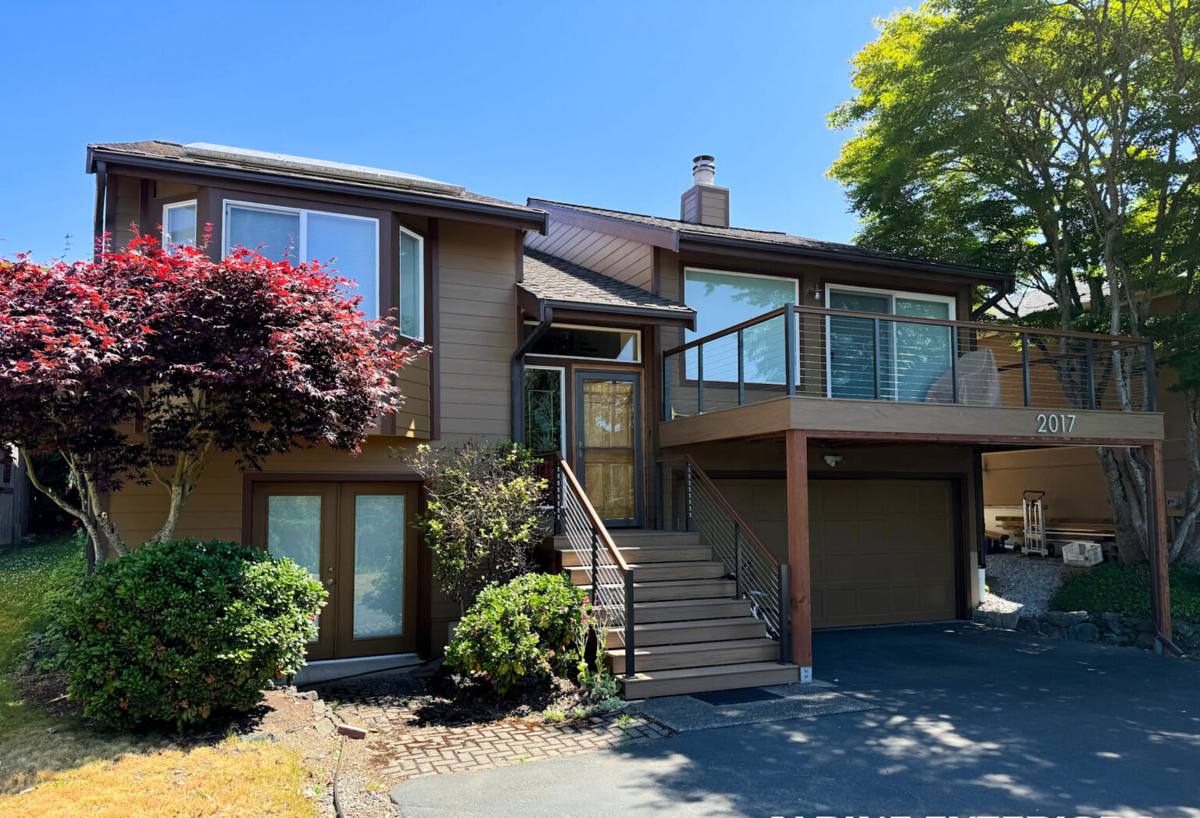
What Sunnyland's Climate Does to a Roof Over Time
Salt Air and Metal Fatigue
Proximity to the bay means airborne salt settles on roofing materials, gutters, flashing, and fasteners. Over years, this accelerates corrosion on lower-grade metal components — cheap flashing, uncoated fasteners, and bargain gutter systems age faster here than they would twenty miles inland. It's not dramatic, it's cumulative, and it's the kind of thing that shows up as a pinhole leak eight or ten years into a roof's life instead of twenty.
Driving Rain and Wind-Driven Water Intrusion
Bellingham's weather off the water tends to come in sideways during winter storms. That means rain doesn't just fall on a roof, it gets pushed up under shingle tabs, around vent boots, and into any gap in flashing that a calmer climate might tolerate. Roofs here need tighter underlayment coverage, properly lapped step flashing, and sealed penetrations — not because the materials are different, but because the margin for error is smaller.
Moss, Shade, and Moisture Retention
Sunnyland's tree cover and the region's damp, mild winters create ideal conditions for moss and algae growth, especially on north-facing slopes and anywhere debris collects. Moss isn't just cosmetic — it holds moisture against the roofing surface, works its way under shingle edges, and can shorten the life of a roof by years if left unmanaged. A correct roof replacement plans for this from day one, both in material choice and in the maintenance the homeowner is told to expect.
Signs a Sunnyland Roof Is Due for Replacement
- Granule loss showing up in gutters or at downspouts, especially after storms
- Shingles that are cupping, curling, or cracking, particularly on sun- and wind-exposed slopes
- Moss buildup that returns quickly after cleaning, or has spread across multiple slopes
- Soft spots in the roof deck felt when walked, or sagging visible from the ground
- Water stains on interior ceilings or in the attic near valleys, chimneys, or vent penetrations
- Rusting or deteriorating flashing around chimneys, skylights, or roof-to-wall transitions
- A roof approaching or past the manufacturer's expected service life for its material and exposure
Any one of these on its own might just mean repair. Several together, especially on a roof that's fifteen-plus years old, usually means it's time to talk about full replacement instead of chasing leaks one at a time.
What a Correct Roof Replacement Involves Here
Tear-Off and Deck Inspection
We remove the existing roofing down to the deck rather than layering over it. This is the only way to actually see what's underneath — soft or rotted decking, especially near valleys and eaves where water has been sitting for years, has to be found and replaced before new roofing goes down. Skipping this step just buries a problem under a new surface.
Underlayment Built for Wind-Driven Rain
Given how often rain here comes in at an angle, we use synthetic or ice-and-water-shield underlayment at eaves, valleys, and other vulnerable areas rather than relying on minimum-code coverage. This is one of the most important — and least visible — decisions in the whole job.
Flashing Done Right
Step flashing at walls and chimneys, proper valley metal, and correctly lapped drip edge matter more in a marine climate than almost anywhere else. Salt exposure means we favor corrosion-resistant flashing materials and fasteners over the cheapest option available, because replacing failed flashing under a five-year-old roof is a bad outcome for everyone.
Ventilation That Actually Balances
Proper intake and exhaust ventilation keeps moisture from condensing in the attic, which matters as much for roof longevity as anything happening on the outside. In a humid coastal climate, an unbalanced ventilation system can trap moisture that rots decking from below, even on a roof with flawless top-side work.
Material Selection for Moss Resistance and Exposure
We talk through material options honestly — asphalt composition shingles, metal roofing, and other systems each have real trade-offs in a climate like Whatcom County's. Algae-resistant shingle products, proper metal coatings, and roof design choices that reduce moss-prone shaded areas all factor into what we recommend for a specific roof, not a one-size answer.
Material Options: Honest Trade-Offs for This Climate
| Material | Moss/Algae Resistance | Salt Air Durability | Typical Lifespan Here | Notes |
|---|---|---|---|---|
| Asphalt composition shingles | Good with algae-resistant granules | Good, with corrosion-resistant fasteners | 20-30 years | Most common choice; wide range of price points and warranties |
| Standing seam metal | Very good; sheds moss more easily | Requires proper coating/gauge near the bay | 40-60 years | Higher upfront cost, lower long-term maintenance |
| Wood shakes | Poor without diligent maintenance | Moderate; needs regular treatment | 20-30 years with upkeep | We're candid that upkeep demands are steep in this climate |
| Composite/synthetic shingles | Good | Good | 30-50 years | Worth considering where budget allows |
There's no universally "best" material — the right call depends on the home's roof pitch, shading, budget, and how much ongoing maintenance the homeowner wants to take on.
Cost Factors for a Sunnyland Roof Replacement
Every roof is different, but a few things reliably move the price up or down on jobs in this neighborhood:
- Roof size and number of slopes, valleys, and penetrations (more complexity means more labor and flashing)
- Current roof condition — how much, if any, deck repair is needed once tear-off exposes the substrate
- Material choice, from standard asphalt shingles up through metal or premium composite systems
- Accessibility — steep pitches or difficult site access add time and safety measures
- Ventilation and flashing upgrades needed to meet current best practice, especially on older homes
- Permit requirements, which vary by scope and jurisdiction within Whatcom County
We give homeowners a broad range up front based on roof size and visible condition, then firm it up once we've actually been on the roof. We won't quote a number sight unseen and we don't pad estimates to leave room for "surprises" — if something's found during tear-off, we explain it and get sign-off before proceeding.
Our Process for a Sunnyland Roof Replacement
- On-site inspection of the existing roof, attic ventilation, and any interior signs of water intrusion
- Written estimate outlining material options, scope, and a realistic cost range
- Scheduling that accounts for Bellingham's wetter months, so tear-off and dry-in happen with a real weather window
- Tear-off, deck inspection, and repair of any compromised sheathing before new materials go down
- Installation of underlayment, flashing, ventilation components, and roofing material to manufacturer and code specifications
- Final walkthrough covering what was done, warranty coverage, and basic maintenance expectations for this climate
Why a Crew That Already Works Sunnyland Matters
Roofing crews who mostly work drier, more sheltered areas sometimes treat marine-climate details as optional upgrades rather than necessities. A crew that regularly works neighborhoods like Sunnyland treats wind-driven-rain underlayment coverage, corrosion-resistant fasteners, and moss-aware material selection as standard practice, not add-ons, because we've seen what happens when they're skipped. That familiarity also means we know how Bellingham's permitting works, how to schedule around the region's wetter stretches, and what maintenance advice actually holds up here versus generic guidance written for a different climate.
None of this requires exotic materials or inflated pricing — it requires attention to the parts of the job that don't show up in a photo but decide whether the roof is still doing its job in fifteen years.
Maintaining a New Roof in a Coastal, Moss-Prone Climate
- Have moss and debris cleared from the roof and gutters at least once a year, more often under heavy tree cover
- Keep gutters and downspouts clear so water isn't backing up under eaves during heavy rain
- Trim back overhanging branches to reduce shade and debris buildup on moss-prone slopes
- Schedule a periodic visual inspection of flashing and penetrations, particularly after major windstorms
- Address small leaks or granule loss early — in this climate, minor issues tend to compound quickly if ignored
A well-installed roof still needs basic upkeep in a climate like this one. We're happy to walk homeowners through a simple maintenance schedule as part of any replacement project.
If your Sunnyland home's roof is showing its age or you just want an honest read on where it stands, we're glad to take a look. Fill out the form below for a free, no-pressure estimate.