 Bellingham Exterior
 Why Decks in Sehome Wear Out Faster Than People Expect
Sehome sits close enough to Bellingham Bay that salt-laden air is a constant, low-grade presence on anything built outdoors. Add in the tree cover around the neighborhood's hillier lots — much of it shaded by mature evergreens near the Arboretum — and you get decks that stay damp longer after every rain than decks in more open, sun-exposed parts of Whatcom County. That combination of salt air, driving rain off the Sound, and a moss season that can run from early fall through late spring is exactly the environment that shortens the life of a deck's structure, not just its surface finish.
Most homeowners notice the cosmetic side first — gray, slick boards, moss in the gaps, a railing that feels a little soft. By the time those signs show up, the framing underneath has usually been dealing with trapped moisture for years. A deck built or maintained without that climate in mind will fail from the inside out, well before the decking boards themselves look "done."
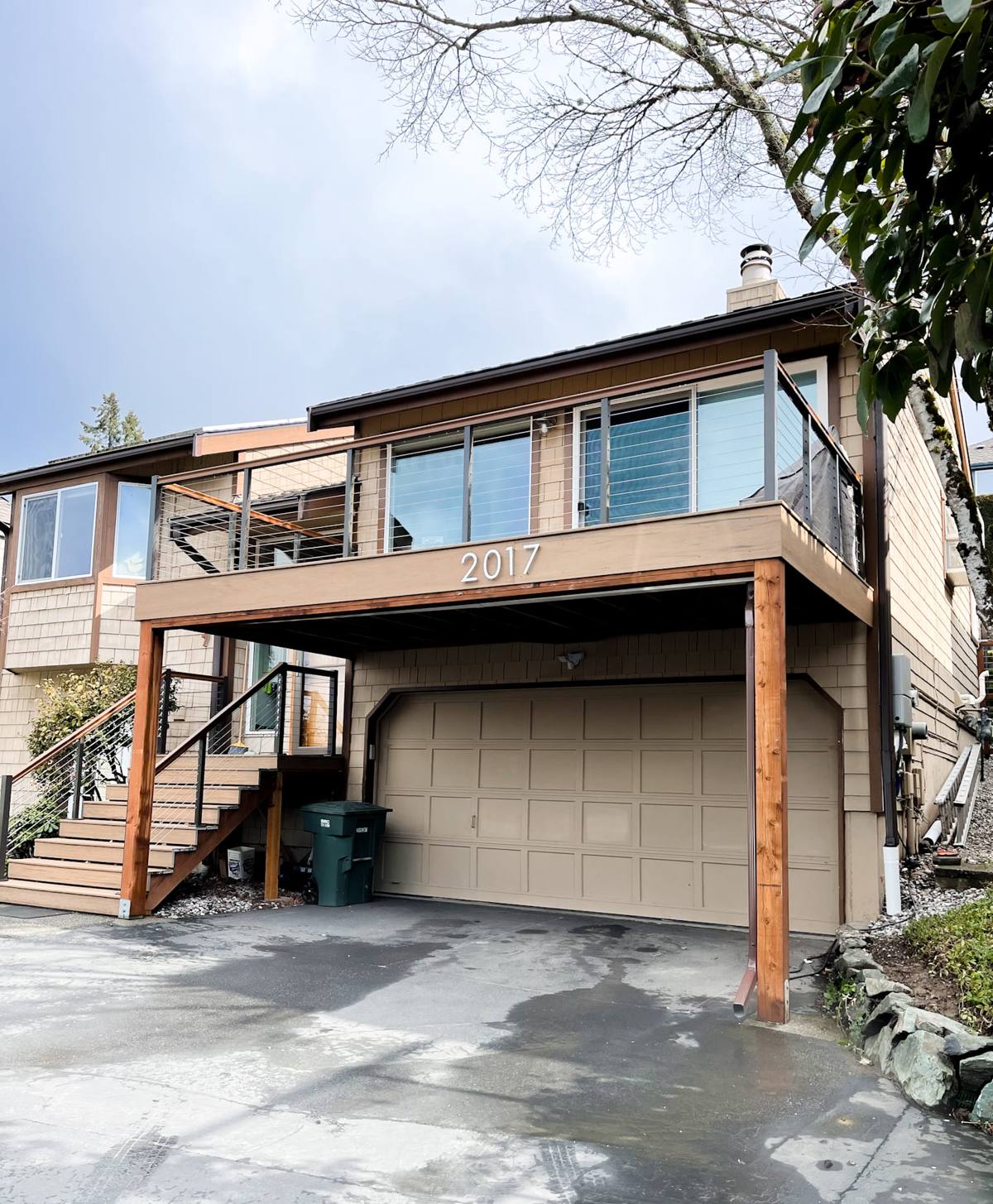
Signs a Deck Needs Replacement, Not Another Repair
Not every tired-looking deck needs to come out. But there's a point where patching individual boards stops making sense and full replacement becomes the honest recommendation. Here's how we tell the difference on a site visit:
- Soft or spongy spots underfoot, especially near the house or at board ends — usually rot, not just wear
- Ledger board separation from the house, or daylight/gaps where the ledger meets the siding
- Joist ends that are dark, crumbly, or punky when probed with a screwdriver
- Rusted or failing fasteners and hardware, particularly older galvanized nails that were never rated for coastal moisture exposure
- Footings that have shifted, heaved, or settled, causing the deck to feel uneven or bounce more than it should
- Moss and algae that return within weeks of cleaning, a sign the deck rarely fully dries between rain events
If it's just surface graying and a few loose boards on an otherwise sound frame, we'll say so and recommend a repair. If the framing or ledger is compromised, replacement is the only option that actually solves the problem rather than delaying it a season or two.
What a Correct Deck Replacement Actually Involves
Ledger and Flashing
The ledger board — where the deck attaches to the house — is the single most common failure point in this climate. Correct flashing detail keeps water from running behind the ledger and into the house's rim joist and framing. This is the step most likely to get shortcut on a fast, low-bid job, and it's the one that causes the most expensive hidden damage later.
Framing and Joist Layout
Joist spacing and blocking need to match the decking material and the loads the deck will actually see — furniture, hot tubs, and gathering space all matter here. Wider joist spacing than a given decking product is rated for leads to bounce and premature sagging, regardless of how good the boards themselves are.
Footings
Footings need to sit at proper depth and bear on undisturbed, stable soil. On sloped or damp Sehome lots, drainage around footings matters as much as depth — standing water at the base of a post is a slow but reliable way to undermine a deck's structure.
Fasteners and Hardware
In a coastal-influenced climate, fastener choice isn't a place to save money. Stainless steel or high-grade coated fasteners rated for exterior, moisture-heavy use cost more up front and save the deck from the rust streaking and hardware failure that plague decks built with standard hardware.
Choosing a Decking Material for This Climate
There's no single "best" decking material — there's a best fit for how a household uses the deck, how much upkeep they want to do, and how much shade and moisture the specific spot on the lot deals with. Here's how the main options generally compare under Sehome's conditions:
| Material | How It Handles Local Moisture & Moss | Maintenance | General Lifespan |
|---|---|---|---|
| Pressure-treated wood | Needs consistent sealing to resist rot in shaded, damp spots | Annual cleaning and periodic re-sealing | Roughly 10–15 years with upkeep |
| Cedar | Naturally rot-resistant but still needs sealing under heavy shade | Regular cleaning, periodic oil or sealant | Roughly 15–20 years with upkeep |
| Composite decking | Doesn't rot, but can stay damp and grow moss/algae on the surface in shaded areas without airflow | Periodic washing; low but not zero maintenance | Often 25+ years, backed by manufacturer warranty |
| PVC/capped decking | Best moisture resistance of the group; least prone to surface staining in shade | Occasional washing | Often 25–30+ years, backed by manufacturer warranty |
Composite and PVC products cost more up front but remove the annual sealing cycle that wood requires — a real consideration in a neighborhood where shade and dampness make that cycle harder to keep up with. We'll walk through the honest trade-offs for your specific site rather than pushing one product line.
How Our Process Works
- Site assessment — we inspect the existing deck's framing, ledger, and footings, not just the surface boards, and tell you plainly whether replacement or repair is the right call
- Scope and estimate — a clear, itemized estimate covering demolition, framing, decking material, hardware, and any permit work
- Tear-off and disposal — full removal of the old structure, including hidden hardware and any compromised ledger flashing
- Framing rebuild — new ledger flashing, joists, and footings built to current structural standards for the deck's size and use
- Inspection — framing is signed off before decking goes down, on any project requiring permit inspection
- Decking, railing, and stairs installed — per the material and layout chosen at estimate
- Final walkthrough — we go over care and maintenance specific to the material installed before we consider the job done
Permits and Local Requirements
Deck replacement that involves structural work — new framing, altered footprint, or changes to railing and stair height — typically requires a permit through the local building authority, whether the property falls under City of Bellingham jurisdiction or unincorporated Whatcom County. Requirements can differ depending on deck height, guardrail specifications, and whether the footprint is changing from the original structure. We handle the permit process as part of the job so homeowners aren't left tracking down inspections themselves.
What Drives Cost on a Deck Replacement
Every deck is different, so we don't quote sight-unseen. But these are the factors that most often move a project up or down in scope:
| Factor | Why It Matters |
|---|---|
| Size and footprint | More square footage means more framing, footings, and decking material |
| Condition of existing footings | Reusable footings save cost; settled or undersized footings need replacement |
| Decking material chosen | Wood, composite, and PVC sit at different price tiers and affect long-term upkeep cost |
| Height and access | Elevated decks or difficult site access add framing complexity and labor time |
| Railing and stair design | Code-required guardrail height and stair configuration affect materials and labor |
| Demolition and disposal | Larger or multi-level tear-offs mean more disposal volume |
Why a Crew That Already Works Sehome Matters
A contractor who already works this neighborhood knows the practical realities before they ever step on site: the shade patterns from mature tree cover, the moisture that lingers on sloped lots, and the moss season that runs longer here than in drier parts of the county. That familiarity shows up in small but real ways — recommending flashing and fastener choices suited to actual local conditions rather than generic specs, and being upfront about which materials will hold up versus which will just look good for a year or two.
It also matters after the job is done. A local crew is easy to reach for a warranty question or a follow-up check, without the runaround of chasing down a company that only worked in the area once.
Keeping a New Deck Sound After Replacement
A correctly built deck still needs basic upkeep to get its full lifespan in this climate. A few habits go a long way:
- Sweep off moss, needles, and leaf debris regularly, especially in shaded areas that don't dry quickly
- Check and re-tighten hardware annually, particularly on stairs and railings
- Re-seal wood decking on the schedule recommended for the specific product used
- Keep nearby vegetation trimmed back to improve airflow and sun exposure across the deck surface
- Inspect the ledger flashing yearly for gaps or signs of water intrusion
- Keep gaps between boards and any drainage points clear so water doesn't pool
If you're weighing repair versus replacement, or just want an honest read on what your deck needs, we're glad to come take a look. Reach out for a free, no-pressure estimate using the form below.