 Bellingham Exterior
 Sehome's Climate Is Harder on Siding Than It Looks
Sehome sits close enough to Bellingham Bay to catch salt-laden air off the water, and like the rest of Whatcom County it gets long stretches of driving rain from fall through spring. Add in the shaded, tree-lined lots common around Sehome Hill and you get a third factor that does more damage than people expect: moss. Moisture that lingers under moss growth keeps wood-based siding wet for days at a time, and salt air accelerates corrosion on fasteners, flashing, and any exposed metal trim.
None of this is dramatic on its own. It's cumulative. A siding product that's marginal in a dry climate becomes a real liability after ten or fifteen Bellingham winters. That's the lens we use on every Sehome project — not "what looks good going up," but "what still looks good and still protects the house in year fifteen."
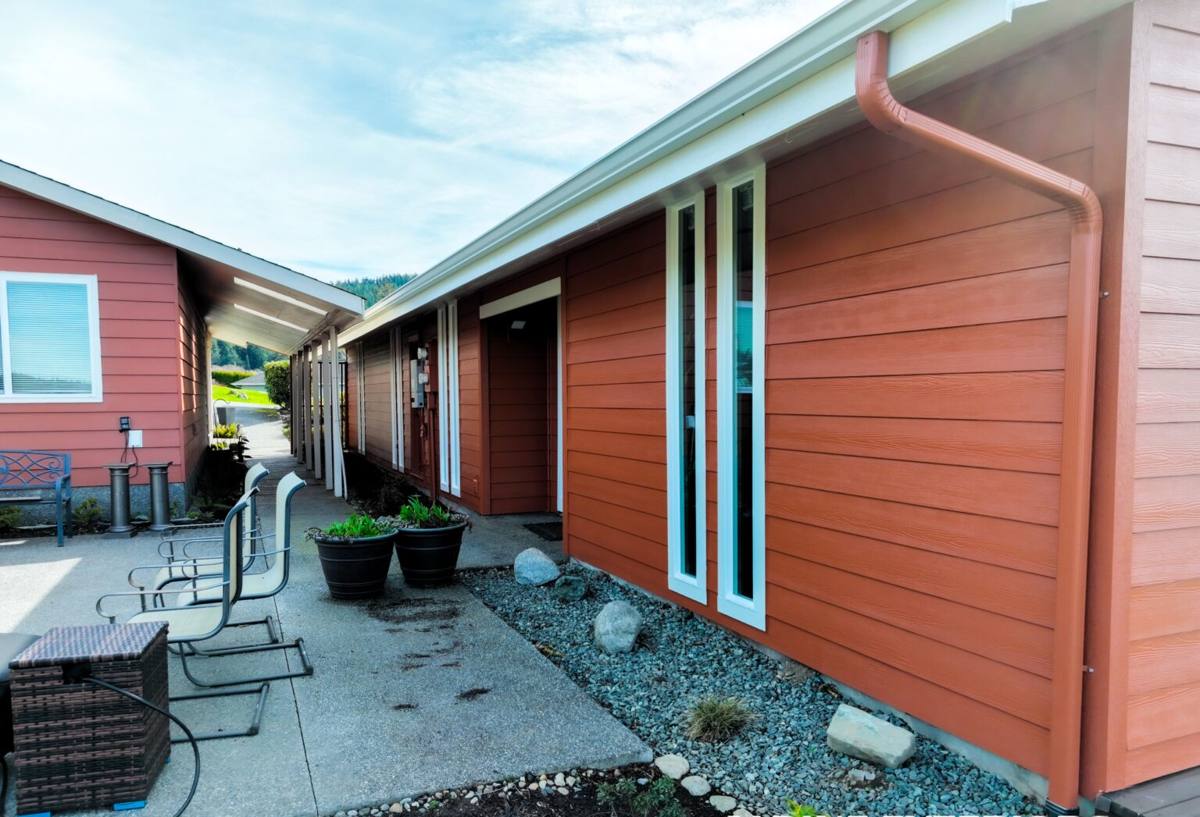
Why Fiber Cement Specifically — and Why James Hardie
Fiber cement is a mix of cement, sand, and cellulose fiber, engineered to resist moisture, hold paint, and stand up to freeze-thaw cycling far better than wood or wood-composite siding. It doesn't feed moss and mildew the way wood does, and it doesn't warp or delaminate when it takes on water at a cut edge or a poorly flashed joint — two failure points that are common on Bellingham homes because of how often the siding actually gets wet.
We install James Hardie products exclusively. We don't carry LP SmartSide, vinyl, Cemplank, Allura, or cedar. That's a deliberate standard, not a sales pitch — Hardie's HZ5 product line is engineered specifically for climates like ours (moisture, moss, and freeze-thaw exposure), the ColorPlus finish is baked on at the factory rather than field-applied, and the warranty structure is transferable if the home sells. We'd rather install one product line correctly, every time, than juggle several with different moisture behavior and different installation rules.
What This Means for a Sehome Home Specifically
Sehome has a mix of older homes with original wood siding or aging composite, and newer infill construction. On the older homes, we're almost always dealing with compromised sheathing or trim behind the existing siding from years of moisture intrusion — something a straight re-side over the top would just seal in. On newer homes, the siding itself may be fine but installed with gaps or clearances that don't account for how much rain this area actually gets.
What a Correct Fiber Cement Installation Actually Involves
Fiber cement siding is only as good as the assembly behind it. A rushed install voids the manufacturer warranty and, more importantly, lets water get where it shouldn't. Here's what we check on every job, not just the ones that look complicated:
Weather-Resistant Barrier and Flashing
A continuous weather-resistant barrier (WRB) goes on before any siding, with all seams taped and all penetrations — vents, hose bibs, light fixtures — properly flashed. Around windows and doors, flashing has to shed water outward and downward, never trap it behind the trim. This is the single most common corner cut on lower-bid siding jobs, and it's invisible once the siding goes up, which is exactly why it matters that the crew doing it isn't skipping steps to save time.
Fastening and Clearances
James Hardie specifies exact fastener types, spacing, and penetration depth, plus minimum clearances from grade, roof lines, and decks — typically 6 inches from grade and 2 inches from roofing. In a moss-prone area like Sehome, those clearances aren't a formality. Siding installed too close to grade or too close to a roofline stays damp longer and gives moss somewhere to establish itself early.
Caulking and Joint Treatment
Butt joints, trim edges, and any cut ends need to be sealed or capped per Hardie's specifications — cut edges of fiber cement are more vulnerable to moisture uptake than the factory-finished face. We treat every field cut, not just the visible ones.
James Hardie Product Lines We Use in Sehome
Different parts of a home call for different profiles. We spec these based on the specific house, not a one-size approach:
- HardiePlank lap siding — the most common choice for full re-sides, available in smooth or cedar-textured finishes, engineered in the HZ5 formulation for Pacific Northwest moisture exposure.
- HardieShingle — used for accent gables or a shingle-style look on homes where that matches the existing character of the block.
- HardiePanel — vertical panel siding, common on modern or craftsman-style accents and outbuildings.
- HardieTrim — matched trim boards so window and corner details hold up at the same rate as the field siding instead of becoming the weak point.
All of it is available in Hardie's ColorPlus factory finish, which is baked on under controlled conditions and backed by its own finish warranty — a meaningfully different product than field-painted siding that starts weathering from day one.
Our Process for a Sehome Project
The steps are the same on every job because skipping one is how problems start:
- On-site inspection of existing siding, sheathing, and trim condition — including a check for hidden moisture damage around windows and at the base of walls.
- Written scope covering removal, sheathing repair (if needed), WRB, flashing detail, product line, and color.
- Tear-off and sheathing assessment — this is where we find out if there's damage the old siding was hiding.
- WRB and flashing installation, inspected before any siding goes up.
- Hardie siding installation to manufacturer clearance and fastening specs.
- Trim, caulking, and final detail work.
- Walkthrough with the homeowner before we call it done.
What Drives Cost on a Project Like This
| Factor | Why It Affects Cost |
|---|---|
| Sheathing condition | Water-damaged sheathing found during tear-off has to be replaced before new siding goes on — this is common on older Sehome homes with prior moisture intrusion. |
| Home size and stories | More square footage and taller wall sections mean more material, more labor, and in some cases added equipment for access. |
| Trim and architectural detail | Homes with more corners, gables, and window trim take more cutting, fitting, and sealing per square foot of coverage. |
| Existing siding removal | Multiple layers of old siding, or siding with asbestos-containing materials underneath, add disposal and handling steps. |
| Color and finish | Factory ColorPlus finishes have a cost built in but eliminate a repaint for years; custom field-painted color adds a separate cost line. |
| Site access | Tight lots, mature landscaping, or limited driveway access — common on older Sehome parcels — can add setup time. |
Signs a Sehome Home's Siding Needs Attention
Because moisture damage develops behind the siding before it's visible on the surface, it's worth checking for these before a small problem becomes a sheathing replacement:
- Moss or dark streaking building up on north- or shade-facing walls
- Paint that's peeling, bubbling, or chalking faster than it used to
- Soft spots when you press on siding near the ground or under windows
- Visible gaps or separation at trim boards and corner joints
- Warping, cupping, or boards that no longer sit flat against the wall
- A noticeable jump in heating bills without another clear cause
Any one of these on its own isn't an emergency. Several together, especially on the shaded or weather-facing side of the house, are worth a look before winter rains set in again.
Why It Matters That We Already Work in Sehome
Siding crews that mostly work drier inland areas sometimes under-detail flashing and clearances because it rarely gets tested. In Sehome, it gets tested every rainy season. Working this neighborhood regularly means we already know what the older housing stock tends to be hiding behind its siding, how shaded lots near Sehome Hill affect drying time, and which details actually matter here versus what's fine to standardize. That's not a marketing point — it changes what we look for during inspection and how we sequence the work.
Maintenance After Installation
Fiber cement is low-maintenance compared to wood, but "low" isn't "none," especially in a moss-prone climate. An annual rinse to knock down algae and moss buildup, a quick check of caulked joints every couple of years, and prompt attention to any gutter overflow or landscaping that's pushed up against the siding will keep a correctly installed Hardie system performing for decades. ColorPlus finishes hold their color well without repainting, but keeping debris and standing moisture off the wall surface is still the homeowner's job.
If you're dealing with aging or moisture-damaged siding on a Sehome home, or planning ahead before the next rainy season, we're happy to take a look and give you a straightforward, no-pressure estimate — use the form below to get started.