 Bellingham Exterior
 Siding Repair for Columbia's Bellingham Homes
The Columbia neighborhood sits close enough to Bellingham Bay to catch salt-tinged air off the water, and far enough into the city's tree canopy to stay shaded and damp for long stretches of the year. That combination is hard on exterior siding. Homes here run the full range — postwar bungalows, mid-century ramblers, and newer infill construction — but almost all of them share the same enemy: months of low sun, driving rain off the Sound, and a moss season that can stretch from October into June.
Siding repair in this kind of climate is not just about matching a color or patching a hole. It's about understanding how moisture moves behind cladding, how salt air accelerates corrosion on fasteners and trim, and how moss and algae hold water against a wall long after a storm has passed. This page covers what siding repair actually involves for a Columbia-area home, what separates a real fix from a cosmetic patch, and why we only use James Hardie fiber cement when a wall needs new material.
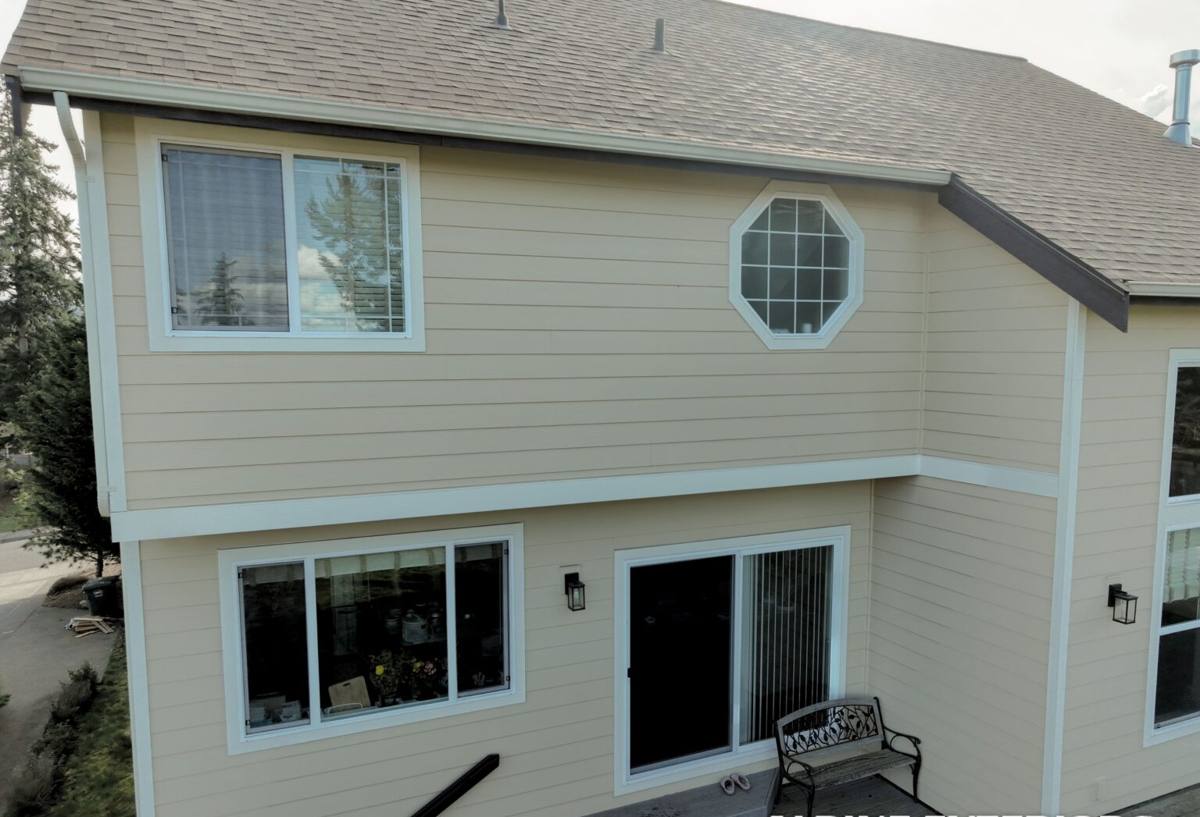
What Bellingham's Climate Does to Siding Over Time
Salt Air and Corrosion
Proximity to Bellingham Bay means airborne salt settles on exterior surfaces, including fasteners, flashing, and trim. Over years, that accelerates rust on exposed nail heads and steel components, which shows up as staining streaks bleeding down the siding face — usually the first visible sign that something underneath needs attention.
Driving Rain
Whatcom County's rain rarely falls straight down. Wind-driven rain pushes water sideways into laps, seams, and butt joints, which is exactly where poor original installation or aging caulk fails first. Water that gets behind siding and can't drain or dry out is the single biggest cause of rot in this region.
Moss and Algae Season
Shaded, north-facing walls and anything under tree cover — common throughout Columbia's residential streets — stay damp far longer than sun-exposed walls. Moss and algae growth on siding isn't just cosmetic. It holds moisture against the surface, which speeds up decay on wood-based products and can stain or degrade coatings on other materials.
Signs Your Siding Needs Repair
- Soft or spongy spots when you press on the siding, especially near the bottom courses or below windows
- Visible gaps, cracks, or separation at butt joints and corners
- Paint or finish that's bubbling, peeling, or chalking unevenly
- Dark staining streaks running down from fasteners or trim
- Persistent moss or algae growth that keeps coming back after cleaning
- Warping, buckling, or boards that no longer sit flat against the wall
- Interior signs — musty smell, peeling interior paint, or soft drywall near an exterior wall
Any one of these can be a minor fix. Several together, especially combined with interior signs, usually mean water has been getting behind the siding for a while and the repair needs to address the water path, not just the surface.
What a Correct Repair Actually Involves
A lot of "siding repair" work in this region is really just cosmetic patching — cutting out a damaged section and screwing in a replacement piece without ever checking what's underneath. That approach hides problems instead of fixing them. A repair done right on a Columbia-area home includes:
1. Removing Enough Material to See the Problem
We pull back siding beyond the visibly damaged area to check the water-resistive barrier, sheathing, and framing underneath. Damage almost always extends further than what's visible from the outside.
2. Addressing the Water Source
Repairing the siding without fixing why water got in there means the same damage comes back. That could mean re-flashing a window, correcting a bad kick-out flashing detail, re-sealing a penetration, or fixing a grading issue that's splashing water onto lower siding courses.
3. Replacing Rotted Sheathing or Framing
If water reached the wall sheathing or framing, that material needs to be cut out and replaced — not painted over or wrapped. Skipping this step is the most common shortcut in cheap repair work.
4. Matching Material and Fastening Correctly
New siding material needs to match the profile and reveal of the existing wall, and it needs to be fastened per manufacturer spec — not just "close enough." Incorrect fastening is one of the fastest ways to create a new failure point.
Repair Difficulty by Siding Material
What's already on your Columbia home affects how a repair is done, how long it lasts, and how well it holds up to salt air, rain, and moss. Here's how the common materials we encounter compare:
| Material | Repair Behavior in This Climate | Long-Term Outlook |
|---|---|---|
| Vinyl siding | Cracks in cold snaps, fades unevenly, hard to color-match older panels | Repairs are usually visible; UV and temperature swings shorten lifespan |
| Cedar or primed wood | Rot-prone once finish fails; moss and damp shade accelerate decay | Requires ongoing refinishing; repairs often reveal more hidden rot |
| LP SmartSide / wood composite | Vulnerable at cut edges and seams if not sealed exactly to spec | Edge swelling is the most common repair call we see on this product |
| James Hardie fiber cement | Non-combustible, dimensionally stable, doesn't rot; repairs are about correcting install details, not material failure | Holds paint and color longer; factory ColorPlus finish resists the fading we see on painted materials |
We don't install vinyl, LP SmartSide, primed wood, or cedar — but we do repair homes that already have them, and we're upfront about what those materials can and can't take in this climate. When a repair calls for new cladding material, we use James Hardie.
Why We Standardize on James Hardie for Repairs
When a section of siding has to come out and be replaced, the material we put back matters as much as the repair technique. James Hardie fiber cement is non-combustible, holds its shape in wet-dry cycling instead of swelling or warping, and comes with a factory-applied ColorPlus finish that's more resistant to the fading and chalking that Whatcom County's damp, low-light winters cause on field-painted materials. Hardie's HZ5 product line is engineered for exactly this kind of climate — freeze-thaw cycling, sustained moisture exposure, and coastal air.
That doesn't mean every repair on a Columbia home requires re-siding the whole wall. Hardie panels and lap siding can be cut in to match existing coursing, and because the material doesn't rot or swell, a properly executed patch holds up as well as the surrounding wall — something we can't say with confidence about wood-based or vinyl repairs in this climate.
Repair vs. Replace: How We Help You Decide
| Factor | Favors Repair | Favors Full Replacement |
|---|---|---|
| Extent of damage | Isolated to one wall or a few sections | Recurring problems across multiple walls |
| Age of existing siding | Relatively recent, otherwise sound | Near or past expected service life |
| Underlying material | Sheathing and framing intact | Widespread rot found once siding is opened up |
| Original install quality | Good flashing and water management elsewhere on the house | Systemic flashing or water-barrier problems throughout |
| Material match | Discontinued profile can be closely matched | No reasonable match available; patch would look obviously different |
We'll always tell you honestly which side of that table your house falls on. A lot of homes only need targeted repair; some homes have enough underlying damage that repair would just be an expensive way to delay a replacement that's coming anyway.
Our Repair Process
- On-site inspection — we look at the visible damage plus the areas most likely to be affected: window and door flashing, butt joints, corners, and low-clearance areas near grade or decks.
- Diagnosis, not just a quote — we explain what we think is causing the damage, not just what it will cost to patch it.
- Opening up the wall — we remove enough siding to confirm the extent of damage before finalizing scope.
- Fixing the water path first — flashing, sealant, or drainage corrections happen before any new siding goes back on.
- Replacing damaged sheathing or framing — only sound material gets covered back up.
- Installing and finishing new material — matched profile, correct fastening, and color match where James Hardie ColorPlus is involved.
What to Ask Before Hiring a Siding Repair Crew
- Will they open up the wall to check for hidden damage, or just patch what's visible?
- Do they identify and fix the water source, or only the symptom?
- Are they licensed and insured to work in Washington State?
- Can they show you the specific material they plan to use and explain why?
- Do they work in your neighborhood regularly, or is this a one-off job for them?
- Will you get a written scope before work starts, not just a verbal estimate?
Why a Local Bellingham Crew Matters for Columbia Repairs
Siding repair is a small-scale, detail-driven job — the kind of work where local experience actually changes the outcome. A crew that regularly works in Bellingham and Whatcom County has seen how salt air, driving rain, and shaded, moss-prone walls behave on homes in this specific area, not just in a general "Pacific Northwest" sense. That means knowing which wall orientations tend to fail first, which original installation shortcuts show up most often in homes of a certain era, and how to size a repair scope that actually holds up through another wet season instead of needing a redo in two years.
It also means someone who can get to a Columbia-area home quickly if a repair needs a follow-up look, and who has a track record in the community rather than a one-time presence.
If you're seeing early signs of siding trouble on your Columbia home — staining, soft spots, persistent moss, or gaps at the joints — it's worth getting an honest look before the damage spreads further into the wall. We offer free, no-pressure estimates and will tell you straight whether your siding needs a targeted repair or something more.