 Bellingham Exterior
 Deck Repair Built for Silver Beach's Moisture Load
Silver Beach homes sit in one of the wetter, greener pockets of Bellingham, and the decks here show it. Between the moist air coming off the water, long stretches of driving rain through fall and winter, and a moss season that can run eight months or longer, outdoor structures in this neighborhood take a beating that inland Whatcom County homes simply don't see. We repair decks in Silver Beach regularly, and the failure patterns we find are consistent enough that we can usually tell you what's wrong before we finish the first walkaround.
This page is specifically about repairing an existing deck in this neighborhood — not building a new one. If your deck is structurally sound but showing wear, soft spots, loose railings, or surface damage, this is the service you need.
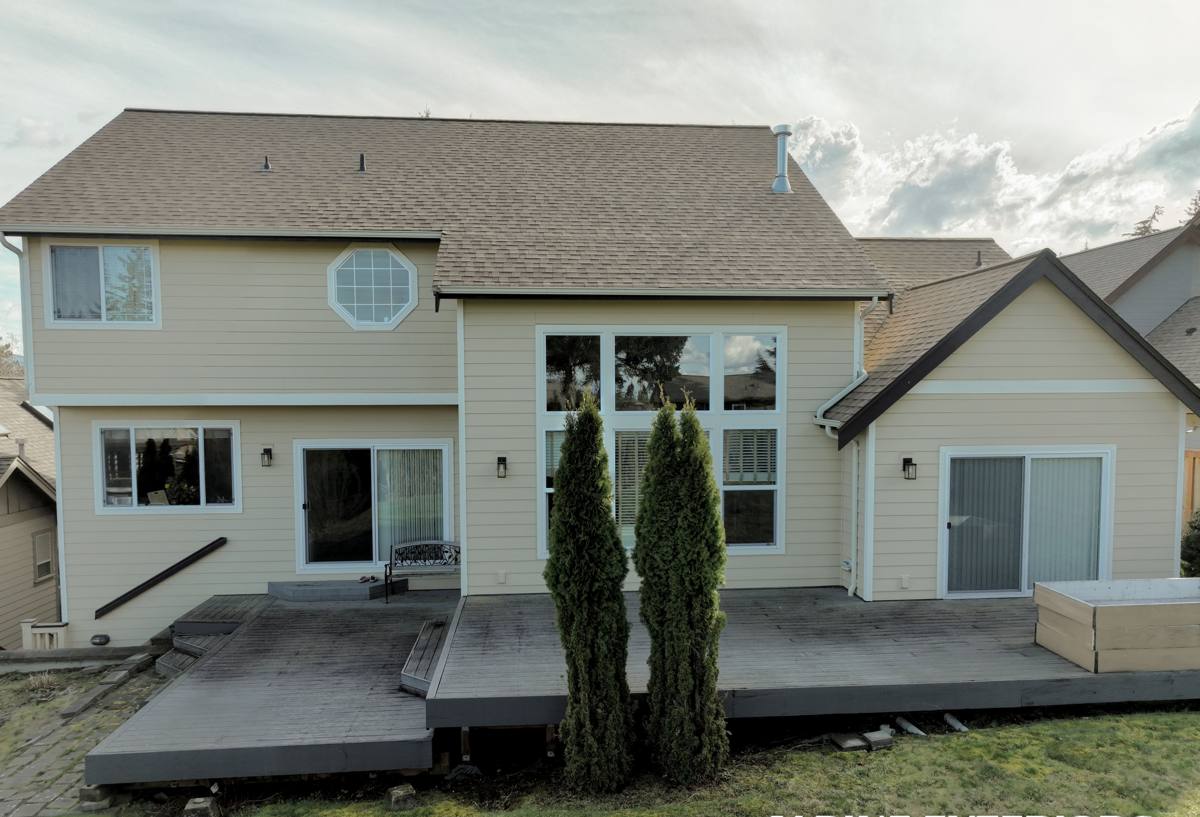
Why Decks in This Part of Bellingham Wear Differently
Every deck in Whatcom County deals with rain. What sets Silver Beach apart is the combination of persistent humidity and shade from mature trees, which slows down drying time after every storm. Wood and composite decking need to dry out between rain events to stay healthy — when that drying window shrinks, moisture problems compound instead of resolving on their own.
The Three Things We See Most
- Moss and algae buildup on decking boards and stair treads, which holds moisture against the wood and creates a slip hazard
- Fastener failure — screws and nails that have backed out, rusted, or sheared as the wood around them swells and shrinks through repeated wet-dry cycles
- Ledger board and framing rot at the point where the deck attaches to the house, usually because flashing was missing, damaged, or never properly installed
Salt-laden air in areas closer to the water accelerates corrosion on any exposed metal hardware — joist hangers, structural screws, railing brackets — even when the wood itself still looks fine. That's one reason a deck can look okay from a distance while having real structural issues underneath.
What a Correct Deck Repair Actually Involves
A lot of deck "repair" in this climate is really just cosmetic — power washing and a coat of stain. That has its place, but it doesn't fix the underlying problem, and on a deck with moisture intrusion it can actually seal damage in rather than out. Our approach starts with figuring out what's structural versus what's surface-level, because those get fixed very differently.
Our Inspection Process
- Check the ledger board connection and flashing where the deck meets the house — this is the single most common source of hidden rot
- Probe joists, beams, and posts with an awl or screwdriver at any spot showing discoloration, softness, or fungal growth
- Inspect all fasteners and hardware for corrosion, backing-out, or missing connectors required by current code
- Check railings and stair stringers for looseness, since these are the components most tied to safety
- Assess decking boards individually — cupping, splitting, and soft spots don't always mean the whole board needs replacing, but they do need to be identified one by one
Once we know what we're dealing with, we separate the work into structural repair (anything affecting the frame, ledger, posts, or hardware) and surface repair (decking boards, railings, stairs, finish). Structural issues get fixed first and always to code, regardless of what the original build looked like.
Repair vs. Replacement: How We Decide
Homeowners often assume a deck with visible damage needs to be torn out. That's frequently not true — decks are modular by nature, and most repairs are targeted to specific components rather than the whole structure. The table below covers the factors that actually drive that decision.
| Factor | Favors Repair | Favors Replacement |
|---|---|---|
| Structural frame (joists, beams, posts) | Solid wood, isolated soft spots | Widespread rot or repeated past patch jobs |
| Ledger board condition | Sound, properly flashed | Rotted or never flashed correctly |
| Decking material | A few damaged boards among sound ones | Most boards cupped, splitting, or spongy |
| Age of structure | Under 15-20 years, built to a reasonable standard | Older, undersized framing by current code |
| Hardware/fasteners | Mostly intact, isolated corrosion | Widespread rust, wrong fastener types used originally |
In most Silver Beach repair calls we handle, the frame is salvageable and the issue is concentrated in decking boards, fasteners, and railings — the parts most exposed to weather and foot traffic. Full tear-outs are the exception, not the rule, when a deck has been reasonably maintained.
Moss, Algae, and Surface Restoration
Given how long moss season runs here, surface maintenance is not optional — it's part of protecting the structure underneath. Moss and algae hold water against the decking surface far longer than bare wood or composite would dry on its own, and that constant moisture is what eventually leads to the rot and soft spots we described above.
Proper surface restoration on a Silver Beach deck typically includes:
- Careful cleaning that removes moss and algae without pressure-washing so hard that it damages the wood grain or composite surface
- Sanding or spot-treating any boards with early-stage cupping before they get worse
- Reapplying a water-repellent stain or sealant rated for the wood species, or manufacturer-specified cleaner for composite
- Addressing drainage and airflow under and around the deck so the surface actually gets a chance to dry between storms
That last point matters more in Silver Beach than in drier parts of the county. If a deck is boxed in by landscaping or sits low with poor airflow underneath, no amount of sealant will keep up with the moisture load — the fix has to include improving how the deck dries out, not just what's on top of it.
Railings, Stairs, and Safety Repairs
Loose railings and worn stair treads are the most common safety complaints we hear, and they're also some of the most straightforward repairs. Wood movement from wet-dry cycles loosens railing posts over time, and stair stringers exposed to standing water rot faster than the rest of the structure because water runoff concentrates there.
We check every railing connection for both looseness and code compliance — height, baluster spacing, and post attachment all get verified, since older decks in this area were sometimes built before current requirements were in place. A repair is a reasonable point to bring these up to standard even if the whole deck isn't being replaced.
Our Deck Repair Process in Silver Beach
We keep the process straightforward because homeowners are usually trying to get a deck safe and usable again, not turn it into a project that drags on.
- On-site inspection — we walk the full deck, probe suspect areas, and check the ledger, framing, and hardware
- Written scope and estimate — you get a clear breakdown of what's structural, what's cosmetic, and what it costs, with no pressure to do more than what's needed
- Repair work — structural fixes first, then decking, railings, and finish work
- Final check — we walk the deck with you before calling the job done, especially on anything safety-related
Why a Crew That Already Works This Neighborhood Matters
Deck repair sounds simple until the person doing it hasn't seen how this specific microclimate behaves. A crew unfamiliar with Whatcom County's rain patterns and moss cycles might power-wash and reseal a deck that actually needed a ledger board replaced — the deck looks great for a season, then the real problem resurfaces. Working in Silver Beach and similar Bellingham neighborhoods regularly means we already know where to look first: the ledger flashing, the north-facing boards that never fully dry, the hardware closest to grade.
We also know that quick fixes without addressing moisture and drainage tend to fail fast in this climate. A repair that doesn't account for how long this deck stays wet after a storm isn't really a repair — it's a delay.
Simple Maintenance Checklist Between Visits
A few habits go a long way toward stretching the life of a repaired deck in this environment:
- Sweep off leaves and debris regularly, especially in fall — trapped debris holds moisture against boards
- Keep an eye on any board that stays visibly wet or dark longer than the rest of the deck after rain
- Clean moss off stairs and walking surfaces as soon as it appears, before it becomes a slip hazard
- Check railings for looseness a couple times a year, particularly after windstorms
- Trim back vegetation that's shading or crowding the deck and slowing airflow
If your Silver Beach deck has soft spots, loose railings, persistent moss, or you're just not sure whether it needs repair or replacement, we're happy to take a look. We offer a free, no-pressure estimate — use the form below to get started.