 Bellingham Exterior
 Silver Beach's Climate Asks More of Your Siding Than People Realize
Homes in Silver Beach sit in one of the wetter, greener corners of Whatcom County, and that's not an accident of geography you can design around — it's a fact of life your siding has to handle every single day. Long stretches of drizzle, driving rain that comes in sideways off a windstorm, humid air that never fully dries out between storms, and a moss and mildew season that can stretch for most of the year. Add in mature tree cover common to this part of Bellingham, and you get siding that stays shaded and damp longer than it would on an open lot across town.
Wood-based and lower-grade siding products don't age gracefully under those conditions. Paint film breaks down faster in constant moisture, seams and butt joints swell and separate, and anything with exposed wood fiber becomes a food source for the mold and moss spores that are simply part of the air here. None of this is a defect in a particular house — it's what the regional climate does to siding that isn't built for it.
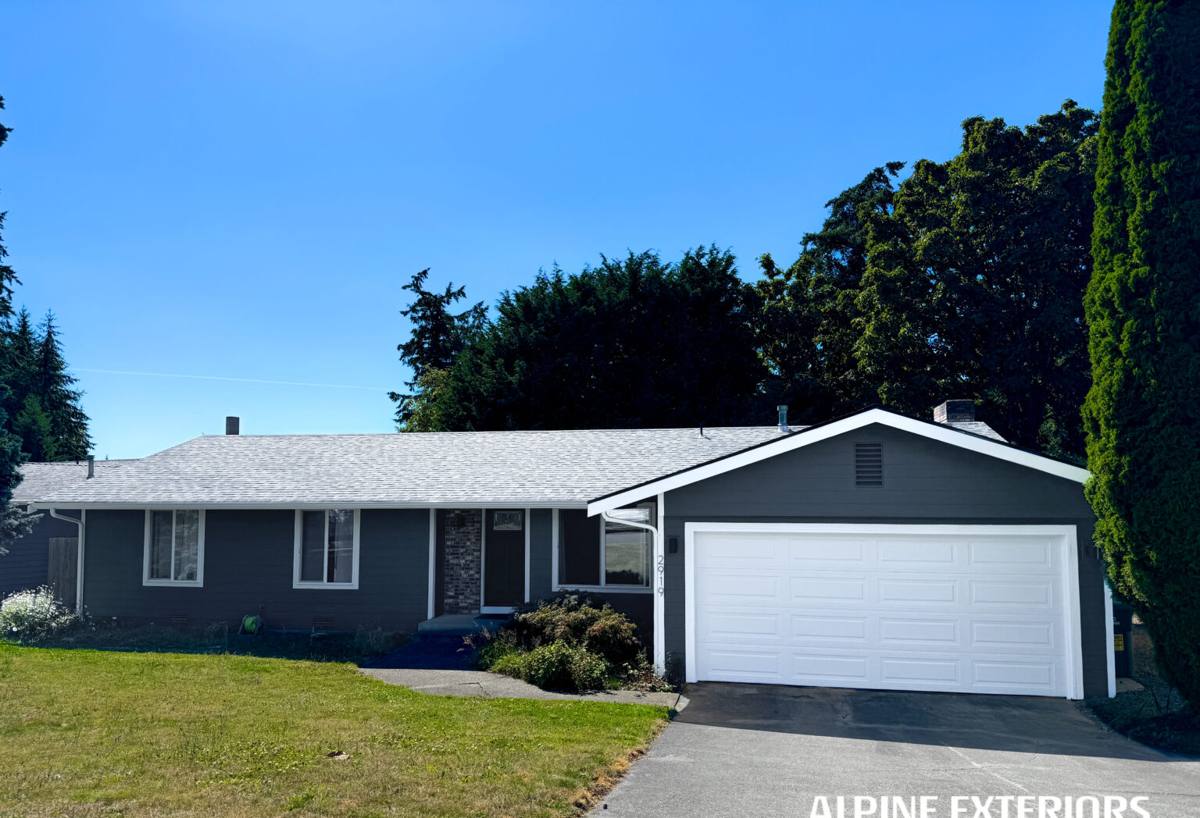
Why We Install Only James Hardie Fiber Cement
We made a decision a long time ago to install one siding system — James Hardie fiber cement — and to say no to vinyl, LP SmartSide, primed wood, and the composite alternatives, even when they're cheaper or faster to install. That's not brand loyalty for its own sake. It comes down to how each product behaves over 20-plus years in exactly the kind of weather Silver Beach gets.
What Fiber Cement Actually Solves Here
- It doesn't rot. Fiber cement has no wood fiber for moisture to break down or moss to root into.
- It doesn't warp or cup. Wind-driven rain that would swell a wood plank doesn't distort a cement-based board.
- It's non-combustible. A real consideration in a region where wildfire smoke and dry-season risk have become part of the summer conversation, even in a wet climate like this one.
- The factory finish (ColorPlus) is baked on, not brushed on. That matters enormously in a place where paint gets tested by moisture nearly year-round — a factory finish resists fading, chipping, and moisture intrusion far better than field-applied paint.
James Hardie also engineers specific product lines (HZ5, for example) for climates with more moisture exposure, which is the right fit for a neighborhood like Silver Beach rather than a generic siding spec meant for a dry-summer, dry-winter region.
What Correct Installation Actually Involves
Fiber cement is only as good as the install. A rushed or undertrained crew can put Hardie board on a wall and still leave it vulnerable to the exact moisture problems it's supposed to solve. This is the part homeowners rarely get walked through, so here's what a correct job actually requires.
Before the First Board Goes Up
- Full tear-off of old siding and inspection of the sheathing underneath for hidden rot or water staining — common on older Silver Beach homes with mature landscaping shading the walls.
- Weather-resistant barrier (house wrap) installed and taped correctly at every seam, not just stapled up and left.
- Proper flashing at every window, door, and roofline intersection — this is where the majority of siding leaks actually start, not through the field of the wall.
- Starter strip set level and true, since every course above it follows that first line.
During Installation
- Correct fastener type, spacing, and depth per the Hardie install spec — over-driven nails crack the board's edge and create a moisture entry point that won't show up for a year or two.
- Manufacturer-specified gaps at butt joints and trim, caulked with a product rated for the movement and moisture cycling this climate produces.
- Field-cut edges primed before installation, since a factory-finished board with an unsealed cut edge is a weak point exposed to rain.
- Clearance maintained between the bottom of the siding and grade, decks, or roof lines so water has somewhere to go besides behind the board.
Every one of these steps is easy to skip and hard to notice until the siding is already failing. That's the gap between a siding job that lasts a couple of decades and one that needs attention again in five years.
What We See on Older Silver Beach Homes
Working this neighborhood regularly, the same handful of problems show up again and again on homes with wood, hardboard, or aging vinyl siding — almost always tied back to the same root cause: sustained moisture with nowhere to escape.
| Siding Material | Common Failure in This Climate | How James Hardie Handles It Instead |
|---|---|---|
| Cedar / primed wood | Moss growth, paint failure, swelling at joints, eventual rot | No organic material for moss to root into; factory finish resists moisture cycling |
| Hardboard / LP-style products | Edge swelling and delamination where moisture gets behind the finish | Cement-based core doesn't swell or delaminate from moisture exposure |
| Vinyl | Warping in wind, brittle cracking in cold snaps, faded color over time | Rigid, dimensionally stable panel with baked-on color that doesn't chalk or fade the same way |
| Field-painted fiber cement (other brands) | Paint wear at 7-10 years, requiring full repaint | ColorPlus factory finish is warrantied separately from the board and rated for far longer color life |
How Our Process Works, Start to Finish
- Free on-site walkthrough. We look at your current siding, sheathing condition where visible, trim, and any moisture staining or soft spots — not just a driveway estimate.
- Written scope and product selection. We walk through Hardie's plank, shingle, and panel options and help you pick a profile and color that fits the house and the neighborhood.
- Tear-off and sheathing check. Old material comes off and we inspect for hidden damage before anything new goes up — this is where surprises get caught early, not after the new siding is on.
- Weather barrier and flashing installation. The unglamorous part that determines whether the siding actually keeps water out for the next 30 years.
- Hardie board installation to manufacturer spec. Fastener pattern, gapping, and cut-edge sealing done correctly, not rushed.
- Trim, caulking, and final detail work. Clean lines at corners, windows, and doors — the details that make a siding job look finished instead of just done.
- Final walkthrough with you. We go over the work in person before we consider the job complete.
Choosing Colors and Profiles That Fit Silver Beach
Silver Beach has a mix of established homes with mature trees and newer infill construction, and siding choices tend to look best when they respect that mix rather than fight it. Lap siding profiles remain the most common and versatile choice; shingle-style Hardie panels can work well as an accent on gables or entry features without needing to redo the whole elevation. Because ColorPlus finishes are factory-matched and consistent board to board, trim and accent colors stay true over time in a way that's hard to guarantee with field-mixed paint, which matters in a climate where color has to hold up through a lot of grey, wet months.
Why the Crew You Hire Matters as Much as the Product
James Hardie board itself is a strong product, but the installation is what determines whether a home actually gets the moisture resistance and longevity it's built for. A crew that regularly works Bellingham and Whatcom County neighborhoods like Silver Beach already understands the local flashing details, roofline intersections, and moisture patterns that a crew unfamiliar with this climate might not think to double-check. That local repetition is worth something real — it's the difference between a general contractor doing siding as one of many trades and a crew that installs Hardie, specifically, week after week, in this exact weather.
Caring for Your Siding After Installation
James Hardie is low-maintenance, not zero-maintenance. A little seasonal attention goes a long way toward getting the full lifespan out of it.
- Rinse siding annually to clear pollen, moss spores, and grime before they get a foothold, especially on shaded elevations.
- Keep gutters clear so overflow doesn't run down the wall face repeatedly.
- Trim back vegetation and tree limbs that keep siding shaded and damp longer than necessary.
- Inspect caulking at trim and penetrations every couple of years and have any gaps resealed.
- Address any impact damage (a ladder bump, a thrown rock from mowing) promptly — small chips are simple to touch up but shouldn't be left exposed.
What This Costs and What Drives the Price
Every Silver Beach home is different in size, trim complexity, and current siding condition, so we don't quote a number without seeing the house. What we can tell you is what actually moves the price:
| Factor | Why It Matters |
|---|---|
| Tear-off complexity | Multiple layers of old siding or hidden sheathing repair adds labor before the new install even starts |
| Trim and architectural detail | Homes with more corners, gables, and window trim take more precision cutting and caulking |
| Siding profile chosen | Lap siding, shingle-style panels, and mixed-material accents carry different material and labor costs |
| Access and site conditions | Mature landscaping, slopes, and tight lot lines common in Silver Beach can affect staging and scaffolding needs |
If you're ready to see what a correctly installed James Hardie system would look like on your Silver Beach home, we're glad to come take a look. The estimate is free, there's no pressure, and you'll get a straight answer about what your home actually needs.