 Bellingham Exterior
 New-Construction Windows, Done Right the First Time
New-construction window installation is a different job than swapping out an old window in an existing wall. It happens before the siding goes on, while the framing, weather barrier, and flashing details are still open and adjustable. That's an advantage — it lets us build the window opening correctly from the studs out instead of working around whatever's already there. But it's also less forgiving: there's no old window to reference, no existing trim to hide a slightly-off reveal, and every flashing layer has to be sequenced correctly the first time, because once the siding closes it in, mistakes stay hidden until they show up as a leak years later.
For homeowners and builders working in the Silver Beach area of Bellingham, that first-time-right requirement matters more than it does in a drier climate. This page covers what a correct new-construction window install involves here, what the local weather asks of the materials and methods, and how our process works from rough opening to final trim.
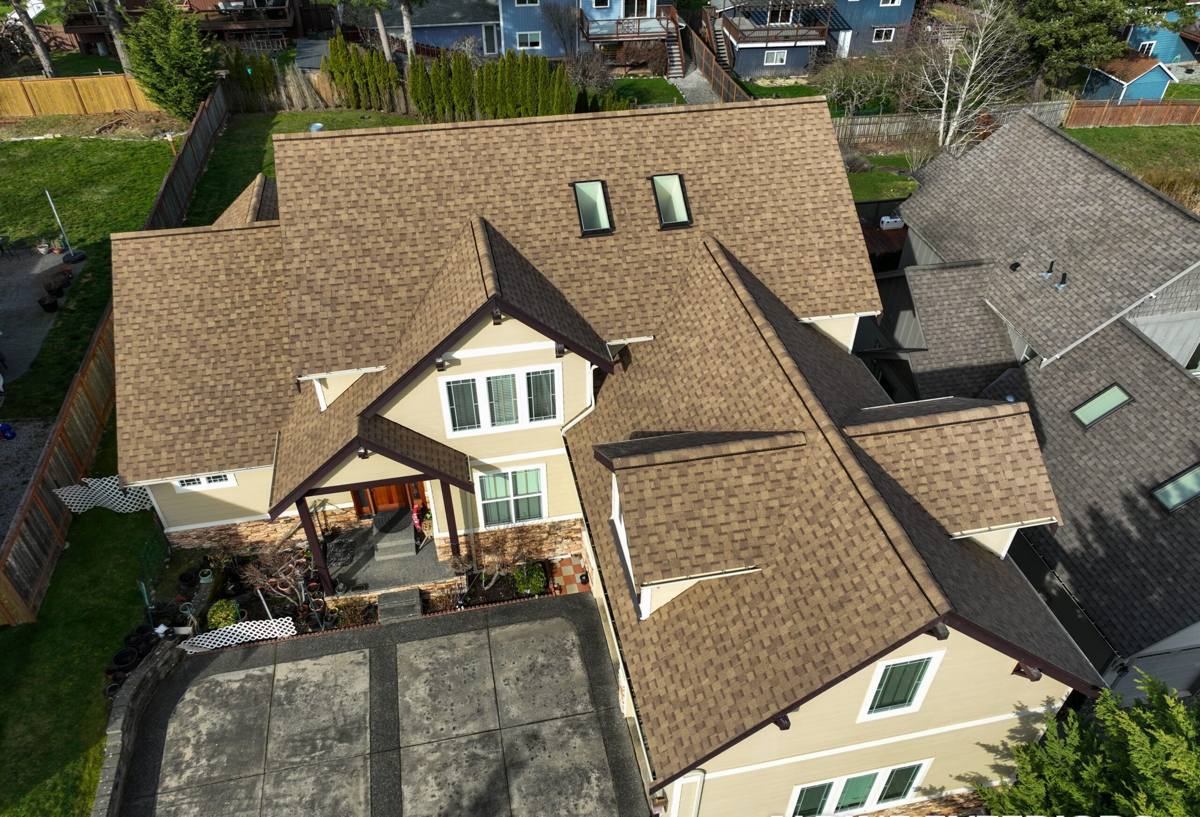
What Bellingham's Climate Asks of a New Window Install
Whatcom County's marine climate is a mixed blessing for window installers. Winters are mild, which is easy on the building materials, but the tradeoffs show up in three specific ways that we plan for on every new-construction job in this area:
Salt-Laden Air
Proximity to Bellingham Bay means airborne salt is a factor for fasteners, flashing metal, and any exposed hardware. We use corrosion-resistant fasteners and flashing components rated for coastal exposure rather than standard interior-grade hardware, because the wrong fastener in this environment can start corroding — and telegraphing rust stains through the finish — well before the window itself shows any wear.
Driving, Wind-Driven Rain
Bellingham doesn't just get a lot of rain — a good portion of it comes sideways during fall and winter storms. A new-construction window opening has to be built to shed that water at every layer: the weather-resistive barrier, the flashing tape, the sill pan, and the window's own nailing fin all have to overlap in the correct shingle-fashion order so water moving downhill never meets a seam it can get behind.
A Long Moss and Mildew Season
Shade, moisture, and mild temperatures add up to a moss and mildew season that runs most of the year in this part of Whatcom County. It doesn't damage a properly flashed window opening, but it will find any weak point — a gap in caulking, a sill without slope, a trim board sitting flush against wet siding — and slowly work into it. Good drainage and airflow around the window opening matter as much as the window unit itself.
New-Construction vs. Insert Replacement — Why the Method Matters
Some Silver Beach projects are true new construction (a new home or addition); others are gut-to-the-studs remodels where we have the option to install "new-construction style" instead of a simpler insert replacement. Knowing the difference helps you understand what you're paying for and why.
| Factor | New-Construction (Nail-Fin) Install | Insert Replacement |
|---|---|---|
| Flashing integration | Fully integrated with the wall's weather-resistive barrier and sill pan — built from the studs out | Relies on the existing wall's flashing, sealed around the new frame |
| Best used when | Framing is open, siding isn't installed yet, or you're doing a full re-side | Existing siding and trim stay in place; window frame is sound |
| Long-term moisture control | Highest, if flashing sequence is followed correctly | Good, but depends on the condition of the original opening |
| Disruption to interior/exterior finishes | Higher — trim and sometimes siding are affected | Lower — mostly contained to the window itself |
| Typical project fit | New builds, additions, full re-sides | Standalone window upgrades on homes keeping their siding |
Neither method is "better" in the abstract — they solve different problems. What matters is matching the method to the actual condition of the wall, which is something we assess on-site rather than assume from a phone call.
What a Correct New-Construction Install Actually Involves
The window unit itself is often the least variable part of the job — most quality windows perform similarly on paper. What separates a install that lasts decades from one that leaks in five years is the sequence of hidden steps around it:
- Rough opening check — verified square, level, and sized correctly before anything else happens.
- Sill pan flashing — a sloped, sealed pan at the bottom of the opening so any water that does get past the window has somewhere to go besides the framing.
- Weather-resistive barrier integration — the house wrap or building paper is cut, folded, and taped so it laps over the flashing correctly, not just stapled around the opening.
- Jamb and head flashing — sides and top sealed in the correct shingle order so water is always directed outward and down, never trapped.
- Window setting and shimming — set plumb, level, and square, shimmed at the correct load points so the frame doesn't rack or bind over time.
- Fastening — corrosion-resistant fasteners through the nailing fin into solid framing, spaced per the manufacturer's instructions to keep the warranty intact.
- Insulation and air-sealing — the gap between frame and rough opening filled with a low-expansion foam or backer rod and sealant, never packed solid enough to bow the frame.
- Interior and exterior trim — sealed at the right points and left open at others, so the assembly can drain and dry rather than trap moisture.
Skip or rush any one of these and the window can still look fine on install day. The problems that show up later — staining, soft trim, drafts, fogged glass from a failed seal caused by racking — usually trace back to one of these steps being shortcut.
Choosing Windows for New Construction in This Climate
Frame material, glazing package, and hardware all affect how a window holds up to Bellingham's weather over time. A few things worth understanding before you pick a product:
Frame Material
Vinyl, fiberglass, and wood-clad frames are all viable choices for this climate, and each has real tradeoffs — vinyl is low-maintenance and budget-friendly but expands and contracts more with temperature swings; fiberglass holds paint well and moves less, at a higher cost; wood-clad offers a traditional look but needs the exterior cladding and seals maintained to keep moisture out of the wood core. We'll walk through the honest tradeoffs for your project rather than push one material as universally best.
Glazing and Ratings
Look for a U-factor in the low-to-mid 0.20s or better for this region — it's a bigger factor here than solar heat gain, since Bellingham's climate is more about keeping heat in than keeping it out. Double-pane with a low-E coating and argon fill is standard on most new-construction projects here; triple-pane is worth discussing for north-facing walls or homes prioritizing energy performance.
Hardware and Weatherstripping
Corrosion-resistant hardware and quality compression weatherstripping matter more here than in a dry climate — they're what keeps wind-driven rain from finding its way past a closed sash. Cheaper hardware tends to show wear as loose cranks or stiff locks well before the glass or frame shows any age.
Our Process for a Silver Beach New-Construction Job
- On-site assessment — we look at the framing, orientation, and exposure of each opening, since a west-facing wall catching prevailing storms needs the same care as an entire home, applied more carefully.
- Product selection — we go over frame material, glazing, and sizing options based on your budget and the home's exposure, not a one-size-fits-all package.
- Opening prep and flashing — sill pans, weather barrier integration, and flashing tape installed in the correct sequence before any window is set.
- Window setting — plumb, level, square, shimmed, and fastened per manufacturer spec to keep the warranty valid.
- Air-sealing and trim — interior and exterior finish work completed so the whole assembly can shed water and dry properly.
- Final walkthrough — every window operated, checked, and reviewed with you before we consider the job finished.
Why a Local Crew Matters for This Kind of Work
New-construction window installation sits at the intersection of several trades — framing, weather barrier, siding, and trim all have to line up with the window schedule. A crew that regularly works in Silver Beach and the surrounding Bellingham neighborhoods already understands how local builders sequence a job, what inspectors here typically look for at the weather-barrier and flashing stage, and how exposure varies from one part of a lot to another depending on tree cover, slope, and which direction a wall faces into the weather.
That local familiarity also means fewer surprises mid-project. We're not learning Whatcom County's permitting and inspection expectations for the first time on your job, and we're not guessing at how a given product line performs after a few Bellingham winters — we've already seen it.
Common Mistakes We See on New-Construction Window Jobs
Most of the water-intrusion problems we get called to diagnose on newer homes trace back to a short list of avoidable mistakes. Questions worth asking any contractor bidding this work:
- Is the sill pan sloped and sealed, or just a flat piece of flashing tape?
- Does the weather barrier lap over the flashing in the correct shingle order, or is it just taped flat?
- Are fasteners corrosion-resistant, rated for this climate — not standard interior-grade hardware?
- Is the window shimmed at manufacturer-specified load points, or wedged in wherever it happens to sit square?
- Is the gap around the frame air-sealed with a low-expansion product, or packed solid enough to bow the jambs?
- Will the installer put the flashing sequence and fastening schedule in writing, or just tell you to trust them?
If a contractor can't answer these clearly and specifically, that's worth treating as a warning sign before work starts — not after siding closes the opening up.
What to Expect After Installation
A correctly installed new-construction window in this climate needs very little ongoing attention: periodic cleaning of tracks and weep holes, an occasional check of exterior caulking at the trim joints, and keeping nearby landscaping trimmed back so moss and mildew don't get a foothold against the siding and trim. If you ever notice staining below a window, a soft spot in the trim, or a draft that wasn't there before, those are worth having looked at early — they're usually cheap to address as isolated issues and expensive to ignore.
If you're planning a new build, addition, or full re-side in the Silver Beach area and want windows installed correctly from the framing out, we're happy to take a look and put together a straightforward, no-pressure estimate — just fill out the form below.