 Bellingham Exterior
 Asphalt Shingle Roofing Built for South Hill's Weather
South Hill sits up above downtown Bellingham with some of the best views in Whatcom County — and some of the toughest roofing conditions to go with them. Elevation, tree cover, and proximity to the bay mean these roofs deal with a combination most inland neighborhoods don't: salt-laden air drifting up off Bellingham Bay, driving rain that comes in sideways off the water, and long stretches of shade that turn into a moss farm on north-facing slopes every winter. An asphalt shingle roof that isn't specified and installed with all three of those in mind will show its age early — curling edges, granule loss, moss creeping under the shingle tabs, and soft spots where water has been sitting longer than it should.
This page covers what an asphalt shingle roof needs to hold up on South Hill specifically, what a correct installation actually involves, and how we approach these jobs as a crew that works this neighborhood regularly rather than passing through once.
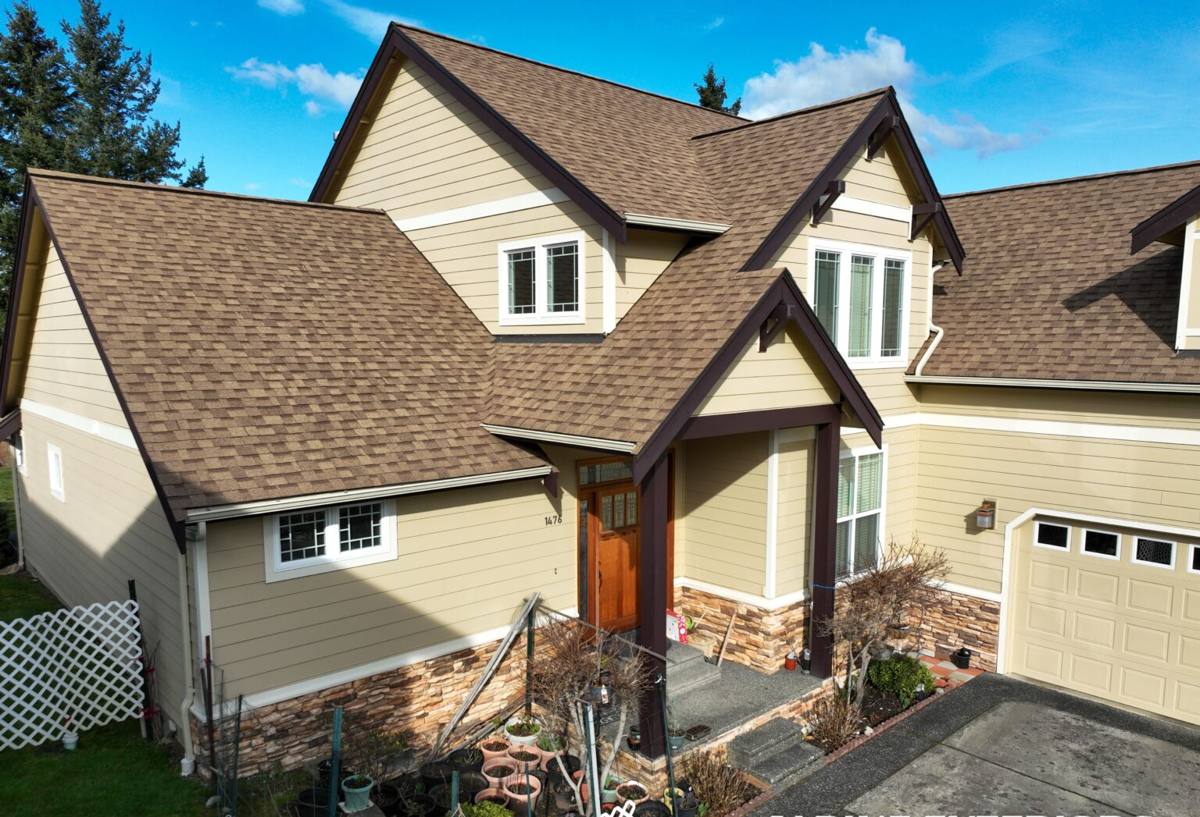
What South Hill's Climate Does to a Roof
Salt Air
Homes with any exposure toward the water pick up airborne salt that accelerates corrosion on exposed metal — nail heads, flashing, vent caps, and gutter fasteners. On an asphalt shingle roof, the metal components (not the shingles themselves) are usually the first thing to show wear. Cheap or mismatched fasteners rust and streak the roof, and corroded flashing is one of the more common causes of a leak that homeowners assume is a shingle problem.
Driving Rain
Bellingham doesn't just get rain — it gets rain pushed sideways by wind coming off the Sound, especially on exposed South Hill slopes. Wind-driven rain finds every gap in a roofing system: under-lapped shingle courses, short nails, poorly sealed valleys, and flashing that was caulked instead of properly integrated. A roof that would perform fine in a calm-rain climate can leak here if the underlayment and flashing details weren't built for sideways water.
Moss Season
Whatcom County's moss season runs long — realistically most of the fall through spring — and South Hill's mature tree canopy means plenty of shaded, slow-to-dry roof sections. Moss isn't just cosmetic. It holds moisture against the shingle surface, works its way under tabs and lifts them, and over years it breaks down the granule layer that protects the shingle from UV and weather. A roof with poor ventilation or heavy shade will grow moss faster than a well-ventilated, sun-exposed one, regardless of shingle quality.
What a Correct Asphalt Shingle Roof Includes
An asphalt shingle roof is a system, not a single product. On South Hill, we pay particular attention to the parts that deal with wind-driven rain and moisture retention, since those are the conditions that expose a shortcut.
Underlayment and Ice-and-Water Barrier
Synthetic underlayment across the full deck, with self-adhered ice-and-water membrane at eaves, valleys, and around penetrations. This is the backup layer that keeps the deck dry if wind-driven rain gets under a shingle tab — which it will, eventually, on an exposed slope.
Ventilation
Balanced intake (soffit) and exhaust (ridge) ventilation keeps the underside of the roof deck at a consistent temperature and lets moisture escape instead of condensing. Poor ventilation is one of the biggest hidden contributors to premature shingle failure and moss growth on shaded roofs — it's also one of the most commonly skipped details on budget re-roofs.
Flashing and Valleys
Step flashing at walls and chimneys, properly woven or metal-lined valleys, and corrosion-resistant fasteners given the salt exposure. Flashing should be integrated into the shingle courses, not just caulked over the top — caulk is a maintenance item, not a waterproofing method.
Starter Strip, Hip, and Ridge
A proper starter course along eaves and rakes prevents wind uplift at the roof's most vulnerable edges — a real concern during South Hill's harder wind-driven storms. Matching hip and ridge caps finish the system and keep the ridge vent line sealed against blown rain.
Our Process for South Hill Roofs
- Inspection and honest assessment — we look at the deck, existing ventilation, flashing condition, and moss/algae staining before quoting anything, and we'll tell you plainly if a repair is a better call than a full re-roof.
- Deck prep — any soft or water-damaged sheathing gets replaced before new roofing goes down; covering a bad deck is how you end up doing this twice.
- Underlayment and ice-and-water barrier — installed per the details above, sized to the slope and exposure of your specific roof.
- Shingle installation — proper nailing pattern and exposure, correct valley and flashing integration, algae-resistant shingles where moss and streaking have been a recurring problem.
- Ventilation check and correction — we won't install a new roof over a ventilation setup we know will shorten its life.
- Cleanup and walk-through — magnetic sweep for stray fasteners, debris haul-off, and a plain-language explanation of what was done and what to expect going forward.
Choosing Shingles for South Hill Conditions
Not every asphalt shingle is a good fit for a shaded, salt-exposed, wind-driven-rain roof. The table below compares the common tiers we see requested.
| Shingle Type | Wind/Rain Performance | Moss/Algae Resistance | Typical Lifespan |
|---|---|---|---|
| 3-tab (economy) | Lower wind rating, more exposed tab edges for wind-driven rain to catch | Standard granules only, unless upgraded | 15–20 years |
| Architectural / laminate | Higher wind rating, thicker profile sheds driving rain better | Often available with algae-resistant granules | 25–30 years |
| Premium/designer laminate | Highest wind rating in the asphalt category | Algae-resistant standard on most product lines | 30+ years |
For most South Hill homes — especially anything with tree cover or a north-facing slope — we recommend at minimum an architectural shingle with algae-resistant (AR) granules. The upgrade cost over standard granules is modest, and it directly addresses the moss-and-streaking issue that's specific to this kind of shaded, wet climate.
Cost Factors on a South Hill Re-Roof
| Factor | Why It Matters Here |
|---|---|
| Roof pitch and access | South Hill has a lot of steeper, view-oriented rooflines that take longer and need more safety setup |
| Deck condition | Older homes may need sheathing replaced, especially where moss has trapped moisture for years |
| Tree cover / shade | Heavier shade often justifies upgrading to AR shingles and improved ventilation, adding modest cost but reducing moss maintenance |
| Flashing and metalwork | Salt-air corrosion means we sometimes recommend replacing old flashing rather than reusing it |
| Number of valleys, chimneys, skylights | Each penetration is a place water can get in and adds labor and material |
We'll walk through these specific to your roof during the estimate rather than quoting a flat number sight-unseen — pitch, access, and deck condition vary a lot even between houses a block apart on South Hill.
Signs Your South Hill Roof Needs Attention
- Moss visible on shaded slopes, especially where it's crept under shingle tabs rather than just sitting on the surface
- Granules collecting in gutters or at downspout outlets
- Curling, cupping, or cracked shingle tabs, particularly on wind-exposed sections
- Streaking or dark staining that doesn't wash off (often algae, not just dirt)
- Rusted or visibly corroded flashing, vent caps, or nail heads
- Daylight visible through the roof deck from the attic, or damp insulation after a storm
- A roof approaching or past 20–25 years old, even with no obvious visible damage
Any one of these on its own might just mean a maintenance item. Several together, especially on an older roof, usually means it's worth a real inspection before the next big storm off the bay finds the weak spot for you.
Why a Crew That Already Works South Hill Matters
South Hill's mix of steeper lots, mature landscaping, and older housing stock means access and staging matter as much as the roofing work itself. A crew that's worked the neighborhood knows what to expect from narrow driveways, tree-adjacent tear-offs, and the kind of debris containment that keeps a job from turning into a mess in tight side yards. We also know which flashing and fastener upgrades actually pay off given the salt exposure up here, instead of defaulting to a generic spec that ignores it.
Just as important: we're not guessing about how a shingle brand or ventilation setup performs in this specific climate. We've seen what holds up through a Whatcom County moss season and what doesn't, and we'll tell you honestly which option fits your roof and your budget rather than upselling the most expensive system available.
Maintenance After Installation
A correctly installed asphalt shingle roof on South Hill still benefits from periodic attention — a moss treatment or gentle low-pressure cleaning on shaded slopes every year or two, gutters cleared before the fall rains start, and a quick visual check after any major windstorm. None of this is complicated, but skipping it is how a 30-year shingle ends up needing repairs at year twelve.
If you're not sure whether your current roof needs repair, a maintenance visit, or a full replacement, we're happy to take a look and give you a straight answer. Reach out for a free, no-pressure estimate using the form below.