 Bellingham Exterior
 Siding Installation Built for South Hill's Conditions
South Hill sits above downtown Bellingham with open exposure toward the bay, mature tree canopy on many older lots, and a mix of home vintages that range from early-1900s construction to mid-century remodels. That combination creates a specific set of demands on exterior siding: salt-laden air off the water, driving rain that comes in sideways during winter storms, and a moss season that runs longer here than in drier parts of Whatcom County. Siding that isn't installed with those conditions in mind tends to show problems early — soft trim, streaking, moss creep at the bottom courses, and paint film that fails years ahead of schedule.
A siding installation done right in this neighborhood isn't just about the product on the wall. It's about how that product is flashed, gapped, fastened, and finished so it can actually shed the water and resist the moisture load this hillside sees for eight or nine months of the year.
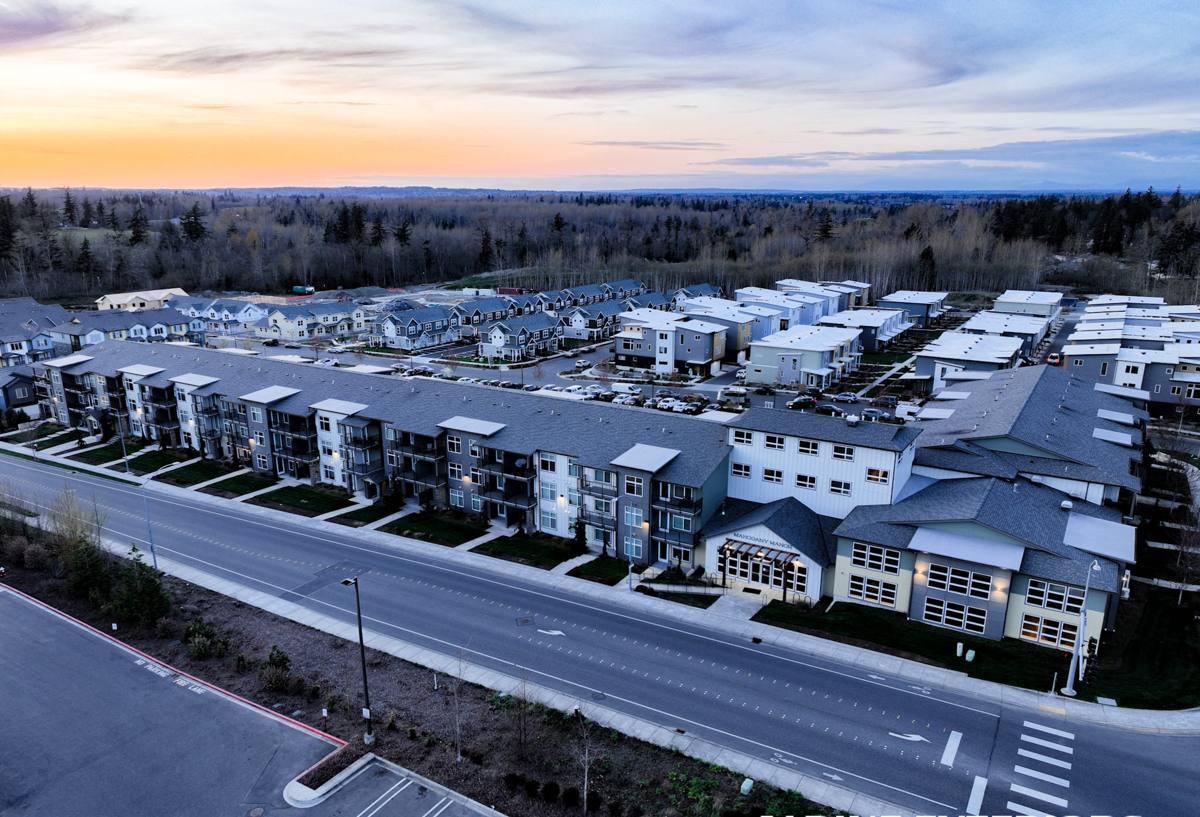
What South Hill Homes Are Up Against
A few things make this neighborhood different from a flat, open subdivision on the edge of town:
- Elevation and exposure: Homes higher on the hill catch more direct wind-driven rain than sheltered lots closer to sea level, which pushes water harder into laps, corners, and trim joints.
- Salt air: Proximity to Bellingham Bay means airborne salt settles on exterior surfaces, which accelerates corrosion on fasteners and hardware that aren't rated for it and can degrade lower-quality paint finishes faster than inland areas.
- Mature tree cover: Many South Hill lots have significant shade from established trees, which keeps siding damp longer after rain and creates ideal conditions for moss and algae growth on north-facing walls.
- Older housing stock: A lot of homes in this area were built well before modern water-resistive barrier and rain-screen practices were standard, so what's hidden behind the existing siding is often as important as what goes back up.
Moss Season Is a Real Design Consideration
In much of Whatcom County, moss isn't a cosmetic nuisance — it's a moisture problem. Moss holds water against a wall surface for extended periods, and on wood-based or poorly finished siding products, that sustained dampness is what starts rot at butt joints and fastener penetrations. Siding installation in a shaded, moisture-heavy area like South Hill has to account for airflow behind the cladding and a finish that resists organic growth, not just a product that looks good on install day.
What a Correct Siding Installation Actually Involves
Siding is a system, not a single layer. Skipping or shortcutting any part of it is where most failures start, and it's usually invisible until years later when the damage is already done. A correct installation includes:
- A continuous, properly lapped water-resistive barrier over the sheathing, with all seams and penetrations sealed
- Correct flashing at every window, door, and roofline intersection — installed so water is directed out and down, never trapped
- A drainage gap (rain screen) behind the cladding so any moisture that gets past the surface can drain and the wall can dry
- Manufacturer-specified fastener type, spacing, and embedment — not a generalized "close enough" pattern
- Correct clearance from grade, roofing, decks, and hardscape so siding isn't sitting in a moisture trap
- Factory-finished or properly field-finished joints and cut edges, sealed with the right sealant for the substrate
Every one of these steps matters more in a climate like Bellingham's than it would in a dry region, because the margin for error on moisture management is much smaller here.
Why We Install James Hardie Fiber Cement — and Nothing Else
We standardized on James Hardie fiber cement siding for every home we side, including South Hill, and we don't install vinyl, LP SmartSide, primed spruce, cedar, or other fiber cement brands. That's a deliberate professional standard, not a sales pitch. A few reasons it matters specifically here:
- Non-combustible material: Fiber cement doesn't burn, which matters for wildfire-adjacent risk and simply for peace of mind on a long-term investment.
- Moisture-resistant composition: Hardie's fiber cement formulation holds up to sustained damp exposure far better than wood-based siding products, which is a real advantage in a shaded, moss-prone neighborhood.
- Factory-applied ColorPlus finish: The baked-on finish resists fading and cracking better than field-applied paint, which is significant when a home is exposed to salt air that can degrade lesser finishes faster.
- Climate-engineered HZ product lines: Hardie manufactures region-specific formulations (HZ5 for the Pacific Northwest and similar climates) designed around moisture and freeze-thaw exposure rather than a one-size-fits-all product.
- Strong transferable warranty: A meaningful, transferable warranty backs up the product, which matters to resale value in a neighborhood where homes change hands regularly.
We're not saying every other product on the market is worthless — vinyl and wood-based sidings have legitimate uses and price points. We're saying that after years of installing and repairing exteriors in this climate, fiber cement is what we're willing to put our name behind, and it's the only thing we install.
Our Process for a South Hill Siding Job
1. On-Site Assessment
We walk the exterior, check the condition of the existing siding and what's likely underneath it, look at grading and drainage around the foundation, and note tree cover and shade patterns that affect moisture exposure on specific walls.
2. Tear-Off and Substrate Check
Old siding comes off and we inspect the sheathing and framing underneath for rot, water staining, or prior water intrusion — common on older South Hill homes where the original water-resistive barrier may be decades past its intended service life.
3. Repair and Prep
Any compromised sheathing or framing gets addressed before anything new goes back on. Installing new siding over damaged substrate just hides a problem instead of fixing it.
4. Water Management Layer
New water-resistive barrier, flashing, and a drainage gap go in per manufacturer specification — this is the step that determines how the wall performs during the next thirty years of Bellingham winters.
5. Hardie Installation
Siding is installed to James Hardie's fastening and clearance specifications, with attention to joint placement, corner details, and trim integration.
6. Final Walkthrough
We review the finished exterior with the homeowner, check caulking and trim details, and make sure everything meets the standard we'd want on our own home.
Common Problems We See on South Hill Exteriors
Because of the age and exposure of homes in this area, a few issues show up repeatedly when we tear off old siding:
- Rot at the bottom courses where siding was installed too close to grade, decks, or roof lines
- Trapped moisture behind old siding installed with no drainage gap, especially on shaded north and west walls
- Failed or missing flashing above windows and doors, leading to hidden water damage in the wall cavity
- Heavy moss and algae buildup that's been painted over repeatedly instead of addressed
- Corroded fasteners from salt air exposure that have loosened siding panels over time
None of these are unusual for a coastal, tree-covered neighborhood with an older housing stock — they're exactly why the installation details matter as much as the product choice.
Cost Factors for South Hill Siding Projects
Every home is different, and we won't quote a number without seeing the house, but these are the main variables that move the price on a South Hill siding job:
| Factor | Why It Matters |
|---|---|
| Home size and wall complexity | More corners, dormers, and roof intersections mean more flashing, cutting, and labor time |
| Condition of existing sheathing | Rot repair discovered during tear-off adds material and labor before new siding goes up |
| Access and site conditions | Hillside lots, retaining walls, and mature landscaping can limit staging and scaffolding options |
| Hardie product line selected | HardiePlank, HardiePanel, and shingle-style profiles carry different material costs |
| Trim and detail work | Window and door trim, fascia, and soffit work add scope beyond the field siding itself |
| Tear-off and disposal | Removing and hauling away old siding, especially multiple layers, adds time and dump fees |
Why Hiring a Crew That Already Works South Hill Matters
Siding installation isn't a one-size-fits-all trade. A crew that primarily works dry, low-exposure areas may not think twice about drainage gaps or flashing details that are non-negotiable here. Working regularly in Bellingham and Whatcom County means we already understand what this climate does to an exterior over time — the moss patterns, the salt exposure near the bay, the way driving rain hits an elevated, exposed wall differently than a sheltered one. That local familiarity shows up in the details: where we pay extra attention to flashing, how we handle shaded walls prone to moisture retention, and what we look for when we open up an older wall assembly.
It also means we're not learning on your house. We've seen how James Hardie siding performs in this specific climate over the years, not just how it's supposed to perform on paper.
Maintenance Checklist for New Hardie Siding in a Coastal, Shaded Climate
- Rinse siding annually to remove salt residue, pollen, and dust buildup
- Trim back tree branches and shrubs that keep siding shaded and damp for extended periods
- Inspect caulking around windows, doors, and trim every year or two and reseal if it's cracked or pulling away
- Watch for moss or algae starting on shaded walls and address it early with a gentle wash rather than letting it establish
- Check that gutters and downspouts are directing water away from siding and not overflowing onto walls
- Keep an eye on areas near grade, decks, and roof intersections where moisture tends to concentrate
If your South Hill home needs new siding — or you're not sure whether your current siding is holding up the way it should — we're happy to take a look and walk you through what we find. Reach out for a free, no-pressure estimate using the form below.