 Bellingham Exterior
 Siding Repair on South Hill: What Elevation and Exposure Do to a Wall
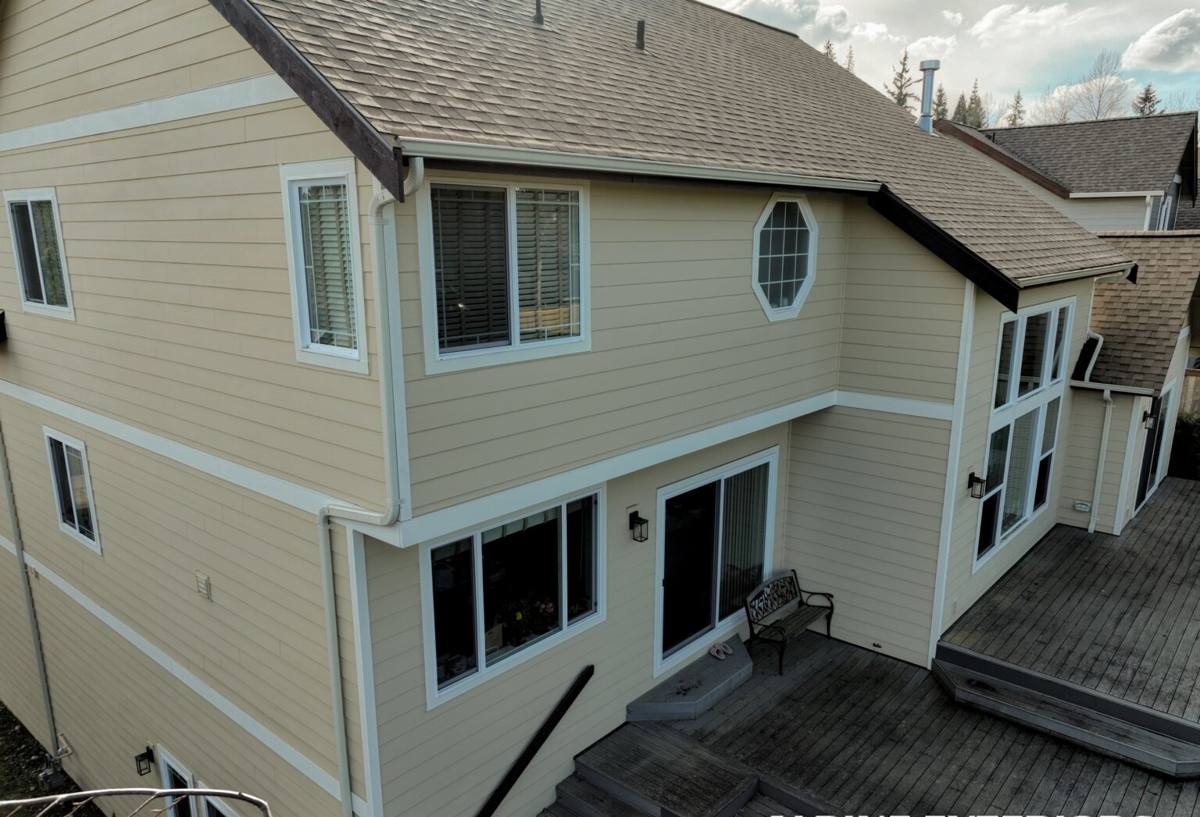
South Hill sits above much of the rest of Bellingham, and that elevation cuts both ways. The views are part of what makes the neighborhood desirable, but the same exposure that opens up those views also means South Hill homes take wind and driving rain more directly than houses tucked into lower, more sheltered parts of the city. Add in the mature tree canopy that shades many of South Hill's older lots, and you get a neighborhood where siding damage tends to show up in specific, recognizable patterns: wind-driven moisture at high, exposed walls and persistent damp and moss growth on shaded, tree-covered sides of the same house.
We work throughout Whatcom County, and South Hill is one of the areas where we get called out for siding repair rather than full replacement more often than not. A lot of the housing stock here is older, well-built, and worth saving rather than tearing off wholesale. The goal of a repair call is almost always the same: figure out exactly what's failing, why, and whether a targeted fix will actually hold or if it's just delaying a bigger job.
Why South Hill's Climate Wears on Siding Differently
Wind Exposure at Elevation
Because South Hill sits higher than surrounding neighborhoods, walls that face open exposure catch wind-driven rain at angles that a lower, more sheltered home rarely deals with. That kind of rain doesn't just wet a surface, it works its way into lap joints, trim seams, and any spot where a seal has started to fail. Over years, that's exactly how water gets behind siding rather than just running down the front of it.
Shade, Tree Cover, and a Long Moss Season
Many South Hill lots have mature trees, and the shade they throw keeps siding damp longer after every rain event, sometimes for days on north-facing walls in the wetter months. Moss and mildew take hold on any surface that stays consistently moist, and on porous or aging siding materials, that growth traps even more moisture against the wall. This is a genuinely long season in Whatcom County, not an occasional nuisance, and it's one of the most common reasons we see siding sections that look fine from the street but are soft or deteriorating underneath.
Salt-Tinged Marine Air
Bellingham's proximity to the water means even homes well up the hill get some exposure to salt-carrying air, which slowly affects fasteners, flashing, and lower-grade finishes over time. It's rarely the sole cause of a repair issue, but it's often a contributing factor that accelerates whatever else is already going wrong.
Common Siding Repair Scenarios We See on South Hill
- Impact damage: cracked or chipped siding panels from storm debris, fallen branches, or accidental impact, common on lots with mature trees.
- Moisture intrusion behind the wall: soft, spongy, or delaminating siding where water has been tracking behind the panel for a while, often starting at a failed seam or trim joint.
- Failed caulking and sealant: gaps that open up at trim, corners, and butt joints as old sealant dries out and cracks, letting wind-driven rain in.
- Rot at trim and window surrounds: a very common failure point where flashing wasn't detailed correctly during an earlier installation or renovation.
- Warped, cupped, or buckled panels: typical of engineered wood or older wood-based siding that's absorbed moisture repeatedly through wet seasons.
- Localized rot from shaded, damp conditions: sections on north-facing or heavily shaded walls that stay wet longer than the rest of the house.
Not every one of these calls for the same fix. Some are a clean, contained repair. Others are a visible symptom of a moisture problem that's been developing behind the wall for longer than the surface damage suggests.
Repair or Replace? How We Make That Call
| Situation | Usually Points To | Why |
|---|---|---|
| Isolated impact damage, otherwise sound siding | Targeted repair | Damage is contained and the surrounding wall assembly is still performing correctly |
| Soft or delaminating siding in one or two spots | Repair, pending moisture check | If the moisture source is identified and stopped, a contained repair can hold |
| Rot or moisture damage tracking along multiple wall sections | Full or partial replacement | Suggests a systemic water-management failure, not a one-off issue |
| Siding is an older, discontinued material that's simply reached end of life | Replacement | Patching a failing material just delays the same problem, and matching old material gets harder over time |
| Widespread moss and staining but sound substrate | Cleaning and targeted repair | Cosmetic and early-stage issues don't always mean structural damage underneath |
We don't default to recommending full replacement because it's a bigger job. We open up the affected area, check the substrate and house wrap underneath, and give you a straight answer about which category your house actually falls into.
Repairing James Hardie Siding: What Makes It Different
We install and repair James Hardie fiber cement siding exclusively. We don't install or patch LP SmartSide, vinyl, Cemplank, Allura, primed spruce, or cedar. That standard applies to repair work too, and it shapes how we approach a South Hill repair call in a few practical ways.
Matching the ColorPlus Finish
Hardie's ColorPlus finish is baked on at the factory under controlled conditions, which is a large part of why it resists fading and chalking so much better than field-applied paint. The trade-off on a repair is that matching an existing ColorPlus color exactly requires sourcing the correct product line and color match rather than just brushing on touch-up paint, which will never blend the same way and tends to fade at a different rate than the factory finish around it. We account for that when we scope a repair instead of promising a seamless match we can't actually deliver with the wrong materials.
Why We Don't Patch With Something Else
It's technically possible to patch a damaged section of siding with a cheaper or more convenient material regardless of what's already on the wall. We don't do that. Mixing materials on one wall creates uneven moisture behavior, different expansion and contraction rates, and a finish that will never age evenly. If a section needs to come out, we replace it with the correct Hardie product so the repair performs the same way the rest of the wall does for the life of the siding.
Fiber Cement's Advantage in a Repair Context
Because fiber cement doesn't swell, cup, or warp the way engineered wood can after repeated wet-season cycling, a Hardie wall that's otherwise sound usually means the damage is localized rather than symptomatic of the material failing broadly. That's a genuinely useful diagnostic advantage on an older South Hill home, and it's part of why homes already sided in Hardie tend to be more straightforward repair jobs than homes sided in moisture-sensitive materials.
What a Correct Repair Actually Involves
- Inspection and moisture check. We look past the visible damage to check the house wrap, flashing, and sheathing underneath before deciding on scope.
- Identifying the actual water path. Surface damage is often just where water became visible, not where it got in. We trace it back to the real entry point, whether that's a trim seam, a window flashing detail, or a failed joint.
- Sourcing the correct match. We match the existing Hardie product line, profile, and color as closely as the product allows, and we're upfront when an exact match isn't possible.
- Correcting the underlying detail, not just the surface. If the original flashing or house wrap integration was the real problem, we fix that as part of the repair, not just the panel that failed because of it.
- Reinstalling to spec. Correct fastening pattern, proper clearance, and properly lapped and sealed joints, the same standard we hold on a full installation.
A repair that only replaces the damaged board without addressing why it failed tends to fail again in the same spot within a few seasons. We'd rather spend the extra time diagnosing the cause than send someone back out to redo the same repair.
Signs a South Hill Home Needs Siding Repair Now
- Soft, spongy, or delaminating siding when pressed, especially near the base of the wall or below windows
- Persistent moss or dark staining on shaded or north-facing walls that returns quickly after cleaning
- Cracked, chipped, or missing siding sections, particularly after wind or storm events
- Visible gaps at trim, corners, or butt joints where wind-driven rain can track in
- Paint or finish that's peeling or bubbling in isolated spots rather than evenly across the wall
- Warped, buckled, or cupped panels on older or non-fiber-cement siding
- A musty smell or unexplained interior wall staining near an exterior wall
What to Ask Before Hiring Anyone for Siding Repair
Repair work gets shortcut more often than full installations because it's a smaller job, and a rushed repair on a wall that already has a moisture problem tends to fail again quickly. Before hiring anyone for siding repair on South Hill, it's worth asking a few direct questions.
- Do they open up and inspect the substrate before quoting, or just eyeball it from outside?
- What siding material do they use to patch, and does it match what's already on the house?
- How do they handle hidden rot or moisture damage found once the siding comes off?
- Are they licensed and insured to do exterior work in Washington?
- Will the same crew doing the repair also address flashing or trim details if that's the actual cause?
Why a Crew That Already Works South Hill Matters
South Hill's mix of elevation, wind exposure, and mature tree cover means moisture problems show up differently here than they do in a low-lying, more sheltered part of Bellingham. A crew that regularly works this neighborhood knows which wall orientations stay damp longest, where wind-driven rain tends to find its way in on exposed lots, and how the older housing stock common on the hill was typically built and flashed. That experience shortens the diagnostic part of a repair call and helps make sure the fix addresses the actual cause instead of just the visible symptom.
If you're seeing damaged, soft, or failing siding on a South Hill home, we're glad to take a look and give you a straight assessment of what's actually going on. Reach out using the form below to schedule a free, no-pressure estimate.