 Bellingham Exterior
 Why Sudden Valley Decks Wear Differently Than Decks Elsewhere in Whatcom County
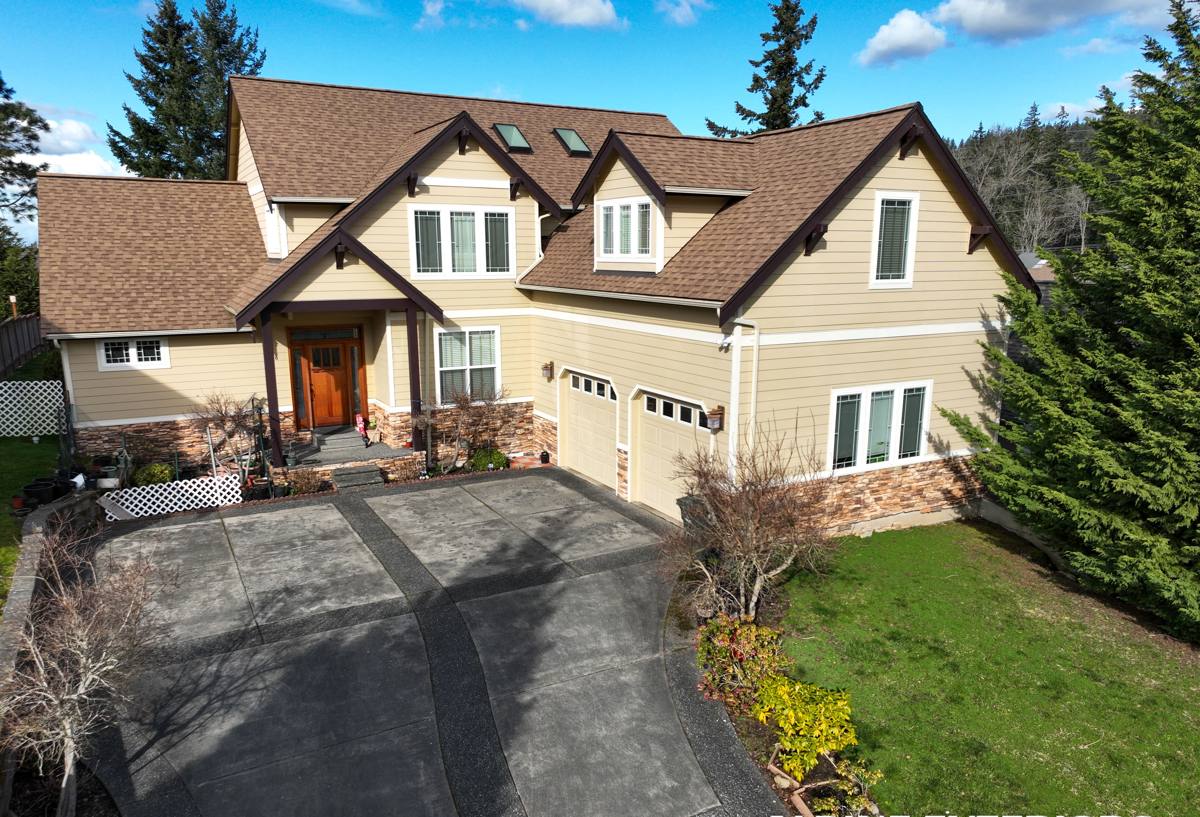
Sudden Valley sits in a heavily wooded setting around Lake Whatcom, and that changes what a deck has to deal with day to day. Tree canopy means more shade, more standing moisture on deck boards after a storm, and a steady supply of falling needles, leaves, and pollen that collect in board gaps and against the house. Add in the lake's humidity and the general marine influence that moves through this part of Washington, and you have a recipe for wood decks that stay damp far longer than they would on an open, sun-exposed lot.
None of this is unusual for the area, but it does mean a deck built here needs to be planned around moisture management first, appearance second. A board, fastener system, and substructure that work fine on a dry, open lot in eastern Washington will not hold up the same way under Sudden Valley's tree cover.
What the Regional Climate Actually Does to a Deck Over Time
Driving Rain and Long Wet Stretches
Bellingham and the surrounding county see extended stretches of rain rather than short, hard downpours. That slow, sustained moisture is harder on a deck than a quick storm — it soaks into end grain, works into fastener holes, and sits in shaded low spots on the deck surface far longer before it can evaporate.
A Long Moss and Algae Season
Shade plus moisture plus mild temperatures for most of the year is exactly what moss and algae need. On a wood deck, moss growth isn't just cosmetic — it holds moisture against the board surface and accelerates rot, and it makes the deck slick and unsafe underfoot. Under tree cover like much of Sudden Valley, the moss season can run nearly year-round.
Marine Air and Fastener Corrosion
The marine influence common to this part of Washington also affects metal hardware over time. Fasteners, brackets, and connectors that aren't rated for a damp, coastal-influenced climate can corrode faster than homeowners expect, which is one of the more overlooked failure points on older decks in this region.
Why Composite Decking Is a Strong Fit for This Environment
Composite decking — engineered boards made from wood fiber and recycled plastic, most with a protective outer cap — is built to resist exactly the conditions that wear down a wood deck in a place like Sudden Valley:
- Capped composite boards don't absorb water the way wood does, so they're far less prone to rot, swelling, and splintering under long wet stretches.
- The solid, sealed surface gives moss and algae less to grip onto compared to open wood grain, and what does grow rinses off more easily.
- No annual staining or sealing — a real advantage on a shaded lot where a wood deck would need refinishing almost every year just to keep up.
- Consistent color and texture over time, without the graying, cupping, or checking that shaded wood decks develop.
Composite isn't maintenance-free — we'll get into that — but it removes the single biggest maintenance burden of a wood deck in this climate: constant moisture protection.
Composite Decking Options: What the Differences Actually Mean
Not all composite decking is built the same, and the differences matter more in a wet, shaded environment than they would somewhere drier. Here's how the main categories compare for a Sudden Valley property:
| Board Type | Moisture Performance | Maintenance | Best Fit |
|---|---|---|---|
| Capped composite (cap on all sides) | Best resistance to moisture, staining, and moss buildup | Occasional wash-down | Shaded, tree-covered lots — most Sudden Valley sites |
| Capped composite (cap on top/sides only) | Good, but cut ends need sealing or capping at install | Low, with attention to cut edges | Standard decks with normal exposure |
| Uncapped composite | More prone to moisture absorption and surface mold over time | Periodic cleaning and sealing | Better suited to drier, sunnier sites — not our first recommendation here |
| PVC/cellular decking | Fully synthetic, essentially impervious to moisture | Very low | Heavily shaded or ground-level decks with limited airflow |
For most Sudden Valley lots, we lean toward fully capped composite or PVC boards, especially on decks with tree cover overhead or limited direct sun to dry the surface after rain. We'll walk your specific lot and sun exposure with you before recommending a product line — a deck on an open, south-facing lot doesn't need the same spec as one tucked under fir and cedar canopy.
What a Correct Installation Involves Here
The board is only part of the job. A composite deck that actually performs in this climate depends on what's underneath and how it's built:
Substructure and Framing
We use framing materials and joist spacing rated for composite decking, which behaves differently than solid wood under load and temperature change. Ledger board flashing where the deck attaches to the house is critical here — this is one of the most common failure points we see on older decks, and it's where sustained rain does the most hidden damage if it's not flashed correctly.
Drainage and Airflow
On a shaded, tree-covered lot, what happens under the deck matters as much as the surface. We plan for proper drainage away from the foundation and adequate airflow beneath the structure so moisture doesn't get trapped underneath — a real risk on lots where sun rarely reaches ground level under the deck.
Fasteners and Hardware
Given the marine-influenced air common to this region, we use fasteners and structural hardware rated for the exposure, not just whatever is cheapest. This is a small line-item difference that has an outsized effect on how long the structural connections last.
Board Layout and Gaps
Board spacing is set to allow for expansion and contraction and, just as importantly, to let debris and moisture pass through rather than collect. Under tree cover, tight or incorrect gapping turns into a moss and needle trap within a season or two.
What Affects the Cost of a Composite Deck in Sudden Valley
| Cost Factor | Why It Matters Here |
|---|---|
| Deck size and shape | Larger footprints and multi-level designs (common on sloped Sudden Valley lots) increase material and framing costs |
| Board tier (capped vs. PVC) | Higher-moisture-resistance boards cost more upfront but reduce long-term maintenance under tree cover |
| Substructure material | Pressure-treated wood framing vs. composite or steel framing changes both cost and longevity |
| Site access and lot slope | Many Sudden Valley lots are wooded or sloped, which can affect equipment access and framing complexity |
| Railing and stairs | Composite, cable, or metal railing systems vary widely in cost and upkeep |
| Permitting | Whatcom County permit requirements apply based on deck height and attachment; we handle this as part of the project |
Exact numbers depend on your specific lot and design, which is why we give real quotes after a site visit rather than a number over the phone. As a general rule, expect composite decking to cost more upfront than pressure-treated wood but noticeably less over the life of the deck once you account for staining, sealing, and repair that a wood deck needs in this climate.
Our Process for a Sudden Valley Composite Deck Project
- On-site assessment: We look at sun exposure, tree cover, drainage, existing structure (if replacing a deck), and access — all of which shape the right product and framing choice for your lot.
- Design and product selection: We recommend board type, railing, and layout based on your home and how the space will actually be used, not a one-size-fits-all package.
- Permitting: We handle the Whatcom County permitting process for projects that require it, so it's not left on your plate.
- Build: Proper flashing, rated fasteners, correct joist spacing, and drainage planning — the parts of the job that don't show up in photos but determine how long the deck lasts.
- Final walkthrough: We go over the finished deck with you, including basic care specific to your site conditions.
Why Hiring a Crew That Already Works in Sudden Valley Matters
Sudden Valley has its own character as a community — private roads, wooded and often sloped lots, and, in many cases, HOA design guidelines that affect what a deck can look like and how it's built. A contractor who hasn't worked in the community before is often learning these details on your project. A crew that already knows the area brings a few real advantages:
- Familiarity with typical lot conditions — slope, tree cover, and access — so there are fewer surprises once work starts
- Experience navigating any community design guidelines that may apply
- A working relationship with Whatcom County permitting for the paperwork side of the job
- An understanding of how the local climate — shade, moss, sustained rain — should shape material and framing choices, rather than defaulting to a generic spec
Keeping a Composite Deck in Good Shape Here
Composite decking cuts down maintenance significantly compared to wood, but "low maintenance" isn't "no maintenance," especially under tree cover. A simple seasonal routine keeps a composite deck performing the way it's supposed to:
- Sweep needles, leaves, and debris out of board gaps regularly so water keeps draining as designed
- Rinse the surface periodically to prevent moss and algae buildup before it takes hold, especially on shaded sections
- Check that gaps between boards and along the house ledger stay clear and unobstructed
- Inspect railing posts and stair connections once a year for movement or corrosion at fastener points
- Keep gutters and downspouts near the deck clear so runoff isn't draining directly onto or under it
None of this is heavy work — it's the kind of upkeep that takes an hour or two a few times a year, which is the whole point of choosing composite for a lot like this in the first place.
If you're planning a new deck or replacing an aging one in Sudden Valley, we're happy to walk your property, talk through what your specific lot needs, and give you a straightforward, no-pressure estimate. Use the form below to get started.