 Bellingham Exterior
 "Custom windows" covers more ground than most homeowners expect — it's any window that isn't a stock size or shape pulled straight off a shelf. In Sudden Valley, that usually means one of a few things: an odd-sized opening in an older home built before manufacturers standardized common dimensions, a larger picture or bay window meant to take advantage of the surrounding trees or lake views, or a replacement that has to match an opening nothing in a catalog quite fits. We work throughout Sudden Valley regularly, and the same environment that shapes our siding and roofing work — heavy tree canopy, hilly terrain, and a long damp season off Lake Whatcom — shapes how we approach custom window projects here too.
What "Custom" Usually Means for a Sudden Valley Window Project
Sudden Valley is a mix of home ages and styles built up over decades on the south shore of Lake Whatcom, and that mix is exactly what pushes window projects out of stock-size territory. Older homes in the community were often framed to whatever dimensions made sense at the time, well before modern window sizing became standardized — so a straight swap sometimes isn't possible without either a custom unit or reframing the opening. Additions and remodels create openings with no factory match at all. And because so many Sudden Valley lots are set among trees with partial lake or forest views, it's common to see larger picture windows, bay windows, or matched sets designed specifically to take advantage of a particular sightline through the canopy.
None of that is unusual for us — it's routine work in this community. But it does mean a custom project starts with careful measurement and an honest conversation about what's realistic for the opening, rather than assuming a stock unit will drop in.
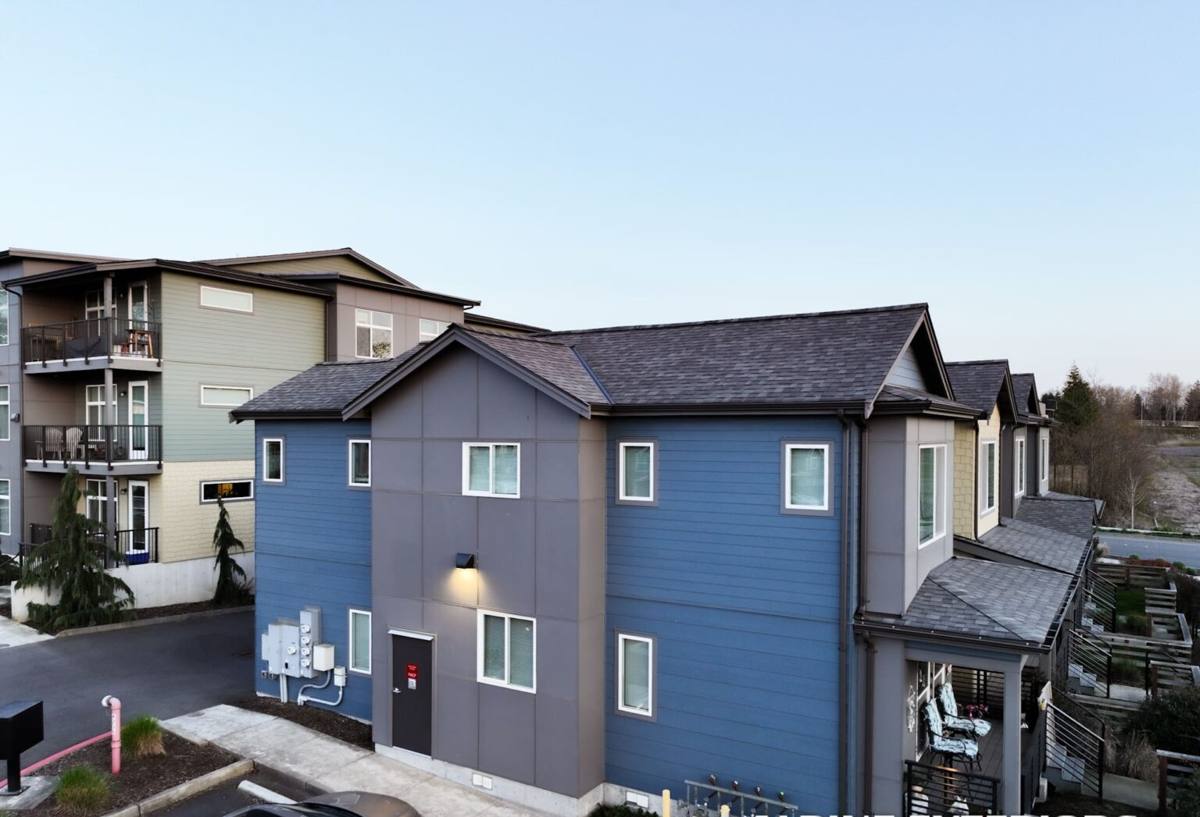
The Conditions That Shape Window Work in Sudden Valley
Heavy Shade and Slow Drying
Most Sudden Valley properties sit under significant second-growth tree cover, and it's common for a home to have one or more wall faces that get very little direct sun through most of the year. That matters for windows because a shaded opening stays wet longer after every rain than one on an open, sunny lot. Flashing and sealant details that would dry out and self-correct minor imperfections on a sunnier property don't get that same forgiveness here — any gap or shortcut in the installation has more time to do damage before the wall face ever fully dries.
Hilly Terrain and Variable Exposure
Sudden Valley's terrain is hilly, with homes sitting at a range of elevations and orientations relative to the lake and surrounding ridgelines. That means wind-driven rain doesn't hit every wall of the same house the same way — one elevation might take direct, driving rain in a storm while another stays relatively sheltered. Custom window installations, especially larger units or bay projections with more surface area, need flashing and drainage details sized to the specific wall they're going into, not a one-size-fits-all approach across the whole house.
A Long Moss and Mildew Season
Shade, humidity off the lake, and mild year-round temperatures keep moss and mildew active in Sudden Valley for most of the year. Window sills, trim, and the wall assembly just below and around a window are exactly the kind of horizontal and semi-horizontal surfaces where that growth tends to establish itself first, especially on shaded elevations that never fully dry between wet spells. A window's sill detail and the flashing above it need to shed water cleanly rather than holding it against the frame.
Where Custom Windows Show Up in Sudden Valley Homes
- Non-standard replacement sizes — matching an opening in an older Sudden Valley home built before current sizing standards existed
- Bay and bow windows — projecting units that add interior space and a wider field of view, common where a lot's orientation opens up a lake or forest sightline
- Picture and large-format windows — fixed units used to maximize a view through the trees, with more glass area and perimeter to manage than a standard unit
- Egress and code-driven openings — bedroom or basement additions where the opening size is set by code minimums
- Matched sets for additions or remodels — new windows sized and positioned to sightline correctly with a home's existing windows
What a Correct Custom Window Installation Involves
The window unit itself is usually not where problems start. It's the transition points around it — the flashing above the head, the sill pan below, the way the rough opening was cut and sealed — that decide whether a custom window performs for decades or starts leaking within a few wet seasons. A correct installation in this environment includes:
- Accurate measurement of the existing or planned rough opening, accounting for any out-of-square framing common in older homes
- A sill pan or equivalent sloped drainage detail so any water that gets past the glazing has somewhere to go besides into the wall
- Properly lapped flashing at the head and sides, installed in the correct sequence with the surrounding house wrap or weather-resistive barrier
- Sealant and backer rod at joints, sized and placed correctly rather than relying on a heavy bead of caulk to cover a poor fit
- Insulation and air sealing around the frame that doesn't compress or gap over time as the house settles
- Final inspection of the exterior trim and cladding tie-in so the window doesn't become the one weak point in an otherwise well-sealed wall
Frame Materials for This Environment
Frame material matters more on a custom unit, since larger or projecting windows have more surface area exposed to sustained moisture on a shaded lot. We'll go through the honest trade-offs for a specific opening rather than defaulting to whichever material is easiest to install. In general, fiberglass and vinyl frames tolerate sustained dampness with less ongoing maintenance than an all-wood exterior finish, which is why they're usually our starting point for shaded, weather-exposed walls in Sudden Valley — a wood interior finish with a low-maintenance exterior cladding can still be the right call when the interior look matters and the exterior is properly protected.
Our Process for a Custom Window Project
We start with an on-site look at the opening or openings involved, and because exposure varies so much from wall to wall in Sudden Valley's hilly, tree-covered terrain, we treat each elevation individually rather than assuming the whole house needs the same approach. From there:
- We measure the opening precisely and confirm whether a stock custom size or a fully custom shape is needed
- We walk through frame material and glazing options with the real trade-offs for that specific wall's sun and moisture exposure
- We give a written scope and realistic timeline, since custom units are built to order and lead times run longer than stock replacements
- We handle removal of the existing window and any repair to rot or damaged framing found once the old unit is out, before the new one goes in
- We install with sill pan, flashing, and sealing details built for a shaded, damp climate, not just the manufacturer's minimum guidance
- We walk the finished opening with the homeowner and confirm operation, sightlines, and exterior trim tie-in before calling the job done
Cost Factors on a Sudden Valley Custom Window Project
Custom window pricing depends on more variables than a standard replacement, and it's worth understanding what actually drives the number before getting quotes.
| Factor | Why It Matters |
|---|---|
| Size and shape | A true custom shape (arched, angled, or a bay projection) costs more to build and install than a custom-sized rectangular unit |
| Frame material | Fiberglass and higher-end vinyl typically cost more upfront than basic vinyl but hold up better on shaded, damp walls |
| Opening condition | Rot, old flashing failures, or out-of-square framing found once the old window is removed add repair time before the new unit goes in |
| Access and elevation | Second-story or hard-to-reach openings on a sloped Sudden Valley lot can require staging or added labor time |
| Number of units | A matched set for an addition or remodel generally has better per-unit economics than a single one-off window |
Why a Local Crew Matters in Sudden Valley
Sudden Valley is a private community with its own internal road network and homeowners association, and a crew that already works here regularly understands the practical side of that — scheduling around community access, and reading how terrain and tree cover change exposure from one lot to the next even within the same street. On a custom window project, that experience shows up in decisions that don't make it into a sales pitch: how much extra lap a flashing course needs on a shaded, north-facing wall that never fully dries, whether a sill needs a sloped composite cap instead of relying on sealant alone, and which openings are worth reframing versus building a truly custom unit around. Those calls are what separate a window that performs for fifteen-plus years from one that starts showing drafts and staining within a few wet seasons.
A Simple Checklist Before Hiring for Custom Window Work
- Ask to see examples of custom shapes or non-standard sizes they've actually installed, not just standard replacements
- Ask how they handle flashing and sill drainage for the specific shape or size involved
- Confirm current Washington contractor licensing and active liability insurance
- Ask about experience working within HOA-governed or private-road communities like Sudden Valley, including access and scheduling
- Get a written scope of work and realistic lead time before signing anything, since custom units are built to order
- Ask whether labor and the window unit itself carry separate warranties, and get both in writing
Ready When You Are
If you're planning an addition, replacing an odd-sized opening in an older Sudden Valley home, or considering a bay or picture window to make the most of a view through the trees, it's worth having someone look at the actual opening before you start pricing units. We offer free, no-pressure estimates for custom window projects throughout Sudden Valley — use the form below to get a time on the schedule.
```