 Bellingham Exterior
 Why Sudden Valley Roofs Take a Different Kind of Beating
Sudden Valley sits in a pocket of Whatcom County that gets more shade, more moisture, and more organic debris on a roof than a typical Bellingham lot. The community wraps around Lake Whatcom under heavy fir and cedar canopy, and that combination of shade and lake-adjacent humidity means roofs here rarely get the full sun exposure they'd need to dry out quickly after a storm. Add in the driving rain that comes off Bellingham Bay and the broader Salish Sea weather pattern, and you've got roofing material that stays damp longer, ages faster, and grows moss on a schedule most inland Washington homes never deal with.
None of this means Sudden Valley roofs are poorly built. It means they're working under conditions that reward specific repair habits — the right flashing details, the right moss strategy, the right eye for where water actually enters versus where it shows up on a ceiling. A repair that would hold up fine on a dry, open lot in a different part of the county can fail here in a season or two if it ignores that difference.
Shade, Canopy, and Moisture Retention
Tree cover keeps a roof cooler in summer, which sounds like a benefit, but it also means shingles and shakes stay wet for hours or days longer after rain than they would in full sun. That extended damp time is what feeds moss and algae growth, softens the surface of asphalt shingles over the years, and slowly breaks down the granule layer that protects the roof from UV and weather.
Driving Rain and Wind-Driven Water
Storms coming off the water don't just fall straight down — wind pushes rain sideways, up under shingle tabs, and into any gap around flashing, vents, or valleys. A repair that only patches the visible hole without addressing how wind-driven rain actually travels across a roof deck tends to leak again the next time a real system rolls through.
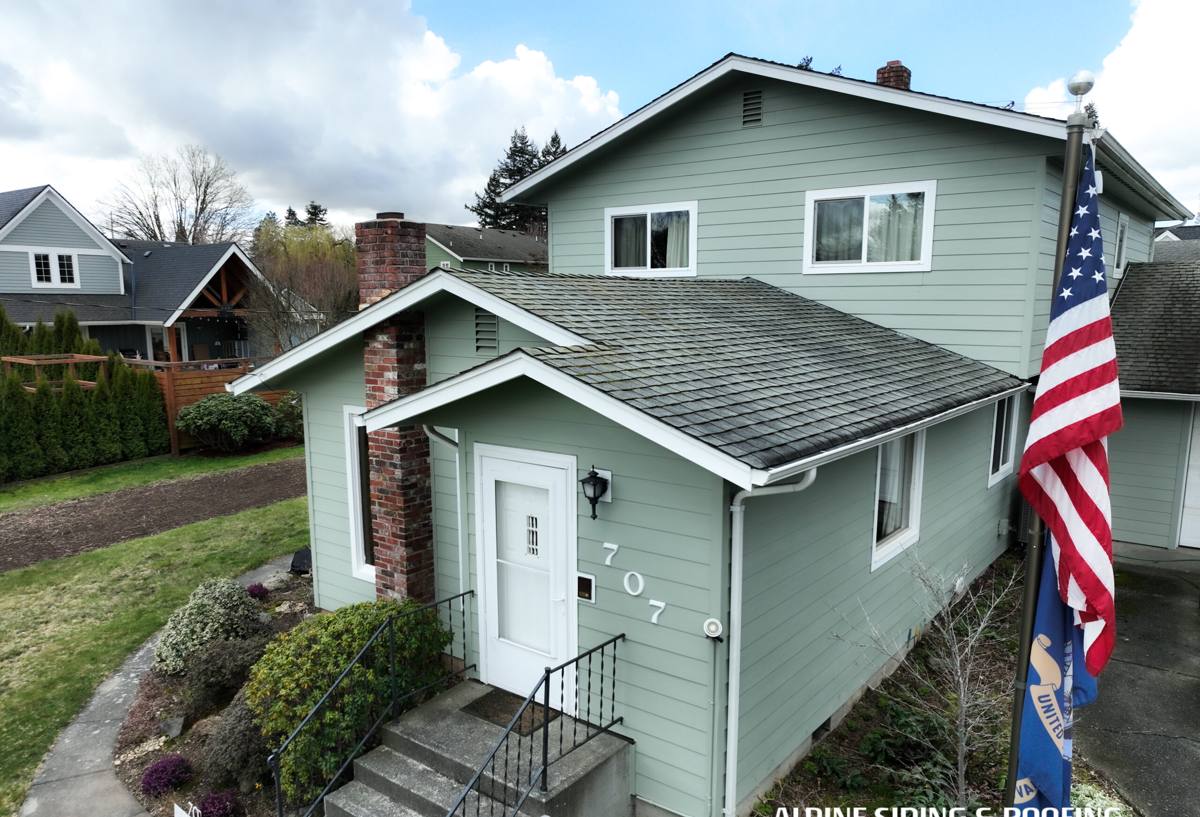
The Repairs We're Called Out For Most Often in Sudden Valley
The specific failures we see repeat themselves across the neighborhood, and almost all of them trace back to moisture that had somewhere to sit and something to feed on.
- Moss and algae growth lifting shingle edges and holding water against the roof deck
- Flashing around chimneys, skylights, and roof-to-wall transitions that has rusted, separated, or was never properly step-flashed
- Valley leaks where two roof planes meet and debris from overhanging trees dams up water flow
- Clogged or undersized gutters backing water up under the roof edge
- Nail pops and cracked shingles from age combined with constant wet-dry cycling
- Soft or rotted decking under a section that's held moisture for an extended period
Most of these show up as a small stain on a ceiling or a dark streak on the roof surface long before they become a structural problem — which is exactly why catching them early with a proper repair is worth doing instead of waiting.
What Goes Into an Honest Roof Repair
A roof repair that actually solves the problem starts with figuring out where water is entering — which is often nowhere near where it shows up inside the house. Water can travel along rafters, follow a nail shank, or run down the inside of sheathing for several feet before it drips somewhere visible. Patching drywall or caulking the spot where a stain appears without tracing the real entry point is the single most common reason a "fixed" roof leaks again.
Diagnosis Before Anything Gets Repaired
Before we open anything up, we look at the whole roof plane, not just the reported leak: flashing condition, moss coverage, granule loss, valley debris, and gutter function. On a Sudden Valley roof shaded by trees, we're also checking how much moss or organic buildup has accumulated in areas the homeowner may not see from the ground, since that buildup is often the root cause even when the visible damage is somewhere else.
Matching Materials and Technique
A repair should blend into the existing roof system, not just cover a hole. That means matching shingle type, exposure, and where possible color and profile, and it means using the correct flashing method for the specific transition being repaired — step flashing at walls, proper counter-flashing at chimneys, and ice-and-water or self-adhering membrane in valleys and other vulnerable spots. Skipping the underlayment detail to save time is how a repair looks fine for a year and then fails.
Repair or Replace? How We Help You Decide
Not every roof problem in Sudden Valley calls for a full replacement, and not every leak can be solved with a patch. We look at the age of the roof, how much of it is affected, and whether the damage is isolated or spread across multiple planes before recommending either path.
| Factor | Leans Toward Repair | Leans Toward Replacement |
|---|---|---|
| Roof age | Under 15-20 years, one section affected | Nearing or past expected shingle lifespan |
| Moss/algae extent | Isolated patches, treatable | Widespread, granule loss underneath |
| Decking condition | Solid, no soft spots found | Rot or soft decking in multiple areas |
| Number of past repairs | First or second repair in this area | Same spot repaired repeatedly |
| Flashing condition | Isolated flashing failure | Flashing failing at multiple penetrations |
When a roof is a genuinely close call, we'll say so and lay out both options honestly, including rough cost ranges, rather than pushing toward the bigger job by default.
Our Roof Repair Process, Start to Finish
- Inspection: We walk the roof (weather permitting) and check the attic or interior for water tracking, staining, and insulation damage.
- Diagnosis: We trace the leak to its actual entry point, not just its visible symptom, and check surrounding areas for related wear.
- Written scope: You get a clear explanation of what's failing, why, and what the repair will involve, in plain language.
- Moss and debris removal: Any moss, algae, or organic buildup contributing to the problem gets cleared before repair work begins.
- Repair execution: Damaged materials are removed down to sound decking, new underlayment and flashing are installed correctly, and matching roofing material is installed.
- Cleanup and check: We clear debris from the property and confirm the repair from both the roof surface and the interior where the leak originated.
Materials We Use for Repairs
For asphalt shingle roofs, the most common material in Sudden Valley, we repair with matching architectural or three-tab shingles depending on what's already installed, paired with self-adhering ice-and-water membrane in valleys and other high-exposure areas. For cedar shake or metal roofs, repair calls for material-specific technique — cedar repairs need proper spacing and fastening to allow the wood to dry between rains, and metal repairs need compatible fasteners and sealants that won't corrode against the existing panel material. We don't cut corners on underlayment or flashing to make a repair cheaper, because in a shaded, wet climate like this one, that's exactly where a rushed repair comes apart first.
Signs Your Sudden Valley Roof Needs Attention
Most roof problems give some warning before they turn into an active leak. Worth checking for, especially on a roof under tree cover:
- Dark green or black streaking, or visible moss patches, on the roof surface
- Granules collecting in gutters or at the base of downspouts
- Curling, cracked, or lifted shingle edges
- Daylight visible through the attic roof deck
- Water stains or discoloration on ceilings, especially after a windy rainstorm
- Sagging in any section of the roofline
- Gutters overflowing during rain instead of draining normally
- Debris buildup in valleys or against chimneys and skylights
Why Local Experience in Sudden Valley Actually Matters
A roofer who mostly works open, sunny lots elsewhere in Whatcom County can still do competent work here, but they're often seeing a heavily shaded, moss-prone roof for the first time on your house. A crew that regularly works Sudden Valley already knows how fast moss returns under this canopy, which flashing details tend to fail first in this microclimate, and how to schedule around the access and driveway conditions common to the community's wooded, hilly lots. That familiarity shows up in fewer callbacks and a repair that's built for the conditions your roof actually faces, not generic conditions.
It also matters for something simpler: showing up when we say we will. Steep, tree-lined driveways and weather-dependent roof access are just part of doing this work in Sudden Valley, and a crew that plans for that ahead of time causes a lot less disruption to your week.
Keeping a Repaired Roof Healthy Between Visits
A good repair buys you years, but a shaded Whatcom County roof still needs some upkeep to get the most out of it. Clearing overhanging branches back from the roofline reduces both debris buildup and the moss spores that branches drop directly onto shingles. Cleaning gutters at least twice a year, more often if you're under heavy fir or cedar cover, keeps water moving off the roof instead of backing up under the edge. A light moss treatment on a schedule appropriate to your roof material can slow regrowth between full cleanings. None of this replaces a proper repair when something's actually failing, but it does stretch the life of the work we do.
If you're seeing moss, a stain on a ceiling, or just want an honest look at where your roof stands, we're happy to come out and take a look. The estimate is free, there's no pressure, and you'll get a straight answer about what your roof actually needs.