 Bellingham Exterior
 Why Sunnyland Decks Wear Out Faster Than You'd Expect
Sunnyland sits close enough to Bellingham Bay and the Salish Sea that salt-laden air is a constant, quiet factor in how outdoor structures age here. Add Whatcom County's long wet season, the driving rain that comes off the water, and the deep shade many Sunnyland lots have from mature trees, and you get a climate that's genuinely hard on decks. Wood fibers stay damp for days at a time. Fasteners corrode faster than they would in a drier inland climate. And moss, algae, and lichen get a running start every fall and don't fully let go until late spring.
None of this means a deck can't last in this neighborhood — it means the deck has to be built and maintained with this specific climate in mind, not a generic one. A deck that would hold up fine in a dry eastern Washington town can fail early here if the framing, fasteners, and drainage details weren't chosen for a marine, high-moisture environment.
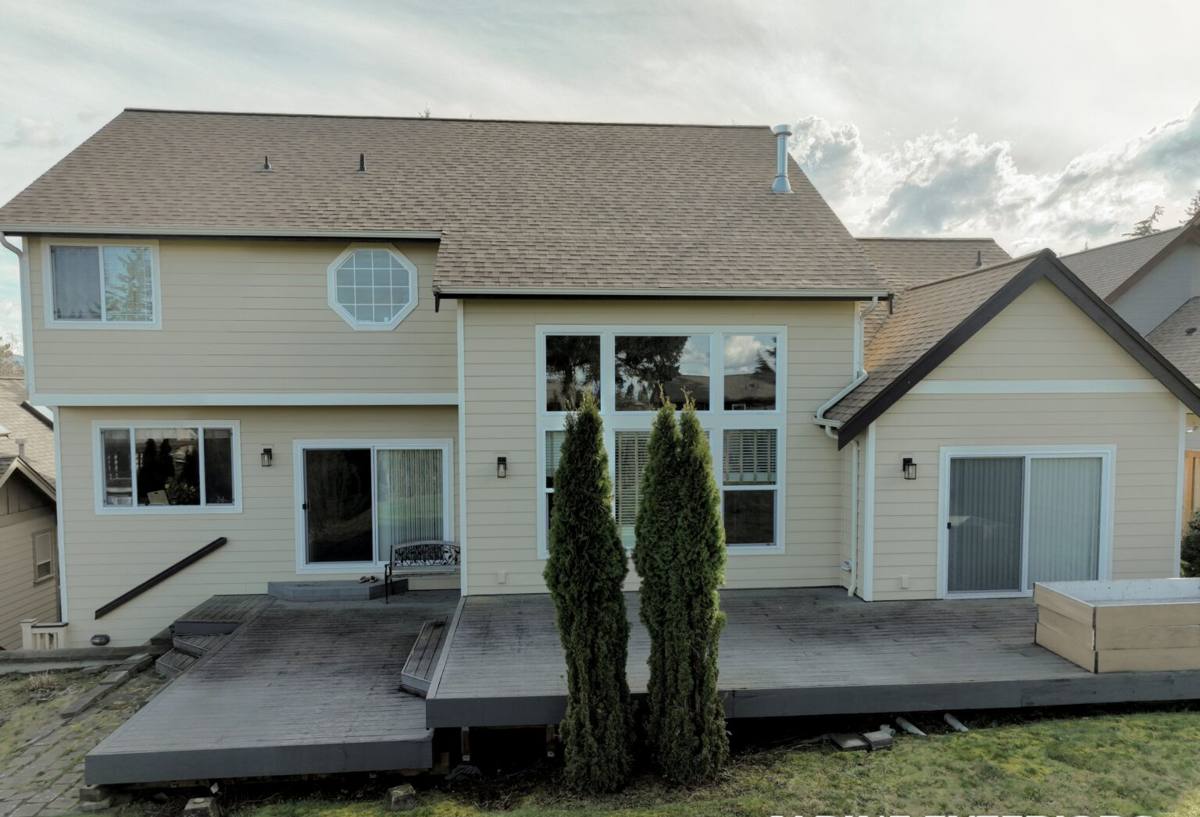
Signs Your Deck Needs Replacement, Not Another Repair
A lot of Sunnyland homeowners call us after years of small fixes — a board here, a post there — because the deck never quite feels solid again after each patch. That's usually a sign the problem is structural, not cosmetic. Here's how we tell the difference on a visit:
- Soft, spongy, or bouncy decking, especially near the house or in shaded corners
- Visible rot, dark staining, or fungal growth at the ledger board where the deck meets the house
- Rusted, black-streaked, or backed-out fasteners across multiple boards
- Posts or footings that have shifted, settled, or show cracking at the base
- Railings that flex or feel loose when leaned on
- A deck more than 20-25 years old that has never been rebuilt from the frame up
If it's one or two boards showing wear, repair usually makes sense. If the framing, ledger connection, or footings are compromised, repair is a temporary patch on a structural problem — and in a wet climate like this one, that problem tends to spread underneath the parts you can see.
What a Correct Deck Replacement Actually Involves
Framing and Footings
Everything above the frame is only as good as what's underneath it. A proper replacement means checking footing depth and condition against Whatcom County soil and frost conditions, confirming posts are set on solid, well-drained ground, and sizing joists and beams for the actual span and load — not just matching what was there before, which may have been undersized to begin with.
Ledger Board and Flashing
The ledger — where the deck attaches to the house — is the single most common point of failure we see in this region, and it's almost always a water intrusion problem. Correct flashing detail keeps rain from working its way behind the ledger and into the house rim joist, which is exactly the kind of slow, hidden damage that a wet climate like Bellingham's is good at causing over time.
Fasteners and Hardware
In a salt-air, high-moisture environment, hardware matters more than it does inland. We use fasteners and structural connectors rated for exterior, corrosive-prone conditions rather than standard-grade hardware that's more likely to rust, stain the decking, or lose holding strength over the years.
Drainage and Airflow
A deck that can't shed water and dry out underneath will stay wet longer than one that can, and in Bellingham's climate that difference shows up as moss, mildew, and premature rot. Board spacing, joist gaps, and ground clearance under the deck all affect how quickly it dries between rain events.
Choosing Decking Material for a Wet, Shaded Climate
There's no single "best" decking material — there's the material that fits your budget, your home's style, and how much upkeep you're willing to do. Here's an honest comparison for Sunnyland's specific conditions:
| Material | How It Handles Bellingham's Climate | Maintenance | Typical Lifespan |
|---|---|---|---|
| Pressure-treated wood | Affordable, but absorbs moisture readily and needs consistent sealing to resist rot and moss in shaded, damp spots | Annual cleaning and periodic staining/sealing | 10-15 years with upkeep |
| Cedar | Naturally rot-resistant and a classic look, but softer and still needs regular sealing in a wet marine climate | Regular cleaning and refinishing | 15-20 years with upkeep |
| Capped composite | Resists moisture absorption and moss buildup much better than wood; performs well in shaded, damp yards | Occasional washing, no sealing/staining | 25-30+ years |
| PVC decking | Fully synthetic, doesn't absorb water at all, handles constant damp shade with minimal issue | Occasional washing | 25-30+ years |
We typically steer homeowners with heavily shaded, tree-covered Sunnyland lots away from uncapped wood products for the walking surface, simply because the maintenance burden to keep moss and moisture damage at bay is real and ongoing. That's not a knock on wood — it's a trade-off worth knowing about before you commit to years of upkeep.
Permits and Whatcom County Requirements
Deck replacement projects in and around Bellingham often require a permit, particularly when the deck is attached to the house, elevated, or being rebuilt from the framing up rather than just re-decked on an existing structure. Requirements can depend on deck height, size, and whether the footprint or footings are changing. We handle the permit process as part of the job so you're not left tracking down requirements from the county or city yourself — and so the finished deck is something that will pass inspection and hold up over time, not just look right on day one.
Our Process, Start to Finish
- On-site evaluation. We inspect the existing deck, ledger, footings, and framing to determine what's actually salvageable versus what needs to be rebuilt.
- Honest scope and estimate. You get a clear picture of what the job involves and why — no vague line items.
- Permitting. We pull the necessary permits and coordinate any required inspections.
- Demolition and disposal. The old deck comes down and off your property.
- Framing rebuild. Footings, posts, beams, joists, and ledger flashing are installed or corrected to current standards.
- Decking and railing installation. Your chosen material goes down with attention to spacing and drainage for our climate.
- Final walkthrough. We go over the finished deck with you before calling the job done.
What a New Deck Costs — The Real Factors
We won't quote a number without seeing the site, but the main cost drivers on a Sunnyland deck replacement are consistent enough to lay out plainly:
| Factor | Why It Matters |
|---|---|
| Deck size and shape | Square footage and the number of angles, levels, or stairs directly affect labor and material |
| Framing condition | Rotted footings or joists mean more rebuild work below the surface, not just new boards on top |
| Decking material | Composite and PVC cost more upfront than wood but reduce long-term maintenance spending |
| Height and railings | Elevated decks need more structural work and code-compliant railing systems |
| Site access | Sloped, wooded, or tight-access Sunnyland lots can add labor time |
Questions Worth Asking Before You Hire
Deck work is easy to do poorly and hard to inspect once it's covered in decking boards. Before you hire anyone for a deck replacement in this neighborhood, we'd suggest asking:
- Are you licensed and insured to do structural exterior work in Washington?
- Will you pull the required permit, or is that left to me?
- How will you address the ledger flashing and water intrusion at the house connection?
- What fasteners and hardware do you use, and are they rated for coastal/marine conditions?
- Can I see examples of decks you've built in this area, not just photos from elsewhere?
- What's included in the warranty on labor versus materials?
If a contractor can't answer the ledger and fastener questions clearly, that's worth noting — those two details are where most deck failures in this climate actually start.
Why Working With a Crew That Already Knows Sunnyland Matters
A deck built without accounting for Bellingham's rainfall, salt air, and shade patterns tends to show its problems within a few years — moss on the walking surface, soft spots near the house, hardware bleeding rust into the boards. A crew that already works in Sunnyland and the surrounding Bellingham neighborhoods has seen how local lots drain, how much shade the mature tree cover really casts, and where moisture tends to collect on homes like yours. That familiarity shows up in decisions you won't see on the surface — footing depth, flashing detail, fastener choice — but that determine whether your deck is still solid in fifteen years or back on our schedule for repairs in five.
If your deck is showing its age or you're planning ahead before a problem gets worse, we're glad to take a look and give you a straightforward, no-pressure estimate. Use the form below to get started.