 Bellingham Exterior
 Windows Built for York's Marine Climate
York is one of Bellingham's older, established neighborhoods, and a lot of the housing stock reflects that — homes built across several decades, with windows that have been replaced piecemeal over the years rather than all at once. That mix creates a real problem for homeowners: mismatched frame materials, inconsistent seals, and windows installed under very different building standards sitting side by side on the same house. Add in Whatcom County's marine climate — salt-laden air moving in off the water, long stretches of driving rain, and a moss season that can run most of the year on shaded or north-facing walls — and window performance becomes less about looks and more about whether the assembly actually keeps water and moisture out.
This page covers what custom window work actually involves for a York home specifically: what the climate does to windows over time, how to think about frame material and glazing choices, what a correct installation looks like, and why local installation experience matters more here than it does in drier parts of the state.
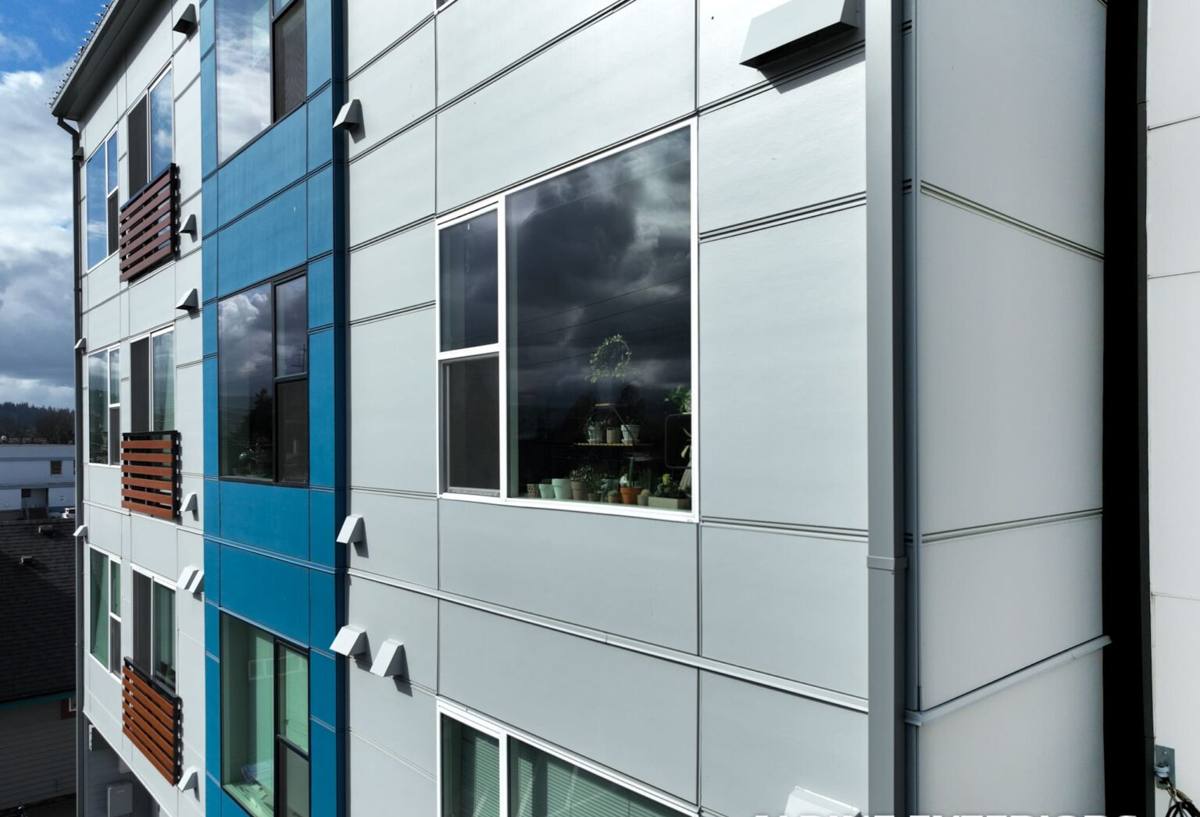
What Bellingham's Weather Does to Windows Over Time
Every part of Whatcom County deals with rain, but neighborhoods closer to the water — York included — get an added layer of stress from airborne salt. None of this shows up overnight. It's cumulative, and it tends to hit these areas first:
Moisture Intrusion at the Frame and Sill
Wind-driven rain doesn't just fall straight down — it gets pushed sideways into wall assemblies, especially on exposed elevations. If a window's flashing or sill pan was installed incorrectly (or skipped altogether, which happens more often than you'd think on older remodels), water works its way behind the trim and into the wall framing. You often won't see it until there's staining, soft trim, or a musty smell inside.
Hardware and Fastener Corrosion
Salt air accelerates corrosion on metal components — hinges, locks, cranks, and screws — faster than it happens further inland. Cheaper hardware finishes can start showing pitting or stiffness within a few years on homes with regular exposure to onshore air.
Moss and Algae Buildup
Shaded walls and window sills that don't get much direct sun stay damp longer, which is exactly what moss and algae need to take hold. Beyond looking bad, moss holds moisture against wood trim and sills, which speeds up rot in exactly the spots where a window is most vulnerable.
Seal and Glazing Failure
Insulated glass units rely on a sealed gas-filled gap between panes. Constant temperature swings and moisture cycling can break down that seal earlier than the manufacturer's rated lifespan, which shows up as fogging or condensation trapped between the panes — a sign the unit needs replacing, not just cleaning.
Choosing the Right Frame Material for a York Home
There's no single "best" window material — it depends on your home's exposure, your budget, and how much upkeep you're willing to do. Here's how the common options actually compare in this climate:
| Frame Material | Salt Air / Moisture Resistance | Maintenance | Typical Lifespan |
|---|---|---|---|
| Vinyl | Good — won't rust or rot, holds up well to salt exposure | Low — occasional cleaning | 20–30 years |
| Fiberglass | Excellent — very stable, resists moisture and temperature swings | Low | 30–40+ years |
| Wood-Clad | Fair — cladding protects the exterior, but cut edges and joints need attention | Moderate — periodic sealant and finish checks | 20–30 years with upkeep |
| Aluminum | Fair to poor near salt air unless properly coated — prone to corrosion and heat/cold transfer | Moderate to high | 15–25 years |
For homes in York with meaningful exposure to onshore weather, we generally steer clients toward vinyl or fiberglass for the primary living spaces, and reserve wood-clad for interiors where the aesthetic matters most and exposure is limited. We're upfront that aluminum frames carry a higher maintenance burden here — not because the material is inherently bad, but because uncoated or poorly maintained aluminum corrodes faster in salt air than the alternatives, and that's a trade-off worth knowing before you commit.
What a Correct Custom Window Installation Actually Involves
The window unit itself is only part of the job. Most window failures we get called out to inspect aren't product defects — they're installation shortcuts. A correct install includes:
- Proper opening prep: removing the old unit down to the rough framing and checking for existing rot or water damage before anything new goes in
- Sill pan flashing: a sloped, sealed pan under the window that directs any water that gets past the frame back outside, instead of into the wall cavity
- Correct flashing sequencing: integrating window flashing with the house wrap or weather-resistive barrier in the right shingled order, so water always drains down and out, never in
- Air-sealing and insulation: gaps around the frame filled with appropriate low-expansion foam or backer rod and sealant — not just caulked over on the surface
- Level, plumb, and square setting: a window that's slightly out of square puts uneven stress on the frame and can cause premature seal or hardware failure
- Exterior sealant compatible with the cladding: the right sealant for siding, trim, or masonry — the wrong one fails faster in constant damp conditions
Skipping any one of these steps might not cause a visible problem for a year or two, but in a climate like Bellingham's, shortcuts eventually show up as water damage, and by then the repair is bigger and more expensive than the original install would have been.
Our Process for York Homeowners
- On-site assessment: we look at your existing windows, check for signs of water intrusion or rot around openings, and talk through what's actually driving the replacement — comfort, energy loss, appearance, or damage.
- Measurement and product selection: exact measurements for each opening, and a walkthrough of frame material, glazing, and hardware options suited to your home's exposure.
- Written estimate: a clear scope of work and price before anything is ordered, so there are no surprises.
- Removal and prep: old units come out carefully, and we inspect the framing underneath for hidden moisture damage before installing anything new.
- Installation: flashing, insulation, and sealing done to the standard described above — not just "set it and caulk it."
- Cleanup and walkthrough: job site cleaned up, and we walk you through operation, locks, and any care instructions specific to the product installed.
Signs Your Windows Need Attention Now
You don't need to wait for a window to fail completely before addressing it. Watch for:
- Fogging or moisture trapped between panes of glass
- Soft, discolored, or spongy trim or sills around the frame
- Difficulty opening, closing, or locking a window that used to operate smoothly
- Visible gaps, drafts, or noticeably cold spots near the window when it's shut
- Moss or dark staining building up on sills or lower trim
- A noticeable jump in heating costs without any other explanation
- Paint or finish peeling specifically around window openings rather than the wall generally
Why a Crew That Already Works in York Matters
York's mix of home ages and styles means no two window jobs in this neighborhood look quite the same — a 1940s home with original openings needs a different approach than a 1990s remodel with builder-grade vinyl already installed. A crew that's worked in the neighborhood before has already seen the common framing quirks, the local permitting expectations, and how different elevations on a given lot handle wind-driven rain. That familiarity shortens the assessment phase and avoids surprises mid-project — things a contractor coming in cold might not catch until the walls are already open.
There's also a practical side to hiring local: shorter travel time for the crew means more consistent scheduling, easier follow-up if you have a question after the install, and a contractor who's still going to be working in your area next year if a warranty question comes up.
Maintenance That Extends Window Life in This Climate
Whatever material you choose, a little seasonal attention goes a long way in a climate like ours:
- Rinse salt residue and grime off exterior frames and glass a few times a year, especially after storms
- Check and clear weep holes on vinyl and aluminum frames so water can drain properly
- Keep gutters and downspouts clear so runoff isn't sheeting directly across window openings
- Inspect exterior sealant annually and re-caulk any cracked or shrunken joints before wet season
- Address moss or algae on sills promptly rather than letting it sit against the wood or finish
If you're weighing whether to repair or replace your current windows, or you're just not sure what condition they're actually in, we're happy to take a look and give you an honest read — no pressure, no hard sell. Reach out for a free estimate and we'll walk your home with you.