 Bellingham Exterior
 New-Construction Windows in York: A Different Job Than a Replacement
Installing windows during new construction is not the same trade as replacing an old window in an existing wall, and homeowners building in York shouldn't assume their contractor treats it that way. On a new build, we're working directly with open framing, a rough opening cut to spec, and a weather-resistive barrier (WRB) that hasn't been closed in yet. That's an advantage — it means the window can be flashed, sealed, and integrated into the wall assembly correctly from the start, instead of working around decades-old framing, rot, or a flashing job we can't see or fix. But it also means there's no room for shortcuts. Every window in a new-construction package only gets installed once before siding and trim close it up for good.
For a York property, that first install has to hold up to Bellingham's marine climate for the life of the house. Getting the sequence right — opening, sill pan, WRB lap, flashing, window, sealant, siding — matters more here than in drier parts of the state, because the margin for a small mistake is thinner.
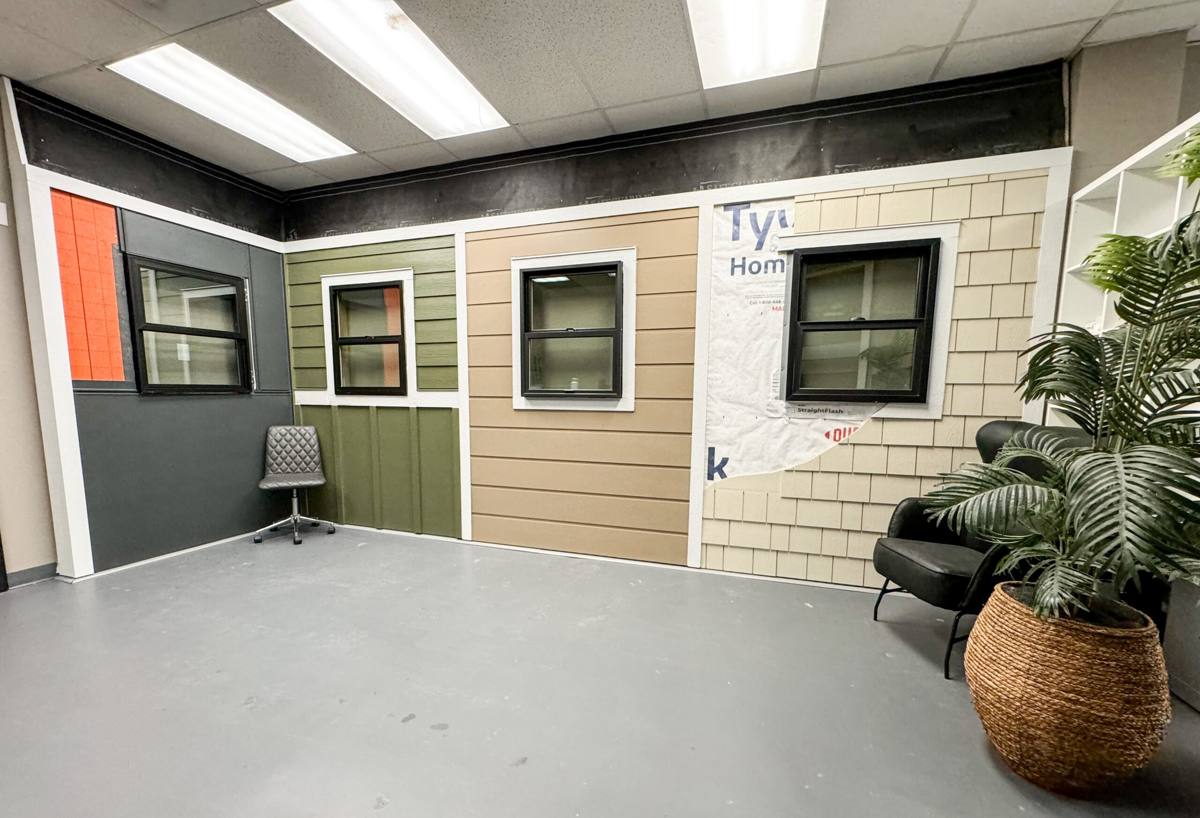
What Bellingham's Climate Asks of a New Window Installation
Whatcom County sits right up against the water, and that shapes how we spec and install windows here. Bellingham Bay puts salt-laden air on exterior hardware and fasteners, which accelerates corrosion on anything not rated for a marine environment. Driving, wind-pushed rain off the Sound tests flashing details that would be forgiving in a drier inland climate — water doesn't just fall here, it gets pushed sideways into wall assemblies under wind pressure. And the long wet season that brings Bellingham its moss on roofs and siding also means window assemblies stay damp for extended stretches of the year, which punishes any installation that traps moisture instead of shedding it.
None of this means a York home needs exotic materials. It means the basics — proper flashing laps, corrosion-resistant fasteners, correctly rated sealants, and a glass package suited to persistent damp and moderate temperature swings — have to be done consistently, on every opening, not just the ones facing the weather.
Flashing and Water Management: Where New-Construction Jobs Get Won or Lost
Sill Pan and WRB Integration
Most water problems in new-construction window installs trace back to the sill, not the head. A sloped sill pan flashing, lapped correctly with the weather-resistive barrier below the rough opening, gives any water that gets past the window a path back out of the wall instead of down into the framing. We install sill pans on every opening as standard practice, not as an upgrade, because in a climate with Bellingham's rainfall totals, skipping it is a bet against the odds.
Head Flashing and the Shingle-Lap Sequence
Above the window, head flashing has to lap over the WRB in proper shingle fashion — each layer overlapping the one below it — so water sheds down and out rather than behind the barrier. We also pay attention to jamb flashing tie-ins, since a lot of leaks in new builds show up at the corners where sill, jamb, and head flashing meet rather than in the middle of the opening.
This sequencing is manufacturer-specified for a reason: it's also what keeps a window's warranty intact. Most window manufacturers require installation per their published instructions, and an installer who deviates from that sequence can void coverage on the unit itself, regardless of how the window performs.
Choosing Frame Material and Glass for a York Build
Frame Material
Vinyl, fiberglass, and wood-clad frames all have a place in new construction, and the right call depends on budget, exposure, and how much upkeep the homeowner wants to take on. Vinyl is the most cost-effective and handles moisture without finishing, but it expands and contracts more with temperature swings. Fiberglass costs more but moves less with temperature and holds paint well if a custom color is wanted. Wood-clad gives an interior wood look with an exterior weather shell, but any breach in that cladding — from a missed caulk joint to physical damage — exposes wood to Bellingham's damp air, so it asks for more attentive long-term maintenance than the other two.
Glass Package
For a York build, we typically recommend a Low-E coated, argon-filled dual-pane unit at minimum, sized to the specific window's orientation. South- and west-facing openings that catch more direct sun benefit from a different Low-E coating than north-facing units that mainly need to resist heat loss and condensation. Whatcom County's building code has specific U-factor requirements for new construction, and we spec glass to meet or beat code minimums rather than treating code as the ceiling.
| Frame Material | Upfront Cost | Moisture Tolerance | Maintenance |
|---|---|---|---|
| Vinyl | Lowest | Excellent — impervious to rot | Minimal; occasional cleaning |
| Fiberglass | Mid to high | Excellent — dimensionally stable | Low; repaint only if desired |
| Wood-clad | Highest | Good if cladding stays intact | Higher; inspect cladding seams regularly |
Our New-Construction Window Process
- Review the plan set and rough opening schedule with the builder before any windows are ordered, to catch sizing conflicts early.
- Confirm window selection — frame material, glass package, operating style — against the home's orientation and Whatcom County energy code requirements.
- Verify each rough opening is square, level, and properly sized once framing is complete.
- Install sill pan flashing and confirm WRB is lapped correctly at the opening before the window goes in.
- Set the window plumb, level, and square, fastened per the manufacturer's nailing fin schedule.
- Install head, jamb, and sill flashing in proper shingle-lap sequence, tied into the WRB.
- Seal and insulate the interior gap per code and manufacturer spec, without over-packing the cavity.
- Walk every opening with the builder or homeowner before siding closes the wall in.
Coordinating With Your Builder or GC
New-construction window installs don't happen in isolation — they sit in the middle of a build schedule between framing, WRB installation, and siding. Timing matters: windows need to go in after the weather barrier is up but before siding, trim, and finish carpentry close everything in. On a York job, we coordinate directly with the general contractor or framer to hit that window (no pun intended), because a delay here can hold up every trade behind it. We also flag any rough opening discrepancies immediately rather than forcing a window to fit an opening that's out of spec, since a forced fit is exactly the kind of shortcut that causes leaks years later.
What Drives Cost on a New-Construction Window Package
| Cost Factor | Why It Matters |
|---|---|
| Number and size of openings | More and larger units mean more material and labor hours |
| Frame material | Vinyl, fiberglass, and wood-clad carry different unit costs |
| Glass package | Higher-performance Low-E and gas-fill options add cost per unit |
| Operating style | Casement and awning hardware typically costs more than fixed or single-hung |
| Site access | Second-story or difficult-access openings add labor time |
| Code compliance features | Egress sizing, tempered glass zones, and energy code minimums can shift product choice |
We provide a written, itemized quote before ordering anything, so a homeowner or builder can see exactly what's driving the number rather than a single lump sum.
A Pre-Install Checklist for York New Builds
- Rough openings confirmed against the approved window schedule, not just the original plan set
- Weather-resistive barrier installed and inspected before window delivery
- Window order confirmed for correct frame material, glass package, and operating style per opening
- Sill pan flashing material on site and compatible with the WRB in use
- Fasteners and hardware rated for coastal/marine exposure
- Manufacturer installation instructions on hand for the specific product line being installed
- Builder and window crew aligned on install sequencing relative to siding and trim
Why Hire a Crew That Already Works in York
York's lots and building conditions aren't identical to inland Whatcom County or the drier east side of the state, and a crew that works this neighborhood regularly already accounts for that. We know how wind-driven rain off Bellingham Bay behaves against west- and southwest-facing openings, how long the wet season actually runs here, and what the City of Bellingham and Whatcom County inspectors look for on new-construction window installs at rough-in and final. That familiarity shortens the learning curve on a job site — we're not guessing at local conditions, we're building to them.
If you're building new in York and want the windows done right the first time, we're happy to walk the plans with you and put together a straightforward, no-pressure estimate — just fill out the form below.