 Bellingham Exterior
 Why Barkley Roofs Wear Out Faster Than the Warranty Suggests
Barkley sits close enough to Bellingham Bay and the Nooksack lowlands that its roofs deal with a specific combination of stresses most manufacturers' warranty language never accounts for. You get long stretches of low-intensity rain that soaks into anything porous, wind gusts that drive water sideways under poorly lapped shingles, and a moss season that can run from fall through spring on shaded lots. None of these alone would be a big deal. Together, over a few winters, they find every weak point in a roofing system — a nail popped a quarter-inch too high, a valley with tired metal, a ridge vent that was never properly tied into the underlayment.
We've worked enough roofs in and around this part of Bellingham to know that a shingle rated for 30 years in a dry climate doesn't automatically get 30 years here. The material holds up fine. What fails early is usually the installation detail underneath it — the parts you can't see once the job is finished.
Moss, Shade, and Slow-Drying Roof Decks
Whatcom County's tree cover means a lot of Barkley homes have at least one roof plane that rarely sees direct sun. Moisture sits there longer, moss spores take hold, and the mat of moss holds even more water against the shingle surface. Over time that constant dampness breaks down the asphalt mat and lifts shingle edges, which is exactly where wind-driven rain gets its opening.
Wind-Driven Rain and Salt Air
Storms rolling in off the bay don't always hit a roof straight down — they hit it at an angle, which is why proper shingle lap, starter strips, and flashing matter so much more here than in a calmer climate. The salt content in the air also speeds up corrosion on exposed metal: nail heads, flashing edges, and gutter hardware all age faster near the water than they would further inland. It's a slow process, but it's a real one, and it's part of why we pay close attention to the metal components on every Barkley roof, not just the shingles themselves.
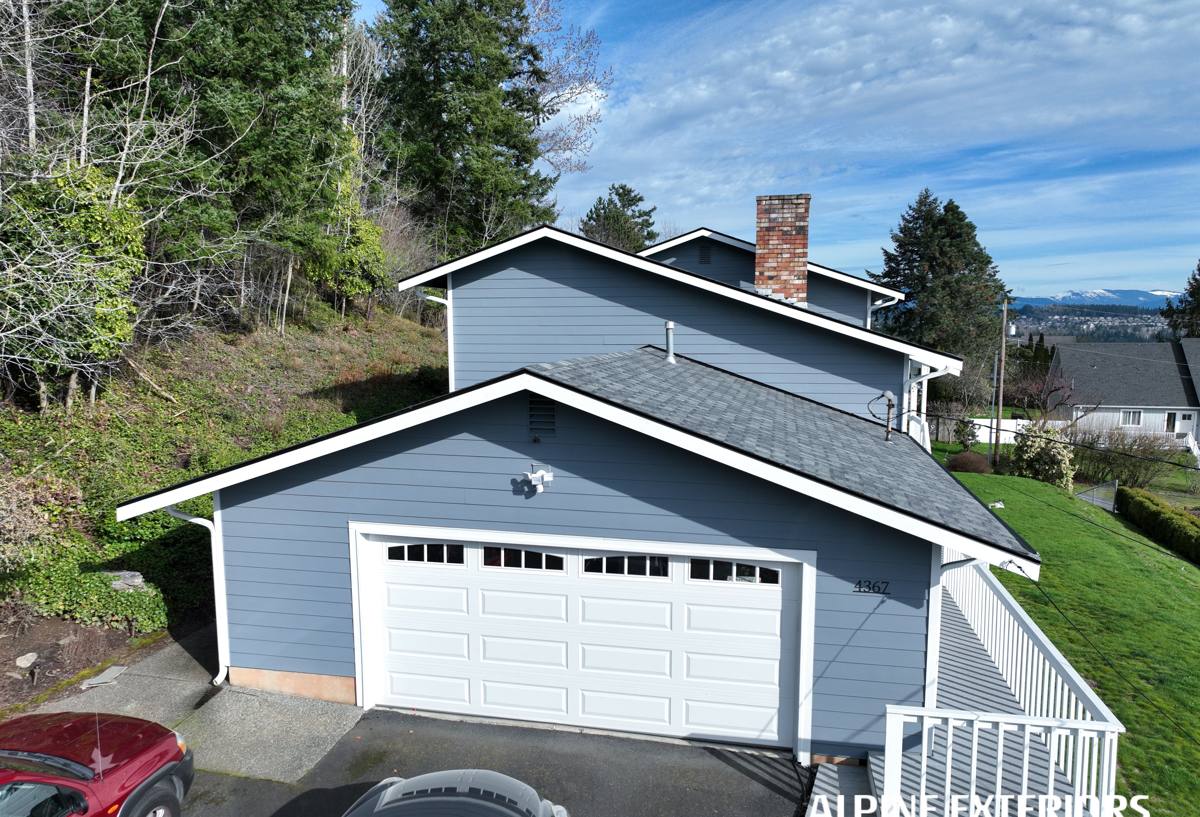
What a Correctly Installed Asphalt Shingle Roof Involves Here
A shingle roof is a system, not a single product. The shingles get the attention because they're what you see, but most of the roofs that fail early in this climate fail because of what's underneath or around them, not because the shingles themselves were bad.
- Ice-and-water shield at eaves, valleys, and around penetrations — the areas most likely to see standing water or ice damming during a cold snap
- Synthetic underlayment across the full deck, lapped correctly, to give the roof a second line of defense if wind ever drives water past the shingle layer
- Balanced ventilation — enough intake at the eaves and exhaust at the ridge to keep the attic dry and the underside of the deck from sweating
- Proper nailing pattern — correct nail count, placement, and depth for the specific shingle and local wind exposure
- Step and counterflashing at every wall intersection, chimney, and skylight, tied into the underlayment rather than just caulked over the top
- Starter strip and ridge cap shingles matched to the field shingle, not a generic substitute
Ventilation Matters More Here Than Most People Realize
In a milder, drier climate, a poorly ventilated attic mostly costs you on energy bills. In Whatcom County, it also costs you roof life. Trapped moisture in the attic condenses on cold nights, soaks into the underside of the roof deck, and creates exactly the damp environment moss and algae need to get established from below as well as above. When we inspect a Barkley roof with premature moss growth or curling shingles, poor attic ventilation is one of the first things we check — not just the shingle brand.
Choosing the Right Shingle for a Barkley Home
There's no single "best" shingle for every house — it depends on your roof's exposure, how much shade it gets, and what you're trying to balance between upfront cost and long-term maintenance. Here's how the common options stack up for this climate:
| Shingle Type | Wind Rating | Moss/Algae Resistance | Typical Lifespan | Best Fit |
|---|---|---|---|---|
| 3-tab | Lower | Standard granules only | 15–20 years | Budget-conscious replacements, low-exposure roofs |
| Architectural / laminate | Higher | Often available with algae-resistant (AR) granules | 25–30 years | Most Barkley homes — best balance of durability and cost |
| Impact-resistant (Class 4) | Higher | Usually AR-treated | 30+ years | Exposed roofs, homeowners prioritizing long-term durability |
For shaded lots or roof planes that stay damp longest, we generally steer homeowners toward an algae-resistant architectural shingle. The copper-infused granules used in AR shingles slow algae and moss growth — they don't stop it entirely, especially under heavy tree cover, but they buy meaningful time between cleanings.
Signs Your Barkley Roof Needs a Closer Look
Most shingle roofs don't fail all at once — they show warning signs for a season or two first. Worth checking for, especially after a windy winter:
- Granules collecting in gutters or at downspout outlets
- Moss buildup on north-facing or heavily shaded slopes
- Shingle edges curling, cupping, or lifting
- Dark streaking across the roof field (algae, not just dirt)
- Soft or spongy spots when the deck is walked
- Daylight visible through the roof deck from inside the attic
- Shingles missing or displaced after a storm
- A noticeable jump in heating costs, which can point to failing attic ventilation
Any one of these on its own isn't necessarily an emergency. A few of them together, especially on a roof past the 15-year mark, is worth a proper inspection before the next wet season.
How We Approach a Barkley Roofing Job
- Inspection first. We walk the roof and the attic, not just the ground-level view, so we know the actual condition of the deck and ventilation before quoting anything.
- Honest scope. If a repair will genuinely hold, we say so. If the deck or flashing has failed to the point that a repair is a short-term patch, we explain why and let you decide.
- Full tear-off. Old shingles come off down to the deck — no layering new shingles over old, which traps moisture and voids most manufacturer warranties.
- Deck repair. Any soft, rotted, or delaminated sheathing gets replaced before anything new goes down.
- Underlayment and flashing. Ice-and-water shield, synthetic underlayment, and new flashing at every penetration and wall intersection.
- Shingle installation. Correct nailing pattern, proper exposure, and starter/ridge details matched to the manufacturer's specifications.
- Ventilation check. We confirm intake and exhaust are balanced before calling the job finished.
- Walkthrough. We show you the finished roof and go over basic maintenance before we leave.
Keeping Moss and Moisture From Shortening Your Roof's Life
A well-installed roof still needs occasional attention in this climate. Pressure washing is one of the worst things you can do to a shingle roof — it strips the protective granules and shortens the shingle's life, even though it looks clean afterward. A gentle low-pressure rinse, or simple hand removal of moss buildup, does the job without the damage.
Zinc or copper strips installed near the ridge are a low-maintenance way to slow moss regrowth on shaded slopes, since rainwater carries trace metal ions down the roof each time it rains. Keeping gutters clear so water doesn't back up under the shingle edge, and trimming back branches that keep a roof plane in shade longer than it needs to be, both go a long way. None of this replaces a periodic inspection, especially after a hard windstorm — small problems caught early are inexpensive; the same problems left through a wet winter usually aren't.
Why Hiring a Crew That Already Works in Barkley Matters
Roofing crews who work all over Western Washington aren't wrong about roofing in general, but they don't always know which slopes in a given Bellingham neighborhood hold moss longest, which older homes in the area were built with ventilation that's since been covered over by additions, or how City of Bellingham permitting works for a full tear-off versus a repair. That local familiarity shows up in small decisions — where to add an extra vent, how to detail a valley that's historically given a particular house trouble, what to flag during inspection that an out-of-town crew might miss.
It also shows up after the job is done. A crew based in this area is the crew you can actually reach if a question comes up two years later, not a name on an invoice from a company that worked the neighborhood once and moved on.
If your Barkley home's roof is showing its age, or you just want an honest read on how many years it has left, we're happy to take a look. The estimate is free, there's no pressure attached to it, and you'll get a straight answer either way — use the form below to get started.