 Bellingham Exterior
 Barkley is one of the more established residential pockets on Bellingham's south side, with a mix of homes old enough to have gone through several Pacific Northwest winters and newer construction that's now hitting the age where original decking starts to show its limits. Whatever the age of your home, a deck in this part of Whatcom County lives a hard life. Salt-tinged air off Bellingham Bay, driving rain that comes in sideways more often than straight down, and a moss season that can stretch from October through May all work against wood, fasteners, and footings in ways that homeowners in drier climates never have to think about.
This page covers what deck replacement actually involves for a Barkley home, what tends to go wrong with decks in this climate, and how we approach the job so the deck you get is still solid a decade or two from now — not just good-looking for the first summer.
Why Decks in Barkley Wear Out Faster Than You'd Expect
A deck doesn't fail all at once. It fails in the places you can't see until you go looking: the ledger board where the deck bolts to the house, the post bases sitting in standing water, the joist hangers rusting from the inside out. Bellingham's marine climate accelerates all of it.
Moisture That Never Really Leaves
Whatcom County doesn't get the kind of hard freeze-thaw cycling that cracks concrete in colder climates, but it makes up for that with sheer duration of dampness. Wood that stays wet for months at a time — under a north-facing deck, behind a planter box, at a ledger connection with no flashing — starts to break down structurally long before it looks bad from a few feet away.
Moss and Organic Growth
The same conditions that keep lawns green year-round in Bellingham also make horizontal wood surfaces a magnet for moss and algae. Beyond the slip hazard, moss holds moisture directly against the decking boards and, on wood, against the fasteners underneath. Left unaddressed for a few seasons, that's a direct path to rot.
Salt Air and Metal Fatigue
Barkley sits close enough to Bellingham Bay that salt-laden air is a real factor, especially on decks facing west or north. Standard galvanized fasteners, joist hangers, and screws corrode faster here than they would inland. Once a fastener starts rusting, it loses holding strength well before it looks obviously bad.
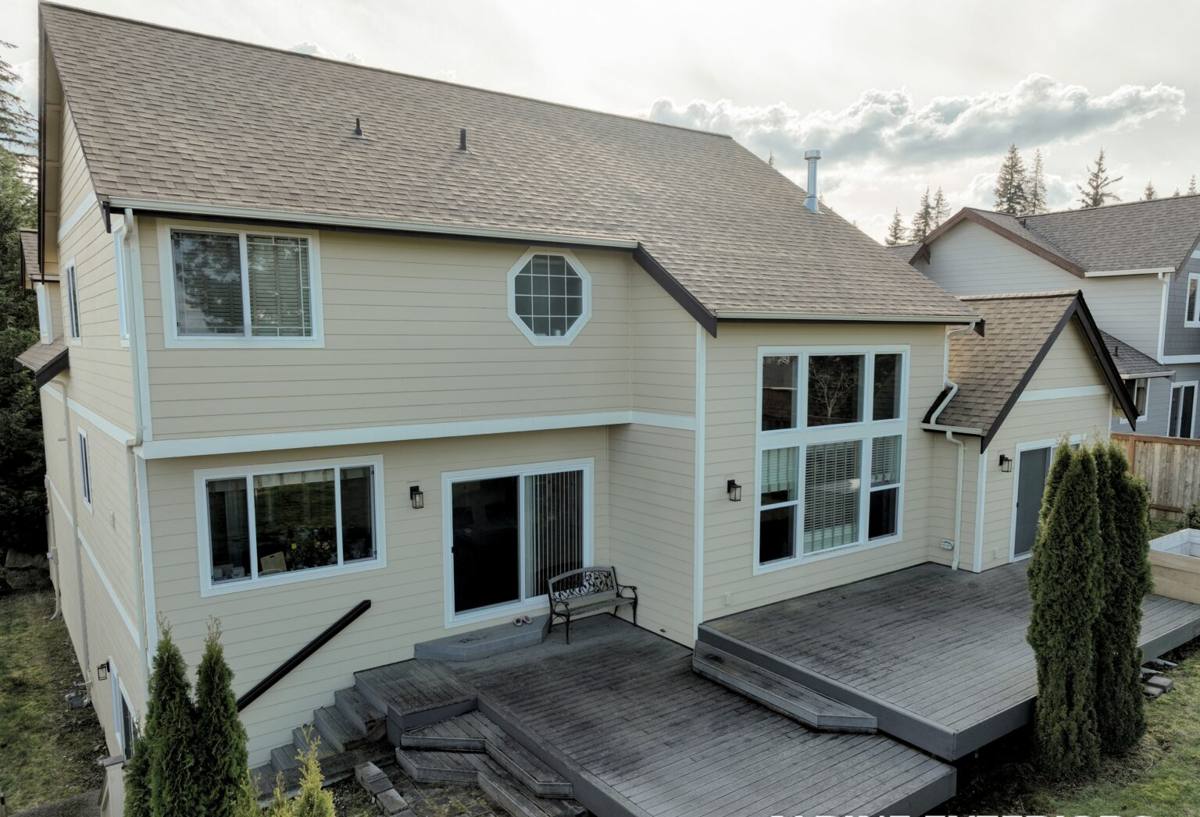
Signs Your Deck Needs Replacement, Not Just Repair
Not every tired-looking deck needs to come down. But there's a real difference between a deck that needs new boards and a deck that needs to be rebuilt from the framing up. Knowing which one you have matters, because repairing a structurally compromised deck just delays the real cost.
Cosmetic Wear (Often Repairable)
- Faded or graying wood on an otherwise solid frame
- A handful of cupped or splitting boards among mostly sound decking
- Surface mildew or algae that hasn't penetrated the wood
- Loose railing balusters that just need re-fastening
Structural Wear (Usually Means Replacement)
- Soft, spongy decking you can push a screwdriver into
- Rot at the ledger board where the deck meets the house
- Posts that have shifted, settled, or sit directly in soil without a proper base
- Rust staining or visible corrosion around joist hangers and bolts
- Railings that flex or wobble under real pressure, not just cosmetic looseness
- A deck more than 20-25 years old that has never been rebuilt to current code
If you're seeing more than one or two items from that second list, replacement is almost always the more honest recommendation — patching individual boards on a frame that's already failing just moves the problem, it doesn't solve it.
What a Correct Deck Replacement Involves
A deck replacement done right in this climate isn't just swapping old boards for new ones on the same frame. The framing, fasteners, and water management are where a deck's real lifespan gets decided.
Footings and Framing
Post footings need to sit below frost depth and be set on solid, well-drained ground — not just poured against saturated soil, which is common in older Barkley builds. We check post spacing and beam sizing against current code, not whatever the original deck happened to use, and we replace any framing lumber showing rot rather than building around it.
Ledger Attachment and Flashing
The ledger board — where the deck attaches to the house — is the single most common failure point we see in this climate, because it's also the hardest place for water to drain away from. Correct flashing at this joint, with proper lag bolts or through-bolts instead of nails, is non-negotiable on a replacement.
Fasteners Rated for the Climate
Given the salt air and near-constant moisture, we use hot-dip galvanized or stainless hardware rated for ground contact and coastal exposure, not the minimum-spec fasteners that come standard on a lot of pre-packaged framing hardware.
Drainage and Airflow Underneath
A deck built tight to the ground with no airflow underneath will hold moisture against the framing indefinitely. Where grading allows, we build in enough clearance and slope for water to actually leave the area instead of pooling under the deck.
Decking Material Options for Barkley Homes
There's no single "correct" decking material — it depends on your budget, how much upkeep you're willing to do, and how much sun exposure the deck gets. Here's how the common options actually perform in this climate.
| Material | Moisture Performance Here | Maintenance | Typical Lifespan |
|---|---|---|---|
| Pressure-treated fir/hem-fir | Good if sealed regularly; prone to checking and splitting if neglected | Annual cleaning, re-sealing every 1-2 years | 15-20 years |
| Cedar | Naturally rot- and insect-resistant, but still needs sealing against constant damp | Cleaning plus sealant/stain every 1-2 years | 15-25 years |
| Composite decking | Handles moisture well, resists rot; can stay damp on the surface longer, so moss still needs occasional cleaning | Periodic washing, no sealing or staining | 25-30+ years |
| PVC/capped polymer | Essentially impervious to moisture and rot | Occasional washing | 25-30+ years |
We're honest with clients that composite and capped polymer boards cost more up front but remove most of the maintenance burden that wood carries in a climate like ours. Wood costs less initially but only holds up if someone actually keeps up with sealing on schedule — which, realistically, a lot of homeowners don't. Neither choice is wrong; it's a question of whether you'd rather pay more now or spend time and money maintaining it later.
Our Deck Replacement Process
- On-site assessment — we inspect the existing deck's framing, footings, and ledger connection to confirm replacement is the right call and identify any hidden rot or drainage issues.
- Design and material selection — we go over decking material, railing style, and layout options based on your budget and how you actually use the space.
- Permitting — where a permit is required, we handle the paperwork and inspections so you're not the one tracking down a building department.
- Demolition and disposal — the old deck comes out, including any rotted framing, and debris is hauled off the property.
- Rebuild from the ground up — new footings or repaired footings as needed, code-current framing, proper ledger flashing, and climate-appropriate fasteners throughout.
- Decking, railing, and finish work — boards, railings, and any stairs are installed and finished to spec.
- Final walkthrough — we go over the finished deck with you before calling the job done.
Permits and Local Building Considerations
Deck replacement in Bellingham and unincorporated Whatcom County can require a building permit depending on the deck's height, size, and whether it's structurally attached to the house — the exact thresholds vary and are worth confirming with the local building department for your specific property rather than assuming. Guardrail height, baluster spacing, and stair rise/run also need to meet current residential code, which is frequently different from what was code when an older Barkley deck was originally built. Part of what a replacement gets you is a deck that's actually brought up to today's standard, not just a fresh coat of stain over an outdated design. We handle the permit process as part of the job so you're not left figuring out inspection scheduling on your own.
Why Hiring a Crew That Already Works in Barkley Matters
A deck built to a generic spec sheet doesn't account for the specific conditions on your lot — how much shade it gets, which direction the prevailing rain comes from, whether the ground drains well or holds water through the winter. Crews who work regularly in this part of Bellingham already know which details matter most here: flashing the ledger properly against sideways rain, using fasteners that won't corrode from salt-laden air, and building in enough airflow underneath to keep moss and moisture from taking hold. That's not something you get from a crew that mostly builds decks in a drier inland climate and treats every job the same way.
It also matters for follow-through. A local crew is the one you can actually call in three years if something needs a look, not a name from an app that isn't based anywhere near Whatcom County.
Maintaining Your New Deck Through Whatcom County's Wet Season
Even a well-built deck needs some basic upkeep to get its full lifespan out of this climate. None of it is complicated, but skipping it is how a good deck turns into a replacement job again in half the time it should have taken.
- Sweep leaves and debris off the deck regularly in fall — trapped leaves hold moisture and speed up moss growth
- Clean moss and algae off the surface at least once a year, ideally before the wet season sets in
- Keep gutters and downspouts clear so runoff isn't dumping directly onto or under the deck
- Check railings and stair connections annually for looseness before it becomes a safety issue
- If you have wood decking, reseal or restain on the schedule the product actually calls for, not "whenever it looks bad"
- Keep planters and furniture legs from sitting directly on wood boards without a barrier, since that's a common spot for hidden rot to start
If your deck in Barkley is showing its age, or you just want an honest opinion on whether it needs repair or full replacement, we're happy to take a look. Fill out the form below for a free, no-pressure estimate — we'll tell you what we actually see, not just what gets the job booked.