 Bellingham Exterior
 Why Birch Bay Siding Takes More Punishment Than Most of Whatcom County
Birch Bay sits right where the Salish Sea meets the wind. Homes here deal with a combination of stresses that inland Bellingham properties simply don't see in the same intensity: salt-laden air off the water, wind-driven rain that hits siding sideways instead of straight down, and a long, damp moss season that runs from fall through spring. Any one of these speeds up wear on the wrong siding material. Together, they're a real test of whatever's on your walls.
Salt air is corrosive to exposed metal fasteners and trim, and it accelerates the breakdown of paint films and cheaper composite products over time. Driving rain off the bay doesn't just wet the surface of a wall — it pushes moisture up under laps, around trim, and into any gap in the water-management details. And moss doesn't just grow on roofs. On north-facing and shaded siding runs in Birch Bay, it takes hold in seams, behind trim boards, and in any spot that stays damp for more than a day or two, holding moisture against the wall assembly long after the rain stops.
None of this means Birch Bay is an impossible place to keep a house looking good. It means the siding material and the installation details matter more here than they would in a drier, more sheltered part of Whatcom County.
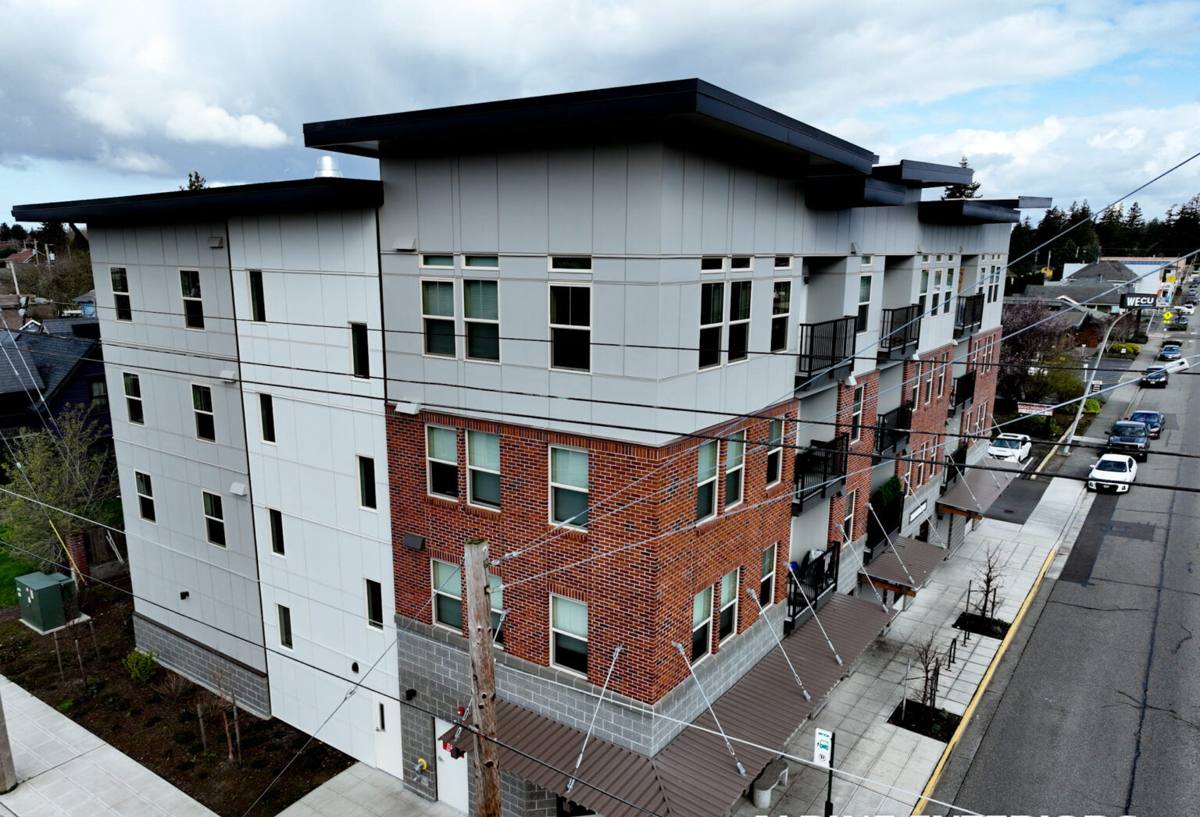
What James Hardie Fiber Cement Does Well in This Environment
James Hardie siding is fiber cement — a mix of cement, sand, and cellulose fibers, engineered and cured to be dimensionally stable. That matters directly for a Birch Bay home for a few reasons.
It doesn't feed moss or rot
Fiber cement is an inorganic material. It won't rot, and it doesn't provide the organic food source that wood-based products can, which matters when a siding run stays damp for weeks at a time under a marine cloud layer. Moss can still grow on the surface if conditions favor it, but it isn't breaking down the substrate underneath while it does.
It's engineered for wet, coastal climates specifically
James Hardie makes region-specific product formulations under its HZ5® engineering, designed for climates with significant moisture exposure and freeze-thaw cycling — which describes the Pacific Northwest coast well. The panels are manufactured to resist moisture absorption and to hold their shape and finish under repeated wet-dry cycling, rather than swelling, cupping, or delaminating.
The factory finish is the real advantage
ColorPlus® Technology bakes the color into the board at the factory, in multiple coats, under controlled conditions no job site can replicate. In a salt-air environment, that matters because factory-applied finishes hold up to UV and airborne salt exposure far better than field-applied paint, and they come with their own finish warranty separate from the substrate warranty. For a waterfront-adjacent home, that's the difference between repainting on a five-to-seven year cycle and going considerably longer before the color needs attention.
What a Correct Installation Actually Involves
Fiber cement siding is only as good as the installation behind it. In a high-exposure area like Birch Bay, the details that get skipped on a rushed job are exactly the details that cause problems two or three winters later.
- Weather-resistive barrier and flashing first. A correctly lapped water-resistive barrier, with properly integrated window and door flashing, has to be right before a single piece of siding goes up. This is the layer that actually keeps wind-driven rain out of the wall assembly.
- Manufacturer-specified clearances. Hardie's installation instructions call for specific gaps at grade, roof lines, decks, and abutting trim so water has somewhere to go instead of wicking into the bottom edge of a board.
- Correct fastener spacing and type. Coastal installations need fasteners rated for the exposure, placed per Hardie's pattern — not just "close enough." Under-fastened or incorrectly placed nails are a common cause of movement and cracking.
- Proper joint and butt-seam treatment. Seams have to be caulked, flashed, or shiplapped correctly depending on the product line, since seams are the first place driving rain finds a way in.
- Field-cut edge sealing. Any board cut on site exposes raw fiber cement that should be sealed per Hardie's guidelines, especially on a job where the finished wall will see regular wetting.
- Ventilation behind the cladding. A rainscreen or properly vented gap behind the siding lets any moisture that does get in dry out, instead of sitting against the sheathing.
Skip two or three of these on a Birch Bay job and the siding itself can be flawless while the wall behind it still takes on moisture damage. This is installation-sensitive work, and it's a big part of why we say the crew matters as much as the material.
Why We Install Only James Hardie
We don't install vinyl, LP SmartSide, or other fiber-cement alternatives. That's a deliberate standard, not a lack of options. In a marine environment like Birch Bay, we've made the call that James Hardie's combination of non-combustible material, coastal-engineered product lines, and factory-cured ColorPlus finish gives homeowners the best long-term outcome for what this climate does to a house. Standardizing on one product also means our crews install it constantly, on exactly this kind of terrain, rather than switching systems from job to job.
Our Process on a Birch Bay Project
1. On-site assessment
We look at your home's specific exposure — which walls face the water and prevailing wind, where moss has already taken hold, and where the current siding or trim shows signs of moisture intrusion. This shapes the flashing and ventilation plan before we ever quote the job.
2. Product and color selection
We walk through Hardie's plank, panel, and shingle-style options and ColorPlus color palette, matched to your home's style and the practical realities of a coastal setting — some colors and finishes simply hold up better under constant salt exposure and UV.
3. Tear-off and wall inspection
Removing the old siding is when we actually see the sheathing. If there's hidden moisture damage from a prior installation's shortcuts, we address it before new siding goes up — not after.
4. Water management installation
Weather-resistive barrier, flashing, and ventilation gap go in per manufacturer spec, before the visible siding starts.
5. Siding installation
Panels or planks go up with correct clearances, fastening, and seam treatment, with field cuts sealed as we go.
6. Trim, caulking, and final walkthrough
Trim and caulking are finished, and we walk the exterior with you before calling the job done.
What Drives Cost on a Birch Bay Siding Job
Every home is different, but these are the factors that typically move the price up or down on a fiber cement siding project in this area.
| Factor | Why it matters here |
|---|---|
| Existing wall condition | Hidden rot or moisture damage found at tear-off adds repair work before new siding can go up |
| Home exposure | Walls facing prevailing wind and water often need extra attention to flashing and ventilation detail |
| Product line and profile | Lap siding, panel systems, and shingle-style Hardie products carry different material and labor costs |
| Trim and accent work | Corner boards, window trim, and accent details add labor time beyond flat wall coverage |
| Story height and access | Multi-story walls and difficult access (slopes, tight lot lines) increase labor and equipment needs |
| Color and finish selection | ColorPlus factory finishes vs. field-applied Primed for Paint have different material pricing |
We give you a written, itemized estimate before any work starts, so you know exactly what you're paying for and why.
Living With Hardie Siding in a Marine Environment
Even a correctly installed Hardie system benefits from a little seasonal attention in a place like Birch Bay:
- Rinse salt residue off the siding occasionally, especially after big wind events off the water
- Keep an eye on shaded, north-facing sections where moss and mildew tend to establish first
- Check caulking at trim joints and penetrations every year or two — caulk is the one component that ages faster than the siding itself
- Trim back vegetation and keep gutters clear so water isn't running down or pooling against the wall
This is light maintenance compared to what wood or composite siding demands in the same conditions, but it's not zero-maintenance, and we tell every Birch Bay homeowner that up front.
Why Hiring a Crew That Already Works This Area Matters
Installation quality is what actually determines how siding performs over 20-plus years, and the details that matter in Birch Bay — wind exposure, salt air, moss pressure, and driving rain off the bay — aren't the same details that matter on a sheltered inland lot elsewhere in Whatcom County. A crew that regularly works this specific stretch of coastline already knows which walls need extra flashing attention, which orientations hold moisture longest, and how the local climate behaves through a full year, not just on the day of installation. That familiarity shows up in fewer callbacks and a wall assembly that's actually built for where it sits.
If you're planning a siding project in Birch Bay, we'd like to take a look at your home and walk you through what a correct James Hardie installation looks like for your specific site. Reach out for a free, no-pressure estimate using the form below.