 Bellingham Exterior
 Roof Repair in Birchwood: Built for Whatcom County Weather
Birchwood homes take a different kind of beating than roofs in drier parts of the country. Salt-laden air drifting off the water, driving rain that comes in sideways during winter storms, and a moss season that can stretch for most of the year all work against asphalt shingles, flashing, and underlayment in ways that aren't always obvious from the ground. A roof that looks fine from the driveway can still be losing its grip on moisture underneath the shingle line, especially around valleys, chimneys, and low-slope sections common in this neighborhood's older housing stock.
We work on roofs throughout Bellingham and Whatcom County, and Birchwood shows up on our schedule regularly enough that we know its patterns: which roof lines tend to hold moss longest, which older homes still have flashing details that don't meet current best practice, and which repairs are quick fixes versus warning signs of something larger developing underneath.
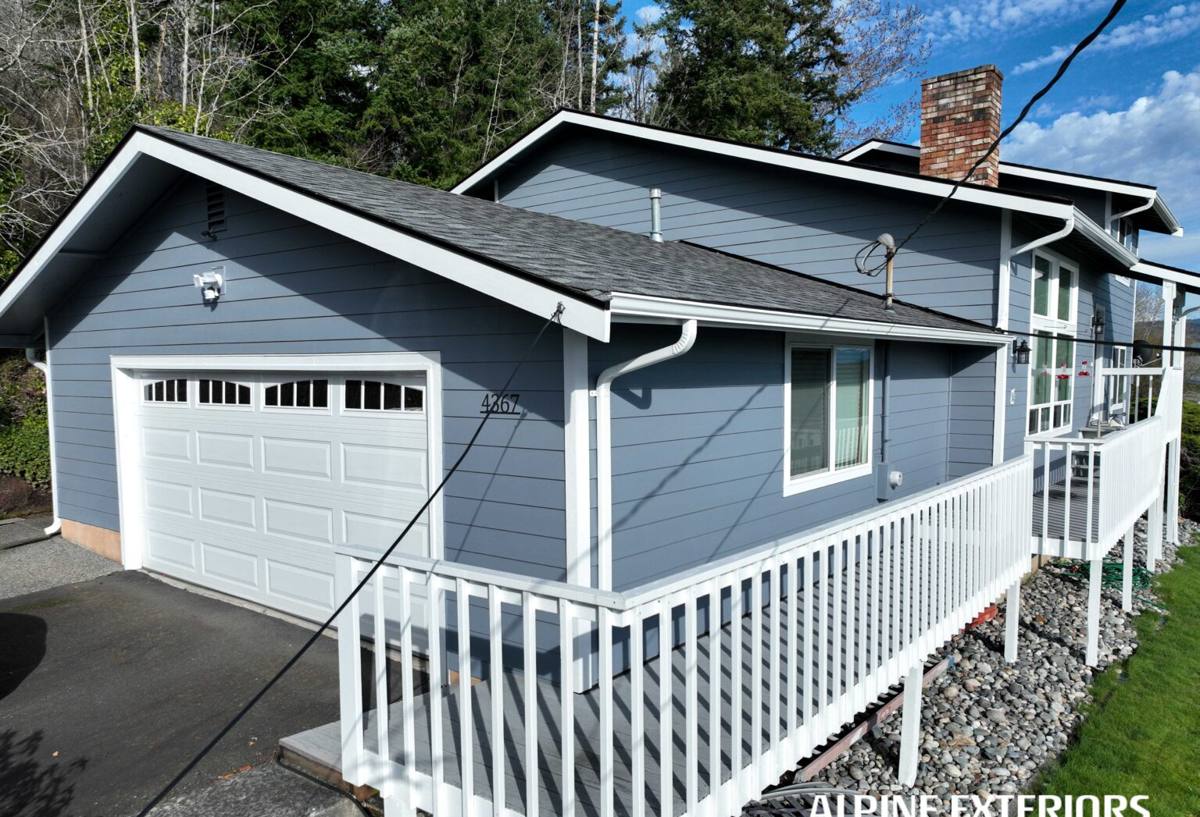
What Birchwood's Climate Does to a Roof
Moss and Organic Growth
Moss doesn't just look bad — it holds moisture against the roof surface long after rain has stopped, which accelerates granule loss on asphalt shingles and can work its way under shingle edges over time. Birchwood's tree cover and the region's damp, shaded microclimates give moss a long growing season. Left unchecked, thick moss mats can lift shingle edges enough to let wind-driven rain find a path underneath.
Salt Air and Metal Fatigue
Proximity to Bellingham Bay means airborne salt settles on roofing metal — flashing, drip edge, vent caps, and fasteners — faster than it would further inland. Salt exposure speeds up corrosion on lower-grade or aging metal, which is often where a roof starts leaking long before the shingles themselves fail.
Driving Rain and Wind-Driven Water
Storms here don't always drop straight down. Wind-driven rain can push water sideways under shingle tabs, around poorly sealed penetrations, and into gaps at wall-to-roof transitions that would stay dry in calmer weather. This is one of the most common reasons we get called out to a roof that "shouldn't" be leaking based on its age.
Signs a Birchwood Roof Needs Repair, Not Just a Look
- Water stains on interior ceilings, especially near chimneys, skylights, or where two roof planes meet
- Granules collecting in gutters or downspout runoff — a sign of shingle wear
- Visible moss mats, especially on north-facing or shaded slopes
- Curling, cracked, or missing shingles after a windstorm
- Rust streaks below metal flashing or vent stacks
- Soft or spongy decking felt underfoot in the attic near roof edges
- Daylight visible through the roof deck from inside the attic
Any one of these on its own might be minor. Several together, or any sign paired with an active interior leak, usually means it's time for a closer look before the next storm cycle rolls through.
What a Correct Roof Repair Actually Involves
A proper repair starts with figuring out where water is actually getting in — which is not always where the stain shows up inside. Water can travel along rafters or sheathing for several feet before it drips somewhere visible, so a repair that just patches the spot above the stain often misses the real entry point.
Our Repair Process
- Roof and attic inspection. We look at the roof surface, flashing details, and — where accessible — the underside of the decking from the attic to trace the actual water path.
- Diagnosis and scope. We identify whether the issue is isolated (a failed flashing seal, a few damaged shingles) or a sign of broader wear that repair alone won't solve long-term.
- Material matching. Where possible, we match existing shingle color and profile so the repair doesn't stand out. When exact matches aren't available, we'll walk you through the closest honest options.
- Flashing and underlayment work. Most lasting leaks trace back to flashing, not the shingles themselves — around chimneys, skylights, valleys, and sidewalls. We replace compromised flashing rather than just re-sealing over it.
- Moss and debris clearing. If moss contributed to the failure, we clear it and treat the area as part of the repair, not as a separate add-on job.
- Final check. We confirm the repair sheds water correctly at the seams and transitions, not just at the original problem spot.
Repair Versus Replacement: How We Help You Decide
Not every roof problem calls for a full replacement, and not every leak is fixable with a patch. We give straight answers based on what we actually find — not on which job pays more.
| Factor | Leans Toward Repair | Leans Toward Replacement |
|---|---|---|
| Roof age | Under 15 years, or newer material with isolated damage | Near or past expected shingle lifespan |
| Extent of damage | Localized to one area, valley, or penetration | Widespread granule loss or curling across multiple slopes |
| Decking condition | Solid, dry sheathing under the damaged area | Soft, delaminated, or water-stained decking in multiple spots |
| Moss history | Recent growth, caught early | Long-term moss damage affecting large sections |
| Flashing condition | One or two failed points | Aging flashing throughout, original to an older roof |
When a roof falls in the middle, we'll tell you that too, along with what a repair buys you in time versus what a replacement would cost — so you can make the call that fits your budget and timeline.
Common Birchwood Repair Scenarios
Chimney and Skylight Flashing Leaks
These are among the most frequent repair calls we get in this neighborhood. Flashing around chimneys and skylights takes direct hits from wind-driven rain and, over years, from moss and debris buildup in the surrounding valley. Once the seal breaks down, water finds its way in during almost any significant storm.
Valley Leaks
Roof valleys concentrate a lot of water flow, and moss or debris buildup here restricts drainage and can force water sideways under the shingles. Valleys are also one of the first places we check when a homeowner reports a leak with no obvious cause.
Wind Damage After Winter Storms
Bellingham's winter storm season regularly loosens or lifts shingle tabs, sometimes without pulling them off entirely. A shingle that's lifted but not missing can look fine from the ground while still letting rain underneath — this is a repair we catch often during post-storm inspections.
Vent and Pipe Boot Failures
Rubber pipe boots and vent seals age faster in coastal, salt-air conditions than most homeowners expect. Cracked boots are a small, inexpensive fix if caught early, but they're an easy thing to overlook during a casual roof check.
Why Choose a Crew That Already Works in Birchwood
A roof repair crew that only sees a neighborhood once knows less about it than one that returns regularly. We've worked on roofs across Bellingham and Whatcom County long enough to recognize the difference between a Birchwood roof showing normal wear for its age and one where the climate — salt air, sustained moss, or storm exposure — has accelerated things faster than expected. That context shapes how we diagnose a leak and what we recommend, rather than defaulting to a one-size-fits-all fix.
We also know which repairs tend to need revisiting in this specific environment and build our work accordingly — using flashing and sealing methods suited to sustained moisture exposure rather than assuming a dry-climate repair standard will hold up here.
What to Expect When You Call Us
- A straightforward inspection focused on finding the actual cause, not just the visible symptom
- A clear explanation of what we found, in plain language, before any work starts
- An honest repair-versus-replace recommendation based on the roof's real condition
- Work scoped to fix the problem correctly the first time, including the flashing and underlayment details that get skipped in rushed patch jobs
- No pressure to upsell a full replacement when a repair is the right call
Maintaining Your Roof Between Repairs
A few habits go a long way toward keeping a Birchwood roof out of trouble between service visits:
- Keep gutters and valleys clear of needles, leaves, and debris so water has a clean path off the roof
- Have moss addressed before it forms thick mats, not after
- Walk the attic occasionally (or have it checked) for early signs of moisture rather than waiting for a ceiling stain
- Have flashing and roof penetrations checked after major windstorms, even if nothing looks obviously wrong from the ground
None of this replaces a professional inspection, but it does help catch small issues before they turn into interior damage.
If you're dealing with a leak, storm damage, or just want a second opinion on a roof that's showing its age, we're happy to take a look. Reach out for a free, no-pressure estimate using the form below.