 Bellingham Exterior
 Siding Replacement for Lynden Homes
Lynden sits inland from Bellingham in the farmland of Whatcom County, but it shares the same marine-influenced weather that shapes every building decision in this corner of Washington. Long, wet winters, a short dry season, and air that stays damp for months at a stretch put steady pressure on exterior walls. Add the region's driving rain — storms that come in sideways off the Salish Sea and soak siding from angles a lot of products were never designed to handle — and you get a climate that finds every weak point in a home's exterior within a few years, not a few decades.
For homeowners in Lynden, siding replacement isn't a cosmetic project. It's a decision about what's going to stand between the house and a wet season that runs roughly eight months out of twelve. We install James Hardie fiber cement siding exclusively, and on this page we'll walk through what that means specifically for a Lynden home, why the climate here punishes the wrong choice, and how our process is built around getting it right the first time.
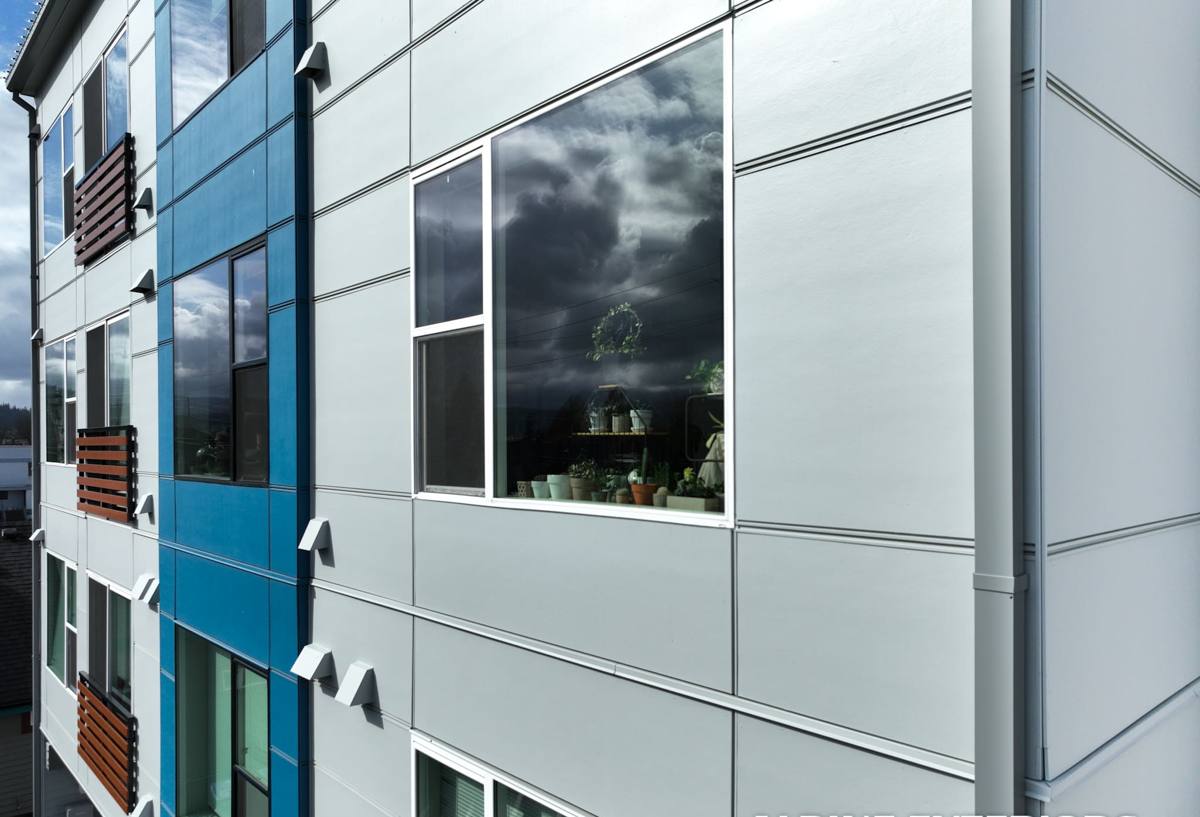
Why Whatcom County Weather Is Hard on Siding
Moisture That Doesn't Let Up
Bellingham and the surrounding county see persistent drizzle, fog, and low cloud cover for much of the year. That kind of weather doesn't stress a wall the way a single hard storm does — it's a slow, constant dampness that finds gaps in caulking, works into end cuts, and keeps siding wet longer than it has time to dry. Products that absorb moisture or swell when saturated are working against the climate from day one.
Driving Rain and Wind-Driven Exposure
Storms moving through the county often bring rain at an angle rather than straight down, which pushes water up under laps and around trim if the siding and flashing details aren't installed correctly. A siding job that looks fine on a calm day can fail during the first real windstorm if the water management behind it wasn't done right.
The Long Moss Season
Shaded, damp exterior walls in this region grow moss and algae for most of the year, not just in deep winter. Moss holds moisture against a wall surface, and on siding that isn't dimensionally stable or properly finished, that trapped moisture accelerates wear, discoloration, and — on wood-based products — rot at the surface. Any siding choice for a Lynden home has to account for the fact that some part of the exterior is going to stay shaded and damp for long stretches, every year, indefinitely.
What a Correct Siding Replacement Involves
Replacing siding is not simply pulling off old panels and nailing up new ones. Done correctly, it's a system — and skipping any layer of that system undermines the rest, regardless of which siding product goes on last.
- Tear-off and inspection: removing the old siding to expose the sheathing and framing underneath, and checking for hidden rot, soft spots, or prior water damage before covering anything back up.
- Repair of damaged sheathing or framing: any compromised wood gets replaced, not papered over — this is the point where hidden problems either get fixed or get sealed in for another 15 years.
- Weather-resistive barrier: a correctly lapped and sealed water/weather barrier installed over the sheathing, which does the real work of keeping bulk water out of the wall assembly.
- Flashing details: proper flashing at windows, doors, and any wall penetrations, so water is directed out and down rather than allowed to pool or migrate behind the siding.
- Rainscreen or drainage gap where appropriate: a small gap behind the siding that lets any moisture that does get in drain and dry out, instead of sitting against the back of the panel.
- Correct fastening and clearances: siding installed to the manufacturer's nailing pattern, with proper clearance from grade, roof lines, and decks so water and debris don't sit against the bottom edge.
- Caulking and trim work: sealed joints at seams and penetrations, done with the right materials in the right places — not as a substitute for proper flashing, but as a finishing layer on top of it.
Every one of those steps matters more in a climate like Whatcom County's than it would somewhere dry. A weather barrier installed sloppily might go unnoticed for years in a low-rain region. Here, it shows up as a stain, a soft spot, or a moisture problem within a couple of wet seasons.
Why We Install Only James Hardie Fiber Cement
We don't install vinyl, LP SmartSide, primed spruce, cedar, or other fiber cement brands. That's a deliberate standard, not a limitation of what we're capable of installing. Here's the reasoning, product by product, as it applies to a wet, moss-prone climate like this one.
Wood and Wood-Composite Products
Cedar and primed spruce are attractive materials, and in a dry climate they can perform reasonably well with regular maintenance. In a climate where siding stays damp for months and moss holds moisture against the surface for most of the year, wood-based products need more frequent recoating, caulking, and spot repair to keep water out of the substrate. LP SmartSide (an engineered wood product) has improved moisture resistance over raw wood, but it's still a wood-strand product at its core, and the failure mode when moisture does get past the finish — swelling, delamination at cut edges — is a wood failure mode. In this climate, that maintenance burden shows up sooner and more often than it does in drier regions.
Vinyl Siding
Vinyl doesn't rot, but it isn't dimensionally stable across the temperature swings this region sees between summer and winter, and it can warp or crack over time, particularly at fastening points that weren't installed with the right expansion clearance. It also doesn't hold paint, so a homeowner is locked into whatever color they originally chose, with no ability to update it as trends or the neighborhood change.
Other Fiber Cement Brands
Products like Cemplank and Allura are also fiber cement, and fiber cement as a category is the right general direction for this climate — non-combustible, dimensionally stable, and moisture-resistant at its core. Our reason for standardizing on James Hardie specifically comes down to their ColorPlus factory-applied finish (which resists fading and chipping better than field-applied paint over time), their HZ5 product engineering for wetter, harsher climates, and the strength and transferability of their warranty. When we stand behind a siding job for years after installation, we want to be standing behind a product with a track record we trust in exactly this kind of weather.
James Hardie Product Lines for This Climate
| Product | Best Use | Why It Fits Lynden's Climate |
|---|---|---|
| HardiePlank lap siding | Most home exteriors | Traditional look, factory ColorPlus finish resists the region's moss and mildew staining better than field-painted surfaces |
| HardiePanel vertical siding | Accent walls, gables, modern facades | Clean lines for contemporary Lynden farmhouse-style builds; performs well under sustained moisture exposure |
| HardieTrim boards | Window, door, and corner trim | Matches the dimensional stability of the field siding so trim and panels move together, not against each other |
| HZ5 engineered products | Homes with heavy rain and freeze-thaw exposure | Engineered specifically for wetter, harsher climate zones like the Pacific Northwest |
Our Siding Replacement Process
- On-site assessment: we inspect the current siding, sheathing condition, and any problem areas specific to the home's exposure and shading.
- Detailed proposal: a clear scope covering tear-off, repairs anticipated, weather barrier and flashing plan, product and color selection, and timeline.
- Tear-off and sheathing repair: old siding removed, structure inspected and repaired as needed before anything new goes up.
- Weather barrier and flashing installation: the water management layer that does the real work, installed to manufacturer and code specifications.
- Hardie installation: siding, trim, and accessories installed to James Hardie's fastening and clearance specifications — not shortcuts.
- Final inspection and walkthrough: we review the completed work with the homeowner before calling the job done.
Why Local Experience in Lynden Matters
A crew that already works across Whatcom County knows how this climate behaves on real homes, not just in a manufacturer's spec sheet. That means knowing which wall orientations in this area collect the most moss, how to detail flashing for the driving rain events that come through several times a winter, and how a home's exposure to open farmland versus tree cover changes its moisture load. It also means being available for warranty follow-up and questions after the job is done, rather than a crew that installed a handful of homes here and moved on. For a project that's supposed to last decades, that local continuity is worth as much as the product going on the wall.
What to Check Before You Hire
- Do they install fiber cement to manufacturer nailing and clearance specs, or just "get it up fast"?
- Will they inspect and repair sheathing before covering it, or just re-side over existing problems?
- Is a weather-resistive barrier and proper flashing plan part of the written scope?
- Are they James Hardie certified or experienced specifically with Hardie's installation requirements?
- Do they have ongoing work and references in Whatcom County, not just claims of general siding experience?
- Is the warranty explained clearly, including what's covered by the manufacturer versus the installer?
If your Lynden home's siding is showing moss staining, soft spots, peeling paint, or visible gaps at seams and trim, it's worth having it looked at before another wet season adds to the damage. We offer free, no-pressure estimates for siding replacement — walk the exterior with us, ask questions, and get a straightforward assessment of what your home actually needs.