 Bellingham Exterior
 Why Edgemoor Decks Take More Punishment Than Most
Edgemoor sits close enough to Bellingham Bay that salt-laden air is a daily fact of life, not an occasional nuisance. Add Whatcom County's long wet season, driving rain that comes in sideways off the water during winter storms, and the deep shade thrown by mature fir and cedar canopies, and you get a deck environment that's genuinely tougher than a typical inland lot. Wood decking in this setting rarely makes it past a few seasons without visible weathering, and even composite products can underperform if they weren't installed with this exact combination of conditions in mind.
The two biggest culprits we see on Edgemoor decks are moisture that never fully leaves the structure, and moss or algae that colonizes any surface that stays damp and shaded for weeks at a time. Neither of these is a composite decking problem by itself — they're an installation problem. Get the drainage, airflow, and fastening details right, and a composite deck in this neighborhood will genuinely outperform wood. Get them wrong, and you've just built an expensive place for moss to grow.
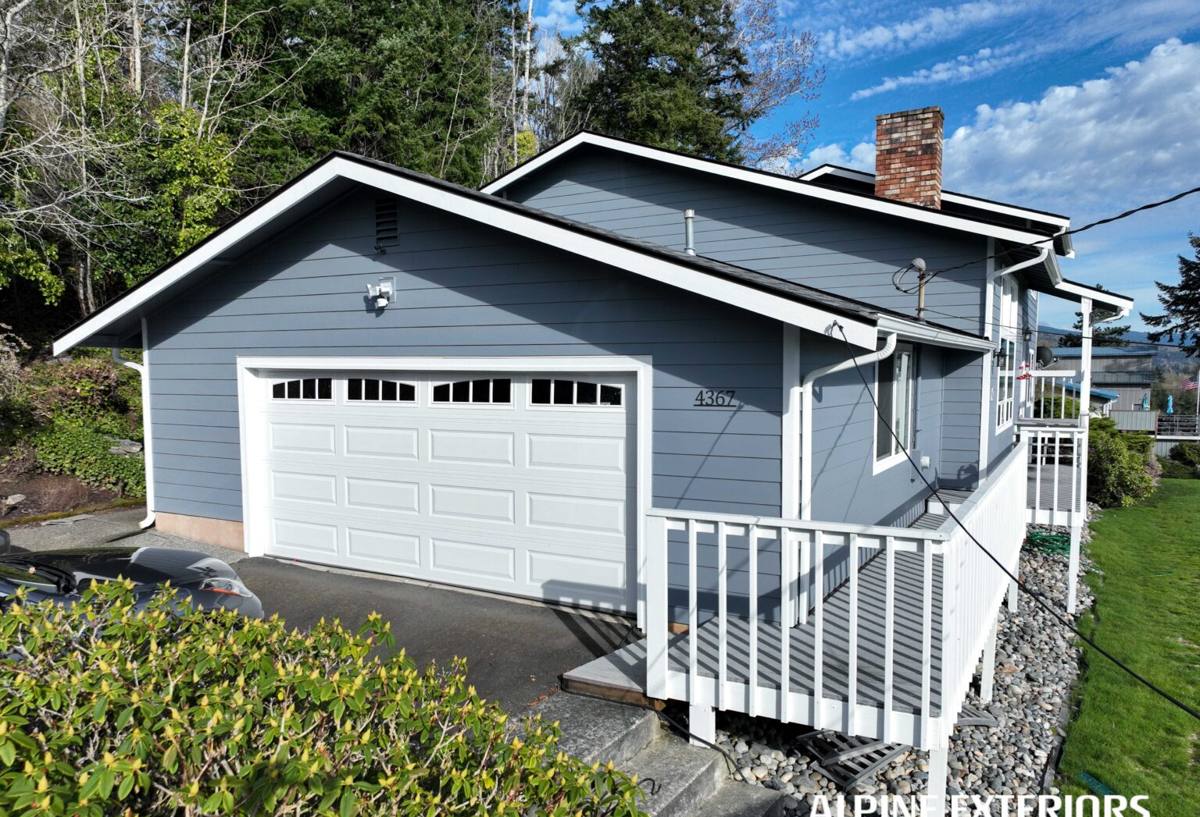
What a Deck in This Neighborhood Actually Needs
Airflow Underneath, Not Just On Top
Composite boards themselves resist rot, but the framing underneath them doesn't unless it's protected and ventilated. A deck built low to grade, or tight against a foundation wall, traps moist air underneath with nowhere to go. In a marine climate like Bellingham's, that trapped humidity accelerates corrosion on fasteners and hangers and creates the exact damp, dark conditions moss and mildew need. Any deck we build here is framed with enough clearance and cross-ventilation to let air actually move under the boards, not just around the edges.
Fasteners That Won't Corrode Away
Salt air eats ordinary galvanized hardware faster than most homeowners expect — often years before the decking itself shows any wear. Structural screws, joist hangers, and hidden fastener clips all need to be rated for coastal exposure, typically stainless steel or a coating specifically tested for marine environments. This is one of the easiest details for a crew unfamiliar with the area to get wrong, because it costs more up front and the failure doesn't show up for a few years.
A Ledger and Flashing Detail That Actually Sheds Water
Where the deck attaches to the house is the single most common failure point we find on older decking of any material, and driving rain makes it worse here than in drier parts of the state. Proper flashing tape and a ledger board that's set to shed water outward — not trap it against the siding — is not optional trim work. It's the difference between a deck that lasts and one that quietly rots the house behind it.
Composite vs. Other Decking Materials for an Edgemoor Lot
Homeowners in this neighborhood usually end up choosing between capped composite, PVC, pressure-treated wood, or cedar. Here's how they actually compare once salt air, rain, and moss are part of the equation:
| Material | Moisture & Salt Air Behavior | Moss/Algae Resistance | Maintenance | Typical Lifespan Here |
|---|---|---|---|---|
| Capped composite | Excellent — moisture-sealed cap layer | Good, especially textured/streaked colors | Periodic wash-down only | 25-30+ years |
| PVC decking | Excellent — fully synthetic, no wood content | Good | Periodic wash-down only | 25-30+ years |
| Pressure-treated wood | Fair — absorbs moisture, prone to cupping | Poor in shaded, damp spots | Annual staining/sealing | 10-15 years |
| Cedar | Fair — naturally rot-resistant but still absorbs moisture | Poor to fair | Regular sealing, more sanding over time | 12-18 years |
We install composite as our standard recommendation for Edgemoor because it holds up to the specific combination of salt exposure and shade-driven moss growth better than any wood product, without the annual sealing and staining cycle. That said, our standard here is about matching the material to the site's real conditions and the homeowner's maintenance appetite — not steering everyone toward the same answer regardless of budget.
Capped vs. Uncapped Composite
Within composite decking itself, capped boards — where a protective polymer shell surrounds a wood-composite core — perform noticeably better in wet, shaded conditions than older uncapped composite formulations, which can absorb moisture at the edges over time and are more prone to surface mildew staining in low-light areas. For an Edgemoor lot with tree cover and marine humidity, we don't recommend uncapped composite; the small upfront savings isn't worth the maintenance difference over the deck's life.
What a Correct Installation Actually Involves
A composite deck is only as good as the framing and details underneath it. On every project we:
- Assess the existing structure (or design new footings and framing) for the actual load and span requirements, not just what's visually adequate
- Set joist spacing to the composite manufacturer's spec, which is often tighter than standard lumber spacing to prevent long-term sagging
- Use hidden fastener systems for a clean surface with no exposed screw heads to trap moisture or moss
- Flash the ledger board and any house connection points to shed water away from the structure
- Build in proper drainage slope so water doesn't pool on the deck surface
- Leave adequate ventilation gaps between boards and around the perimeter skirting
- Pull permits and inspections where required by the city, since deck framing is a structural item, not a cosmetic one
Our Process for an Edgemoor Deck Project
We start with an on-site assessment — not a phone estimate — because lot slope, shade cover, and proximity to the water all affect what the framing and drainage plan should look like. From there:
- We evaluate the existing structure (if replacing a deck) or the site conditions (if building new), including drainage paths and any moisture already present in ledger areas or framing
- We put together a written scope and quote covering board selection, substructure work, railing, and any permit needs, so there are no surprises mid-project
- We handle demolition and haul-away of the old deck if applicable, and repair or rebuild framing as needed before a single composite board goes down
- We install to manufacturer spec, including fastening, flashing, and ventilation details specific to this climate
- We do a final walkthrough with you covering how the new deck drains, how to care for it, and what to watch for over the first year
Living With a Composite Deck in This Climate
Composite decking is genuinely low-maintenance, but "low" isn't "none" — especially under tree cover near the water. A seasonal wash-down (a garden hose and a stiff brush, or a low-pressure wash, handles most of it) keeps moss and organic buildup from getting a foothold, particularly on shaded sections of the deck that dry slowly. Keeping gutters and downspouts clear so runoff isn't dumping directly onto or under the deck matters more here than in drier climates. And it's worth a quick look each fall at the ledger flashing and any fastener points, just to confirm nothing has shifted or corroded — a five-minute check that prevents the kind of hidden damage that's expensive to fix later.
What Drives the Cost
| Factor | Why It Matters |
|---|---|
| Deck size and shape | Square footage and cuts around angles or curves affect material and labor |
| Board tier | Composite lines range from entry-level capped boards to premium streaked/hardwood-look lines |
| Substructure condition | Existing framing that needs repair or replacement adds cost but is not optional to skip |
| Railing type | Composite, cable, or glass railing systems vary widely in price |
| Site access | Sloped lots and limited equipment access near the water can add labor time |
| Permit requirements | Deck height, size, and location relative to the house may trigger permitting |
Most Edgemoor composite deck projects land in a broad mid-to-upper range compared to simpler inland builds, mainly because of the fastener upgrades and drainage detailing this site type calls for. We give firm, itemized numbers after seeing the site — not a ballpark based on square footage alone.
A Checklist Before You Hire Anyone
- Do they ask about drainage and airflow under the deck, or just talk about board color?
- Do they specify corrosion-resistant fasteners and hardware for a marine-air environment?
- Do they include ledger flashing detail in the written scope, not just "attach to house"?
- Are they pulling permits where required, rather than treating it as optional?
- Can they explain why they'd choose capped composite over uncapped or pressure-treated wood for your specific lot?
- Do they offer a written, itemized quote after an on-site visit, rather than a phone estimate?
Why Local Experience in Edgemoor Specifically Matters
Edgemoor's lots vary a lot in slope, tree cover, and proximity to the water, and those differences change how a deck should be framed and drained. A crew that's worked this neighborhood before already knows to expect shaded, slow-drying areas that need extra ventilation, and salt-air exposure that makes fastener selection non-negotiable rather than a place to cut cost. That familiarity shows up in fewer surprises during the project and a deck that's built for the conditions it will actually face, not generic conditions somewhere else in Whatcom County.
If you're weighing a new deck or a replacement for your Edgemoor home, we're happy to come take a look and give you a straightforward, no-pressure estimate — just fill out the form below.