 Bellingham Exterior
 Custom Windows Built for Happy Valley's Coastal Conditions
Happy Valley sits close enough to the water and the hills around Bellingham that its homes take a different kind of weathering than houses further inland in Whatcom County. Salt-laden air off the bay, wind-driven rain that comes in sideways during a fall or winter storm, and a moss season that can stretch from October through May all put steady stress on window frames, seals, and hardware. A window that's rated fine for a dry climate can fail here in a handful of years if it wasn't chosen and installed with this specific mix of conditions in mind.
We've installed and replaced windows across this neighborhood long enough to know which failure points show up first — corroded hardware, sills that trap water, caulking that shrinks and cracks before its time, and moss creeping into joints that were never properly flashed. This page is about what actually matters when you're putting custom windows into a Happy Valley home, not a generic rundown of window options.
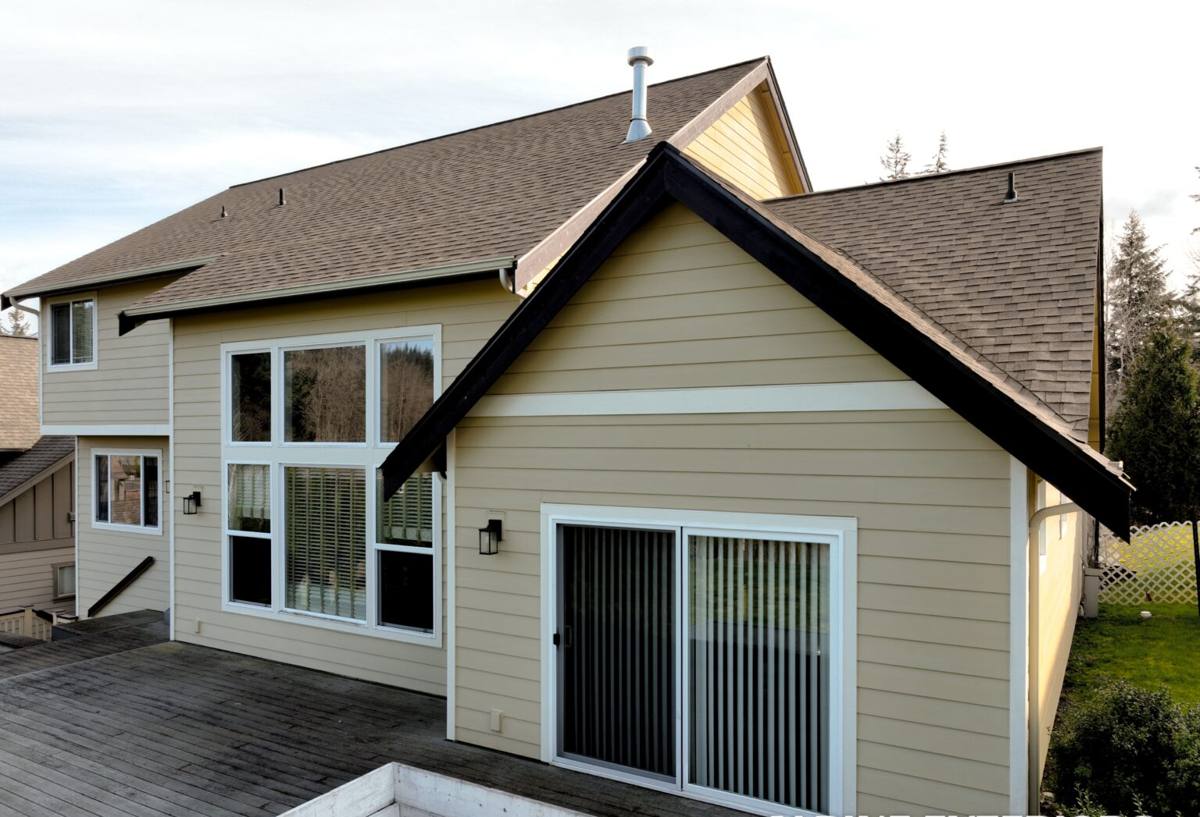
What Salt Air, Driving Rain, and Moss Actually Do to a Window
Salt Air and Metal Components
Salt in the air accelerates corrosion on anything metal — hinges, cranks, balance systems, and especially uncoated or poorly coated aluminum. Over years, hardware that isn't rated for coastal exposure gets stiff, pits, or seizes, and a window that won't open and close cleanly is one that seals poorly too.
Driving Rain and Wind-Driven Water Intrusion
Whatcom County storms don't just drop rain straight down. Wind pushes it sideways and up under trim, so the water management around a window — the flashing, the sill pan, the weep path — has to work even when rain is hitting the glass at an angle instead of falling on it. This is where most window failures we see actually start: not bad glass, but water getting behind a window that wasn't flashed to shed it back out.
Moss, Shade, and Trapped Moisture
Homes on tree-covered or hillside lots typical of this part of Bellingham hold moisture longer after a rain because they get less direct sun and wind to dry things out. That moisture supports moss and algae growth on sills, trim, and cladding around a window opening, and if that growth works into a seam or a poorly sealed joint, it holds water against the frame instead of letting it drain.
What a Correctly Installed Window Actually Involves
A window is only as good as the opening it sits in. Good hardware and good glass mean little if the installation doesn't manage water. For Happy Valley homes we treat every custom window install as a small water-management project, not just a frame swap.
- Sill pan flashing that directs any water that gets past the window back outside the wall, not into the framing
- Head flashing and properly lapped house wrap so water sheds down and over the window, never behind it
- Weep holes and drainage paths kept clear and unobstructed, especially on sill-heavy designs
- Sealants and backer rod matched to the frame material and rated for exterior UV and moisture exposure, not just interior-grade caulk
- Fasteners and hardware rated for coastal exposure, not standard-grade parts that corrode early
- Trim and casing detailed to shed water away from the frame rather than channeling it toward the joint
Full-Frame Replacement vs. Insert Replacement
Two different approaches come up on almost every job, and the right one depends on the condition of the existing frame and rough opening. Insert (pocket) replacement keeps the existing frame in place and fits a new window inside it. It's faster and less disruptive to siding and trim, and it works well when the existing frame is still sound and square. Full-frame replacement removes the window down to the rough opening, which is the only way to actually inspect and fix what's behind the trim — rot, poor flashing from a previous install, or framing that's shifted out of square. On older homes in this area, or anywhere we find signs of past water intrusion, full-frame replacement is usually the more honest recommendation even though it costs more, because an insert installed over a compromised opening just seals the problem back in.
Choosing a Frame Material for This Climate
There's no single "best" frame material — the right choice depends on the specific exposure of your home (how much direct wind and rain it takes, how close it sits to the water, how shaded it is) and your maintenance tolerance. Here's how the common options generally hold up under Whatcom County's coastal conditions:
| Frame Material | Coastal / Moisture Performance | Maintenance |
|---|---|---|
| Vinyl | Doesn't corrode or rot; performs well in salt air and moisture; quality varies by manufacturer | Low — occasional cleaning |
| Fiberglass | Very stable dimensionally, resists moisture and UV well, holds paint if desired | Low |
| Aluminum-clad wood | Good weather-side protection from the cladding, but any breach in the seal exposes the wood beneath to rot | Moderate — watch seal integrity |
| Solid wood | Strong appearance option for some homes, but needs consistent upkeep in a wet, mossy climate to avoid rot | High — regular painting/sealing |
| Uncoated aluminum | Prone to pitting and corrosion in salt air over time; we don't recommend it for this area | Moderate to high |
For most Happy Valley homes we steer clients toward vinyl or fiberglass for the working parts of the house — bedrooms, additions, anywhere low maintenance matters most — and reserve wood or clad-wood for street-facing rooms where appearance carries more weight and the owner is comfortable with the upkeep it asks for.
Glass Packages That Make Sense Here
Glass selection in this climate is less about extreme heat or cold and more about condensation control and long-term seal integrity in a consistently damp environment.
Double-Pane vs. Triple-Pane
Double-pane windows with a quality low-E coating and argon fill are the standard choice for most homes here and perform well against our winter temperatures and marine humidity. Triple-pane adds another layer of insulation and can reduce condensation risk further, which matters more on north-facing or heavily shaded walls where glass stays cooler longer — but it adds weight and cost, and isn't necessary on every elevation of every home.
Low-E Coatings and Seal Quality
The coating matters less than the seal. A failed edge seal lets moisture into the space between panes, and once that happens you'll see permanent fogging that no amount of cleaning fixes. In a climate with this much sustained humidity, we pay closer attention to the warranty and seal construction of the insulated glass unit itself than to marketing claims about the coating alone.
Our Process for Custom Window Installation
- On-site assessment — we look at each opening individually, including exposure to wind and rain, existing flashing condition, and any signs of past moisture damage
- Measuring and ordering — precise measurements for each opening since older Bellingham homes rarely have perfectly uniform openings
- Tear-out — removing the old window and, on full-frame jobs, opening up enough of the surrounding wall to inspect the framing
- Repair as needed — replacing any rotted framing or correcting prior flashing mistakes before the new window goes in
- Installation and flashing — setting the window plumb and square, then building the water management detail around it correctly
- Sealing and trim — exterior sealant, interior finish work, and trim detailing that sheds water rather than trapping it
- Walkthrough — checking operation, seals, and cleanup before we call the job done
Maintaining Custom Windows in a Salt Air, High-Moisture Climate
Even a correctly installed window benefits from a little seasonal attention in this environment. A short annual check catches small issues before they become water intrusion or hardware failure.
- Rinse hardware and tracks periodically to clear salt residue, especially on homes closer to the water
- Inspect exterior caulking each fall for cracking or shrinkage before the wet season sets in
- Clear weep holes of debris, moss, or dirt so water can drain as designed
- Remove moss or algae buildup on sills and surrounding trim before it holds moisture against the frame
- Watch for condensation between panes, which signals a failed seal rather than a cleaning issue
- Operate every window at least a few times through the year so hardware doesn't seize from disuse
Why Local Experience in This Neighborhood Matters
Window specs on paper don't tell you how a specific home actually takes weather. A crew that's worked in and around Happy Valley knows which walls take the brunt of wind-driven rain, which lots hold moisture longest under tree cover, and which older homes are more likely to have flashing shortcuts left behind by a past remodel. That local pattern recognition changes real decisions — where full-frame replacement is worth the extra cost, which openings need extra attention to flashing, and which frame materials are worth the investment on a given elevation. It also matters for the practical side of the job: understanding Bellingham's permitting expectations and working efficiently around the terrain and access typical of this part of Whatcom County.
What Affects the Cost of Custom Windows in Happy Valley
| Factor | Why It Matters |
|---|---|
| Frame material | Vinyl is typically the most affordable; fiberglass, clad-wood, and solid wood cost more upfront |
| Installation type | Full-frame replacement costs more than insert replacement due to added labor and materials |
| Glass package | Triple-pane and specialty coatings add cost over standard double-pane low-E |
| Size and shape | Custom shapes, oversized openings, or multiple units in one wall increase both material and labor cost |
| Existing condition | Rot repair or flashing correction found during tear-out adds to the scope |
| Access and site conditions | Upper-story windows, tight lots, or difficult staging can affect labor time |
Costs for quality custom window replacement in this region generally range from a few hundred dollars per window for straightforward vinyl inserts to several thousand per opening for larger custom units in premium materials with full-frame work involved. The only way to get a number that means anything for your home is to look at your specific windows and openings.
If you're weighing custom window options for a Happy Valley home, we're glad to take a look and give you a straightforward, no-pressure estimate — just fill out the form below.