 Bellingham Exterior
 Why Silver Beach Decks Wear Out Faster Than the Books Say
Silver Beach sits close enough to the water that salt-laden air is a daily fact of life, not an occasional nuisance. That air settles into fastener heads, ledger connections, and any exposed end-grain, and it does its corrosion work slowly and quietly until a homeowner notices rust streaks bleeding down a fascia board or a board that flexes underfoot where it never used to. Add Whatcom County's long wet season — months of driving rain followed by an equally long stretch of low sun angle and shade that lets moss and algae take hold — and you have a climate that is genuinely harder on an exterior deck than most manufacturer warranty language assumes.
None of this means a deck in Silver Beach is doomed to a short life. It means the structure has to be built and detailed for these specific conditions, not generic ones. A deck that would hold up fine in a dry inland climate can fail early here if the framing, fasteners, and drainage details weren't chosen with salt air and standing moisture in mind.
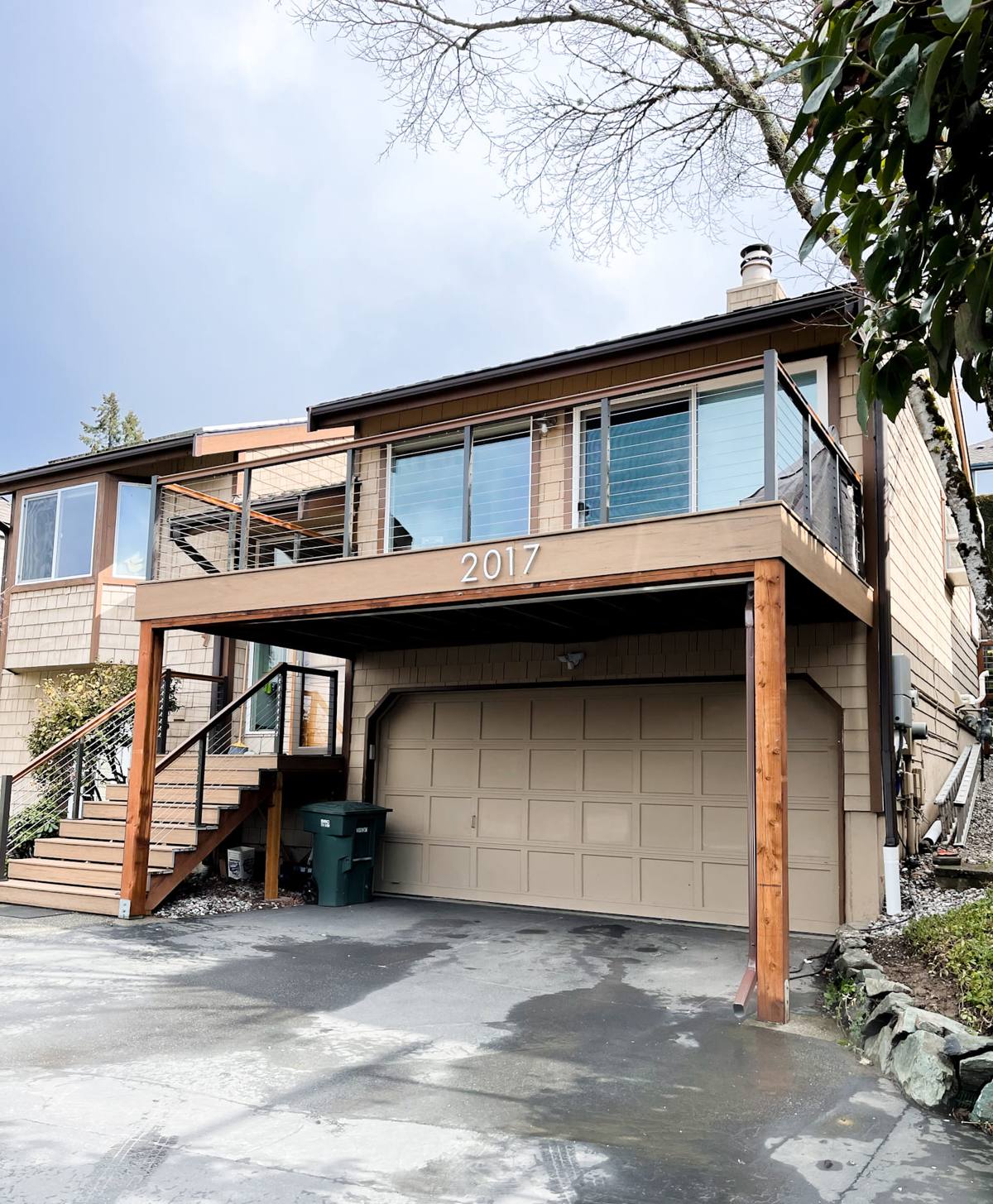
Repair or Replace? Reading the Real Signs
We get called out to a lot of decks where the owner assumed a few rotten boards were the whole problem. Sometimes that's true. Often it isn't. The surface boards are usually the first thing to show wear, but they're rarely the first thing to actually fail structurally — that's typically the framing underneath, the ledger board attachment to the house, or the posts and footings below.
Signs that point to replacement rather than a patch job
- Soft or spongy spots in the decking that go beyond one or two boards
- Visible gaps, rust bleed, or movement at the ledger board where the deck meets the house
- Posts that feel loose or show rot at the base, especially where they meet concrete
- Persistent moss or black algae staining that keeps returning within weeks of cleaning
- A deck older than 15-20 years that was built before current ledger flashing and connector standards were common practice
- Railings that flex or feel less rigid than they should under normal pressure
If what you're seeing is limited to a handful of boards and the framing underneath tests solid, a repair can be the honest answer — we'll tell you that when it's true. But when the structural wood, the ledger connection, or multiple framing members are compromised, patching the surface just buys a season or two before the underlying problem resurfaces, often worse.
What a Correct Deck Replacement Actually Involves
A deck replacement isn't just pulling up old boards and screwing down new ones. The parts of the deck you never see are the parts that determine whether it lasts five years or twenty-five in this climate.
Ledger board and house connection
This is where most structural failures start, and it's also where water intrusion into the house itself becomes a risk if it's done wrong. A correct ledger installation uses proper flashing that directs water away from the house sheathing, lag bolts or through-bolts sized for the load, and a gap or flashing detail that keeps the ledger from trapping moisture against the siding. This is not an area to cut corners, and it's not something you can verify by looking at the finished deck — it has to be done right during construction.
Framing and footings
Joists, beams, and posts need to be sized for the actual span and load, not just "close enough." Footings need to sit below frost depth and bear on undisturbed or properly compacted soil. In a climate with this much groundwater saturation through the winter, footing drainage and concrete quality matter more than they would in a drier region.
Fasteners and hardware
This is where salt air punishes cheap choices fastest. Standard galvanized hardware can start showing corrosion within a few years this close to the water. Hot-dip galvanized or stainless connectors, and fasteners rated for the specific decking material being used, cost more up front and are one of the cheapest ways to add years to a deck's life.
Drainage and airflow underneath
A deck that traps moisture underneath — from poor grading, no airflow, or debris buildup — will rot from the bottom up no matter how good the surface boards are. Correct grading, gapping, and clearance underneath the structure keep it drying out between rain events instead of staying damp for weeks at a time.
Choosing Decking Material for Silver Beach's Climate
There's no single "best" decking material — there's a best material for a given budget, maintenance appetite, and how close the deck sits to salt spray and shade. We'll walk through the honest trade-offs rather than push whatever has the best margin.
| Material | Upfront Cost | Maintenance | How It Handles This Climate |
|---|---|---|---|
| Pressure-treated wood | Lowest | Annual cleaning, periodic sealing | Affordable and repairable, but needs consistent upkeep to resist moss and moisture in wet winters |
| Cedar | Moderate | Regular sealing to hold color and resist graying | Naturally rot-resistant and a good regional fit, but still needs maintenance near salt air |
| Composite decking | Higher | Occasional washing, no sealing | Resists rot and moisture well; lower-quality composites can still support surface mold in constant shade |
| PVC/capped polymer | Highest | Lowest — washing only | Best moisture and salt-air resistance of common options, strongest warranty structures |
Whatever surface material you choose, we treat the framing underneath the same way regardless — a composite deck on undersized, poorly flashed framing will still fail early. The surface material affects how much upkeep you'll do; the framing decisions affect whether the deck stands up at all.
How Our Process Works, Start to Finish
We keep the process straightforward because homeowners are usually juggling this alongside everything else going on with their house.
- On-site assessment. We look at the existing deck, the ledger connection, the framing condition, and drainage — and we'll tell you plainly if repair is a reasonable option before we ever propose a full replacement.
- Design and material selection. We talk through decking material, railing style, and layout based on your budget and how the space gets used, with the trade-offs laid out honestly.
- Permitting. Most deck replacements in Bellingham require a permit, especially when framing, footings, or the ledger connection are involved. We handle that process rather than leaving it to you.
- Demolition and disposal. Old decking, framing, and hardware are removed and hauled off — we don't leave debris piled in the yard.
- Framing and structural work. Ledger, posts, footings, and joists are built to current code and detailed for this climate's moisture exposure.
- Decking, railing, and finish work. Surface material and railings go on last, with fastener choices matched to the material and the salt-air environment.
- Final walkthrough. We go over the finished deck with you, including what maintenance it needs and roughly when.
Permits and Code Considerations in Bellingham
Deck work involving structural changes, new footings, or height above a certain threshold generally falls under permit requirements locally, and inspectors will want to see proper ledger attachment and footing depth in particular. Skipping this step might save a little time up front, but it creates real problems later — unpermitted structural work can complicate a home sale or an insurance claim down the road. We pull the necessary permits as part of the job rather than treating it as optional paperwork.
Maintaining Your New Deck Through Whatcom County's Wet Season
A well-built deck still needs some seasonal attention, especially with the moss and algae pressure that comes with this region's long shoulder seasons. None of this is complicated, but skipping it is the fastest way to shorten the life of an otherwise solid deck.
A realistic seasonal maintenance checklist
- Sweep debris and leaves off the surface regularly through fall, especially in shaded corners
- Rinse or gently wash the surface once or twice a year to knock down moss and algae before it takes hold
- Check railing connections and stair treads for movement once a year
- Reseal wood decking on the manufacturer's recommended schedule — don't wait until it looks obviously dry
- Keep gutters and downspouts near the deck clear so runoff isn't dumping directly onto or under it
- Inspect underneath the deck once a year for standing water, debris buildup, or early signs of rot
Composite and PVC decking cut this list down considerably, but even those materials benefit from an annual rinse in an area with this much airborne salt and organic buildup.
What Drives the Cost of a Deck Replacement
Every deck is different, so we won't put a number here that doesn't mean anything without seeing your project. What we can do is explain what actually moves the price, so an estimate makes sense when you get one.
| Factor | Why It Matters |
|---|---|
| Deck size and shape | More square footage and more corners or angles both add material and labor time |
| Decking material | Pressure-treated wood, cedar, composite, and PVC span a wide cost range |
| Height and stairs | Elevated decks with stairs and additional railing require more structural work |
| Condition of existing framing | Reusable footings and posts lower cost; full structural rebuild raises it |
| Ledger and house connection complexity | Siding type and house structure affect how much work the ledger tie-in takes |
| Railing style | Cable, glass, and custom railing systems cost more than standard baluster railing |
| Permit and inspection requirements | Adds time and a modest cost, but protects you long-term |
Why a Crew That Already Works Silver Beach Matters
Deck building isn't a one-size-fits-all trade, and building close to the water in Whatcom County means designing around problems that don't show up the same way twenty miles inland. A crew that's put decks in around Silver Beach and similar Bellingham neighborhoods has already seen where salt air attacks hardware first, which shaded exposures grow moss fastest, and how local soil and drainage tend to behave through the wet season. That's not a guess — it's pattern recognition from doing this work in this specific area, and it shows up in the small decisions that determine whether a deck is still solid in fifteen years or needs major work in five.
It also means we're a known, reachable local business if a question comes up after the job is done — not a crew that worked the area once and moved on.
Ready to Talk About Your Deck?
If your Silver Beach deck is showing its age, or you're not sure whether it needs a repair or a full replacement, we're happy to take a look and give you a straight answer. Fill out the form below for a free, no-pressure estimate — there's no obligation, and we'll tell you honestly what your deck actually needs.