 Bellingham Exterior
 Windows on Edgemoor's Waterfront Are Working Harder Than Most
Edgemoor sits close enough to Bellingham Bay that its homes take a different kind of weather than houses further inland in Whatcom County. Wind coming off the water carries salt, moisture rides in on driving rain, and the tree cover that gives the neighborhood its character also keeps humidity lingering longer after a storm passes. None of that is dramatic on its own, but it adds up year after year on window frames, seals, and glazing in a way that homeowners a few miles inland simply don't deal with to the same degree.
We install windows across Bellingham and the rest of Whatcom County, and Edgemoor jobs get treated differently from the start. The materials we recommend, the flashing details we insist on, and the sealants we choose all account for a bluff-adjacent, marine-influenced site. This page is about what that actually means in practice, not a generic rundown of window installation.
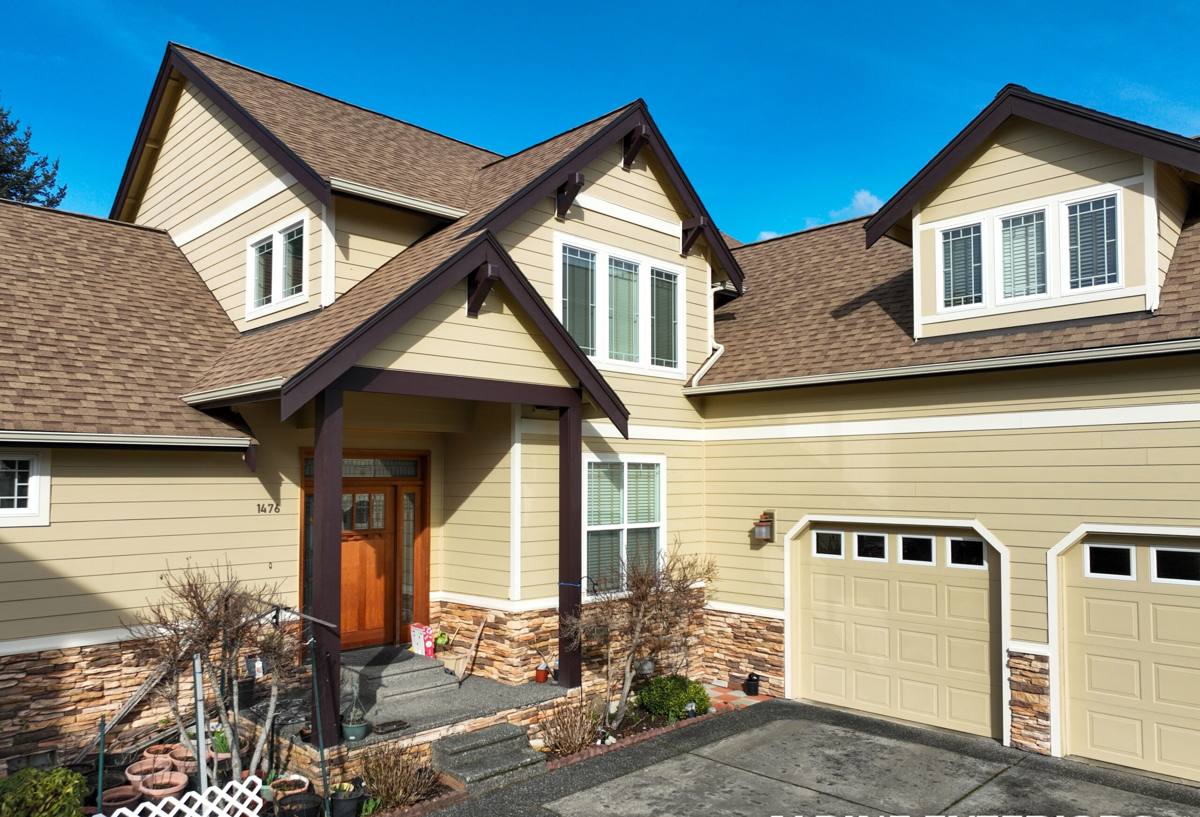
What Salt Air, Driving Rain, and Moss Season Do to Windows Over Time
Three things define the wear pattern on Edgemoor windows, and they compound each other:
Salt-laden air
Airborne salt from the bay settles on exterior surfaces and accelerates corrosion on hardware, fasteners, and lower-grade metal components. It's slow and easy to ignore until locks stick, cranks bind, or a frame corner starts to pit.
Driving, wind-driven rain
Rain that comes in sideways during a fall or winter storm behaves differently than a straight-down shower. It gets pushed up under trim and into any gap in flashing or sealant that a calmer climate would never test. Windows here need to be detailed for wind-driven water, not just gravity drainage.
Extended moss and mildew season
Shade from mature trees and consistent damp air mean moss, algae, and mildew get a longer runway on north-facing walls and sills. Left alone, that growth holds moisture against wood trim and finishes, which is exactly the condition that causes rot around window openings.
Individually, each of these is manageable. Together, over ten or fifteen years, they're the reason older Edgemoor homes often show frame swelling, failed seals, fogged double-pane glass, and soft trim well before a comparable inland home would.
Signs Your Edgemoor Home May Need New Windows
- Fogging or a milky haze between panes — the seal has failed and the gas fill (or air gap) is compromised
- Windows that are hard to open, close, or lock, especially ones facing the water or prevailing wind
- Visible gaps, cracked caulk, or daylight around the frame from inside
- Soft or discolored wood trim at the sill or jamb — often a sign moisture has been sitting there
- A noticeable draft or cold spot near the window in winter
- Condensation forming on the inside of the glass regularly, even with normal ventilation
- Visible corrosion or pitting on hinges, cranks, or locking hardware
- Noticeably higher heating bills compared to similar homes nearby
Any one of these can be a minor fix. Several at once, especially on an older Edgemoor home, usually means the windows are past the point where sealant and hardware repairs make sense.
Choosing Window Materials for a Coastal Whatcom County Home
Material choice matters more here than it does for a typical inland Bellingham lot. Some options that perform fine elsewhere in the county need extra care — or aren't the right call at all — this close to the water.
| Material | How it holds up in Edgemoor's climate | Our take |
|---|---|---|
| Vinyl | Handles moisture and salt air well; won't rot or corrode, but quality varies widely between manufacturers | Solid, budget-friendly choice when sourced from a reputable line with a real warranty |
| Fiberglass | Very stable in temperature swings and resistant to salt exposure and moisture; dimensionally stronger than vinyl | Our default recommendation for exposed, water-facing walls |
| Wood (unclad) | Classic look but needs consistent upkeep; salt air and extended damp seasons shorten the maintenance interval | We'll install it if a homeowner wants the look and understands the upkeep commitment |
| Wood-clad (exterior aluminum or vinyl clad, wood interior) | Exterior cladding shields the wood from weather while keeping the interior appearance | Good middle ground for homes that want a wood interior look without bare-wood maintenance |
| Aluminum | Strong and slim-profile, but standard aluminum is prone to corrosion in salt air unless properly finished | We only use it with marine-grade finishes and proper isolation from dissimilar metals |
We don't push one brand or material on every job. The right call depends on the home's exposure, the homeowner's maintenance appetite, and budget — we'll walk through the honest trade-offs for your specific windows during the estimate.
What a Correct Installation Actually Involves
The window unit itself is only part of the job. Most window failures we see in Edgemoor didn't start with a bad window — they started with an installation that skipped a detail that matters on a bay-facing property.
Removal and opening inspection
Once the old window is out, we check the rough opening for hidden water damage, soft framing, or prior flashing mistakes before anything new goes in. On older homes this step regularly turns up moisture issues that weren't visible from outside.
Flashing and drainage
Proper flashing directs water that gets behind the trim back out, rather than letting it pool against the framing. This is the single detail that matters most for wind-driven rain, and it's also the easiest one to shortcut. We build a drainage path at the sill, not just a caulk bead.
Air and water sealing
We use sealants and flexible flashing tape rated for the temperature range and moisture exposure of a coastal Whatcom County site, not whatever's cheapest at the supply house. Backer rod and sealant at the interior and exterior, sized correctly for the gap, keeps both air and bulk water out.
Shimming and squaring
A window that isn't shimmed level and square will bind, won't seal evenly, and stresses the frame over time — accelerating exactly the kind of wear a marine climate already causes faster.
Insulation of the gap
The space between the window frame and rough opening gets insulated, not just caulked at the trim. An under-insulated gap is a cold spot and a condensation point.
Interior and exterior trim
Trim gets reset or replaced with attention to the same water-shedding principles — proper caulking, no reverse laps, and drainage that moves water away from end grain.
Our Process, Start to Finish
- Free on-site assessment — we look at existing windows, check for signs of moisture or rot, and talk through what's actually needed versus what can wait
- Material and product recommendation — based on the wall's exposure to wind and water, not a one-size-fits-all pitch
- Written estimate — clear scope, materials, and timeline, no pressure to decide on the spot
- Scheduling — we plan around Whatcom County's wetter months where possible to reduce open-opening exposure time
- Removal and opening inspection — old windows out, framing checked before anything new goes in
- Installation — flashing, sealing, shimming, and insulation done to the standard described above
- Trim and finish work — interior and exterior trim reset or replaced and finished
- Walkthrough and cleanup — we confirm every window operates correctly and the site is left clean
Cost Factors for Edgemoor Window Installation
Every home is different, so we won't quote a number without seeing the job, but these are the main factors that move the price up or down:
| Factor | Why it affects cost |
|---|---|
| Number and size of windows | Larger openings and more units mean more material and labor time |
| Material selected | Vinyl, fiberglass, wood, and wood-clad options carry different unit costs |
| Condition of the rough opening | Hidden rot or framing damage found during removal adds repair scope |
| Access and height | Upper-story or hard-to-access windows on sloped or bluff-side lots take longer and may need staging |
| Full-frame vs. insert replacement | Full-frame replacement (removing trim and flashing entirely) costs more than an insert but is often the right call on water-exposed walls |
| Trim and finish scope | Matching existing trim profiles or upgrading finish materials adds to the project |
As a rough guide, homeowners in this area typically see per-window costs ranging from a modest few hundred dollars for a straightforward insert replacement up to several thousand per window for larger, full-frame installations with premium materials. The estimate will give you a real number for your home.
Full-Frame Replacement vs. Insert Replacement
This decision matters more on a moisture-exposed lot than it does on a sheltered inland property. An insert replacement keeps the existing frame and flashing in place and installs a new window inside it — faster and less expensive, but only sound if that existing frame is dry and in good shape. A full-frame replacement removes everything down to the rough opening, which costs more but lets us fix hidden flashing or framing problems and rebuild the water management from scratch. On walls that take direct wind-driven rain, we'll usually recommend full-frame if there's any doubt about what's behind the trim — patching over a moisture problem is worse than not replacing the window at all.
Permits and Working With Older Edgemoor Homes
Window replacement in the City of Bellingham may require a permit depending on the scope of work, particularly for full-frame replacements or any changes to the opening size. We handle that process as part of the job so homeowners aren't left figuring out city requirements on their own. Older homes in established neighborhoods like Edgemoor also sometimes have framing, siding materials, or trim profiles that need to be matched or adapted carefully — we account for that during the assessment rather than discovering it mid-project.
Why Hiring a Crew That Already Works in Edgemoor Matters
Window installation isn't a commodity task, and a coastal, tree-covered neighborhood in Whatcom County isn't a generic job site. A crew that regularly works Edgemoor and similar Bellingham waterfront areas already knows which walls take the worst of the wind-driven rain, which older homes tend to have hidden moisture behind their trim, and which materials actually hold up against salt air instead of just looking good on a spec sheet at the time of installation. That local pattern recognition is what prevents a callback in three years for a "new" window that failed the same way the old one did.
If you're noticing drafts, fogged glass, sticking hardware, or trim that's starting to look rough around your windows, we're happy to come take a look. The estimate is free, there's no pressure to commit, and you'll get a straight answer about what your home actually needs.