 Bellingham Exterior
 Fairhaven's Climate Puts Real Stress on Siding
Fairhaven sits close to Bellingham Bay, which means homes here deal with a combination of weather stresses that inland neighborhoods don't see as intensely. Salt-laden air moves in off the water and settles on exterior surfaces, siding fasteners, and trim. Driving rain off Puget Sound storms hits walls sideways rather than falling straight down, pushing moisture into seams and laps that would stay dry in a calmer climate. And Whatcom County's long, wet fall-through-spring stretch creates ideal conditions for moss and algae to take hold on any surface that stays damp and shaded.
None of that is unusual for western Washington. But it adds up to a specific set of demands on siding material and installation quality that a lot of products and a lot of installs simply aren't built to meet. This page focuses on one service in one neighborhood: correctly installed fiber cement siding for Fairhaven homes, and what "correct" actually means when the weather doesn't cooperate.
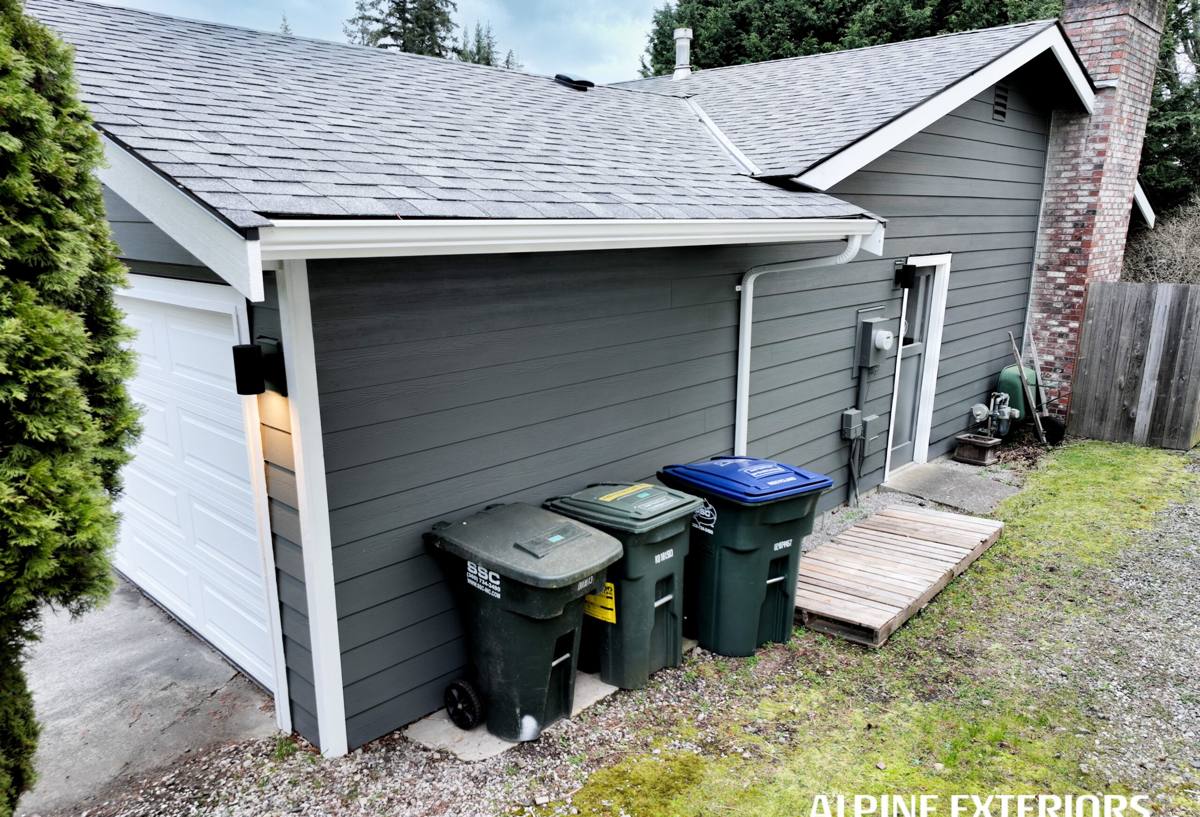
What Siding Actually Needs to Handle Here
Before talking about products or process, it helps to be specific about what's being asked of the siding itself in this location:
- Resist moisture intrusion from wind-driven rain hitting walls at an angle, not just vertical drainage
- Tolerate salt air exposure without accelerated corrosion of fasteners or degradation of the surface finish
- Shed water fast enough that moss and algae don't get a permanent foothold in shaded or north-facing areas
- Hold paint or factory finish through repeated wet-dry cycles without peeling, cracking, or fading
- Stand up to occasional wind events off the water without loosening at the laps
A siding material that's marginal on any one of these points tends to show it within a few winters in a location like Fairhaven, not a decade or two down the road.
Why We Install Only James Hardie Fiber Cement
We install James Hardie fiber cement siding exclusively. We don't install vinyl, LP SmartSide, Cemplank, Allura, primed spruce, or cedar, and that's a deliberate standard, not a lack of options. Each of those alternatives has real strengths, but each also carries a trade-off — moisture sensitivity, maintenance burden, or long-term durability in a wet coastal climate — that we're not willing to put our name behind on a Fairhaven roof.
James Hardie fiber cement is non-combustible, engineered specifically for different climate zones (Bellingham falls in Hardie's HZ5 zone, built for moisture-heavy environments), and finished at the factory with ColorPlus technology — a baked-on finish that resists fading and chipping far better than field-applied paint. It's dense enough to resist moisture intrusion at the board level, and when installed to Hardie's specifications, it carries a strong transferable warranty that follows the house, not just the original owner.
What Correct Installation Actually Involves
Fiber cement siding performs only as well as the installation behind it. Most siding failures we see on older homes in this area trace back to installation shortcuts, not the material itself. A correct Hardie install involves several details that are easy to skip and hard to spot once the job is finished.
Water Management Behind the Siding
Every wall needs a weather-resistant barrier and properly integrated flashing at windows, doors, and any penetration before a single board goes up. In a driving-rain environment like Fairhaven, this layer is what actually keeps a house dry — the siding is the first line of defense, not the only one.
Clearance and Spacing
Hardie specifies minimum clearances from grade, roof lines, decks, and other siding transitions. Skipping these clearances is one of the most common corner-cutting moves in the industry, and it's also one of the fastest ways to trap moisture against the bottom of a board where it can't dry out.
Fastening
Corrosion-resistant fasteners, driven at the correct depth and location on the board, matter more here than in a dry inland climate because salt air accelerates corrosion of the wrong fastener type. Overdriven or underdriven nails compromise the board's ability to expand and contract with moisture and temperature.
Joints and Caulking
Butt joints, corners, and trim transitions need to be treated correctly — sealed where Hardie calls for sealant, left to drain where it calls for a gap. Getting this wrong is a common source of moisture staining and premature paint failure at seams, which is exactly where a lot of Fairhaven homes show wear first.
Our Process for a Fairhaven Project
The steps themselves aren't exotic — what matters is not skipping any of them.
1. On-Site Assessment
We look at the existing siding and sheathing condition, note any moisture damage already present, and check drainage patterns around the house — a step that matters more in a neighborhood this close to the water, where grading and runoff have an outsized effect on how walls dry out.
2. Tear-Off and Sheathing Check
Old siding comes off and we inspect the sheathing underneath for rot or soft spots before anything new goes up. Covering damaged sheathing with new siding just hides a problem that gets worse.
3. Weather Barrier and Flashing
A new weather-resistant barrier goes on, with flashing correctly integrated at every window, door, and penetration — the layer that does the real water-management work.
4. Hardie Installation to Spec
Boards go up with correct clearances, fastening, and joint treatment, following Hardie's published installation requirements — which is also what keeps the manufacturer's warranty intact.
5. Trim, Caulk, and Final Detail
Trim work and caulking get finished last, at the transitions and corners that take the most weather exposure.
6. Walkthrough and Warranty Registration
We walk the finished job with the homeowner and make sure the installation is properly registered so the warranty is active and transferable.
How Fiber Cement Compares to the Alternatives Here
| Material | Moisture Behavior in Wet Coastal Climate | Maintenance Burden | Typical Longevity |
|---|---|---|---|
| James Hardie Fiber Cement | Dense, engineered for moisture-heavy zones; factory finish resists water damage | Low — occasional wash, no repainting for many years | Long-term with correct install and warranty coverage |
| Vinyl Siding | Sheds water at the surface but can warp or gap under wind-driven rain and temperature swings | Low but prone to fading and cracking over time | Moderate; UV and impact sensitive |
| LP SmartSide (engineered wood) | Wood-based core is more moisture-sensitive if any breach occurs at seams or cuts | Moderate — finish and caulking need monitoring | Moderate; installation sensitivity is a factor |
| Cedar / Primed Spruce | Natural wood absorbs moisture readily; needs consistent finish maintenance to resist rot and moss | High — regular refinishing and moss treatment needed | Shorter without diligent upkeep |
This isn't a claim that the alternatives are bad products — it's why, given the specific demands of salt air, driving rain, and moss season, we standardized on one material and one installation standard rather than offering several.
Cost Factors for a Fairhaven Fiber Cement Project
Every home is different, so we won't quote a number without seeing the house, but the main variables that drive cost on a project like this are consistent:
- Square footage of wall area and the home's overall shape and complexity (corners, gables, dormers add labor)
- Condition of the existing sheathing — whether repair is needed before new siding goes on
- Amount of trim, fascia, and detail work involved, especially on older or more architecturally detailed homes
- Siding profile and ColorPlus finish selection
- Access and site conditions — tight lots, mature landscaping, or limited staging area near the water
- Whether a full tear-off is needed versus siding over sound existing material (we recommend tear-off in most wet-climate cases so sheathing can be checked)
We provide a written estimate after walking the property, not a phone quote, because the variables above genuinely change the number.
Living with Fiber Cement Siding in a Moss-Season Climate
Correctly installed Hardie siding is low-maintenance, but "low" isn't "zero." A few habits keep it performing well through Whatcom County's wet seasons:
- Rinse siding periodically, especially shaded or north-facing walls where moss and algae are most likely to establish
- Keep gutters clear so overflow doesn't run down and pool against siding at roof-to-wall transitions
- Trim back vegetation that keeps a section of wall shaded and damp — the most common spot for moss growth
- Watch caulked joints and touch them up if they start to crack or pull away, rather than waiting
- Have any impact damage (branches, debris) repaired promptly so water doesn't get behind the board
Why Local Experience in Fairhaven Matters
A crew that regularly works Fairhaven and the surrounding Bellingham neighborhoods has already seen how homes here actually age — where moss tends to establish first, which wall orientations take the worst of the wind-driven rain, and how older housing stock in this part of Whatcom County was originally built and where it tends to need extra attention during tear-off. That's the kind of judgment that doesn't come from a manufacturer's install manual alone; it comes from doing this work, on homes like this one, in this specific climate, repeatedly. It's also why we stand behind one material installed one correct way rather than offering a menu of products with varying trade-offs.
If you're weighing a siding replacement on a Fairhaven home, we're happy to take a look and give you a straightforward, no-pressure estimate — no obligation, just an honest read on your home's condition and what correct installation would involve. Use the form below to get started.