 Bellingham Exterior
 Composite Decking in Ferndale: Built for What This Climate Actually Does
Ferndale sits close enough to Bellingham Bay and the Strait of Georgia that homes here deal with a specific mix of weather most decking never sees in a showroom: salt-tinged air off the water, long stretches of driving rain through fall and winter, and a moss and algae season that can run eight months or more. A deck that looks great going in during a dry August needs to hold up through all of that, year after year, without cupping, staining, or turning into a slip hazard every time it rains. That's the standard we build composite decking to in Ferndale — not just "installed correctly" in a generic sense, but installed for this specific stretch of Whatcom County.
This page covers composite decking specifically — what the local climate does to it, what a correct installation actually involves, and how we approach the job from estimate to finished deck.
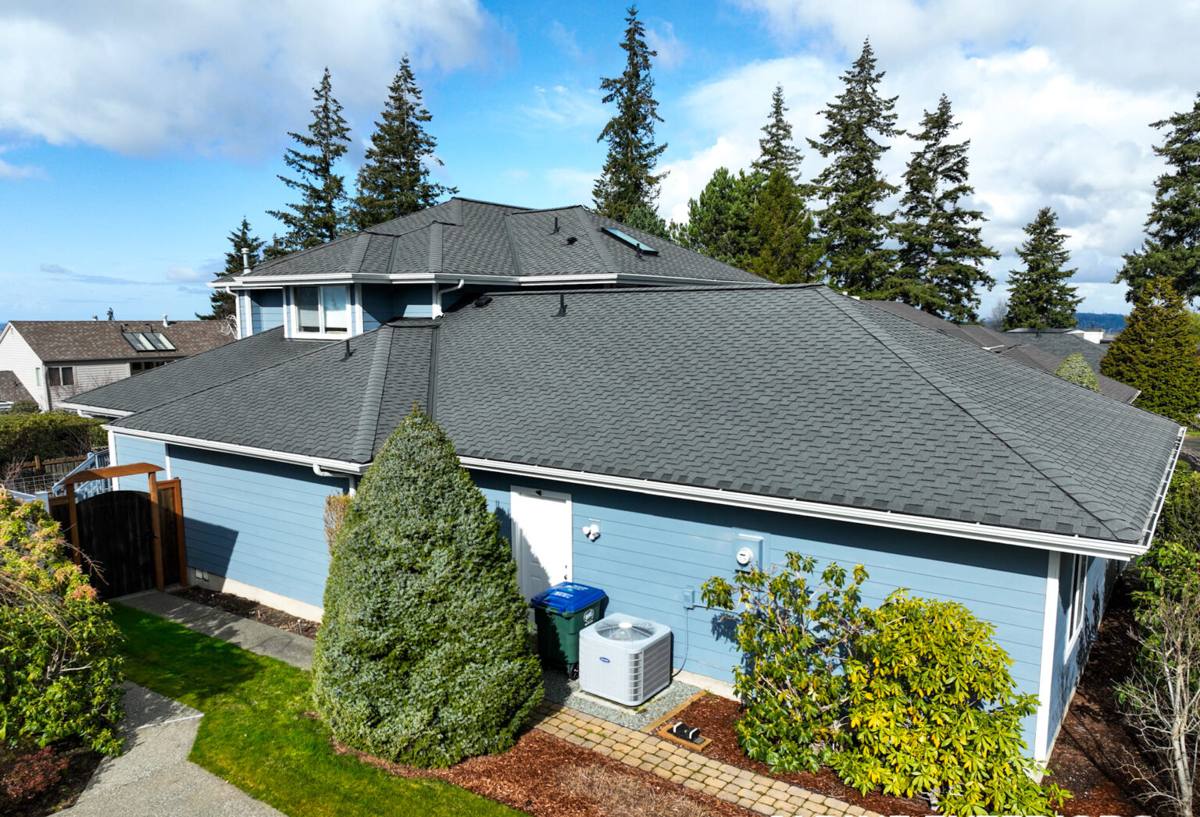
What Salt Air, Rain, and Moss Do to a Deck Over Time
Three things wear on decks in this part of Whatcom County more than most places inland:
Salt-laden air
Proximity to Bellingham Bay means fasteners, brackets, and any exposed metal hardware are exposed to airborne salt more than a deck built twenty miles inland. Over years, the wrong fastener grade corrodes, stains the decking around it, and eventually weakens. This is a hardware decision, not a decking-board decision, but it's one homeowners rarely think to ask about.
Sustained rain and moisture cycling
Ferndale gets long stretches of steady, driving rain rather than short heavy downpours. That means a deck's substructure — the joists, ledger connection, and anything underneath the boards — stays damp for days at a time rather than drying out quickly between storms. Framing lumber that isn't properly protected or ventilated underneath a composite deck can rot even while the composite boards on top look fine.
Moss and algae season
Shaded decks, north-facing decks, and decks under trees develop a green film faster here than in drier climates, and it can start as early as late fall and persist into spring. Composite decking resists rot in a way wood doesn't, but it isn't immune to surface algae — the difference is how easily it cleans off and whether the board's surface texture traps or sheds moisture.
None of this means composite decking is a bad fit for Ferndale — it's actually one of the better-suited materials for this climate. It means the installation details matter more here than they would somewhere drier.
What a Correct Composite Deck Installation Involves
Composite boards themselves are largely maintenance-free, but the deck as a whole is only as good as what's underneath and around them. In our climate, that comes down to a handful of details that are easy to skip and hard to fix later:
- Ledger board flashing: where the deck attaches to the house, proper flashing keeps water from working its way behind siding and into the wall framing — this is one of the most common sources of hidden water damage on older decks in wet climates.
- Joist spacing and joist tape: composite boards generally need tighter joist spacing than wood, and a moisture-resistant tape over the joists protects the framing lumber underneath from the constant damp this area sees.
- Ventilation underneath: low decks or decks close to grade need enough airflow underneath to let the substructure dry between rain events, not just after it.
- Fastener selection: hidden fastener systems and screws rated for coastal or high-moisture exposure, not standard-grade hardware that will corrode and stain over time.
- Board gapping: correct spacing between boards accounts for composite's expansion and contraction and gives water somewhere to go instead of pooling.
- Stair and railing connections: these see the most structural stress and the most water exposure at the same time, so they get the same attention to hardware and flashing as the ledger.
Skipping any one of these doesn't usually show up as a problem in year one. It shows up in year five or six, as soft spots, staining, or a deck that starts to feel less solid underfoot — usually right around when a homeowner assumed a "maintenance-free" material meant they didn't need to think about it again.
Composite vs. Wood vs. PVC: How They Actually Compare Here
Every decking material has real tradeoffs. We install composite most often in this area because of how it balances upfront cost against long-term maintenance in a wet coastal climate, but it's worth seeing the honest comparison rather than taking that on faith.
| Factor | Wood (cedar/pressure-treated) | Composite | PVC |
|---|---|---|---|
| Upfront cost | Lowest | Mid-range | Highest |
| Moisture/rot resistance | Requires regular sealing to hold up | Strong, especially capped boards | Excellent — fully synthetic |
| Moss/algae resistance | Prone to surface growth, absorbs moisture | Resists absorption, cleans off easily | Very resistant, non-porous surface |
| Maintenance | Annual staining/sealing | Periodic washing, no sealing | Minimal, occasional washing |
| Fading/UV wear over time | Grays and splits without upkeep | Slow, gradual fade depending on brand | Very stable color retention |
| Feel underfoot in heat | Natural, cooler in most tones | Can run warm in dark colors | Similar to composite |
For most Ferndale homeowners, composite lands in the sweet spot: it costs meaningfully less than PVC, doesn't demand the yearly upkeep wood does, and handles this area's rain and salt air far better than untreated or poorly sealed wood ever will.
Choosing Boards and Colors for Coastal Exposure
Not all composite decking performs the same way in a marine-influenced climate, and color choice matters more here than people expect.
Capped vs. uncapped composite
Fully capped composite boards have a protective polymer shell around the wood-plastic core, which resists moisture absorption and staining far better than older-style uncapped composite. In an area with this much sustained rain, we treat capped composite as the baseline standard, not an upgrade.
Color and heat
Darker composite boards absorb more heat and can fade slightly faster under UV exposure than lighter tones, though modern capped boards fade far less than older generations of the product. Lighter and mid-tone colors also tend to show less visible surface algae between cleanings, which matters on shaded or north-facing decks common in this area.
Surface texture
A board with some texture or grain pattern provides better slip resistance during Ferndale's wetter months than a smooth, glossy finish — worth prioritizing on stairs and any deck that doesn't get much direct sun.
How Our Process Works
We keep the process straightforward from first look to finished deck:
- On-site assessment: we look at your existing deck or build site, house connection point, drainage, and sun/shade exposure — all of which affect material and design recommendations specific to your property.
- Honest estimate: a clear breakdown of material options and cost factors, with no pressure toward the most expensive board on the shelf if it doesn't fit your situation.
- Permitting: we handle the permit process where required, including anything tied to setbacks or structural changes.
- Demo and framing: removal of the old deck if applicable, followed by framing built to the moisture-management standard described above — ledger flashing, joist tape, and correct spacing.
- Decking, railing, and stairs: installed with fasteners and hardware suited to this area's air and moisture conditions.
- Final walkthrough: we go over basic care with you before we consider the job done.
Deck Maintenance Checklist for This Climate
Composite decking is low-maintenance, not no-maintenance. A few habits go a long way in a climate with this much moss and moisture:
- Sweep off fallen leaves and debris regularly through fall — trapped organic matter holds moisture against the board surface and speeds up algae growth.
- Wash the deck at least once or twice a year with a mild soap and water, especially shaded sections that don't get much direct sun.
- Avoid pressure washing at close range or high PSI — it can damage the cap layer on composite boards over time.
- Check railings and stair connections annually for any loosening, especially after a hard winter.
- Keep gutters and downspouts near the deck clear so runoff isn't draining directly onto or under the deck surface.
- Trim back overhanging branches where possible to reduce shade and debris buildup on the deck surface.
Why a Crew That Already Works Ferndale Matters
A lot of what separates a deck that holds up for twenty-plus years from one that needs repairs by year seven comes down to details that aren't visible once the project is finished — flashing behind the ledger, the grade of fastener used, whether the substructure was given room to dry. A crew that regularly works decks in Ferndale and the surrounding Whatcom County coastline has already seen what happens when those details get skipped, because we're often the ones called back to fix it. That's a different starting point than a crew building its first deck in a marine climate and learning the hard way.
We also know the practical side of working here — typical soil conditions for footings, how local permitting works, and what kind of exposure a given lot actually gets based on its position relative to the water and tree cover, rather than treating every deck the same regardless of where it sits.
Permits and Practical Considerations
Most deck projects that involve new footings, structural changes, or attachment to the house require a permit, and setback requirements can affect how close a deck can sit to a property line. Requirements vary by lot and by scope of work, so this is something we confirm for your specific property rather than assume. If you're replacing an existing deck on the same footprint, the process is often simpler than a new build, but it's still worth confirming before work starts rather than after.
If you're weighing composite decking for a home in Ferndale, we're happy to take a look and give you a straightforward, no-pressure estimate — what your specific site needs, what it will cost, and why. There's a form below to get that started.