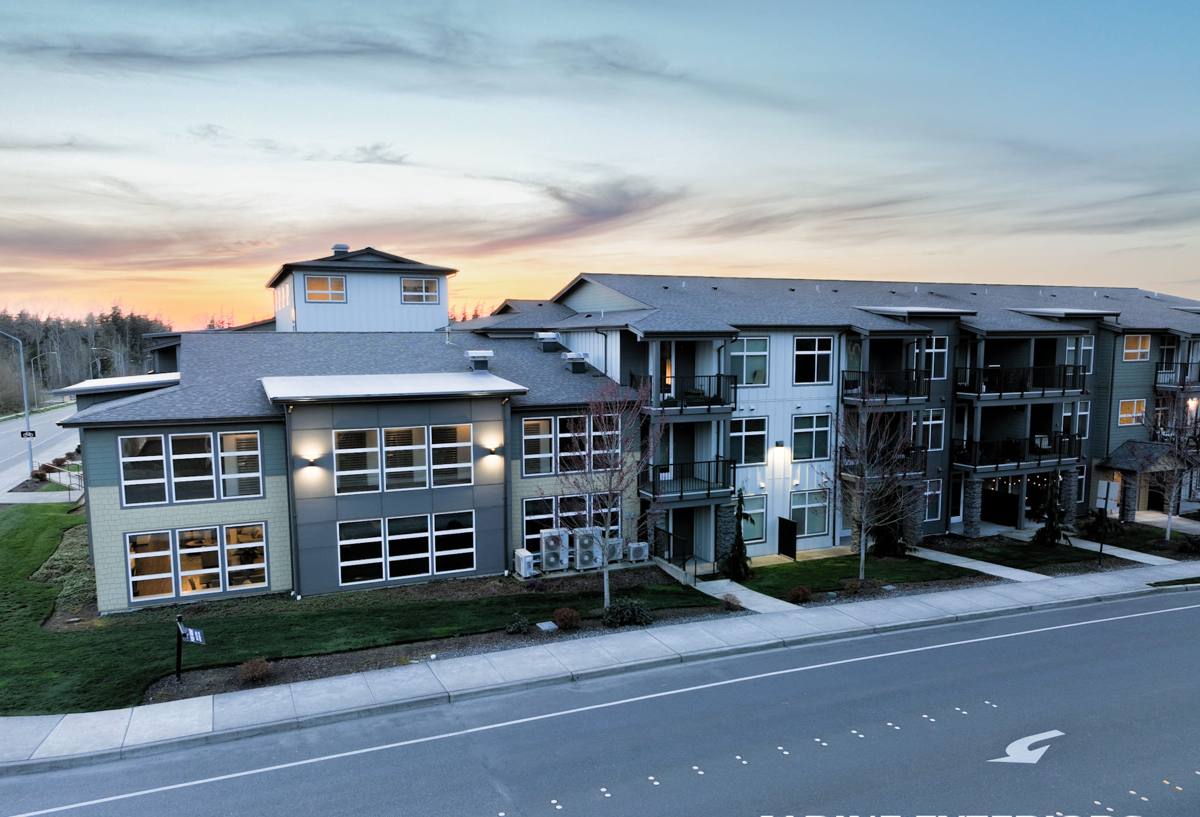
 Bellingham Exterior
 Storm Damage Roof Repair for Happy Valley Homes
Happy Valley sits close enough to the water and the hills around Bellingham that its roofs take a particular kind of beating. Winter windstorms come off the Strait of Georgia and Bellingham Bay carrying salt-laden air, driving rain arrives sideways more often than straight down, and the tree cover that makes the neighborhood pleasant to live in also means shade, dampness, and moss on roofs almost year-round. When a storm damages a roof here, the repair has to account for all of that — not just patch the hole and move on.
This page covers what storm damage roof repair actually involves for Happy Valley properties, what to look for after a storm, and how we approach the work so it holds up through the next one.
What Whatcom County Storms Do to a Roof
Most storm damage in this part of Washington isn't a single dramatic event — it's cumulative. A roof gets weakened over several storm seasons before a homeowner notices a leak. The main mechanisms we see on Happy Valley homes:
Wind
Gusts off the water can lift shingle or shake edges, especially on roof faces that catch the prevailing wind. Once a tab or shake is lifted even slightly, wind-driven rain gets underneath it, and the next gust does more damage than the last. Ridge caps and ridge vents are especially vulnerable because they sit at the highest point of stress.
Wind-Driven Rain
Bellingham rain rarely falls straight down in a storm. When it comes in at an angle, it can work its way under flashing, around vent boots, and into any gap that would be a non-issue in calmer weather. This is why storm leaks so often show up at penetrations — chimneys, plumbing vents, skylights — rather than in the open field of the roof.
Falling Debris
Happy Valley's tree cover is an asset most of the year and a liability during a windstorm. Branches and limbs coming down can crack shingles, dent metal flashing, or in worse cases puncture the roof deck. Even small branch strikes can bruise asphalt shingles in ways that aren't obvious from the ground but shorten their lifespan.
Moss and Prolonged Moisture
This one isn't a single storm event, but it compounds storm damage. Moss holds moisture against the roof surface, and on shaded or north-facing sections of a Happy Valley roof, that moisture doesn't dry out between storms the way it would on a sunnier lot. Moss-laden shingles or shakes are more brittle, more prone to lifting in wind, and slower to shed water — so storm damage on a moss-heavy roof tends to be worse than the same storm on a clean one.
Signs Your Roof Took Storm Damage
Not all storm damage announces itself with an active leak. Some of it sits quietly for months. After any significant wind or rain event, it's worth checking for:
- Shingles or shakes that look lifted, curled, or out of alignment compared to the rest of the roof
- Granules collecting in gutters or at downspout outlets (a sign of shingle wear or impact)
- Bent, creased, or missing flashing around chimneys, skylights, or vent pipes
- Water stains on interior ceilings, especially near exterior walls or chimneys
- Visible daylight through the attic roof deck
- Debris — branches, needles, moss clumps — built up in valleys where water is meant to flow freely
- Gutters pulling away from the fascia or sagging under debris weight
Any one of these on its own might be minor. Several together, especially after a named storm system, are worth a proper inspection before the next round of weather arrives.
How We Assess Storm Damage
We start with a full-roof inspection, not just a look at the spot where a leak showed up inside the house. Storm damage often has more than one point of entry, and fixing only the obvious one leaves the others to cause problems later. Our process typically includes:
- A ground-level and roof-level visual check of every slope, not just the side facing the reported leak
- Close inspection of flashing, vents, valleys, and ridge lines — the places wind-driven rain finds first
- Checking the attic or roof deck from inside for water staining, soft spots, or daylight
- Assessing moss and debris buildup, since it affects both the damage and the repair approach
- Photographing findings so you have a clear record, which also helps if you're filing an insurance claim
We give you a straight answer about what's actually storm-related damage versus what's general wear that a storm exposed. Those are two different conversations, and you deserve to know which one you're having.
What a Correct Storm Repair Involves
A rushed storm repair — a bead of sealant over a gap, a shingle stapled back down — tends to fail again in the next storm. A correct repair addresses the underlying cause, not just the visible symptom.
Matching Materials Properly
Replacement shingles or shakes should match the existing roof in type, profile, and as close to color as reasonably available. A patch that doesn't match won't necessarily fail faster, but it does affect how well it sheds water if the profile doesn't align with the surrounding courses.
Rebuilding Flashing, Not Just Resealing It
When flashing has been bent, lifted, or corroded by salt air, the right fix is usually to re-form or replace that section rather than caulk over it. Sealant is a short-term patch on a flashing problem, not a real repair — it dries out and cracks within a season or two, especially with the salt exposure common this close to the water.
Checking the Deck Underneath
If water has been getting in for a while before the storm made it obvious, the roof deck itself may be softened or delaminated at the damage point. Repairing over a compromised deck doesn't hold. We check this before closing up any repair area.
Addressing the Moss, Not Just the Hole
If moss contributed to the damage, we address it as part of the repair — clearing growth from the repair area and, where it makes sense, discussing longer-term moss management so the same section isn't back in the same condition within a year or two.
Repair vs. Replacement: How We Help You Decide
Storm damage doesn't automatically mean a full roof replacement, but it can be the moment that reveals a roof is near the end of its useful life. Several factors go into that call:
| Factor | Leans Toward Repair | Leans Toward Replacement |
|---|---|---|
| Roof age | Under 15–20 years, depending on material | Nearing or past expected lifespan |
| Extent of damage | Isolated to one section or a few spots | Widespread across multiple slopes |
| Underlying deck condition | Solid, no rot or delamination found | Soft spots or rot discovered at inspection |
| Moss and moisture history | Minor, recently maintained | Long-term buildup affecting large areas |
| Prior storm repairs | This is the first significant repair | Repeated patching over several seasons |
We'll walk you through where your roof falls on this table honestly. If a targeted repair is the sound choice, that's what we'll recommend — we're not looking to sell a replacement a home doesn't need.
Why It Matters That We Already Work in Happy Valley
A roofer unfamiliar with this neighborhood might treat every storm repair the same way they would on a dry, open lot across town. That's a mismatch for Happy Valley conditions. Knowing which slopes here tend to hold moss, how the tree canopy affects drying time after a repair, and how salt air from the bay accelerates flashing wear changes how a repair should be built, not just how it's diagnosed.
Working locally also means faster response after a storm. When wind and rain move through Whatcom County, demand for roof repair spikes all at once. Being based in the area and already familiar with Happy Valley's housing stock lets us respond and assess damage without the delay of an out-of-area crew getting oriented to the neighborhood first.
Working With Your Insurance
Many storm repairs are at least partially covered by homeowner's insurance, depending on your policy and the cause of damage. We're not your insurance adjuster and won't promise a specific outcome, but we can provide clear photo documentation and a written description of the damage and repair scope that you can submit as part of your claim. It's worth having that inspection done promptly after a storm — some policies have windows for reporting damage, and documentation is stronger when it's close to the event rather than months later.
Protecting the Repair Going Forward
Once a storm repair is complete, a few habits go a long way toward making it last in Happy Valley's climate:
- Keep gutters and valleys clear of needles and debris, especially going into fall and winter storm season
- Trim back overhanging branches that could strike the roof in high wind
- Have moss addressed on a regular schedule rather than letting it build up over multiple seasons
- After any major windstorm, do a quick visual check from the ground for lifted shingles or debris in valleys
- Keep a record of any prior repairs and their dates, which helps with both maintenance planning and future insurance claims
Storm damage repair done right is as much about reducing the chance of a repeat problem as it is about fixing what happened this time. If a recent storm has left your Happy Valley roof with damage — or you're just not sure whether what you're seeing is worth a look — we're happy to come out for a free, no-pressure estimate and give you a straight assessment of what's going on and what it would take to fix it properly.