 Bellingham Exterior
 Siding That Has to Work in Lynden's Weather, Not Just Look Good on Day One
Lynden sits far enough inland from Bellingham Bay to feel a little different from the waterfront neighborhoods, but it still gets the same wet, gray stretch of fall-through-spring weather that defines Whatcom County living. Driving rain off the Strait, damp air that never fully dries out between storms, and long stretches of shade under mature trees and overcast skies add up to one thing for exterior siding: constant moisture exposure. Add in salt-tinged air that drifts inland on windy days and a moss season that can run six months or longer on north-facing walls, and you have a climate that is genuinely hard on the wrong siding material. This page is about one product, installed in one community, by a crew that already knows what that combination does to a house.
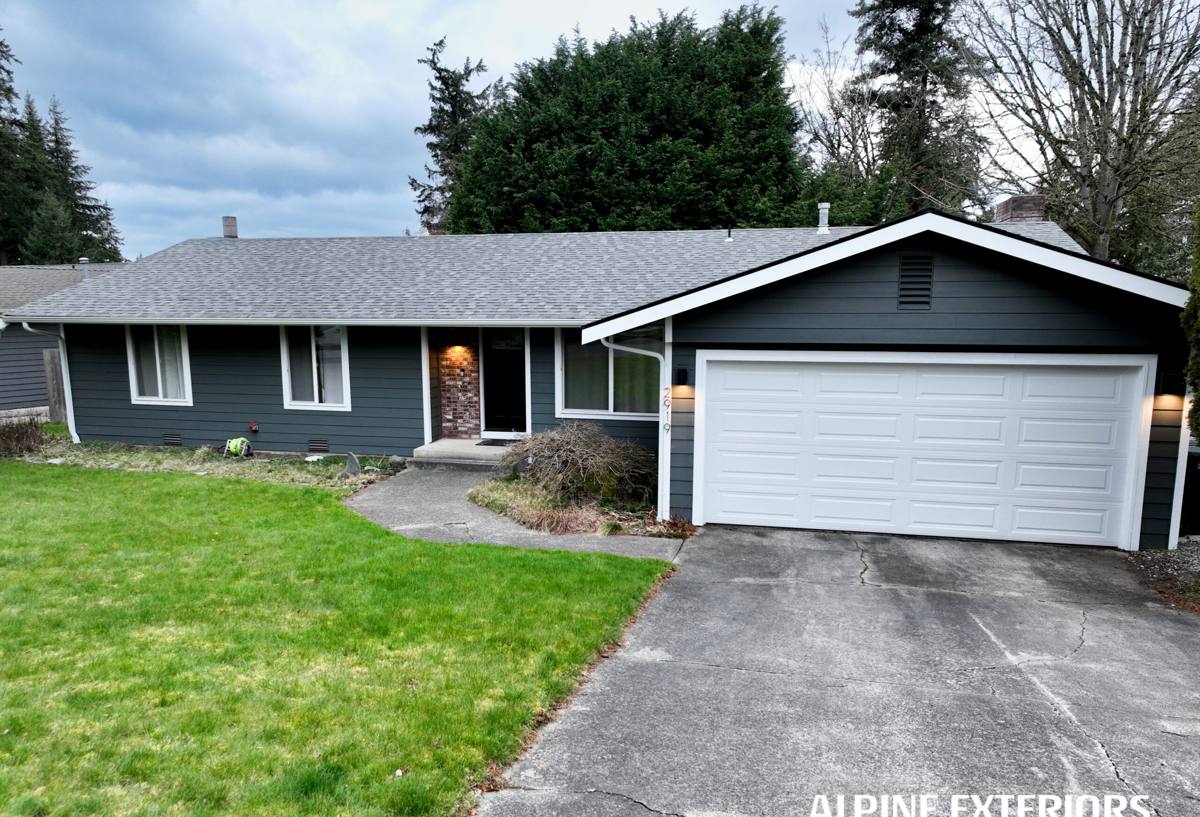
Why We Only Install James Hardie
We don't install LP SmartSide, vinyl, Cemplank, Allura, primed spruce, or cedar. That's not a marketing line — it's a standard we hold because we've seen what happens to those materials in a climate like this one over ten and twenty year timelines. Engineered wood products can perform well for years and then fail quickly once moisture finds a seam or a cut edge. Vinyl expands and contracts with temperature swings and can crack in cold snaps or fade unevenly under UV exposure. Cedar looks beautiful new but demands a maintenance schedule most homeowners don't keep up with, and in a wet, mossy climate it's fighting rot from day one. We standardized on James Hardie fiber cement because it's non-combustible, it doesn't feed mold or moss the way wood does, and the factory-applied ColorPlus finish holds up to UV and moisture without the repainting cycle other materials require. That's the whole reason this page exists — not to sell a brand, but to explain why we put one specific product on Lynden homes and nothing else.
What Fiber Cement Actually Is
James Hardie siding is made from cement, sand, and cellulose fiber, cured into a dense, stable board. It doesn't absorb water the way wood does, it doesn't warp with humidity swings, and it won't support the kind of moss and algae growth that thrives on cedar and some engineered wood products in a climate this damp. It's heavier and more rigid than vinyl, which is part of why it holds paint and factory finish so much better over time.
What Lynden's Climate Specifically Does to a House
Every siding material fails in its own way, and the failure mode in Whatcom County is almost always moisture-related. Here's what we're actually working against on a Lynden job:
- Driving rain: Wind-driven rain off the Strait pushes water sideways into wall assemblies, not just straight down — this stresses every seam, joint, and penetration in the siding system.
- Extended damp periods: Long stretches without full drying mean any material that wicks moisture stays wet longer than it would in a drier climate, which accelerates rot and delamination.
- Moss and algae season: Shaded walls and north-facing elevations can stay damp for months, and porous or wood-based siding gives moss something to grip onto and root into.
- Salt-influenced air: Even a few miles inland, coastal air carries enough salt to accelerate corrosion on fasteners and hardware that isn't rated for it.
- Temperature swings: Cold snaps followed by mild wet stretches stress materials that expand and contract at different rates than the structure behind them.
None of this is unique to Lynden — it's Whatcom County weather generally — but it's worth saying plainly because it's the actual engineering problem a siding job has to solve, not an abstraction.
How James Hardie's HZ Product Lines Address This
James Hardie engineers its siding in climate-specific formulations, and the HZ5 line is built for exactly the wet, temperate conditions found in the Pacific Northwest. The difference isn't marketing — it's how the board is formulated and treated to resist moisture-related freeze-thaw stress and to hold its factory finish under sustained damp exposure. When we spec a Lynden job, we're specifying the version of the product engineered for this climate, not a generic national default.
ColorPlus Finish vs. Field Painting
ColorPlus is James Hardie's factory-applied finish, baked on under controlled conditions before the boards ever reach the jobsite. That matters here because field-applied paint on any siding material is only as good as the weather conditions it was applied in — and Whatcom County doesn't give you many long, dry painting windows. A factory finish sidesteps that problem entirely and comes with its own finish warranty separate from the substrate warranty.
What a Correct Installation Actually Involves
Fiber cement siding is only as good as its installation. This is the part homeowners rarely get walked through, and it's where most siding problems in this climate actually originate — not in the material itself.
Water Management Comes First
Before a single board goes up, the wall needs a correctly lapped weather-resistive barrier, properly flashed windows and doors, and rainscreen or drainage detailing appropriate for the wall assembly. In a climate with this much driving rain, the siding is the second line of defense, not the first — the water management behind it is what actually keeps a wall dry over decades.
Fastening and Clearances
James Hardie specifies fastener type, spacing, and penetration depth, and those specs exist for a reason — under-driven or over-driven nails, wrong fastener material, or wrong spacing are common causes of premature failure. Ground clearance, gaps at trim and butt joints, and caulking only at manufacturer-approved locations all matter more in a wet climate than a dry one, because any mistake becomes a moisture entry point that stays wet for months at a time.
Cut Edges and Sealing
Factory edges come primed and sealed; field cuts don't, unless they're properly sealed on site. Left unsealed, a cut edge is the fastest path for moisture to get into the board itself, and it's an easy detail to skip when a crew is moving fast.
| Detail | Why It Matters in Whatcom County |
|---|---|
| Weather-resistive barrier lapping | Driving rain finds any gap; correct lapping directs water out, not in |
| Flashing at windows/doors | Highest-risk penetration points for wind-driven rain |
| Fastener spacing and depth | Wrong fastening is a leading cause of board movement and cracking |
| Sealed cut edges | Unsealed cuts absorb moisture fastest in prolonged damp conditions |
| Ground and roofline clearance | Prevents constant splash-back and moisture wicking at the base |
| Rainscreen/drainage gap | Lets any moisture that does get behind the siding actually dry out |
Our Process for a Lynden Job
- Walk-through and assessment: We look at your current siding, existing water damage, trim condition, and how your specific lot's sun and shade pattern affects moisture exposure.
- Product and color selection: We help you choose the right Hardie board profile and ColorPlus color for your home, factoring in HOA or neighborhood conventions where relevant.
- Written estimate: A clear scope covering removal, water management upgrades, siding, trim, and any repair work uncovered along the way — no vague allowances.
- Tear-off and inspection: Once old siding comes off, we inspect sheathing and framing for hidden rot before anything new goes up — this is often where real problems get found.
- Water management install: Barrier, flashing, and drainage detailing installed to spec before siding starts.
- Siding installation: Installed to James Hardie's fastening, clearance, and sealing specifications throughout.
- Final walkthrough: We go over the finished work with you before calling the job done.
Why a Crew That Already Works Lynden Matters
Siding installation isn't identical everywhere. A crew that's used to working in a drier climate can install a technically "correct" job by the book and still miss the details that matter most where rainfall and moisture exposure are higher. A crew that regularly works Whatcom County homes already has a feel for which walls need extra attention to drainage detailing, how local moss and algae patterns show up on different orientations, and what water damage typically looks like when it's been building for years behind old siding. That local pattern recognition is hard to substitute for, and it's a real part of what you're paying for when you hire local rather than the lowest bid from out of the area.
Questions Worth Asking Any Contractor
- Are you a certified James Hardie installer, and can you explain their fastening and clearance specs without looking them up?
- What water management detailing will you install behind the siding, specifically?
- How do you handle sealing field-cut edges?
- What does the manufacturer's warranty cover, and what does your workmanship warranty cover separately?
- Have you worked on homes in this area before, and what did you find when you tore off the old siding?
What Lynden Homeowners Typically Notice First
Most calls we get about siding start with one of a handful of visible symptoms: dark streaking or moss buildup on north-facing walls that keeps coming back no matter how often it's cleaned, soft or spongy spots near the base of the wall or under windows, paint that's peeling or bubbling in patches, or visible warping and cupping on wood-based siding. Any of these is worth a look before it turns into a sheathing or framing repair, which costs considerably more than a siding job alone.
Cost Factors Worth Understanding Up Front
We don't publish blanket pricing because every home is different, but the real cost drivers on a Lynden siding job are consistent: the condition of what's under the current siding (hidden rot changes scope fast), the amount of trim and detail work around windows and rooflines, the board profile and color you choose, and whether water management upgrades are needed beyond what's already there. A house with sound sheathing and straightforward walls costs less than one with hidden moisture damage or a lot of architectural detail — and you won't know which one you have until the old siding comes off, which is exactly why we inspect before finalizing scope.
If you're weighing a siding project for a Lynden home, we're happy to come take a look, walk you through what we find, and give you a straightforward, no-pressure estimate — no hard sell, just an honest read on what your house actually needs.