 Bellingham Exterior
 Asphalt Shingle Roofing Built for the Puget Neighborhood
Homes in Puget sit close enough to the water and the tree line that roofs here work harder than roofs inland. Salt-laden air off the bay accelerates corrosion on fasteners and flashing, driving rain finds every weak seam, and the shade from mature conifers keeps roof decks damp long after a storm has passed. Asphalt shingle roofing is still the right call for most homes in this part of Bellingham — it's cost-effective, repairable, and available in styles that hold up to Pacific Northwest weather when it's installed correctly. The problem isn't the material. It's installations that don't account for what this specific microclimate does to a roof over time.
This page covers what a shingle roof needs to actually perform in Puget, what a correct installation looks like, and how we handle the job from first look to final inspection.
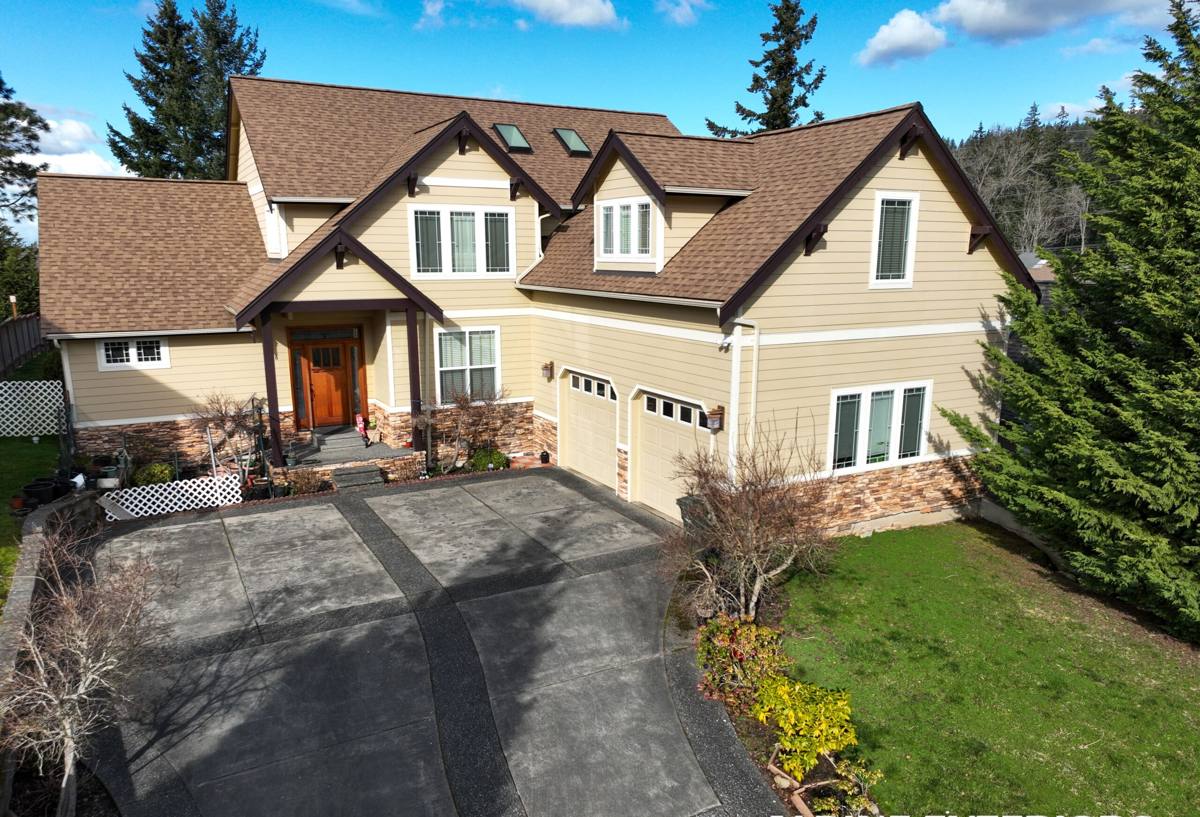
What Puget's Climate Does to a Shingle Roof
Salt Air and Moisture
Proximity to Bellingham Bay means airborne salt settles on every exterior surface, including your roof. Salt accelerates the breakdown of unprotected metal — nails, flashing, vent stacks — long before the shingles themselves show wear. A roof built with standard-grade fasteners in a salt-air zone will show rust streaking and fastener failure years ahead of a roof built with corrosion-resistant materials.
Driving Rain and Wind-Driven Water
Storms coming off the water don't just fall straight down — wind pushes rain sideways and up under shingle edges, eaves, and anywhere flashing isn't properly lapped. A roof that would be fine in a calmer climate can leak in Puget if the underlayment, ice-and-water membrane at vulnerable points, and flashing details aren't upgraded to handle wind-driven moisture.
Moss, Shade, and Slow-Drying Roof Decks
Whatcom County's long moss season is a direct result of extended damp periods combined with tree cover. Moss holds moisture against the shingle surface, lifts shingle edges as it grows, and works its way under tabs over several seasons. Roofs with heavy shade or north-facing slopes in Puget dry out slower than roofs in open, sunnier parts of Bellingham, which means moss and algae staining show up sooner and spread faster if left unmanaged.
What a Correct Shingle Roof Install Looks Like Here
A shingle roof that's going to last in this environment needs more than shingles nailed to a deck. The details that matter most in Puget are usually the ones a homeowner can't see once the job is done — which is exactly why they get skipped by crews that don't know the area.
- Ice-and-water shield or equivalent self-adhered membrane at eaves, valleys, and roof-to-wall transitions, not just where code requires it
- Corrosion-resistant fasteners and flashing rated for coastal/salt-air exposure, not standard galvanized where budget alone drives the choice
- Proper starter strip and drip edge at all eaves and rakes so wind-driven rain can't get under the first course
- Balanced intake and exhaust ventilation so the roof deck can actually dry between wet stretches instead of staying damp
- Step flashing and counter-flashing at every wall intersection and chimney, not caulk used as a substitute for proper flashing
- Shingle nailing pattern and placement matching manufacturer specs for wind exposure, especially on more exposed slopes
- Valley treatment appropriate to the roof's pitch and water volume — open metal valleys in high-flow areas where warranted
Skipping any one of these doesn't usually cause a visible problem in year one. It shows up as a leak, moss colony, or fastener failure three to seven years later — after the installer is long gone.
Choosing Shingles for a Puget Home
Not every asphalt shingle product is built the same, and the right choice depends on your roof's exposure to shade, wind, and moisture.
| Factor | What to Look For | Why It Matters in Puget |
|---|---|---|
| Algae resistance | Shingles with algae-resistant (AR) granules | Shaded, damp roofs are prone to blue-green algae staining; AR granules slow it significantly |
| Wind rating | Match or exceed local wind exposure for your slope and elevation | Open or elevated lots near the water see stronger gusts during storms |
| Fastener compatibility | Corrosion-resistant nails specified for coastal use | Salt air corrodes standard fasteners faster, leading to early shingle lift or loss |
| Warranty structure | Understand what's prorated vs. non-prorated, and what voids coverage | Improper ventilation or installation error is the most common reason warranty claims get denied |
| Shingle weight/thickness | Heavier, dimensional shingles for high-exposure roofs | More resistant to wind lift and impact from wind-blown debris off nearby trees |
We'll walk you through the specific product lines that make sense for your roof's pitch, exposure, and budget rather than pushing one option for every house. A steep, shaded roof under conifers has different needs than an open, sun-exposed roof a few streets over.
Moss Prevention and Long-Term Maintenance
Moss is the most visible sign of a roof that isn't shedding water and drying out the way it should. Once moss establishes itself, it holds moisture against the shingle mat and lifts tabs as the rhizoids grow, which shortens the roof's life if it's not addressed.
What actually helps
- Zinc or copper control strips near the ridge, which release ions that inhibit moss and algae growth as rain washes over the roof
- Regular soft-wash cleaning rather than pressure washing, which can strip granules and shorten shingle life
- Trimming back overhanging branches where practical to reduce shade and debris buildup
- Keeping gutters and valleys clear so water isn't sitting against the roof edge
None of this replaces a correctly installed, well-ventilated roof — it extends the life of one. A roof fighting poor ventilation or bad flashing will grow moss again no matter how often it's cleaned.
Repair vs. Replacement in Puget
Not every roof problem here means a full replacement. We look at the age of the roof, the extent of damage, and whether the underlying deck and flashing are sound before recommending either path.
Signs a repair may be enough
- Isolated shingle damage from wind or falling branches on an otherwise healthy roof
- A single flashing failure at a chimney, skylight, or wall intersection
- Moss growth on a roof that's less than half through its expected lifespan
Signs replacement is the honest answer
- Widespread granule loss or shingles that are curling and brittle across multiple slopes
- Repeated leaks in different locations, suggesting the underlayment has failed broadly
- A roof deck that's shown soft spots or rot when we've been up for a repair
We'll tell you plainly which category your roof falls into. A patch job on a roof that's structurally past its useful life just delays a bigger repair bill and risks interior water damage in the meantime.
Our Process for Puget Homeowners
- On-site inspection. We get on the roof (or use a drone where access is limited) to check shingle condition, flashing, ventilation, and any signs of moisture intrusion at the deck.
- Honest assessment. We explain what we found in plain terms — what needs attention now, what can wait, and what a repair versus replacement would involve.
- Written estimate. Scope, materials, and pricing in writing before any work starts, with the coastal-grade details called out specifically.
- The work itself. Proper tear-off and deck inspection where needed, correct underlayment and flashing detail, and shingle installation to manufacturer spec — not shortcuts to save an afternoon.
- Final walkthrough. We review the finished roof with you, including ventilation and any moss-prevention measures installed, before we consider the job done.
Why a Crew That Already Works Puget Matters
Roofing crews that split time between drier regions and coastal Whatcom County don't always build for the difference. A roof detailed the same way you'd detail one in a low-moisture climate will underperform here — not because the materials are bad, but because the install didn't account for salt air, wind-driven rain, and a moss season that runs longer than most parts of the state. Working this neighborhood regularly means we've seen which failure points show up first on homes here, and we build against them from the start rather than fixing them after the fact.
Get a Straightforward Estimate
If your roof in Puget needs a repair, a moss cleanup, or a full asphalt shingle replacement, we're glad to take a look and give you an honest read on where it stands. Reach out for a free, no-pressure estimate using the form below — we'll tell you what we actually see, not just what sells a job.