 Bellingham Exterior
 Why Siding Wears Out Faster in the Puget Area
Homes in the Puget area near Bellingham sit in one of the more demanding siding climates in the Lower 48. It's not any single factor — it's the combination. Salt-laden air drifts in off the water and slowly works on fasteners, caulk joints, and any exposed wood fiber. Driving rain, often pushed sideways by wind off the water, finds every gap a builder-grade installation left behind. And because this part of Whatcom County stays cool and damp for long stretches of the year, moss and algae get months at a time to colonize north-facing walls, shaded eaves, and anywhere siding stays wet longer than it should.
None of that is exotic weather. It's just persistent. Siding that would coast along for decades in a dry inland climate gets tested here every single winter, and the products and installation details that don't matter much elsewhere matter a great deal in the Puget area.
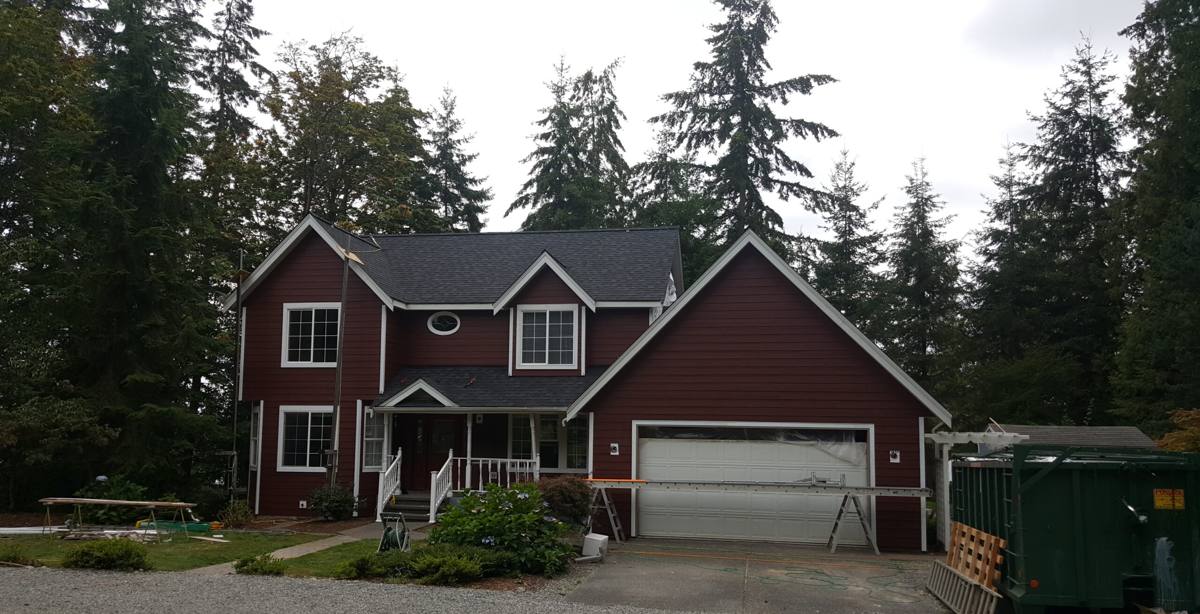
What Local Homes Actually Need From Their Siding
Strip away the marketing and a Puget-area home needs siding that does three things well: shed water instead of absorbing it, resist the organic growth that thrives in shade and moisture, and hold its finish without cracking, peeling, or fading under repeated wet-dry cycles. Wood-based products struggle with the first two. Vinyl struggles with wind-driven rain intrusion at the seams and can go brittle over time. Fiber cement, installed correctly, is built to handle all three — which is a large part of why we standardized on it.
The Role of the Water-Resistive Barrier
The siding itself is only half the story. Behind every board should be a properly lapped weather-resistive barrier and correctly integrated flashing at every window, door, and penetration. In a climate that gets sustained, wind-driven rain, this drainage plane is what actually keeps water out of the wall assembly — the siding is the first line of defense, not the only one.
What a Correct Fiber Cement Installation Involves
Fiber cement siding is only as good as the installation behind it. James Hardie's own installation guidelines are specific for a reason — skipping steps is the single biggest cause of premature siding failure we see when we're called in to look at someone else's work.
Gaps, Clearances, and Fastening
Boards need the correct gap where they meet trim, corners, and other siding boards, sealed with a quality sealant rated for exterior movement — not butted tight and caulked as an afterthought. Fasteners need to land in framing at the manufacturer's specified spacing, driven flush without overdriving, which cracks the board's edge and creates a future water entry point.
Clearance From Grade, Decks, and Roof Lines
Siding installed too close to grade, a deck surface, or a roofline wicks moisture up from below or gets splash-back that keeps the bottom courses wet far longer than the rest of the wall. This is one of the most common corner-cutting mistakes we find on re-sides, and it's almost always where rot or staining shows up first.
Starter Strips and Flashing at Penetrations
A proper starter strip sets the first course at the correct angle and kickout. Every window, vent, hose bib, and light fixture needs flashing or a sealant detail designed for that specific penetration — not a bead of caulk over a hole cut slightly too large.
Why We Install James Hardie and Nothing Else
We made a deliberate decision to install only James Hardie fiber cement siding. We don't install vinyl, LP SmartSide, Cemplank, Allura, primed spruce, or cedar. That's not brand loyalty — it's a standard we settled on after weighing what actually holds up in a climate like this one.
HZ5 Engineering for the Pacific Northwest
James Hardie engineers its HardieZone products by climate region, and the HZ5 line is built for areas with sustained moisture exposure — exactly the profile of Whatcom County. The formulation and installation specs account for freeze-thaw cycling and prolonged dampness rather than treating every region the same way.
Non-Combustible, Dimensionally Stable
Fiber cement is roughly 90 percent sand, cement, and cellulose fiber. It doesn't expand and contract with moisture the way wood does, and it won't support combustion, which matters for insurance considerations as much as safety.
ColorPlus Factory Finish
Where budget allows, we steer homeowners toward Hardie's ColorPlus finish — a baked-on, factory-applied coating that resists fading and holds up to UV and salt air far better than a field-applied paint job, backed by its own finish warranty separate from the product warranty on the board itself.
Fiber Cement Compared to Other Siding Options
| Factor | Vinyl | Cedar / Wood | James Hardie Fiber Cement |
|---|---|---|---|
| Moisture absorption | Low, but seams can leak | High — swells and warps | Very low when sealed per spec |
| Moss / algae resistance | Moderate | Poor — feeds organic growth | Good, especially with ColorPlus finish |
| Performance in wind-driven rain | Weak at seams and corners | Weak at joints and end grain | Strong with correct flashing details |
| Maintenance burden | Low, but brittle with age | High — recoat / reseal regularly | Low — no repainting for years with ColorPlus |
| Fire resistance | Melts / deforms | Combustible | Non-combustible |
This isn't a knock on those other products — cedar has real character and vinyl has its place on a budget. It's an honest look at how each one behaves under the specific stress this region puts on a wall system, and why fiber cement wins that comparison here more often than not.
Our Process for a Puget-Area Siding Project
- Assessment — we inspect the existing siding, sheathing, and any moisture damage before quoting anything, since damaged sheathing changes the scope.
- Tear-off and sheathing check — old siding comes off and we inspect what's underneath rather than covering over a problem.
- Weather-resistive barrier and flashing — a new drainage plane goes on with correctly lapped flashing at every penetration.
- Fiber cement installation — HardiePlank, HardieShingle, or HardiePanel installed to manufacturer fastening and clearance specs.
- Trim, caulking, and finish detailing — corners, trim boards, and sealant joints finished to shed water, not just look clean.
- Final walkthrough — we go over the finished work with the homeowner before calling the job done.
What Drives the Cost of a Fiber Cement Project
| Cost Factor | Why It Matters |
|---|---|
| Home size and wall complexity | More corners, gables, and dormers mean more cutting, flashing, and labor |
| Condition of existing sheathing | Rot or moisture damage found during tear-off adds repair scope |
| Siding profile chosen | Lap siding, shingle-style panels, and board-and-batten carry different material and labor costs |
| Factory finish vs. field paint | ColorPlus finish costs more up front but removes a repainting cycle |
| Site access | Tight lots, mature landscaping, or multi-story walls affect staging and labor time |
Maintenance Checklist for Puget-Area Hardie Siding
- Rinse siding annually, focusing on north-facing and shaded walls where moss gets a head start
- Keep gutters clear so overflow doesn't run down the wall and feed moss growth
- Trim back shrubs and tree limbs to let siding dry out between rain events
- Inspect caulk joints at trim and penetrations every year or two and re-seal if cracked
- Check that soil, mulch, or deck surfaces haven't crept up to reduce siding clearance from grade
- Address any hairline cracking or chipped caulk promptly — small gaps are cheap to fix and expensive to ignore
Signs Your Current Siding Is Already Losing
- Persistent moss or dark staining that comes back within weeks of cleaning
- Soft spots, bubbling, or visible warping, especially near the bottom courses
- Paint that's peeling or chalking faster than it should on a wall that isn't full-sun
- Visible gaps or dried-out caulk at corners and trim
- Musty smell or staining on interior walls that back up to exterior siding
Why Hiring a Crew That Already Works This Area Matters
A crew that regularly works the Puget area around Bellingham already knows which walls will fight moss the hardest, which direction the driving rain typically comes from on a given lot, and how to sequence a tear-off around a wet forecast instead of getting caught mid-project. That local pattern recognition shows up in the small decisions — where to add extra flashing attention, which elevations need the most careful clearance from grade, how to plan around the tree cover common in this area — that a crew unfamiliar with Whatcom County's climate simply won't think to make. It also means familiarity with local permitting expectations, so the project moves without avoidable delays.
If you're weighing a siding replacement for a Puget-area home, we're happy to take a look and give you a straightforward, no-pressure estimate — no invented urgency, just an honest read on what your home needs and what it would take to do it right.