 Bellingham Exterior
 Why Siding Replacement Looks Different in Sehome
Sehome is one of Bellingham's older, established residential neighborhoods, sitting close enough to the water that salt-laden air is a constant factor in how exterior materials age. Combine that with Whatcom County's driving rain and a moss season that can stretch from fall through spring, and you get a set of conditions that punish siding in ways that don't show up in a sunnier, drier climate. Homes here don't fail because the siding is old in years — they fail because the siding was never suited to the environment it was installed in, or because it was installed in a way that let moisture find a way behind it.
When we talk about siding replacement for a Sehome home, we're not just talking about swapping old boards for new ones. We're talking about correcting the moisture management, ventilation, and material choices that determine whether the next siding job lasts one decade or three.
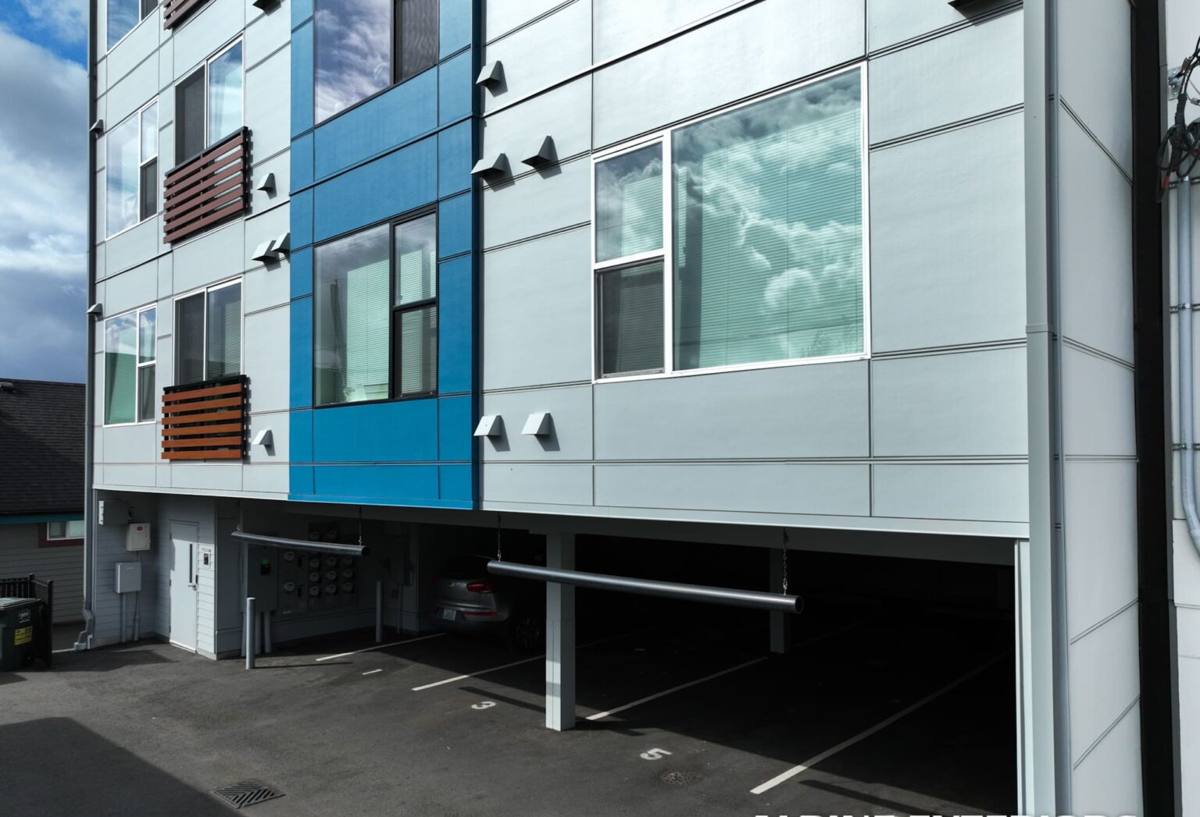
What Bellingham's Climate Actually Does to Siding
Salt Air
Proximity to Bellingham Bay means airborne salt settles on exterior surfaces year-round. Salt is corrosive to fasteners and hardware, and it accelerates the breakdown of finishes that aren't built to resist it. Paint film on wood or engineered wood siding chalks and fades faster near the water; caulk joints dry out and crack sooner.
Driving Rain
Storms off the Sound don't just fall straight down — wind-driven rain gets pushed sideways into wall assemblies, seams, and butt joints. Siding systems that rely on face-sealed caulking rather than proper lap, flashing, and drainage detailing are the first to let water through, and once water gets behind siding in this climate, it rarely gets a chance to fully dry out before the next system rolls in.
Moss and Sustained Moisture
Whatcom County's moss season is long because the conditions that grow moss — shade, moisture, and mild temperatures — persist for most of the year here. Moss and algae hold water against the siding surface far longer than bare siding would stay wet on its own, which is hard on any material that isn't dimensionally stable or resistant to moisture absorption.
Signs a Sehome Home Needs Siding Replacement, Not Just Repair
- Soft, spongy, or delaminating panels, especially near the bottom courses and around window and door trim
- Persistent moss or dark staining that returns within a season of cleaning
- Visible cupping, warping, or buckling boards
- Paint that won't hold — recoating every few years instead of every decade
- Soft trim or sheathing discovered when a board is pried back
- Rising energy bills that point to a compromised weather barrier behind the siding
A few isolated boards can sometimes be repaired. But once moisture damage shows up in more than one area, or the underlying material itself isn't holding up to the climate, patch repairs are usually just delaying a full replacement — and spending money that won't carry forward into the next job.
What a Correct Siding Replacement Involves
Replacing siding on a Sehome home properly means treating the wall assembly as a system, not just a facade. The visible siding is the last layer applied — everything underneath it is what actually keeps water out.
- Full tear-off and inspection. Old siding comes off so the sheathing, framing, and existing weather barrier can be checked for rot, soft spots, or prior water intrusion. Anything compromised gets repaired or replaced before new material goes up — covering damage over is how the same problem resurfaces in five years.
- Weather-resistive barrier. A correctly lapped, sealed house wrap or building paper goes on before siding, giving the wall a drainage plane that lets any incidental moisture find its way back out rather than getting trapped.
- Flashing at every penetration. Windows, doors, hose bibs, vents, and roof-to-wall intersections are the most common failure points on any home in this climate. Correct flashing at each one is non-negotiable, not an upgrade.
- Rainscreen or drainage gap where appropriate. Giving siding a small air gap off the sheathing lets bulk water drain and the wall assembly dry, which matters more in a wet coastal climate than almost anywhere else in the state.
- Correct fastening and clearances. Fastener type, spacing, and butt-joint treatment are all specified for a reason — installed off-spec, even a good material will underperform.
- Factory-finished siding installed to manufacturer spec. The finish is what stands between the material and the salt air, rain, and moss for the next several decades.
Why We Install Only James Hardie Fiber Cement
We made the decision to install exclusively James Hardie fiber cement siding, and we don't install vinyl, LP SmartSide, Cemplank, Allura, primed spruce, or cedar. That's not a marketing position — it's a standard we hold because of what we've seen these materials do, and not do, in a wet coastal climate over time.
Fiber cement is dimensionally stable — it doesn't expand, contract, cup, or warp the way wood-based products can when they take on and release moisture through a long wet season. It's also non-combustible, which matters increasingly to insurers and to homeowners thinking about long-term risk. James Hardie's ColorPlus factory finish is baked on under controlled conditions, which gives it better fade and adhesion performance than field-applied paint — a real advantage in an environment where salt air is already working against any painted finish. Hardie also offers HZ5 and HZ10 product lines engineered specifically for climate zones like ours, with moisture and impact performance matched to what the Pacific Northwest actually throws at a home.
None of this means other products are without merit — vinyl is inexpensive and low-maintenance in mild climates, cedar has genuine natural appeal, and engineered wood has improved over the years. But when we weigh long-term moisture performance, maintenance burden, and warranty strength against what Whatcom County's climate demands, fiber cement is what we're willing to put our name behind and back with installation workmanship we stand by.
Siding Material Comparison for a Coastal Climate
| Factor | James Hardie Fiber Cement | Vinyl | Engineered Wood (LP-type) | Cedar |
|---|---|---|---|---|
| Moisture absorption | Very low | Low (but can trap moisture behind panels) | Moderate — vulnerable if finish fails | High if finish isn't maintained |
| Dimensional stability | High | Moderate — can warp in heat/cold cycles | Moderate | Lower — prone to cupping and checking |
| Fire resistance | Non-combustible | Combustible | Combustible | Combustible |
| Finish durability | Factory-baked ColorPlus finish | Color molded in, can fade/chalk | Field-applied paint, needs recoating | Field-applied stain/paint, frequent maintenance |
| Typical maintenance | Occasional wash, repaint on a long cycle | Low, but repairs are visible | Regular repainting and caulk upkeep | Regular staining/sealing |
Cost Factors for a Sehome Siding Replacement
Every home is different, so we won't quote a number without seeing the house — but the factors that move the price are consistent from job to job:
| Factor | Why It Matters | Relative Cost Impact |
|---|---|---|
| Total square footage of wall area | Sets the baseline material and labor quantity | High |
| Condition of the sheathing underneath | Rot or water damage found during tear-off requires repair before new siding goes on | Variable, can be significant |
| Number of stories and roof lines | Affects staging, access, and labor time | Medium |
| Trim, corners, and architectural detail | More cuts, more flashing points, more labor | Medium |
| Siding profile and color selection | Lap width, textures, and ColorPlus color all price slightly differently | Low to Medium |
| Existing rainscreen or barrier upgrades | Adding proper drainage detailing where it's missing is worth the investment | Medium |
Our Process for Sehome Projects
We start with an on-site walk of the home to assess the existing siding, look for water damage or venting issues, and talk through product and color options. From there we put together a written scope and estimate before any work begins — no surprises added mid-project. Once scheduled, we handle tear-off, sheathing repair as needed, weather barrier and flashing installation, and the Hardie siding install itself, followed by a final walkthrough with the homeowner. Because Bellingham's rain doesn't wait for a convenient week, we plan tear-off sections and weather protection carefully so a home is never left exposed longer than necessary.
Why Hiring a Crew That Works Sehome Regularly Matters
Sehome's mix of home ages and styles means a crew needs to recognize what decade of construction it's dealing with and what that implies for sheathing, wall assembly, and likely trouble spots — an older home's original wall detailing is often very different from what's standard today. A contractor who works Whatcom County regularly also isn't guessing at what "normal" moss growth or moisture staining looks like here versus a sign of real trouble. That local pattern recognition shortens the inspection phase and reduces the odds of missing something during tear-off.
Local crews are also simply more available when a schedule needs adjusting around a stretch of dry weather — and in this climate, timing a tear-off around the forecast is not optional.
Choosing a Contractor: What to Verify
- Current WA state contractor license and liability insurance, verifiable on request
- Manufacturer training or certification for the specific siding system being installed
- A written scope of work that specifies weather barrier, flashing, and fastening details — not just "siding replacement"
- A clear, transferable manufacturer warranty explained in plain terms, not just a verbal mention
- Local references or completed work in the Bellingham/Whatcom County area
- A plan for weather protection during tear-off, given how unpredictable rain can be here
Caring for Your Siding After Replacement
Correctly installed Hardie siding is low-maintenance, not no-maintenance. A periodic gentle wash removes the moss spores and organic buildup that settle out of the air here before they get a foothold. Keeping gutters clear and downspouts directed away from the foundation reduces splash-back onto lower courses. Beyond that, an occasional visual check around windows, doors, and trim — the same spots most vulnerable to driving rain — is the best way to catch anything early, long before it becomes a repair.
If your Sehome home's siding is showing its age, or you just want a straight answer on whether repair or replacement makes sense, we're happy to take a look. The estimate is free, there's no pressure, and you'll get a clear explanation of what we find and why.