 Bellingham Exterior
 Roofing in South Hill: A Different Kind of Wear
South Hill sits up above the rest of Bellingham, and that elevation cuts both ways. Homes here often get more direct wind off Bellingham Bay, more exposure to wind-driven rain during winter storms, and — because so many lots have mature tree cover — more shade, more debris, and more moss pressure than roofs down in the flatter parts of town. Add in the salt air that comes off the water and you've got a combination that ages a roof faster than most homeowners expect, even when the shingles still look okay from the ground.
We work on roofs across Whatcom County, but South Hill's older housing stock, steep driveways, and tree-heavy lots come with their own set of considerations. This page covers what actually goes into a correct roof replacement here, what tends to fail first on South Hill homes specifically, and how we approach the job from first inspection to final cleanup.
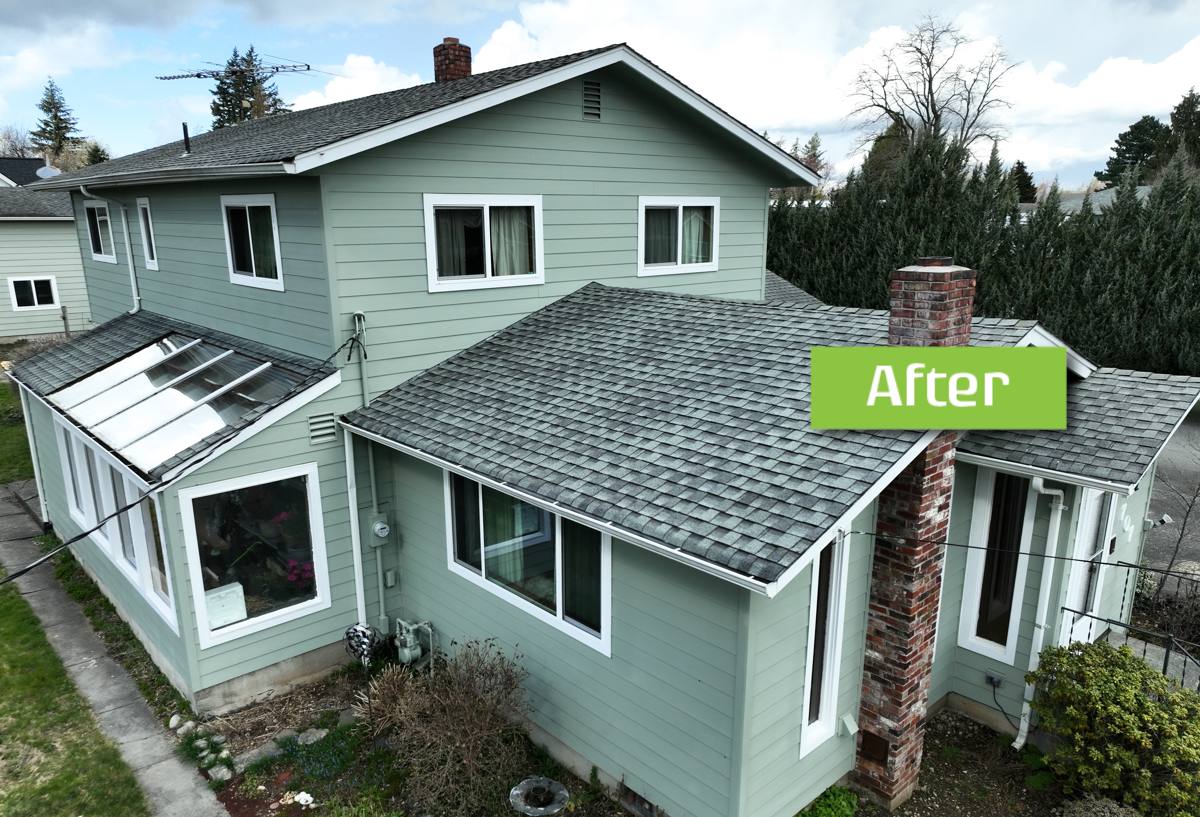
Why South Hill Roofs Fail Earlier Than You'd Think
Moss and Organic Growth
Whatcom County's moss season runs long — realistically most of the year outside of a dry stretch in summer. On shaded, north-facing slopes (common on hillside lots with tree cover), moss and moisture-loving algae get a head start and don't let up. Moss isn't just cosmetic. It holds water against the shingle surface, works its way under tabs and around fasteners, and accelerates granule loss. Left unaddressed for a few seasons, it can shave real years off a roof's service life.
Salt Air and Driving Rain
Proximity to the bay means metal components — flashing, fasteners, vents, gutters — corrode faster than they would further inland. Driving rain, especially in wind events, tests every seam, valley, and penetration on a roof. A roof that's marginal on flashing or underlayment detail will show it here before it shows it on a more sheltered lot.
Older Homes, Older Roofs
South Hill has a lot of established homes, which means a lot of roofs that have already been through one or two replacement cycles, sometimes with shortcuts baked in from a prior job — inadequate ventilation, flashing that was reused instead of replaced, or decking that was never inspected under the old layer. A replacement is the one point in a roof's life where those older problems can actually get fixed instead of covered up again.
Signs You're Looking at Replacement, Not Repair
- Shingles that are cupping, curling, or losing granules in patches rather than just at the edges
- Moss or algae staining that comes back within a season or two of cleaning
- Soft spots or slight sag when walked (a sign of decking or structural moisture damage)
- Daylight visible through the attic roof deck, or damp insulation after storms
- Repeated leaks in different spots — a pattern that usually means the underlayment has failed system-wide, not just at one flashing point
- A roof that's at or past the manufacturer's expected service life for your material type
Any one of these on its own might still be a repair. Two or more together, especially on a roof that's already 18-20+ years old, usually means repair costs start competing with replacement costs — and replacement gets you a warranty and a clean slate instead of a patched-together roof.
What a Correct Roof Replacement Actually Involves
A roof replacement is more than pulling off old shingles and nailing on new ones. Done right, it's a full system replacement:
Tear-Off and Deck Inspection
We remove the existing roofing down to the deck rather than layering over it. This is the only way to actually see what's underneath — soft or delaminated plywood, old water staining, prior repair patches — and address it before it's sealed under a new roof for another 20-30 years.
Underlayment and Ice/Water Protection
Given how much wind-driven rain Whatcom County sees, the underlayment layer matters as much as the shingle itself. Vulnerable areas — eaves, valleys, and anywhere water tends to back up — get self-adhered ice-and-water barrier; the rest of the deck gets synthetic underlayment as a secondary water barrier beneath the roofing material.
Flashing
All flashing — around chimneys, skylights, sidewalls, and roof-to-wall transitions — gets replaced, not reused. Reused flashing is one of the most common causes of "mystery leaks" that show up a few years after a roof replacement, and near the bay, older flashing is often more corroded than it looks.
Ventilation
Proper intake and exhaust ventilation keeps the attic temperature and moisture balanced, which protects the new decking, helps prevent ice damming in cold snaps, and extends shingle life. On homes with older or modified attic spaces, this is often the piece that was missing the first time around.
Roofing Material Installation
Installed to manufacturer specification for nailing pattern, exposure, and starter/ridge detail — the details that determine whether a roof holds its wind rating and warranty coverage.
Choosing a Roofing Material for a South Hill Home
There's no single "best" roofing material — the right choice depends on your home's age and style, your tree cover, your budget, and how much maintenance you want to take on. Here's how the common options stack up for a hillside, tree-shaded Bellingham lot:
| Material | Typical Lifespan | Moss/Moisture Resistance | Relative Cost |
|---|---|---|---|
| Architectural asphalt shingle | 25-30 years | Good with proper ventilation; needs periodic moss cleaning on shaded slopes | $ |
| 3-tab asphalt shingle | 15-20 years | Fair; more prone to curling and moss buildup over time | $ |
| Standing seam metal | 40-50+ years | Excellent; sheds moisture and resists moss growth on steep slopes | $$$ |
| Composite/synthetic shake | 30-40 years | Good; more moisture-stable than natural cedar | $$ |
We don't install natural cedar shake as part of our standard offering. Cedar can look great, but in a climate with this much sustained moisture and moss pressure, it demands a level of ongoing maintenance and periodic treatment that most homeowners underestimate, and its moisture behavior over time is harder to warranty confidently. Composite and synthetic shake products give a similar look with far more predictable long-term performance, which is why we steer clients that direction when the aesthetic matters to them.
Our Replacement Process
- Inspection and estimate. We get on the roof (or use a lift/drone where access is tight, which isn't unusual on South Hill's steeper lots), check the deck condition where visible, and walk you through what we find — no pressure, no upsell script.
- Material and scope selection. We go over material options, ventilation needs, and any flashing or structural items that came up in the inspection, so the quote reflects the actual roof, not a generic package.
- Scheduling around weather. Roofing on a hillside lot in a wet climate means watching the forecast closely. We plan tear-off and dry-in around weather windows so your home isn't exposed longer than it needs to be.
- Tear-off, deck repair, and dry-in. Old material comes off, the deck gets inspected and repaired as needed, and underlayment goes down the same day where possible.
- Installation. Roofing material, flashing, and ventilation components installed to spec.
- Cleanup and final walkthrough. Full site cleanup, including a magnetic sweep for stray fasteners, followed by a walkthrough so you know exactly what was done and what to expect going forward.
Moss Prevention After Your New Roof Goes On
A new roof doesn't make South Hill's moss season disappear — it just gives you a clean start and, done correctly, a roof that resists moss better and is easier to keep clean. A few habits go a long way:
- Keep gutters clear of needles and leaf debris, especially heading into fall
- Trim overhanging branches to reduce shade and debris buildup on north-facing slopes
- Have moss growth cleaned gently (never pressure-washed directly on shingles) before it spreads under tabs
- Ask about zinc or copper strips at the ridge if your lot is heavily shaded — a low-maintenance way to slow moss regrowth over time
Why Local Experience on South Hill Actually Matters
A roofing crew that already works on South Hill knows the practical stuff that doesn't show up in a generic estimate: how steep driveways and tight lot access affect equipment staging, how mature tree canopy changes ventilation and moss strategy, and how older Bellingham-area homes tend to be framed and vented under the roof deck. That experience shows up in fewer surprises mid-project and a scope that's accurate the first time, not revised after tear-off.
It also matters for accountability. We're not a crew passing through from out of the area — we're working in Whatcom County on an ongoing basis, which means the work has to hold up, because we're the ones you'd call if it didn't.
What to Look For in a South Hill Roofing Contractor
- Washington state contractor license and current insurance — ask to see it, not just hear about it
- A written estimate that itemizes material, labor, and any deck repair or flashing allowance
- Manufacturer certification for the material being installed, if warranty coverage matters to you
- A clear explanation of ventilation plans, not just "shingles and done"
- Willingness to show you the deck condition during tear-off, not just tell you about it afterward
- References or completed local work you can actually verify
Ready for a Straight Answer on Your Roof?
If your South Hill roof is showing its age, moss keeps coming back no matter how many times it's cleaned, or you just want an honest opinion on whether repair still makes sense, we're glad to take a look. Fill out the form below for a free, no-pressure estimate — we'll tell you what we actually see, not just what sells a job.