 Bellingham Exterior
 Siding Installation in Sudden Valley: What the Job Actually Requires
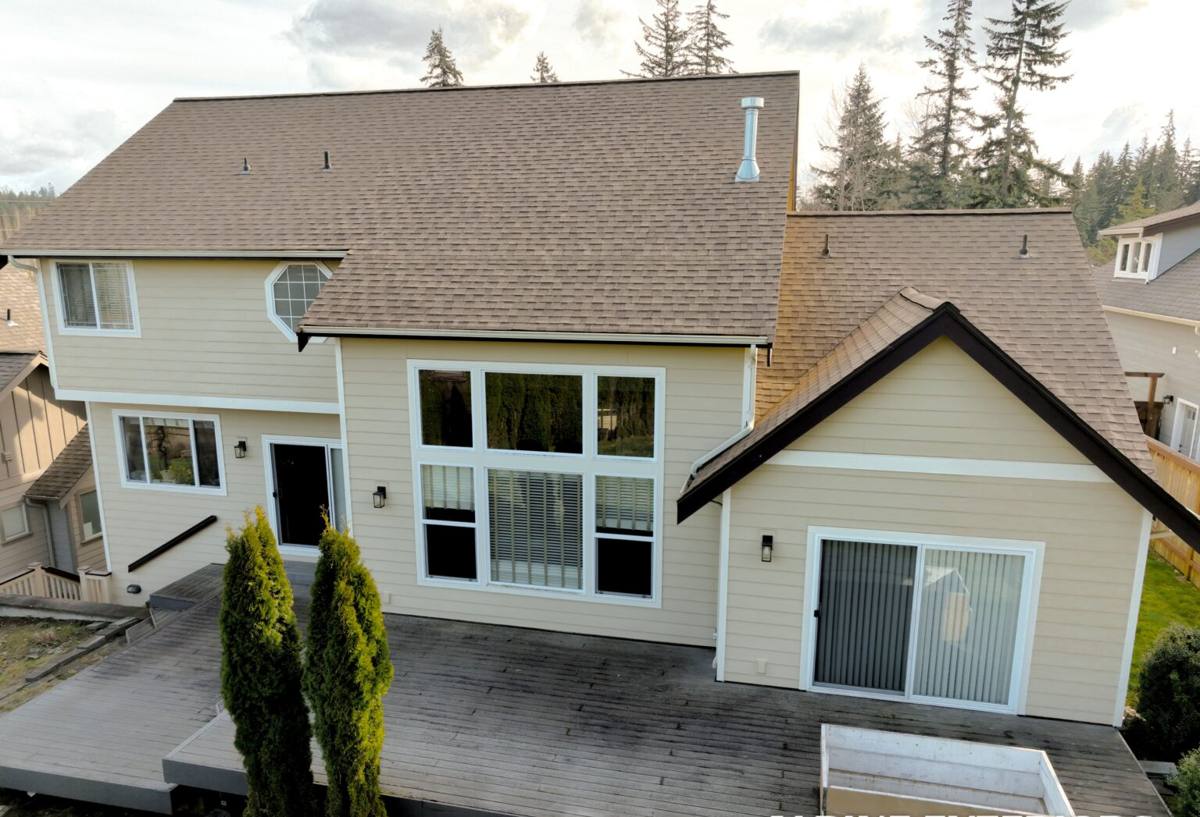
Sudden Valley is one of the more distinct settings we work in around Bellingham — a large residential community on the south shore of Lake Whatcom, laid out across wooded, hilly terrain with its own private road network and homeowners association. Installing new siding on a home here isn't quite the same job as installing it on an open lot closer to town, and treating it that way is how an installation ends up with moisture problems within the first few years instead of decades of trouble-free service. We install James Hardie fiber cement siding exclusively, and every part of how we plan and run a Sudden Valley installation — the flashing details, the fastening schedule, the sequencing around a wooded, sometimes tight-access lot — is built around what this specific neighborhood actually puts a house through.
The Climate a Sudden Valley Installation Has to Survive
Whatcom County's exterior climate is a combination that shows up across the region in different proportions on different properties: salt air pushing in off the coast, driving rain that hits a house sideways more often than it falls straight down, and a moss season that runs long compared to drier parts of the state. Sudden Valley sits well inland from the direct saltwater exposure that hammers waterfront Bellingham homes hardest, but the other two pieces of that pattern — wind-driven rain and a long, damp moss season — show up here in full force, layered on top of conditions that are specific to this community.
Heavy Tree Cover and Persistent Shade
Most Sudden Valley lots sit under substantial second-growth forest canopy, and it's common for a home to have one or more wall faces that get very little direct sun for most of the year. Shaded siding stays wet longer after every rain than siding on an open lot, and any material that depends on sun exposure to dry out between storms simply doesn't get that chance here. That's a real factor in how quickly moisture-sensitive siding starts to show problems on a heavily treed property.
Lake Humidity on Hilly, Variable Terrain
Lake Whatcom keeps ambient humidity higher through the neighborhood than it would be on a dry inland lot, and Sudden Valley's hilly layout means homes at different elevations and orientations relative to the lake and surrounding ridgelines can see meaningfully different wind and rain exposure — sometimes house to house on the same street. Flashing and drainage details that are adequate on one elevation of a home can be undersized for another elevation of the same house, which is exactly the kind of variability a generic, one-size-fits-all installation misses.
A Long Moss and Mildew Season
Shade plus humidity is the exact combination moss and mildew need to establish themselves, and Sudden Valley's tree cover means that combination holds for a large part of the year, not just the wettest months. On wood-based or wood-look siding, that ongoing dampness isn't only a cosmetic problem that shows up as green staining — sustained moisture against a moisture-absorbent material leads to swelling, softening, and rot at seams and cut edges over time.
Why James Hardie Fiber Cement Is the Only Siding We Install Here
We don't install vinyl siding, LP SmartSide, primed spruce, cedar, or other fiber cement brands. That's a professional standard, not a limitation on what we're capable of installing. In a shaded, humid, wooded environment like Sudden Valley, the products that tend to struggle share a common thread: they either absorb moisture directly, rely on a field-applied or factory coating to keep water out indefinitely, or expand and contract enough with temperature and humidity swings that seams and joints gradually work loose.
James Hardie fiber cement is engineered specifically against that kind of exposure. It's non-combustible — a real consideration on a heavily forested lot — and it doesn't swell, rot, or feed moss the way wood-based products can. Its ColorPlus factory finish is baked on under controlled conditions and warrantied against the fading and chalking that constant shade, moisture, and UV cycling cause over time. Hardie also builds climate-specific HZ formulations rather than a single generic board, which matters in a region that sees this much sustained dampness. Paired with a strong transferable warranty and installation carried out to the manufacturer's actual specifications, it's the system we trust to hold up through a full Sudden Valley year, not just look good the day it goes on.
None of this is a knock on cheaper alternatives — vinyl, engineered wood, and primed wood all have legitimate uses in the right climate and price point. But in a shaded, high-moisture setting like this one, the maintenance burden on those materials tends to land back on the homeowner within a decade or two, usually as caulking, repainting, or panel replacement that a correctly installed fiber cement system doesn't require nearly as often.
What a Correct Siding Installation Actually Involves
A siding installation is only as good as the layers a homeowner never sees once it's finished. On a Sudden Valley property, we pay particular attention to a few steps that matter more here than on a drier, more open lot.
Tear-Off and Substrate Inspection
Once the old siding comes off, we inspect the sheathing underneath for rot, soft spots, or existing water damage — common on heavily shaded walls that have stayed damp for years. Any compromised substrate gets repaired or replaced before new siding goes on. Installing new siding over a damaged substrate just hides the problem instead of fixing it.
Weather-Resistive Barrier and Flashing
A correctly lapped weather-resistive barrier, paired with properly installed flashing at every window, door, and roofline intersection, is what actually keeps wind-driven rain from reaching the sheathing. Given how much variability exists between wall orientations on a hilly, tree-covered lot, we adjust flashing and clearance details wall by wall rather than applying one standard everywhere on the house.
Fastening and Clearances to Manufacturer Spec
James Hardie's installation instructions specify fastener type, spacing, and minimum clearances from grade, roofing, and decking — details that directly affect the warranty and, more importantly, how well the siding actually performs. On a shaded lot where siding stays damp longer, correct ground and roof clearances matter even more, since they're what keeps splash-back and standing moisture away from the bottom courses.
Finish and Trim Detailing
ColorPlus-finished panels are factory-coated, so field cuts need to be sealed correctly at exposed edges, and trim needs to be caulked and detailed to shed water rather than trap it. This is where installation quality shows up first if it's been rushed — usually at inside corners, butt joints, and trim returns.
Our Installation Process, Start to Finish
- Assessment and estimate: We walk the property, look at the existing siding and substrate, and talk through what the home actually needs before recommending anything.
- Planning and material staging: We confirm access for equipment and material delivery ahead of time — a real consideration on Sudden Valley's private road network — and stage materials so the job isn't held up mid-project.
- Tear-off and substrate repair: Old siding comes off, the sheathing gets inspected, and any repairs happen before anything new goes on.
- Weather barrier, flashing, and installation: The house gets wrapped and flashed correctly, then Hardie siding goes on to manufacturer spec, wall by wall, accounting for that wall's specific sun and rain exposure.
- Trim, cleanup, and walkthrough: Trim and detail work gets finished, the site gets cleaned up, and we walk the finished job with the homeowner before calling it complete.
Cost Factors for a Sudden Valley Siding Installation
| Factor | Why It Matters Here |
|---|---|
| Home size and total wall area | Larger homes and multi-story elevations mean more material and more labor hours, straightforwardly scaling the project cost. |
| Existing substrate condition | Shaded walls that have stayed damp for years are more likely to need sheathing repair before new siding can go on, which adds time and material. |
| Site access and lot layout | Sudden Valley's hilly terrain, private roads, and wooded lots can affect how easily equipment and material get to the house, which factors into scheduling and labor. |
| Trim and detail complexity | Homes with more window and door openings, dormers, or architectural detail require more flashing and trim work per square foot of siding. |
| Siding profile and texture choice | Lap width, panel style, and textures like smooth or cedarmill affect material cost slightly and should suit the home's architecture and the surrounding wooded setting. |
Why Hiring a Crew That Already Works Sudden Valley Matters
A siding installer who hasn't worked this neighborhood before is learning its quirks on your project. We already know that Sudden Valley's private road network and HOA can affect how a job gets scheduled and staged, that lot access varies a lot from street to street, and that tree cover changes which walls of a house need the most attention to moisture management. That familiarity shows up in fewer surprises mid-project and in flashing and clearance decisions that are based on what actually works on this kind of lot, not a generic assumption carried over from a job across town.
Signs Your Current Siding Needs Replacement, Not a Patch
- Soft spots or noticeable give when pressing near window or door trim
- Siding that's cupping, warping, or separating at seams, especially on shaded walls
- Persistent moss or mildew that returns quickly after cleaning
- Peeling paint or a chalky, faded finish that keeps recurring after repainting
- Visible rot or staining at the bottom courses near grade
Any one of these on its own doesn't necessarily mean the whole house needs new siding. But on a shaded, damp Sudden Valley lot, moisture-related siding problems tend to compound rather than stay static, so it's worth having a professional take an honest look rather than waiting to see if it resolves on its own.
If you're considering a siding installation for your Sudden Valley home, we're glad to walk the property, look at what the current siding is actually dealing with, and give you a straightforward, no-pressure estimate using the form below.