 Bellingham Exterior
 New Roof Installation for Sunnyland Homes
Sunnyland is one of Bellingham's older, established neighborhoods, and that means a lot of the roofs here are original to homes built decades ago, or they're carrying a second or third roof system that's finally run its course. When a roof in this part of town needs full replacement rather than another patch, the job has to account for what Whatcom County weather actually does to a roof over its lifetime — not just what a roof needs on paper.
A new roof installation is one of the biggest single investments a homeowner makes in a house, and it's also one of the hardest for a homeowner to evaluate once it's done. The felt is covered, the flashing is covered, the ventilation is covered. You're trusting that what's underneath the shingles was done right. This page walks through what that actually means for a Sunnyland home, so you know what to ask for and what to expect.
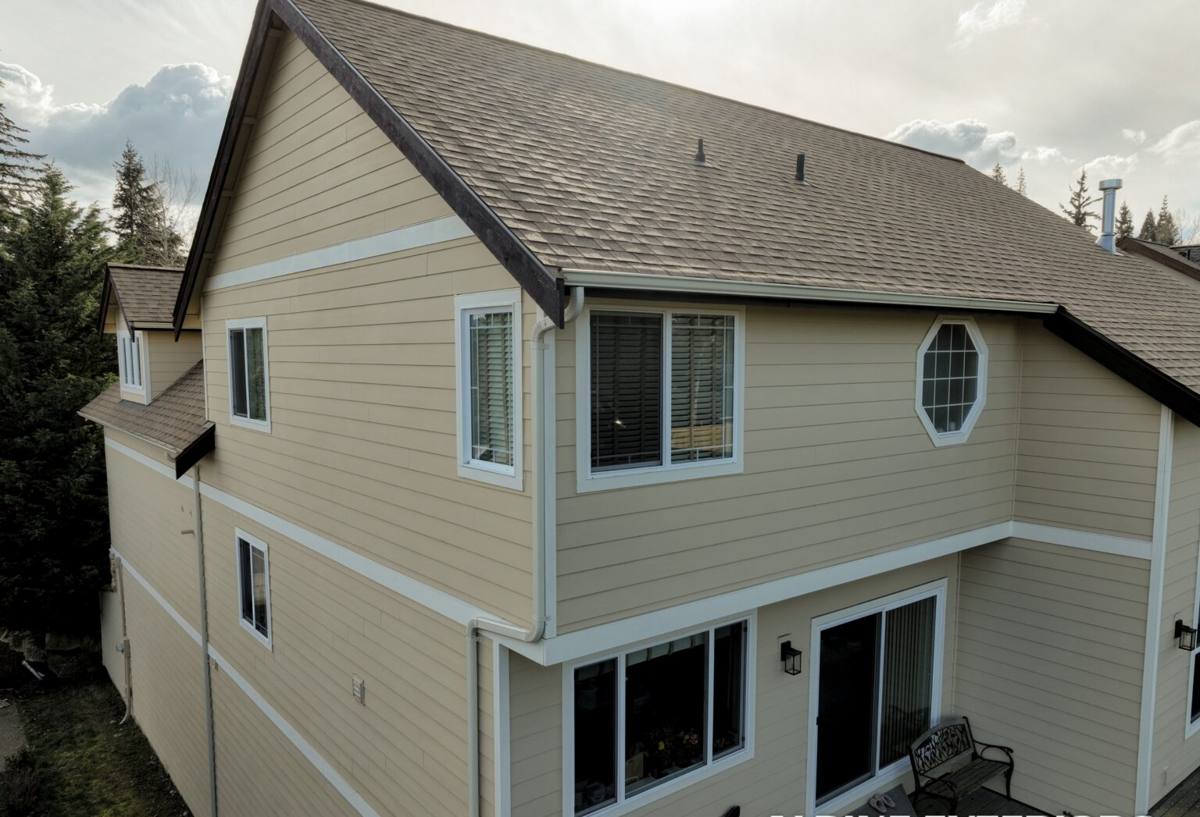
What Bellingham's Climate Does to a Sunnyland Roof
Sunnyland sits close enough to Bellingham Bay that salt-laden air is a real factor on roofing metal, fasteners, and flashing — not just on siding and gutters. Combine that with our long stretch of driving rain each fall and winter, and then the shaded, moisture-holding conditions that let moss take hold on north-facing slopes and under tree canopy, and you get three separate stresses working on the same roof at once.
Salt Air
Salt-influenced moisture accelerates corrosion on exposed metal — nail heads, flashing edges, and any hardware that isn't rated for coastal exposure. Over years, this can show up as rust streaking, pitted fasteners, or flashing that fails well before the shingles around it do.
Driving Rain
Wind-driven rain off the bay doesn't just fall straight down — it gets pushed sideways and upward under shingle edges, around vents, and into any gap in the flashing detail. A roof built for a drier climate's rain patterns often underperforms here because it wasn't detailed for wind-driven moisture intrusion.
Moss Season
Bellingham's long wet season, combined with shade from mature trees common in Sunnyland's older lots, gives moss and algae months to establish themselves. Moss holds moisture against the roofing surface far longer than open air would, which shortens the service life of the material underneath it and can lift shingle edges as it grows.
Signs a Sunnyland Home Needs Full Replacement, Not a Repair
Not every roof problem calls for a full tear-off. Part of an honest estimate is telling a homeowner when a repair is the right call. Full replacement usually becomes the right answer when:
- Granule loss is widespread rather than isolated to one damaged area
- Moss or algae has been present long enough to lift shingles or degrade the mat beneath them
- Flashing at valleys, chimneys, or walls is rusted, cracked, or was installed with the wrong detail originally
- The decking underneath shows soft spots, staining, or delamination when accessed
- The roof is past or near the end of its rated service life and repairs are becoming frequent
- Multiple layers of roofing already exist and another layer isn't a sound option
If a roof only shows one or two of these in a limited area, a repair may genuinely be the more responsible recommendation. We'll tell you that directly rather than upselling a full replacement a home doesn't need yet.
What a Correct Installation Involves
A new roof is only as good as the parts nobody sees once it's finished. For Sunnyland's conditions, several details matter more than they would in a drier, more sheltered location.
Tear-Off and Deck Inspection
Full tear-off to the deck lets us actually see the condition of the sheathing, not guess at it. Any soft, delaminated, or moisture-damaged decking gets replaced before anything new goes down — installing new roofing over a compromised deck just hides the problem for a future owner to discover.
Underlayment Built for Wind-Driven Rain
Given how much of Bellingham's precipitation arrives at an angle, underlayment choice and lap direction matter. We use underlayment systems and self-adhered membrane at vulnerable areas — eaves, valleys, and low-slope transitions — that are built to resist wind-driven moisture, not just standing water.
Flashing Detail
Flashing at chimneys, walls, valleys, and penetrations is where most roof leaks actually originate, not in the open field of shingles. In a salt-air environment, we pay attention to fastener and flashing material choice so it holds up to corrosion rather than becoming the first thing to fail.
Ventilation
Balanced intake and exhaust ventilation keeps moisture from building up in the attic space, which matters in a climate where the roof deck is dealing with damp air for much of the year. Poor ventilation shortens shingle life from underneath, which no amount of surface-level roofing quality can fix.
Moss-Resistant Considerations
On shaded slopes where moss has historically been an issue, we talk through options like zinc or copper strips at the ridge, which help suppress regrowth over time, alongside setting realistic expectations about maintenance going forward.
Our Process for a Sunnyland Roof Replacement
- On-site assessment — we inspect the existing roof, attic ventilation, and any visible signs of moisture or moss damage before quoting anything.
- Honest scope and estimate — you get a clear breakdown of what's being replaced, what materials are proposed, and why, in plain language.
- Tear-off and deck evaluation — old roofing is removed and the deck is inspected in daylight, with any needed repairs discussed before covering it back up.
- Underlayment and flashing installation — detailed to handle wind-driven rain and salt-air exposure at vulnerable points.
- Roofing material installation — installed to manufacturer specification, which is what keeps the material warranty valid.
- Ventilation check — intake and exhaust are verified balanced for the attic space, not just installed and assumed adequate.
- Final walkthrough — we go over the finished roof with you, including any moss-management or maintenance recommendations specific to your lot.
Cost Factors for a Sunnyland Roof Replacement
Every roof is priced on its own specifics, but the factors that move a Sunnyland estimate up or down are fairly consistent. This table covers the main ones.
| Factor | Why It Matters Here |
|---|---|
| Roof size and pitch | Steeper pitches and larger areas require more material, labor time, and safety measures |
| Deck condition | Moisture or moss damage found during tear-off may require sheathing replacement not visible from the ground |
| Number of penetrations | Chimneys, skylights, and vents each need individual flashing detail, which adds labor |
| Material choice | Asphalt composition, metal, and other systems carry different material and labor costs, and different corrosion resistance in salt air |
| Tree cover and access | Mature trees common in Sunnyland can complicate access and increase moss-related deck damage found underneath |
| Ventilation upgrades | Adding or correcting intake/exhaust ventilation is sometimes needed and adds modest cost but protects the whole system |
Broadly, a full roof replacement is a significant investment that varies widely by size and material — we won't put a number on it until we've actually seen your roof, because a phone-quote range isn't useful to you or accurate for us.
Why a Local Crew Matters for This Job
A roof installed by a crew that's never worked in Whatcom County will often follow generic best practices that are correct in general but not tuned to this specific climate. A crew that regularly works in Sunnyland and the surrounding Bellingham neighborhoods knows which slopes tend to hold moss, which flashing details tend to fail first in wind-driven rain, and how salt air affects fastener choice over time — because they've seen it on other roofs in the same few square miles.
That familiarity also matters after the job is done. A local contractor is there for warranty follow-up, seasonal questions, and the occasional maintenance check, not a name on an invoice from a crew that moved on to the next county.
Maintaining a New Roof in Sunnyland
A correctly installed roof still benefits from basic upkeep given our climate. Keeping gutters clear so water isn't held against the roof edge, having moss addressed before it spreads rather than after it's established, and keeping an eye on flashing at chimneys and valleys during your own periodic walk-arounds all extend the life of the investment. We're happy to walk any homeowner through a simple seasonal checklist specific to their roof and lot after installation.
Get a Free Estimate for Your Sunnyland Roof
If your roof is showing its age, holding moss, or has had one too many repairs, it's worth having someone look at it who works in this exact neighborhood and understands what Bellingham weather does to a roof over time. We offer free, no-pressure estimates — use the form below to get started.