 Bellingham Exterior
 Siding Repair for Sunnyland Homes
Sunnyland is one of Bellingham's established residential neighborhoods, with a mix of home ages and siding types sitting close enough to Bellingham Bay to catch the same weather that batters the rest of Whatcom County. When a homeowner in this area calls about a soft spot near a downspout, a cracked panel by the garage, or a patch of siding that never seems to dry out, the cause is almost always the same combination of factors: moisture finding a way behind the cladding, and nowhere good for it to go once it's there. Repairing siding correctly means understanding both problems — not just patching what's visible.
This page focuses on siding repair specifically, not full replacement. If your siding is fundamentally sound but has isolated damage, deferred maintenance, or a handful of trouble spots, repair is often the right, cost-effective move. We'll walk through what that work actually involves, when repair stops making sense, and why choosing a crew that already understands Bellingham's climate — and Sunnyland's housing stock — matters more than it might seem.
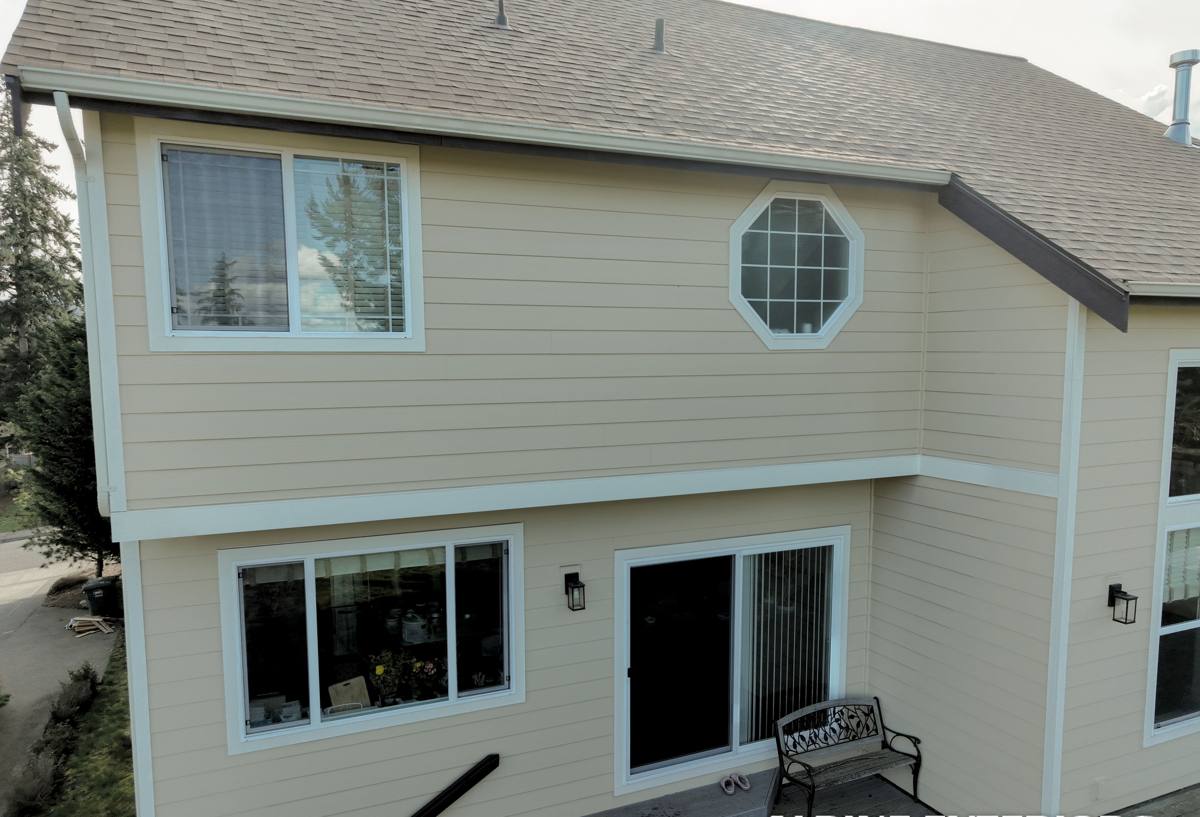
Why Bellingham's Climate Is Hard on Siding
Whatcom County sits in a marine climate that's mild on temperature but relentless on moisture. Three things do most of the damage over time:
Salt Air and Moisture Cycling
Proximity to Bellingham Bay means siding is regularly exposed to salt-laden, damp air. That air accelerates corrosion on fasteners, trim flashing, and any exposed metal components, and it keeps siding surfaces damp longer than they would be further inland — which matters a great deal for materials that absorb moisture rather than shed it.
Driving Rain
Storms off the Sound don't just fall straight down — wind-driven rain gets pushed sideways into wall assemblies, working its way behind loose caulk, gapped trim, and butt joints that weren't sealed correctly the first time. Over years, that's how small installation shortcuts turn into rot.
A Long Moss and Mildew Season
Bellingham's moss season runs long — shaded, north-facing walls and areas under overhangs can stay damp for months at a stretch. Moss and mildew don't just look bad; they hold moisture against the siding surface and, on wood-based products, accelerate decay underneath.
None of this means siding is destined to fail. It means siding has to be installed and repaired with these conditions in mind, not treated like it's going up in a dry climate.
Signs Your Sunnyland Home Needs Siding Repair
Most siding problems give warning signs well before they become structural. Homeowners in Sunnyland should watch for:
- Soft, spongy, or bubbling spots when you press on the siding, especially near the bottom courses or below windows
- Visible cracking, splitting, or warping in individual panels or boards
- Paint that's peeling, blistering, or failing faster than the rest of the house — often a sign moisture is trapped behind it
- Dark streaking, persistent moss growth, or a musty smell near an exterior wall
- Gaps opening up at seams, corners, or where siding meets trim, windows, or doors
- Visible daylight or drafts felt from inside near an exterior wall
- Nail pops, loose panels, or sections that flex or rattle in wind
Any one of these is worth a look. Several at once, especially clustered in one area, usually points to a moisture source that needs to be found and fixed, not just cosmetically covered.
What a Correct Siding Repair Actually Involves
The difference between a repair that lasts and one that fails again in two years almost always comes down to what happens before the new material goes up.
Finding the Real Cause
Damaged siding is a symptom. Before we replace anything, we look for the source: failed caulking, a misdirected downspout, missing or damaged flashing, a roofline dumping water onto a wall it wasn't designed to handle, or ground grading that keeps a lower course wet. Replacing the visible damage without fixing the cause just means paying for the same repair again.
Checking What's Behind the Siding
Once damaged material is pulled, we inspect the sheathing, house wrap, and framing underneath. Sometimes it's dry and the damage was purely surface-level. Sometimes there's soft sheathing or hidden rot that needs to be addressed before any new siding goes back on — patching over compromised framing is how small repairs turn into bigger problems down the road.
Matching Material and Method
For homes already sided in James Hardie fiber cement, repairs are straightforward: we match the profile, exposure, and ColorPlus finish so the repaired section blends in rather than standing out as an obvious patch. For homes with other siding types, we'll talk honestly about whether a like-for-like repair makes sense or whether the smarter long-term move is replacing the affected section — or eventually the whole wall — with a material that won't keep presenting the same problem.
Sealing and Flashing Done Right
This is where a lot of repairs go wrong. Caulk is not a substitute for proper flashing and correct overlaps. We install repairs with the same water-shedding principles as new construction — laps running the right direction, flashing integrated with the water-resistive barrier, and sealant used where it belongs rather than as a catch-all fix.
Repair or Replace? How We Help You Decide
Not every problem area calls for full replacement, but not every repair is worth doing either. Here's how we generally think about it:
| Factor | Leans Toward Repair | Leans Toward Replacement |
|---|---|---|
| Extent of damage | Isolated spots or a single wall section | Damage spread across multiple walls |
| Underlying sheathing | Dry, solid framing found once opened up | Widespread rot or soft sheathing |
| Siding age and material | Newer or durable material still performing well overall | Original siding nearing or past its expected service life |
| Cause of damage | A fixable, one-time or localized moisture source | A systemic issue (grading, roofline, wall design) affecting the whole elevation |
| Material availability | Existing product can still be closely matched | Discontinued profile or color that can't be matched cleanly |
We'll always give you a straight answer on which side of that table your home falls on, along with rough cost expectations for each path, before any work starts.
Why We Repair and Install Only James Hardie Fiber Cement
When a repair does turn into a full section or wall replacement, we install James Hardie fiber cement — not vinyl, LP SmartSide, or cedar. This isn't a sales preference; it's a standard we hold because of what we've seen matter over years of siding work in this climate. Hardie is non-combustible, engineered specifically for wet climates through its HZ5 product line, and finished with a factory-applied ColorPlus coating that resists the fading and peeling that repainted siding is prone to. It also carries a strong, transferable warranty backed by a manufacturer with a long track record.
That standard shapes how we talk to Sunnyland homeowners about repairs, too. If your home already has Hardie siding, repairs are simple and blend in well. If it has a different product and the damage is isolated, we'll repair it honestly and tell you what to expect from that material going forward. If the damage points to a bigger, recurring moisture problem, we'll tell you that plainly — and explain why replacing that section with fiber cement, rather than patching the same material again, is usually the better long-term investment.
How Our Siding Repair Process Works
1. On-Site Inspection
We walk the affected area with you, check moisture readings where relevant, and identify both the visible damage and its likely cause.
2. A Clear, Written Plan
You get a straightforward explanation of what needs to happen, what we expect to find once we open up the wall, and a firm quote — not a vague estimate that grows once work starts.
3. The Repair Itself
We remove only what needs to come out, inspect and address anything hidden underneath, install matched or replacement material with correct flashing and sealing, and finish it so the repair holds up to the next storm season — not just the next inspection.
4. Cleanup and Walkthrough
We clear debris, walk the finished repair with you, and point out anything you should keep an eye on going forward.
Why Local Experience in Sunnyland Matters
Siding damage patterns in Bellingham aren't the same as siding damage patterns in a drier part of the state. A crew that mostly works inland climates may not think twice about a caulk-only fix that would fail within a season here. Working regularly in and around Sunnyland and the rest of Bellingham means we've seen how salt air, sideways rain, and long stretches of shaded dampness actually play out on real houses — which walls tend to take the worst of it, which details fail first, and which repairs are worth doing versus which ones are a short-term patch on a longer-term problem. That local pattern recognition is part of what you're paying for, whether or not it shows up as a line item.
Keeping Repaired Siding in Good Shape
A correct repair should hold for years, but a little upkeep goes a long way in this climate:
- Rinse siding annually, and more often on shaded or moss-prone walls
- Keep gutters clear so water isn't overflowing directly onto wall sections
- Trim back vegetation and tree limbs that keep siding shaded and damp
- Re-caulk seams and trim joints as part of routine exterior maintenance, not just when something looks obviously wrong
- Check downspout extensions to make sure water is actually moving away from the foundation and lower siding courses
- Have any soft spots or recurring damp patches looked at promptly rather than waiting for them to spread
If you're seeing signs of siding trouble on your Sunnyland home, we're happy to take a look and give you a clear, honest read on what's going on — no pressure, no obligation. Fill out the form below for a free estimate.