 Bellingham Exterior
 Siding Built for a Bellingham Neighborhood, Not a Generic Climate
York is one of Bellingham's older, established residential neighborhoods, which means it has a lot of homes that have already been through a few rounds of siding in their lifetime — some original, some replaced once or twice, and some patched together with whatever product was popular the year the last job got done. Whatcom County's marine climate doesn't care how old a house is. Salt air off the Puget Sound region, driving rain that comes in sideways during winter storms, and a moss season that can run most of the year on shaded or north-facing walls all work on siding the same way, whether the house was built in 1965 or 2015.
This page is specifically about installing James Hardie fiber cement siding on York homes — what the climate actually does to siding here, what a correct installation looks like, and why the crew doing the work matters as much as the product itself.
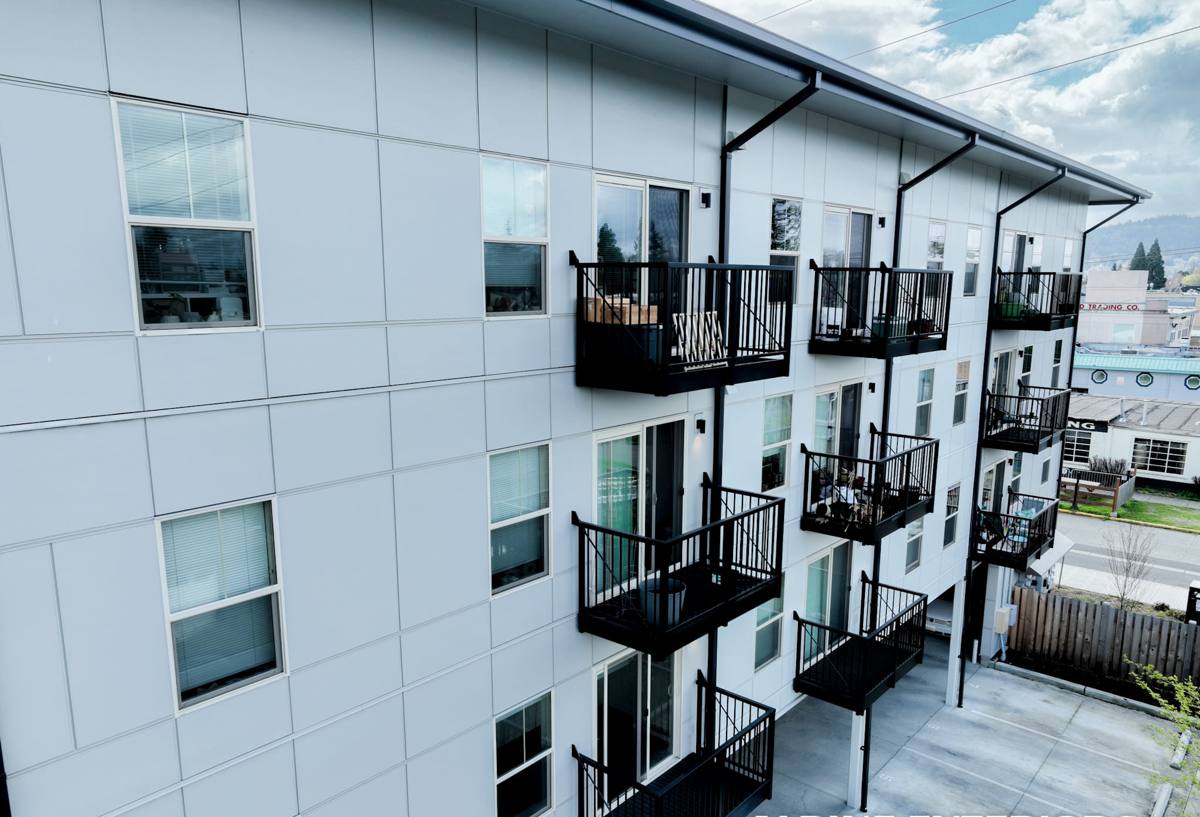
What Salt Air, Driving Rain, and Moss Season Do to Siding Over Time
Salt Air and Moisture-Laden Wind
Bellingham sits close enough to saltwater that homes throughout the area deal with airborne salt and moisture year-round, not just on waterfront lots. Salt-laden air accelerates corrosion on fasteners, trim flashing, and any metal components in a siding system. It also holds moisture against exterior surfaces longer than dry inland air would, which matters a lot for products that aren't fully water-resistant.
Wind-Driven Rain
Whatcom County doesn't just get rain — it gets rain pushed sideways by wind off the water, especially during fall and winter storm systems. That kind of weather finds every gap in a siding installation: unsealed joints, poorly lapped house wrap, missing kick-out flashing above windows and doors. A product that's rated to shed water when it's falling straight down can still leak badly when the rain is coming in at an angle.
Moss Season
Shaded siding, tree cover, and the region's long stretch of wet, mild weather add up to a genuine moss season that can last much of the year on north-facing or heavily shaded walls. Moss holds moisture against the siding surface, and materials that absorb water or swell when wet are especially vulnerable to rot and finish failure underneath a moss mat that's rarely disturbed.
Why We Install Only James Hardie Fiber Cement Siding
We don't install vinyl, LP SmartSide, primed wood, cedar, or other fiber cement brands. That's a deliberate standard, not a sales pitch. James Hardie fiber cement is non-combustible, dimensionally stable in wet-dry cycling, and factory-finished with ColorPlus technology, which puts the paint on under controlled conditions instead of relying on field-applied coatings that weather unevenly. Hardie also engineers specific product lines by climate zone (HardieZone HZ5, which covers the Pacific Northwest), so the material specification itself accounts for freeze-thaw and sustained moisture exposure rather than being a one-size-fits-all product.
None of that replaces correct installation — a good product installed poorly will still fail. But it gives us a consistent baseline we trust across every job, and a manufacturer warranty structure that's meaningful because the product performs as specified when the install is done to spec.
What a Correct Fiber Cement Installation Involves
Water Management Details Most Crews Skip
The siding itself is only part of the system. In a climate like this, the water-resistive barrier, flashing, and drainage plane behind the siding do most of the actual work keeping a wall assembly dry. That means:
- A drainage gap (rainscreen) behind the siding so any moisture that gets past the cladding can drain and dry instead of sitting against the sheathing
- Properly lapped and taped house wrap, installed shingle-style so water always flows over the layer below it
- Metal flashing at every horizontal transition — window heads, door heads, roof-to-wall intersections, and butt joints — not just caulk
- Kick-out flashing anywhere a roofline meets a wall, to direct roof runoff away from the siding instead of behind it
- Correct fastener placement and spacing per Hardie's published installation instructions, since over-driven or misplaced fasteners are one of the most common causes of early failure
- Factory-cut and properly sealed field cuts, since exposed raw edges are more vulnerable to moisture intake
HardieZone HZ5 and Whatcom County
Whatcom County falls within HardieZone HZ5, the engineering specification Hardie uses for regions with significant moisture exposure and freeze-thaw cycling. Installing HZ5-rated product with the manufacturer's specified fastener schedule, clearances, and flashing details is what keeps the warranty valid — and, more importantly, it's what actually keeps water out of the wall assembly over the decades this siding is meant to last.
Fiber Cement vs. Other Siding Options in This Climate
| Factor | James Hardie Fiber Cement | Vinyl | Wood / Engineered Wood |
|---|---|---|---|
| Moisture behavior | Dimensionally stable, engineered for wet climates | Doesn't absorb water, but seams and panels can allow water behind the cladding | Absorbs moisture; vulnerable without diligent maintenance |
| Finish durability | Factory-baked ColorPlus finish, resists fading and chipping | Color is through the material but can fade and become brittle over time | Field-applied paint or primer, needs recoating on a regular cycle |
| Fire resistance | Non-combustible | Melts/deforms under heat exposure | Combustible |
| Moss/algae resistance | Hard, dense surface resists moss anchoring compared to porous wood | Resists moss growth on the surface itself | Porous surface, moss and algae take hold more easily |
| Long-term maintenance | Occasional washing, repaint only if desired decades out | Low maintenance but limited repair options if damaged | Regular repainting, caulking, and spot repairs |
Signs a York Home May Need New Siding
Because so many homes in this neighborhood already have a layer of siding on them, the more common call we get isn't new construction — it's homeowners who suspect their current siding is past the point of patching. Some signs worth taking seriously:
- Soft or spongy spots when you press on the siding, especially near the bottom courses or below windows
- Paint that's peeling or bubbling repeatedly in the same spots, even after repainting
- Persistent moss or algae growth that returns quickly after cleaning
- Visible warping, buckling, or gaps between siding panels or boards
- Interior signs like musty smells, staining, or bubbling drywall near exterior walls
- Siding that's original to a home built more than 25–30 years ago and has never been fully evaluated
Any one of these can be minor. Several together, especially on the shaded or weather-facing side of a house, usually means it's worth a real inspection rather than another patch job.
Our Process From First Call to Finished Siding
We start with an on-site look at the current siding and the wall assembly behind it where accessible, not just a measurement for a quote. That's when we find out whether we're dealing with a straightforward re-side or whether there's sheathing damage, rot, or old flashing that needs to be addressed before new siding goes on — issues that are common on older homes but aren't always visible from the street.
From there, the estimate covers material selection (Hardie panel, lap, or shingle styles and ColorPlus color), the water management plan for that specific house, and a realistic timeline. During installation, we follow Hardie's published fastening and clearance specifications rather than shortcuts, because that's what keeps both the warranty and the wall assembly intact. We walk the finished job with the homeowner before calling it done.
Maintaining Fiber Cement Siding Through a Moss-Prone Climate
Fiber cement doesn't need the maintenance schedule that wood or repeatedly-painted siding does, but it's not zero-maintenance in a climate like this. A periodic soft wash to keep moss and algae from building up on shaded walls goes a long way, and it's worth checking caulking at trim and penetrations every year or two since caulk is the one component in the system that wears out faster than the siding itself. Keeping gutters clear and vegetation trimmed back from walls also reduces how much moisture and shade the siding has to deal with in the first place.
Why Hiring a Crew That Already Works in York Matters
Correct fiber cement installation isn't exotic, but it's detail-dependent — the flashing, the gap behind the siding, the fastener schedule, the sealant choices all matter more in a climate that gets sustained wet-dry cycling than they would somewhere dry. A crew that regularly works on Bellingham homes has already run into the specific problems this neighborhood's housing stock tends to have: aging flashing details, old paint systems that don't play well with new caulk, moss buildup patterns tied to specific tree cover and orientation. That's less guesswork on your project, not more sales talk.
If you're weighing a siding replacement on a York home, we're happy to take a look and give you a straight assessment — no pressure, no obligation. Request a free estimate using the form below and we'll get back to you to schedule a time to walk the property.